
天然单壁碳纳米管

Search documents
嫦娥六号月壤样品中首次发现天然单壁碳纳米管与石墨碳 在微观尺度上探寻月球的历史(我身边的最强大脑)
Ren Min Ri Bao· 2026-02-01 22:26
Core Insights - The research team involved in the Chang'e 6 lunar mission has made significant discoveries regarding the unique carbon nanostructures found in lunar soil samples, which have implications for understanding the Moon's geological history and environment [1][2] Group 1: Research Findings - The team successfully identified and confirmed the presence of naturally occurring single-walled carbon nanotubes and graphite carbon in lunar soil, marking a first in international research [1] - A comparison between lunar surface samples and those from the far side revealed a higher number of carbon structural defects in the far side samples, indicating asymmetry in material composition and evolutionary processes between the two sides of the Moon [1] Group 2: Research Methodology - The research faced challenges in presenting clear nanostructures under transmission electron microscopy while preventing damage from high-energy electron beams, leading to a dual approach of optimizing instrument parameters and enhancing sample preparation efficiency [2] - The successful results were attributed to the collaborative efforts of the research team, which combined theoretical research foundations with expertise in sample testing, preparation, and data analysis [2] Group 3: Implications for Future Research - The findings from the Chang'e 6 lunar soil samples open new avenues for fundamental research, allowing for deeper insights into scientific questions arising from lunar exploration [2]
嫦娥六号月球样品中首次发现天然单壁碳纳米管
Xin Lang Cai Jing· 2026-01-22 00:44
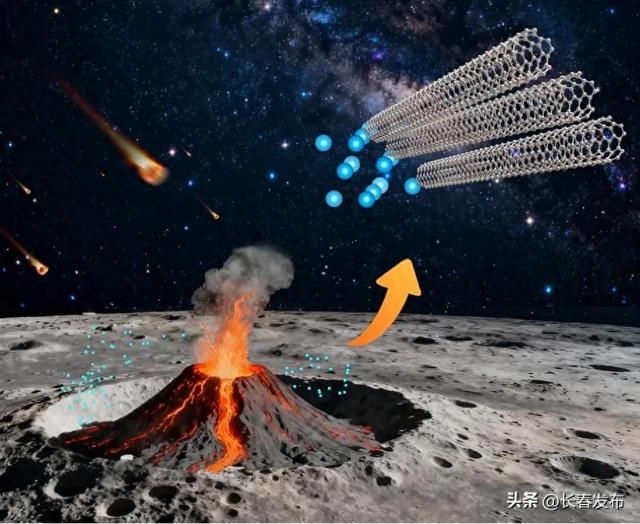
Core Viewpoint - The research team from Jilin University has made a significant discovery by identifying naturally formed single-walled carbon nanotubes and graphite carbon in lunar samples collected by the Chang'e 6 mission, providing critical data for understanding the Moon's geological history [1] Group 1: Research Findings - The study utilized various microscopy and spectroscopy techniques to systematically characterize the lunar samples from the Moon's far side, marking the first international confirmation of naturally formed single-walled carbon nanotubes [1] - The research indicates that the formation of these carbon nanotubes is closely related to multiple factors, including micro-meteorite impacts, volcanic activity, and solar wind irradiation, showcasing nature's ability to synthesize key materials under extreme conditions [1] - A comparative analysis between the Chang'e 6 samples and those from the Chang'e 5 mission revealed that the carbon structures in the Chang'e 6 samples exhibit more pronounced defect characteristics, likely due to stronger micro-meteorite impacts on the Moon's far side [1] Group 2: Implications for Lunar Studies - The findings highlight a new asymmetry in the material composition and evolutionary processes between the Moon's near side and far side, suggesting that geological activities may be more active on the far side [1] - This research contributes valuable insights into the Moon's evolutionary history and the high-energy physical-chemical processes occurring on its surface [1]
吉林大学科研团队在嫦娥六号月球样品中首次发现天然单壁碳纳米管与石墨碳
Xin Lang Cai Jing· 2026-01-21 03:07
Core Insights - The research team from Jilin University has made a significant discovery by identifying naturally formed single-walled carbon nanotubes and graphite carbon from lunar soil samples collected by the Chang'e 6 mission, highlighting the intricate "high-energy physical-chemical processes" on the moon's surface and confirming more active geological activity on the moon's far side, which provides crucial data for studying the moon's evolutionary history [1][3]. Group 1 - The study utilized various microscopy and spectroscopy techniques to systematically characterize the lunar samples from the Chang'e 6 mission, marking the first identification of graphite carbon and the natural formation of single-walled carbon nanotubes without human intervention [3]. - The formation of these carbon nanotubes is closely related to multiple factors such as micro-meteorite impacts, volcanic activity, and solar wind irradiation, showcasing nature's ability to synthesize key materials under extreme conditions [3]. - A comparative study between the Chang'e 6 lunar far side samples and the Chang'e 5 lunar near side samples revealed that the carbon structure in the Chang'e 6 samples exhibited more pronounced defect characteristics, likely due to a more intense history of micro-meteorite impacts on the moon's far side, indicating new asymmetries in material composition and evolutionary processes between the moon's near and far sides [3].

嫦娥六号月球样品中首次发现天然单壁碳纳米管与石墨碳,为研究月球演化史提供关键数据
Xin Hua She· 2026-01-21 02:18
Core Insights - The research team from Jilin University has made a significant discovery by identifying naturally formed single-walled carbon nanotubes and graphite carbon in lunar soil samples from the Chang'e 6 mission, marking the first such confirmation internationally [1][3] - This finding reveals the intricate nature of "high-energy physical-chemical processes" on the lunar surface and indicates more active geological activity on the far side of the moon, providing crucial data for understanding lunar evolution [1] Group 1 - The study utilized various microscopic and spectroscopic techniques to systematically characterize the lunar samples collected from the far side of the moon, leading to the first clear identification of graphite carbon and the natural formation of single-walled carbon nanotubes without human intervention [3] - The formation of these carbon nanotubes is closely related to multiple factors, including micro-meteorite impacts, volcanic activity, and solar wind irradiation, showcasing nature's ability to synthesize key materials under extreme conditions [3] - A comparative study between the Chang'e 6 far side samples and the Chang'e 5 near side samples revealed that the carbon structures in the Chang'e 6 samples exhibit more pronounced defect characteristics, likely due to a more intense history of micro-meteorite impacts on the far side [3] Group 2 - This discovery follows the previous finding of few-layer graphene in the Chang'e 5 lunar samples, representing another important advancement by the Jilin University research team [3] - The research results have been published in the academic journal "Nano Letters," contributing to the scientific community's understanding of lunar material composition and evolution processes [3]
多种显微+光谱技术,助力嫦娥六号月壤样品新发现!
Xin Hua She· 2026-01-20 11:14
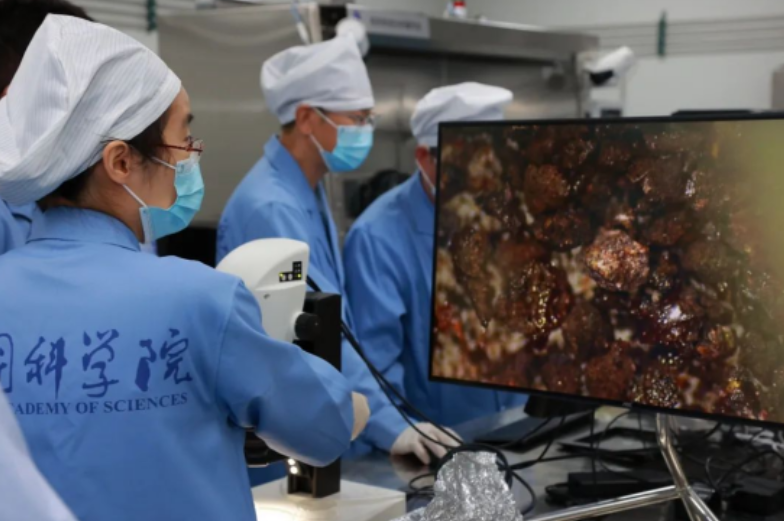
Core Insights - The research team from Jilin University has made a significant discovery by identifying naturally formed single-walled carbon nanotubes and graphite carbon in lunar soil samples collected by the Chang'e 6 mission, marking the first such finding internationally [1][2] - This discovery provides critical data for understanding the geological activity on the far side of the Moon and its evolutionary history, indicating a more active geological process than previously thought [1] Group 1: Research Findings - The study utilized various microscopy and spectroscopy techniques to systematically characterize the lunar samples, confirming the presence of graphite carbon and tracing its potential formation and evolution processes [1] - The formation of these carbon nanotubes is believed to be closely related to multiple factors, including micro-meteorite impacts, volcanic activity, and solar wind irradiation, showcasing nature's ability to synthesize key materials under extreme conditions [1] Group 2: Comparative Analysis - A comparative study between the Chang'e 6 lunar far side samples and the Chang'e 5 lunar near side samples revealed that the carbon structure in the Chang'e 6 samples exhibited more pronounced defect characteristics, likely due to a more intense history of micro-meteorite impacts on the far side [1] - This finding highlights a new asymmetry in the material composition and evolutionary processes between the Moon's near side and far side [1]
收评:创业板指跌1.79% 贵金属板块逆市大涨
Xin Hua Cai Jing· 2026-01-20 08:05
Market Overview - The A-share market saw all three major indices close lower, with the ChiNext index leading the decline, dropping nearly 2% [1] - The Shanghai Composite Index closed at 4113.65 points, down 0.01%, with a trading volume of 12.215 billion yuan; the Shenzhen Component Index closed at 14155.63 points, down 0.97%, with a trading volume of 15.563 billion yuan; the ChiNext Index closed at 3277.98 points, down 1.79%, with a trading volume of 7.093 billion yuan [1] Sector Performance - In terms of sector performance, there were more declines than gains, with the precious metals, chemical raw materials, cement building materials, and chemical fiber industries showing the largest gains, while sectors such as communication equipment, photovoltaic equipment, aerospace, power equipment, batteries, computer equipment, and electronic components experienced the largest declines [1] Hot Stocks - The chemical sector saw a surge, with over ten constituent stocks hitting the daily limit, including Hongbaoli, Shandong Heda, Weiyuan Co., and Hongqiang Co. [2] - The precious metals concept continued its strong performance, with Hunan Silver hitting the daily limit [2] - The real estate sector was active, with Dayue City and Urban Investment Holdings also hitting the daily limit [2] - In the AI application sector, stocks like Jiayun Technology, Yue Media, and Zhejiang Wenhe Internet also reached the daily limit [2] - Overall, more than 2100 stocks in the market rose, with over 60 stocks hitting the daily limit [2] Institutional Insights - According to Jifeng Investment Advisors, the market's short-term fluctuations are primarily due to capital switching, but the core logic for a positive market outlook remains unchanged, supported by resilient economic fundamentals and policy easing from the central bank [3] - CITIC Securities highlighted that the AI application sector has become a main line for 2026, with a year-to-date increase of 19%, leading the A-share market [4] - The semiconductor, consumer electronics, AI, robotics, and commercial aerospace sectors are recommended for mid-to-long-term investment opportunities [3] Policy Updates - Four departments announced a policy to provide a 1.5% interest subsidy on fixed asset loans for equipment updates, with a support period not exceeding two years, expanding the scope to include various sectors such as industrial, energy, transportation, and AI [5] - The Ministry of Finance and three other departments extended the personal consumption loan interest subsidy policy until the end of 2026, adjusting the terms to include credit card installment payments and removing previous limits on subsidy amounts [6]
