硬联通

Search documents
车通了,心更近了
Xin Lang Cai Jing· 2025-12-24 00:16
Core Insights - The implementation of the "Yue Car Southbound" policy marks a historic milestone in facilitating vehicle exchanges between Guangdong and Hong Kong, transitioning to a new phase of "two-way direct access" [1] - The policies have significantly enhanced the attractiveness of the Greater Bay Area, enabling a vibrant "one-hour living circle" and stimulating new economic momentum [1] Group 1 - The "Yue Car Southbound" policy complements previous policies such as "Macau Cars Northbound" and "Hong Kong Cars Northbound," which have already shown strong results with over 2.86 million crossings recorded within two years of the latter's implementation [1] - The physical connection provided by the Hong Kong-Zhuhai-Macao Bridge is supported by regulatory frameworks that facilitate seamless travel, showcasing the collaborative efforts in breaking down barriers between the three regions [2] - The convenience of cross-border travel is expected to deepen emotional connections among residents of the Greater Bay Area, transforming the concept of dual-city living into reality [2] Group 2 - The integration of transportation and regulatory mechanisms is creating a world-class bay area characterized by interconnected roads, people, and businesses, accelerating the realization of a cohesive Greater Bay Area [3] - The "one-stop" inspection process at the ports and online appointment platforms exemplify the successful implementation of "soft connectivity," enhancing the ease of cross-border travel [2] - The ongoing policies and infrastructure developments are not only improving physical access but also fostering a shared identity among the residents of the Greater Bay Area [2]
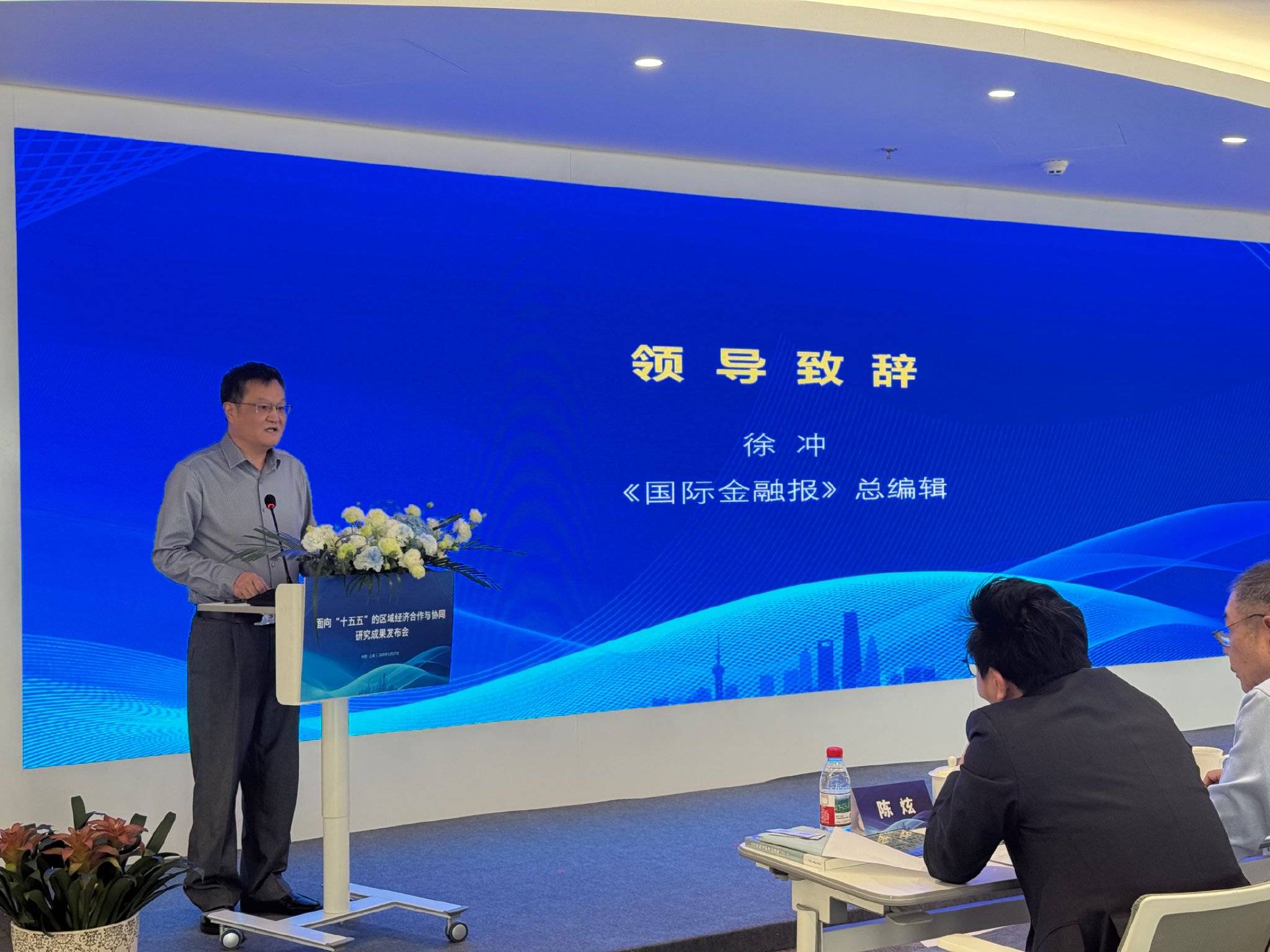
《国际金融报》总编辑徐冲:区域协同发展不仅需要“硬联通”,更需要“软联通”
Sou Hu Cai Jing· 2025-11-27 09:40
Core Viewpoint - The conference focused on the "14th Five-Year Plan" achievements and the new challenges and tasks for the "15th Five-Year Plan," emphasizing the importance of understanding the internal logic of regional coordinated development [3][4]. Group 1: Regional Economic Cooperation - The conference was organized by multiple institutions to release research results related to regional economic cooperation and collaboration under the "15th Five-Year Plan" [1]. - The aim is to provide intellectual support and practical references for high-quality regional economic development through the release of mid-term research results and application system construction [1]. Group 2: Role of Media - The media's role in regional coordinated development is evolving, serving as a platform for dialogue and experience sharing among various stakeholders [4]. - The media aims to present economic news in a more engaging and insightful manner, revealing the internal logic and future trends of regional collaborative development [4]. Group 3: Infrastructure and Innovation - The "15th Five-Year Plan" requires not only hard connectivity through infrastructure but also soft connectivity through institutional mechanisms, innovative elements, and public services [5]. - The conference is expected to spark new ideas and insights that will contribute to regional coordinated development in the context of China's modernization efforts [5].

珠江评论:粤港澳联合承办十五运会,背后藏着一盘国家战略棋局
Nan Fang Du Shi Bao· 2025-11-09 06:05
Core Viewpoint - The 15th National Games, held in Guangzhou and co-hosted by the Guangdong-Hong Kong-Macao Greater Bay Area, represents a significant event not only in sports but also in regional integration and national development strategy [1][6]. Group 1: Event Significance - The National Games are expected to have a long-lasting impact on regional development, similar to the effects of the Olympics and World Cup on their host cities [2]. - Historical events in Guangzhou, such as the 1987 and 2001 National Games, have catalyzed urban development and strategic shifts in the city [2][3]. Group 2: Greater Bay Area Integration - The event marks the first time the Greater Bay Area concept is officially recognized in a national sports event, emphasizing collaboration among the 9+2 cities [3]. - The torch relay and cross-border events, such as the cycling competition that spans the Hong Kong-Zhuhai-Macao Bridge, showcase the technological and regulatory cooperation among the three regions [3][4]. Group 3: Infrastructure and Connectivity - Recent infrastructure projects, including the Shenzhen-Zhongshan Link and Guangzhou-Shenzhen-Hong Kong High-Speed Rail, have enhanced physical connectivity in the Greater Bay Area [4]. - The event facilitates smoother cross-border movement for athletes and spectators, promoting a sense of belonging and cohesion among the Greater Bay Area residents [4]. Group 4: Economic Implications - The Greater Bay Area is positioned as a key driver for China's high-quality development, with the potential to become the world's largest economic center through deep integration [5]. - The 14th Five-Year Plan aims for a doubling of per capita GDP by 2035, with the Greater Bay Area identified as a crucial component in achieving this goal [5]. Group 5: Strategic Importance - The joint hosting of the National Games reflects the ongoing deepening of national strategies and serves as a model for regional collaborative development [6]. - The event is seen as an innovative practice of "One Country, Two Systems" in the sports sector, fostering new productive forces and regional synergy [6].
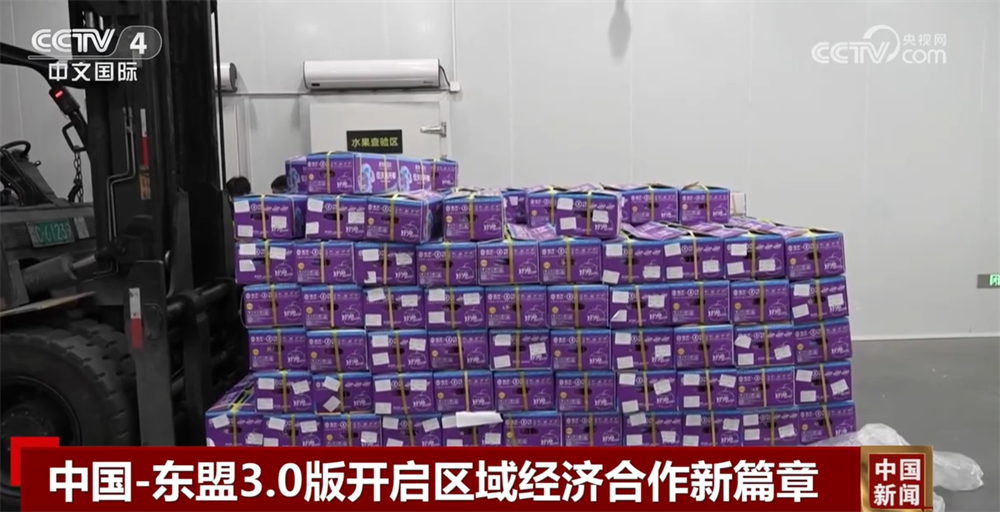
从硬联通到软联通 中国—东盟3.0版开启区域经济合作新篇章
Yang Shi Xin Wen· 2025-11-03 02:00
Core Viewpoint - The signing of the China-ASEAN Free Trade Area 3.0 upgrade protocol on October 28 marks a significant step towards enhancing digital technology empowerment, supply chain connectivity, and green standard alignment across various regions in China and ASEAN countries [1] Group 1: Logistics and Connectivity - The "Air Silk Road" between Zhengzhou and Kuala Lumpur has seen an increase in cargo flights to one per day, transporting nearly 10,000 tons of goods since its launch [2] - Zhengzhou Airport has opened 46 international cargo routes, reaching 18 countries involved in the Belt and Road Initiative, focusing on both "hard connectivity" in logistics and "soft connectivity" through systems like single-window and electronic bills of lading [4] Group 2: Trade Facilitation - The implementation of a single-window system allows companies in Gansu to quickly obtain certificates of origin, enabling them to enjoy tariff reductions of 12% and 5% when exporting products to Vietnam and Indonesia, respectively [6] - The protocol includes mutual recognition of certificates of origin and provisions for a single-window platform, which will enhance customs efficiency and reduce operational costs for businesses [6] Group 3: Industrial Cooperation - The 3.0 version of the free trade agreement aims to deepen the integration of supply chains between China and ASEAN, with a notable increase in rubber imports from ASEAN countries by 40.7% and a 19.8% rise in exports of automotive parts [7][9] - The establishment of a robust rubber tire processing industry cluster in Qingdao supports the export of processed tires to ASEAN nations, reflecting a shift from "product export" to "industry export" [9] Group 4: Green Economy Collaboration - The 3.0 version emphasizes green economy cooperation, with China’s advanced technologies in electric vehicles and solar products providing a foundation for capacity cooperation with ASEAN [10] - The protocol defines key concepts related to green economy and renewable energy, establishing a framework for future collaboration in green trade, investment, and circular economy [14]

从“硬联通”到“软联通” 中国—东盟3.0版开启区域经济合作新篇章
Yang Shi Wang· 2025-11-01 06:15
Group 1 - The signing of the China-ASEAN Free Trade Area 3.0 upgrade protocol has led to increased opportunities in digital technology, supply chain efficiency, and green standards alignment across various regions in China [1] - The "Air Silk Road" connecting Zhengzhou and Kuala Lumpur has seen a significant increase in cargo flights, with nearly 10,000 tons of goods transported since its launch, averaging one flight per day [1][6] - The implementation of a "green channel" and a "24/7" customs clearance system has significantly reduced comprehensive costs for enterprises in warehousing and transportation [3] Group 2 - The 3.0 version focuses on enhancing both "hard connectivity" in logistics and digital infrastructure, as well as "soft connectivity" through single-window systems and electronic bills of lading, which lowers costs for businesses [6] - Companies in Gansu, Lanzhou, can quickly obtain a certificate of origin for the China-ASEAN Free Trade Area, allowing them to enjoy tariff reductions of 12% and 5% when exporting products like Huaniu apples to Vietnam and Indonesia [8]