
大湾区一小时生活圈

Search documents
赏花采摘、主题市集 港澳游客打卡湾区千亩油菜花田
Xin Lang Cai Jing· 2026-02-08 11:22
Core Viewpoint - The article highlights the blooming of canola flowers in Doumen, Zhuhai, Guangdong, attracting numerous tourists from Hong Kong and Macau, showcasing a new cultural and tourism experience within the Greater Bay Area's "one-hour living circle" [1] Group 1: Tourism Experience - The canola flower fields have integrated elements of national style, pastoral life, and trendy culture, creating over ten photo spots and offering activities such as flower viewing, fruit picking, themed markets, light camping, and interactive performances [1] - Tourists, particularly families and young people from Hong Kong and Macau, are drawn to the immersive experiences available in the area [1] Group 2: Culinary Experience - In addition to flower viewing, many visitors are experiencing Hakka cuisine in the local villages, with dishes such as duck stuffed buns, lotus root, and white grouper being highlighted for their excellent taste [3] Group 3: Economic Impact - The local area has launched a series of cultural and tourism activities that combine flower fields, hot springs, and homestays, aiming to establish itself as a preferred short-term vacation destination in the Bay Area [5] - The continuous influx of tourists from Hong Kong and Macau not only boosts local agricultural and cultural tourism consumption but also symbolizes the emotional integration and industrial collaboration among the Guangdong-Hong Kong-Macau Greater Bay Area [5]


报告解读:轨道建设聚焦广佛全域同城化与城市主轴核心功能
Nan Fang Du Shi Bao· 2026-01-22 05:05
Core Insights - The Guangzhou government work report for 2026 emphasizes "deepening the connectivity of the Greater Bay Area," with a focus on rail transit construction as a key initiative [1] - The report highlights the completion of the Guangzhou-Foshan Ring Line West and the expected opening of the second phase of Guangzhou Metro Line 13 this year as significant projects [1][2] - These projects aim to enhance the integration of the Greater Bay Area and establish a one-hour living circle, reinforcing Guangzhou's role as a regional development engine [1] Rail Transit Development - The Guangzhou-Foshan Ring Line West is set to achieve full closure this year, significantly impacting the integration of Guangzhou and Foshan [2] - This line will connect critical hubs such as Baiyun Airport, South Railway Station, and the central business district, facilitating deeper integration between the two cities [2] - The second phase of Guangzhou Metro Line 13 will connect key districts and improve east-west traffic efficiency, with over 95% of the construction already completed [3] Infrastructure Optimization - The report outlines plans for optimizing the infrastructure system by 2026, including the expansion of Baiyun Airport and the development of major projects in Nansha Port [4] - The focus will also be on enhancing the air transport capacity and developing the airport industry cluster [4] - Additional projects include the construction of high-speed railways and highways to strengthen connectivity with surrounding cities [3][4]
惠阳直达郑州高铁首开,大幅扩容广惠班次
Nan Fang Du Shi Bao· 2026-01-19 06:47
Core Viewpoint - The Huizhou Station will officially implement a new train operation schedule starting from January 26, 2026, significantly enhancing capacity and improving cross-province connectivity, regional commuting convenience, and travel service experience [1] Group 1: Capacity Enhancement - The new operation schedule will see Huizhou Station operate a total of 161 high-speed trains, including 145 regular trains, 11 peak trains, and 4 weekend trains [2] - Notably, a direct high-speed train to Zhengzhou East, the capital of Henan Province, will be introduced, departing at 11:03 and arriving at 22:36 the same day, greatly facilitating travel to Central and Northern China [2] - The train network to Central China will be further strengthened with new direct trains to Yueyang East and Wuhan, providing more travel options for passengers [2] Group 2: Regional Integration - The new schedule will significantly increase the number of trains from Huizhou Station to Guangzhou South, from 9 to 20 trains, enhancing commuting connections and improving travel efficiency within the Greater Bay Area [3] Group 3: Service Optimization - A new "convenient transfer" passage has been opened at Huizhou Station, allowing passengers with connecting tickets to transfer quickly without exiting the station, reducing transfer time to just a few minutes [4] - A new customer-friendly initiative will allow passengers to self-process a free refund for mistakenly purchased tickets within 30 minutes of payment, provided it is more than 4 hours before departure [4] - The railway department emphasizes that the official ticketing platform is the only authorized channel for purchasing tickets, urging passengers to protect their personal information and financial security [4]
广花城际最大直径盾构隧道贯通
Xin Lang Cai Jing· 2026-01-11 19:16
Core Viewpoint - The successful completion of the shield tunneling for the Guangzhou East to Huadu Tiangui Intercity Railway marks a significant milestone in the construction of the line, which is crucial for the integration of the Guangdong-Hong Kong-Macau Greater Bay Area's transportation network [1] Group 1: Project Details - The shield tunnel has a maximum excavation diameter of 13.56 meters, making it the largest diameter shield tunnel for the Guanghua Intercity line [1] - To address complex working conditions, a single-tube double-track construction scheme was adopted, utilizing the "Yangcheng" large-diameter shield machine [1] - The "Yangcheng" shield machine is equipped with an intelligent system aimed at achieving the engineering goal of "one-time excavation, halving the risk" [1] Group 2: Strategic Importance - The Guanghua Intercity Railway is a vital component of the intercity railway network in the Guangdong-Hong Kong-Macau Greater Bay Area [1] - Upon completion, the line will facilitate connectivity with Guangzhou Metro Line 18 and the Nanzhu (Central) Intercity Railway, contributing to the establishment of a "one-hour living circle" in the Greater Bay Area [1] - The project further promotes the development of the "Railway-based Greater Bay Area" initiative [1]
2025年深港口岸累计通关2.74亿人次 创历史新高 居全国首位
Nan Fang Ri Bao Wang Luo Ban· 2026-01-04 08:27
Core Insights - The total number of crossings at the Shenzhen-Hong Kong port reached 274 million in 2025, marking a 14% year-on-year increase and setting a historical record, solidifying Shenzhen's role as a key gateway for high-level openness and a core engine of the Guangdong-Hong Kong-Macao Greater Bay Area [1][2] Group 1: Cross-Border Traffic Growth - The number of mainland residents crossing reached 95.29 million, a 22.5% increase year-on-year, while Hong Kong, Macao, and Taiwan residents totaled 171 million, up 9.2%, and foreign visitors reached 7.43 million, increasing by 34.1% [1] - The peak daily crossing reached 1.0876 million on August 16 of the previous year, indicating a significant surge in cross-border traffic [1] Group 2: Economic and Social Integration - The deepening economic and social ties between Shenzhen and Hong Kong are the fundamental drivers of the growth in port traffic, with major platforms like the Qianhai Shenzhen-Hong Kong Modern Service Industry Cooperation Zone and the He Tao Shenzhen-Hong Kong Technology Innovation Cooperation Zone fostering substantial cross-border work and living communities [1] - The dual-city model of "living in Shenzhen and working in Hong Kong" or "living in Hong Kong and developing in Shenzhen" has become the norm, contributing to a large number of daily cross-border commuters [1] Group 3: Consumer and Service Integration - The maturity of the Greater Bay Area's "one-hour living circle" has facilitated the deep integration of consumption and life services, with Shenzhen attracting Hong Kong and Macao residents for leisure and consumption, while mainland residents maintain strong demand for travel, education, and business in Hong Kong and Macao [2] - The rapid increase in Shenzhen's internationalization has drawn numerous multinational companies and expatriates, which is a key factor behind the over one-third increase in foreign traveler crossings [2] Group 4: Infrastructure and Innovation - In response to the growing passenger flow, Shenzhen's port authorities have implemented continuous institutional innovations and technological enhancements to ensure safe, efficient, and smooth crossings [2] - Upgrades and renovations of infrastructure at Shenzhen-Hong Kong ports are underway to address future growth pressures and enhance long-term service capabilities [2]
年均增速全省第二,如何做到的?汕尾晒“十四五”发展成绩单
Nan Fang Du Shi Bao· 2025-12-25 12:44
Core Insights - The "14th Five-Year Plan" for Guangdong highlights Shantou's economic and social development achievements, focusing on rapid growth, urban renewal, and industrial optimization [1][3] Economic Growth - Shantou's GDP surpassed 150 billion, with an average annual growth rate of 5.8%, ranking second in the province [4] - Public budget revenue grew at an average annual rate of 12.7%, the highest in Guangdong [4] - Per capita disposable income increased by 7.5% annually, leading the province [4] Industrial Development - Shantou's jewelry industry employs over 100,000 people, processing 50,000 tons of colored gemstones and 9,000 tons of gold and silver jewelry annually, holding a significant global market share [4][5] - The city is transitioning its traditional jewelry industry towards globalization, branding, and digitalization, with a focus on cross-border e-commerce [5][6] - Online retail sales of gold and silver jewelry reached 8.93 billion, marking a 1.8 times increase [5] Infrastructure and Connectivity - Shantou has integrated into the Greater Bay Area's "one-hour living circle" through major transportation projects like the Guangshan-Shantou high-speed railway [3][4] - The city is enhancing its logistical capabilities to attract talent, capital, and technology [3] Urban and Rural Development - Shantou has implemented the "Hundred-Thousand-Ten Thousand Project," achieving significant urban and rural improvements, with 256 model villages created [7][8] - The city has adopted innovative models for rural development, enhancing living conditions and infrastructure [8] Marine Economy - Shantou's marine economy has shown an average annual growth rate exceeding 10%, contributing over 20% to the GDP [10] - The city is advancing marine ranching projects with a total investment of approximately 8.5 billion [10] - The development of marine engineering equipment and coastal tourism is also a focus, with significant growth in visitor numbers and tourism revenue [11]
车通了,心更近了
Xin Lang Cai Jing· 2025-12-24 00:16
Core Insights - The implementation of the "Yue Car Southbound" policy marks a historic milestone in facilitating vehicle exchanges between Guangdong and Hong Kong, transitioning to a new phase of "two-way direct access" [1] - The policies have significantly enhanced the attractiveness of the Greater Bay Area, enabling a vibrant "one-hour living circle" and stimulating new economic momentum [1] Group 1 - The "Yue Car Southbound" policy complements previous policies such as "Macau Cars Northbound" and "Hong Kong Cars Northbound," which have already shown strong results with over 2.86 million crossings recorded within two years of the latter's implementation [1] - The physical connection provided by the Hong Kong-Zhuhai-Macao Bridge is supported by regulatory frameworks that facilitate seamless travel, showcasing the collaborative efforts in breaking down barriers between the three regions [2] - The convenience of cross-border travel is expected to deepen emotional connections among residents of the Greater Bay Area, transforming the concept of dual-city living into reality [2] Group 2 - The integration of transportation and regulatory mechanisms is creating a world-class bay area characterized by interconnected roads, people, and businesses, accelerating the realization of a cohesive Greater Bay Area [3] - The "one-stop" inspection process at the ports and online appointment platforms exemplify the successful implementation of "soft connectivity," enhancing the ease of cross-border travel [2] - The ongoing policies and infrastructure developments are not only improving physical access but also fostering a shared identity among the residents of the Greater Bay Area [2]
“粤车南下”为双向往来再添关键一笔 成为联结大湾区情感、经济紧密纽带
Yang Shi Wang· 2025-11-15 05:54
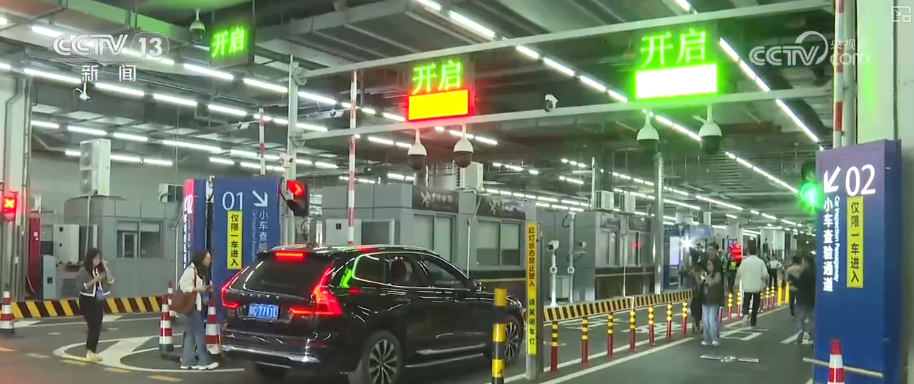
Core Points - The "Yue Car Southbound" policy officially implemented on November 15, allowing approved Guangdong private car owners to drive into Hong Kong via the Hong Kong-Zhuhai-Macao Bridge [1][3] - The policy enhances the connectivity between Guangdong and Hong Kong, contributing to the realization of the Greater Bay Area's "one-hour living circle" [6] - A one-stop system for vehicle customs clearance has been established, allowing for efficient processing of vehicles and drivers through online application [6][11] Summary by Sections - **Implementation Details** - The first Guangdong vehicle successfully passed through customs and border inspection, marking the official launch of the "Yue Car Southbound" policy [3] - The customs and border inspection departments have set up five dedicated clearance lanes for outbound vehicles, enabling automatic verification of vehicle and driver information [6] - **Convenience Measures** - Drivers can use electronic entry-exit documents such as the Mainland Resident Travel Permit to Hong Kong and Macau, allowing for self-service customs clearance through the one-stop channel [8] - The policy includes plans for a parking lot at the Hong Kong port and will accept applications starting November 1, 2025, with full implementation on November 15 and December 23 [11] - **Economic and Social Impact** - The "Yue Car Southbound" policy is expected to strengthen the emotional and economic ties between Guangdong, Hong Kong, and Macau, facilitating increased vehicle flow between the regions [11]
今年暑运广深港高铁跨境客流同比增幅16.7%
Zhong Guo Xin Wen Wang· 2025-09-01 07:48
Core Insights - The cross-border passenger flow of the Guangzhou-Shenzhen-Hong Kong High-Speed Rail during the summer transportation period reached 6.124 million, representing a year-on-year increase of 16.7% [1] - Shenzhen Railway's total passenger arrivals and departures during the summer period amounted to 37.236 million, a year-on-year increase of 7.0% [1][2] - The peak passenger flow was recorded at Shenzhen North Station with 26.126 million passengers, showing a year-on-year increase of 6.1% [1] Passenger Flow Details - The passenger flow from Hong Kong to Shenzhen accounted for 48.7% of the total outbound traffic from Hong Kong to the mainland, while passengers traveling from Shenzhen to Hong Kong made up 49% of the total inbound traffic to Hong Kong [1] - "Dual-city commuters" represent 30% of the cross-border passenger flow, with major demands arising from cross-border tourism, business exchanges, and family visits, contributing to the formation of the Greater Bay Area's "one-hour living circle" [1] Ticketing and Services - The introduction of "regular tickets" and "multiple-use tickets" on the Guangzhou-Shenzhen-Hong Kong High-Speed Rail, Xiamen-Shenzhen High-Speed Rail, and other lines caters to the high-frequency travel needs of commuters [1] - The cross-border train service "Flexible Travel" covers stations from Hong Kong West Kowloon to Shenzhen North and Futian, allowing passengers to change their tickets for free up to three times, serving over 23,000 travelers during the summer period [1]
广深港高铁跨境客流破两千万,大湾区一小时生活圈加速形成
Nan Fang Du Shi Bao· 2025-08-22 08:29
Core Insights - The Guangzhou-Shenzhen-Hong Kong High-Speed Rail is a vital transportation link in the Guangdong-Hong Kong-Macau Greater Bay Area, showing significant growth in cross-border passenger flow [1][2][3] Passenger Flow Statistics - As of August 21, 2025, the rail service has transported 20.088 million cross-border passengers this year, marking a 16.2% increase year-on-year [1][2] - During the summer travel period (July 1 to August 21), the service carried 5.039 million passengers, with a daily average of 97,000 [3][4] - Peak travel days exceeded 100,000 passengers on 59 occasions, primarily during weekends and holidays, indicating a strong demand for leisure and family visits [2][3] Directional Passenger Trends - From Hong Kong to mainland China, 9.761 million passengers were recorded, a 15% increase, while 10.327 million traveled from mainland to Hong Kong, reflecting a 17.3% growth [2][3] - Hong Kong to Shenzhen accounted for 38.4% of total mainland passenger flow, while Shenzhen to Hong Kong represented 38.8% of total outbound traffic [2][3] Summer Travel Insights - The highest single-day passenger count during the summer was 134,000 on August 17, coinciding with major entertainment events in both cities [3] - The majority of passengers traveling from Hong Kong to mainland China were headed to Guangdong Province, with Shenzhen and Guangzhou being the primary destinations [3] Service Enhancements - The rail service has improved its ticketing options, promoting regular and multi-ride tickets to cater to diverse travel needs [5] - Enhanced passenger services include online and offline ticket purchasing, free charging stations, air purification systems, and dedicated facilities for families and individuals with special needs [5] - Continuous service upgrades aim to strengthen the "one-hour living circle" in the Greater Bay Area, enhancing overall travel experience [5]