
粤港澳大湾区融合

Search documents
广州时隔27年将重启赛马,能否解锁内地赛马产业新起点
Mei Ri Jing Ji Xin Wen· 2026-02-25 15:02
Core Viewpoint - Guangzhou is set to restart horse racing after 27 years, with the first regular international standard speed horse racing event scheduled for October 31, 2026, marking a significant development in the mainland horse racing industry [1][2][4]. Group 1: Historical Context - Guangzhou previously explored horse racing in the 1990s, hosting 757 races before ceasing operations in 1999 due to issues related to gambling and regulatory concerns [2]. - The initial attempt at horse racing faced challenges due to the lack of a clear legal framework and the rapid pace of local initiatives outstripping national regulatory designs [2]. Group 2: Current Developments - The new horse racing project in Guangzhou is backed by the Hong Kong Jockey Club and involves the establishment of a "non-specified equine disease zone," facilitating cross-border horse transportation between mainland China and Hong Kong [3]. - The upgraded Conghua Racecourse, covering 150 hectares, has been operational since 2018 and serves as a training center for thoroughbreds, including top racehorses from Hong Kong [3]. Group 3: Strategic Planning - The plan to restart horse racing has been in the works for several years, with the 2019 Guangdong-Hong Kong-Macau Greater Bay Area Development Plan emphasizing the promotion of equestrian sports and related industries [4]. - A framework cooperation agreement was signed in 2021 between the Hong Kong Jockey Club and the Guangzhou government to introduce international horse racing events at the Conghua Racecourse [4]. Group 4: Future Prospects - The successful operation of the Conghua Racecourse and the regular international racing events could signify a new era for the mainland equestrian industry, with the potential to create a stable event cycle and a complete industry chain [6]. - Key factors for establishing a stable racing schedule include public education on horse racing, the creation of a consistent racing rhythm, and the development of an industry chain that encompasses breeding, training, and cultural education [6]. - The Conghua Racecourse has already created over 1,100 jobs, with approximately 90% of employees being local residents, earning an average monthly salary of 7,000 to 8,000 yuan [6].
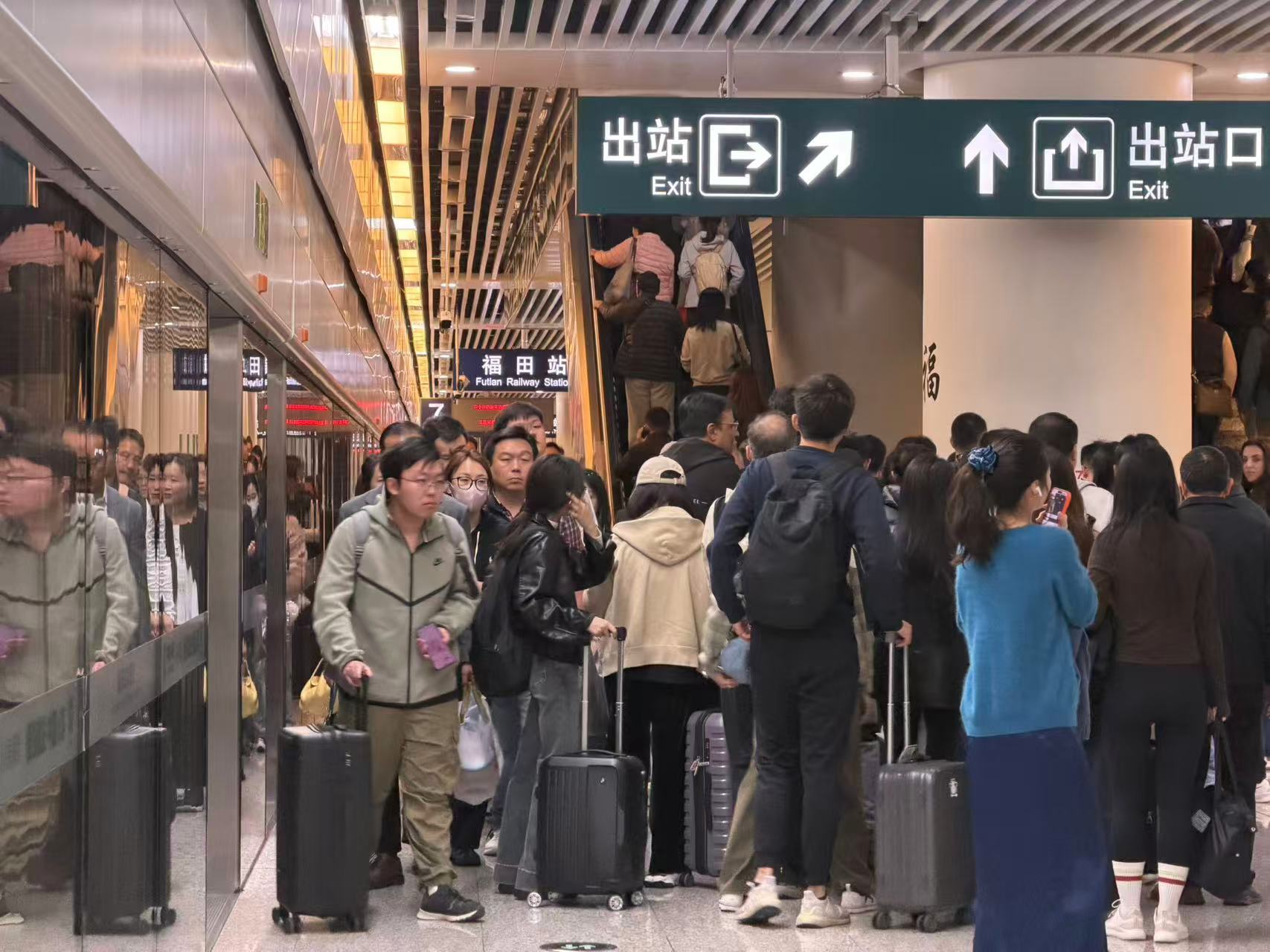
广深港高铁1月跨境客流263.8万人次
Xin Lang Cai Jing· 2026-02-02 10:51
Group 1 - The core viewpoint of the articles highlights the significant increase in cross-border passenger flow via the Guangzhou-Shenzhen-Hong Kong Express Rail Link, with a total of 2.638 million trips recorded from January 1 to 31, indicating strong demand for business and leisure travel [1][2] - The passenger flow from Hong Kong to the mainland reached 1.234 million, primarily directed towards key cities in the Greater Bay Area such as Shenzhen, Guangzhou, and Dongguan, while the flow from the mainland to Hong Kong was 1.404 million [1][2] - To accommodate the growing demand, the railway department operated an average of 213 train sets daily, effectively supporting cross-border travel needs [1][2] Group 2 - The surge in passenger flow is a direct result of the ongoing strengthening of "hard connectivity" and deepening of "soft connections" within the Guangdong-Hong Kong-Macao Greater Bay Area [2] - The Guangzhou-Shenzhen-Hong Kong Express Rail Link is increasingly recognized for its role as a vital transportation artery between the mainland and Hong Kong, enhancing its "accelerator" effect [2] - In response to the rising passenger numbers and higher service standards, Shenzhen Railway is actively optimizing service measures, including dynamic train operation adjustments, multi-ticket service promotion, and improved multilingual service levels to create a safe, efficient, and comfortable cross-border travel experience [2]

港珠澳大桥往来旅客人次破亿
Xin Lang Cai Jing· 2026-01-07 23:22
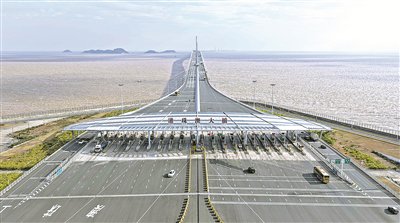
Core Insights - The number of travelers crossing the Hong Kong-Zhuhai-Macao Bridge has surpassed 100 million, with the second 50 million achieved in just 1 year and 8 months, compared to over 5 years for the first 50 million [1] - By 2025, the annual traveler count through the bridge is projected to reach 31.34 million, marking a growth of over 140% compared to 2019 [1] Group 1 - The Hong Kong-Zhuhai-Macao Bridge, measuring 55 kilometers, is the longest sea-crossing bridge in the world, significantly reducing travel time from Hong Kong to Zhuhai and Macao from 3 hours to approximately 45 minutes since its opening in October 2018 [1] - Since the bridge's opening, over 58.7% of the total traveler volume consists of residents from Hong Kong and Macao, totaling more than 58.73 million [1] - The number of vehicles from Hong Kong and Macao crossing the bridge has exceeded 8.4 million, indicating a shift in daily commuting habits for residents [1] Group 2 - The Zhuhai port of the Hong Kong-Zhuhai-Macao Bridge operates 24 hours, providing seamless connectivity with Hong Kong International Airport, which has led to an increase in international travelers choosing this route [2] - By 2025, the number of foreign travelers passing through the bridge is expected to exceed 569,000, reflecting a year-on-year growth of over 28.7% [2]
港珠澳大桥出入境 客流量突破1亿人次
Xin Lang Cai Jing· 2026-01-07 20:19
Core Insights - The Hong Kong-Zhuhai-Macao Bridge has facilitated over 100 million passenger trips since its opening in October 2018 until January 6, 2026 [2] - The bridge, measuring 55 kilometers, is the longest sea-crossing bridge in the world, significantly reducing travel time between Hong Kong, Zhuhai, and Macao from 3 hours to approximately 45 minutes [2] - The implementation of policies such as "Macao vehicles going north," "Hong Kong vehicles going north," and "Guangdong vehicles going south" has accelerated the integration of the Guangdong-Hong Kong-Macao Greater Bay Area [2] Summary by Categories - **Passenger Traffic** - The bridge has seen a total of over 100 million passenger trips since its opening [2] - **Infrastructure** - The bridge spans 55 kilometers, making it the longest sea-crossing bridge globally [2] - **Travel Efficiency** - Travel time between Hong Kong and Zhuhai/Macao has been reduced from 3 hours to about 45 minutes [2] - **Policy Impact** - Policies facilitating vehicle movement across regions have contributed to the accelerated integration of the Greater Bay Area [2]
经港珠澳大桥出入境人数突破1亿人次
Yang Guang Wang· 2026-01-07 02:11
Core Insights - The number of travelers crossing the Hong Kong-Zhuhai-Macao Bridge has surpassed 100 million, indicating accelerated integration within the Guangdong-Hong Kong-Macao Greater Bay Area [1][2] - The bridge, which opened in October 2018, has significantly reduced travel time from Hong Kong to Zhuhai and Macao from 3 hours to approximately 45 minutes [1] - The bridge's passenger traffic reached 50 million in over 5 years, while the next 50 million was achieved in just about 1 year and 8 months [1] Passenger Traffic and Policies - Daily average vehicle crossings at the bridge exceed 18,000, with weekends and holidays often surpassing 22,000, and a single-day record of 28,000 [1] - The implementation of policies such as "Hong Kong vehicles northbound" and "Macao vehicles northbound" has led to over 8.4 million crossings by vehicles with Hong Kong and Macao license plates [1] - The "Guangdong vehicles southbound" policy has facilitated over 800 private car registrations for residents traveling to Hong Kong within two months of its implementation [2] Technological Enhancements - The Zhuhai border inspection station has upgraded to a "one-stop" system and dynamically expanded inspection lanes to ensure safe and orderly passenger and vehicle flow [2] - New technological services, such as facial recognition for fast passage and online filling of entry cards for foreigners, have been introduced to enhance the travel experience [2]
港珠澳大桥出入境客流量突破1亿人次
Zhong Guo Xin Wen Wang· 2026-01-06 14:06
Core Insights - The passenger flow through the Hong Kong-Zhuhai-Macao Bridge has surpassed 100 million, indicating significant cross-border movement among the three regions [1] - By 2025, the annual passenger flow is projected to reach 31.34 million, exceeding 30 million for the first time, representing a growth of over 140% compared to 2019 [1] - The increase in cross-border travel is attributed to policy incentives and improved services, leading to more residents from Hong Kong and Macao choosing to work and settle in mainland China [1] Group 1: Passenger Statistics - As of now, over 58.7% of the total passenger flow consists of Hong Kong and Macao residents, with nearly 18 million expected to cross by 2025, marking a nearly 300% increase from 2019 [1] - The number of private vehicles from Hong Kong and Macao crossing the bridge has exceeded 8.4 million, with over 209,000 drivers and 174,000 vehicles registered for cross-border travel [1] Group 2: Vehicle Traffic - The average daily vehicle crossings at the port exceed 18,000, with weekend and holiday traffic surpassing 22,000, peaking at 28,000 on single days [2] - Since the opening of the port, over 39.38 million mainland travelers have crossed, with projections of over 12.57 million by 2025, setting a new record since the port's inception [2] Group 3: Travel Trends - In addition to traditional travel purposes like tourism and family visits, there is a notable increase in business, labor, and student travel, indicating a growing trend of cross-border living and working among residents [2]
西九龙站跨境旅客逼近1亿人次
Shen Zhen Shang Bao· 2025-12-29 18:15
Core Insights - The West Kowloon Station port has served over 99.987 million passengers, nearing the milestone of 100 million, making it the youngest port in Shenzhen to reach this level and the first high-speed rail port in the country to exceed 100 million inbound and outbound travelers [1] Group 1: Passenger Flow Statistics - The passenger flow at West Kowloon Station has seen significant growth, increasing from 75,800 passengers on the first day of operation to a peak of 137,600 passengers per day [1] - In 2023, the port's annual passenger flow exceeded 30 million on December 23, with record daily entries of 84,000 from Hong Kong on December 25 and 83,000 outbound to Hong Kong on December 27 [1] - The cumulative passenger flow since the port's opening on September 23, 2018, has surpassed 99.987 million [1] Group 2: Passenger Composition and Trends - The passenger composition includes 14.07 million Hong Kong residents and 14.71 million mainland travelers, indicating frequent two-way movement and a more diverse passenger structure [1] - International and other travelers have increased to 1.32 million, reflecting a 31% year-on-year growth, showcasing the port's influence as an international hub [1] Group 3: Infrastructure and Policy Support - The port's reach has expanded from 44 to 96 direct stations, supported by 73,000 high-speed train trips, creating a "half-hour living circle" that significantly reduces travel time for cross-border trips [2] - A cross-departmental coordination mechanism has been established to manage passenger flow effectively, reducing average customs clearance time by 30%, with over 80% of travelers completing clearance in under 5 minutes [2] - Policies such as "one permit for multiple entries" and the nationwide processing of Hong Kong and Macau travel permits have enhanced connectivity and integration between Shenzhen and Hong Kong [2]
“粤车南下”畅通行 大湾区融合“零距离”
Xin Hua She· 2025-12-24 07:20
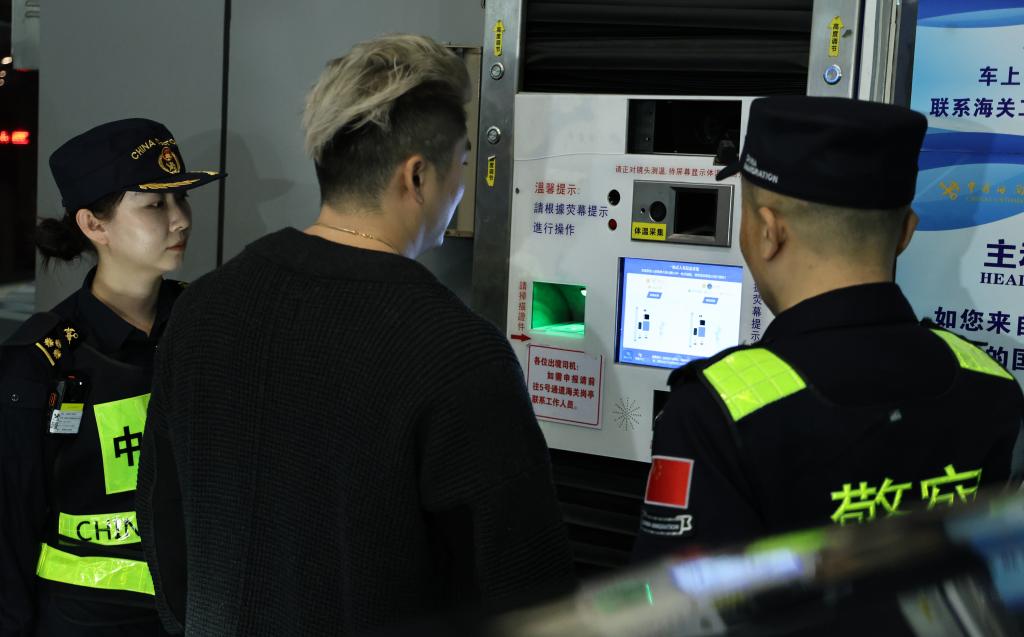
Core Viewpoint - The implementation of the "Yue Car Southbound" policy enhances cross-border travel efficiency between Guangdong and Hong Kong, allowing private vehicles from Guangdong to enter Hong Kong, thus promoting regional economic integration and tourism [1][5]. Group 1: Policy Implementation - The "Yue Car Southbound" policy officially took effect at midnight on December 23, allowing private car owners from Guangdong to enter Hong Kong via the Hong Kong-Zhuhai-Macao Bridge [1]. - Initially, the policy permits 100 vehicles per day from four cities: Guangzhou, Zhuhai, Jiangmen, and Zhongshan, with plans to expand to other cities in six months [1]. - The first vehicle crossed the border within 10 minutes of the policy's implementation, showcasing the efficiency of the new "one-stop" customs clearance process [1]. Group 2: User Experience - Car owners expressed excitement about the convenience of self-driving, which allows for a more scenic and flexible travel experience compared to previous bus or ferry options [1][2]. - The new border inspection system has been adapted to facilitate smoother entry for vehicles, enhancing the overall travel experience for users [2]. Group 3: Infrastructure Development - A new electric vehicle charging station and information center opened at Tung Chung, providing nine fast charging points and various payment options, supporting the needs of cross-border travelers [5][6]. - The Hong Kong government emphasizes that this initiative not only benefits residents but also strengthens Hong Kong's role as a transportation hub, promoting economic integration and tourism [5]. Group 4: Cross-Border Statistics - As of December 23, 402 vehicles had completed the customs clearance process under the new policy, indicating strong initial interest [8]. - Since the implementation of the "Hong Kong Cars Northbound" policy on July 1, over 3.86 million vehicles have crossed the border, with a 36% year-on-year increase in traffic this year [8].
特写:“粤车南下”畅通行 大湾区融合“零距离”
Xin Hua She· 2025-12-24 02:37
Core Viewpoint - The implementation of the "Yue Car Southbound" policy enhances connectivity within the Guangdong-Hong Kong-Macao Greater Bay Area, allowing private vehicles from Guangdong to enter Hong Kong, thus promoting cross-border travel and economic integration [1][4][6]. Group 1: Policy Implementation - The "Yue Car Southbound" policy officially took effect at midnight on December 23, allowing private car owners from Guangdong to enter Hong Kong via the Hong Kong-Zhuhai-Macao Bridge [1][6]. - Initially, the policy permits 100 vehicles per day from four cities: Guangzhou, Zhuhai, Jiangmen, and Zhongshan, with plans to expand to other cities in the province after six months [3][6]. - The first vehicle to cross was an electric car, highlighting the excitement and historical significance of the event for the car owner [1][3]. Group 2: Travel Efficiency - The new policy significantly reduces travel time; previously, traveling to Hong Kong by bus or ferry took about three hours, while self-driving now takes only half that time [3][4]. - The "one-stop" customs clearance process has been optimized, allowing for quicker vehicle inspections and document checks, enhancing the overall travel experience [4][6]. Group 3: Infrastructure Development - A new electric vehicle charging station and information center has been established at Zhuhai, providing nine fast charging points and various payment options, supporting the needs of cross-border travelers [6][7]. - The Hong Kong government has also improved charging infrastructure, with 40 national standard charging devices and over 900 mid-speed charging piles available in various parking lots [8]. Group 4: Economic and Social Impact - The policy is expected to boost tourism, economic activities, and cultural exchanges between Guangdong and Hong Kong, facilitating a "one-hour living circle" for residents [6][8]. - Experts believe that the "Yue Car Southbound" initiative will not only benefit the public but also promote a "soft connection" in cross-border mechanisms, paving the way for a unified vehicle management platform [8].
车通了,心更近了
Xin Lang Cai Jing· 2025-12-24 00:16
Core Insights - The implementation of the "Yue Car Southbound" policy marks a historic milestone in facilitating vehicle exchanges between Guangdong and Hong Kong, transitioning to a new phase of "two-way direct access" [1] - The policies have significantly enhanced the attractiveness of the Greater Bay Area, enabling a vibrant "one-hour living circle" and stimulating new economic momentum [1] Group 1 - The "Yue Car Southbound" policy complements previous policies such as "Macau Cars Northbound" and "Hong Kong Cars Northbound," which have already shown strong results with over 2.86 million crossings recorded within two years of the latter's implementation [1] - The physical connection provided by the Hong Kong-Zhuhai-Macao Bridge is supported by regulatory frameworks that facilitate seamless travel, showcasing the collaborative efforts in breaking down barriers between the three regions [2] - The convenience of cross-border travel is expected to deepen emotional connections among residents of the Greater Bay Area, transforming the concept of dual-city living into reality [2] Group 2 - The integration of transportation and regulatory mechanisms is creating a world-class bay area characterized by interconnected roads, people, and businesses, accelerating the realization of a cohesive Greater Bay Area [3] - The "one-stop" inspection process at the ports and online appointment platforms exemplify the successful implementation of "soft connectivity," enhancing the ease of cross-border travel [2] - The ongoing policies and infrastructure developments are not only improving physical access but also fostering a shared identity among the residents of the Greater Bay Area [2]