
中国—东盟自贸区3.0版

Search documents
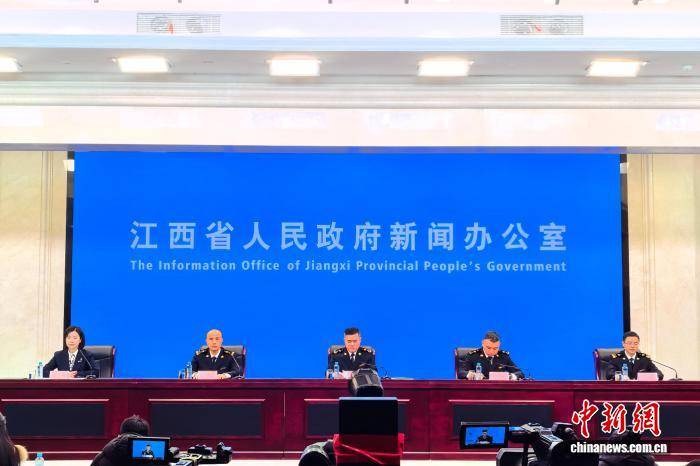
2025年江西对东盟进出口同比增34.9%
Zhong Guo Xin Wen Wang· 2026-01-21 07:42
Core Insights - In 2025, Jiangxi's import and export to ASEAN is projected to increase by 34.9% year-on-year [1] - The total import and export value to countries involved in the Belt and Road Initiative is expected to reach 265.82 billion yuan, marking a growth of 13.9% [1] - The export of "new three items" including electric vehicles, photovoltaic products, and lithium batteries is anticipated to be a significant driver, with exports reaching 27.44 billion yuan, an increase of 89.1% compared to 2020 [1] Group 1 - Jiangxi's import and export to ASEAN is expected to grow significantly, with a focus on high-quality Belt and Road cooperation and the implementation of the China-ASEAN Free Trade Area 3.0 [1] - The average annual growth rate of Jiangxi's import and export value to Belt and Road countries during the 14th Five-Year Plan period is 6.9% [2] - The import and export to emerging markets such as ASEAN, Latin America, and Africa have shown robust growth rates of 11.8%, 13.7%, and 6% respectively [2] Group 2 - The import and export of intermediate goods in Jiangxi is projected to reach 348.06 billion yuan, with a growth of 4.8% [1] - Notable growth in imports and exports to ASEAN and Africa, with increases of 31.8% and 12.6% respectively [1] - Over the past five years, Jiangxi has established trade connections with over 200 countries and regions [1]
2025年江西外贸平稳增长 对东盟进出口大增
Sou Hu Cai Jing· 2026-01-21 07:32
Core Viewpoint - Jiangxi's foreign trade is experiencing steady growth in 2025, with significant increases in exports and imports, particularly with ASEAN countries [3][4]. Group 1: Trade Performance - In 2025, Jiangxi's total foreign trade import and export value reached 482.3 billion yuan, a year-on-year increase of 2.7% [3]. - Exports amounted to 309.78 billion yuan, growing by 1.8%, while imports were 172.52 billion yuan, increasing by 4.3% [3]. - From June 2025, Jiangxi's foreign trade began to rebound, with monthly imports and exports consistently exceeding 40 billion yuan for seven consecutive months [3]. Group 2: Regional Trade Growth - Jiangxi's trade with countries involved in the Belt and Road Initiative reached 265.82 billion yuan, marking a 13.9% increase [3]. - Trade with ASEAN countries surged by 34.9%, while trade with Latin America and Africa grew by 10.9% and 11.1%, respectively [3]. - Intermediate goods trade saw a total of 348.06 billion yuan, with a growth rate of 4.8%, and significant increases in trade with ASEAN and Africa at 31.8% and 12.6% [3][4]. Group 3: Export Drivers - The "New Three Products" (electric vehicles, photovoltaic products, and lithium batteries) became key drivers of Jiangxi's exports, totaling 27.44 billion yuan, an increase of 89.1% compared to 2020 [4]. - The number of foreign trade enterprises in Jiangxi reached 7,412, an increase of 11.2%, with production enterprises growing by 7.6% [4]. - The total value of imports and exports for production enterprises was 389.91 billion yuan, reflecting a growth of 5.2% [4]. Group 4: Long-term Growth Trends - During the 14th Five-Year Plan period, Jiangxi's trade with Belt and Road countries saw an average annual growth of 6.9%, with emerging markets like ASEAN, Latin America, and Africa growing at 11.8%, 13.7%, and 6% respectively [5].

(经济观察)破万亿美元后再蓄新动能 中国—东盟经贸迎新局
Xin Lang Cai Jing· 2026-01-17 08:25
Core Viewpoint - China's trade with ASEAN is projected to exceed $1 trillion by 2025, indicating strong internal momentum for economic cooperation despite complex external environments [1][4]. Group 1: Trade Dynamics - Experts believe that many products exported from China to ASEAN are irreplaceable, leading to a continuous increase in bilateral trade, with efforts to improve trade imbalances [3][4]. - The upgrading of the China-ASEAN Free Trade Area to version 3.0 will enhance cooperation in supply chain connectivity and standard alignment, particularly benefiting small and medium-sized enterprises (SMEs) which make up 90% of the trade [3][5]. Group 2: Economic Growth Drivers - The shift of the global economic center towards Southeast Asia is expected to drive a new round of growth in bilateral trade, supported by strong import demand from the region's expanding economy and infrastructure [4]. - Artificial Intelligence (AI) is identified as a key engine for deepening cooperation, facilitating digital infrastructure connectivity and enhancing cross-border logistics and payment systems [4][5]. Group 3: Future Trade Opportunities - Future trade between China and ASEAN is anticipated to include new sectors such as AI applications, embodied robots, and innovative pharmaceuticals, which are expected to generate significant trade increments [5]. - The implementation of the Regional Comprehensive Economic Partnership (RCEP) is expected to yield substantial benefits for regional cooperation, with the China-ASEAN Free Trade Area 3.0 version creating synergistic effects with RCEP [5].
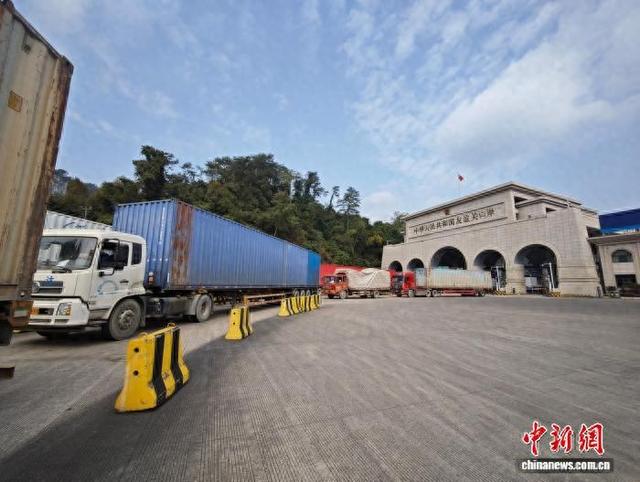
中国—东盟自贸区3.0版开启区域合作新篇章
Zhong Guo Xin Wen Wang· 2025-12-24 11:15
Core Viewpoint - The China-ASEAN Free Trade Area 3.0 version is set to enhance regional economic integration amidst rising global trade protectionism and geopolitical tensions, marking a new chapter in cooperation between China and ASEAN [1][2]. Group 1: Trade Relations - In the first 11 months of this year, trade between China and ASEAN reached $952.84 billion, reflecting a year-on-year growth of 7.7%, continuing a five-year trend of mutual partnership as the largest trading partners [2]. - The trade volume has significantly increased from less than $300 billion at the establishment of the Free Trade Area 1.0 to nearly $1 trillion today, indicating a substantial deepening of cooperation [2]. Group 2: Institutional Framework - The recently signed China-ASEAN Free Trade Area 3.0 upgrade protocol goes beyond tariff reductions, incorporating topics such as digital economy, green economy, and supply chain connectivity [2]. - The shift in industrial cooperation from cost-driven to collaborative industrial chain and technological upgrades is highlighted, marking a transition to a new phase of institutional openness based on rules and standards [2]. Group 3: Future Cooperation - Key future initiatives include expanding local currency settlements and promoting cross-border payment system integration to reduce reliance on a single currency and enhance financial autonomy [5]. - There is significant potential for cooperation in areas like artificial intelligence, smart cities, and capacity building, which are less sensitive to geopolitical tensions and can yield tangible development benefits [5].
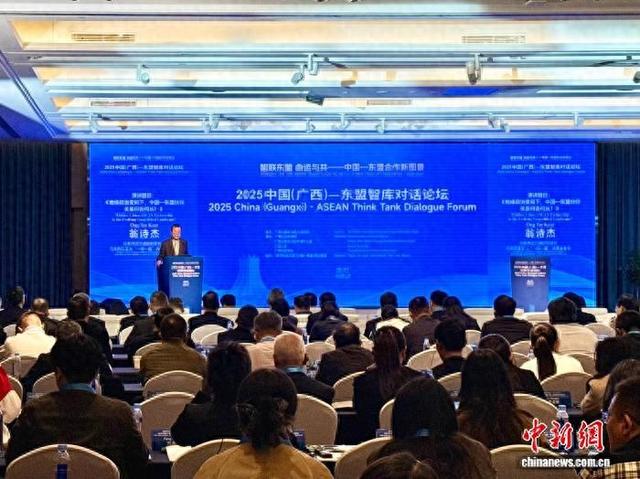
2025中国(广西)—东盟智库对话论坛在南宁举行
Xin Lang Cai Jing· 2025-12-21 05:42
Core Viewpoint - Guangxi is seizing the opportunity presented by the national implementation of the AI capability construction plan to advance technological innovation cooperation and establish itself as an AI cooperation hub facing ASEAN [1][3]. Group 1: Forum Overview - The 2025 China (Guangxi)-ASEAN Think Tank Dialogue Forum opened in Nanning, focusing on themes such as international situation changes, the China-ASEAN Free Trade Area 3.0, and AI cooperation [3][5]. - The forum aims to deepen cooperation between China and ASEAN, contributing to regional prosperity and stability while offering valuable insights for global governance reform [3][4]. Group 2: Key Discussions - Discussions emphasized the need for policy coordination and innovative cooperation mechanisms to create a new landscape for practical cooperation between China and ASEAN [3][4]. - The importance of enhancing technological exchanges and bridging the digital divide was highlighted to stimulate new cooperation dynamics [3][4]. Group 3: Strategic Initiatives - The "Digital Silk Road" (China-ASEAN) Think Tank Alliance Roundtable Meeting was held, resulting in the release of the "Digital Silk Road" (China-ASEAN) Think Tank Alliance AI Cooperation Nanning Initiative [5]. - The forum is designed to gather wisdom and experience from various sectors in China and ASEAN, aiming to produce collaborative proposals for AI applications and regional cooperation [5].
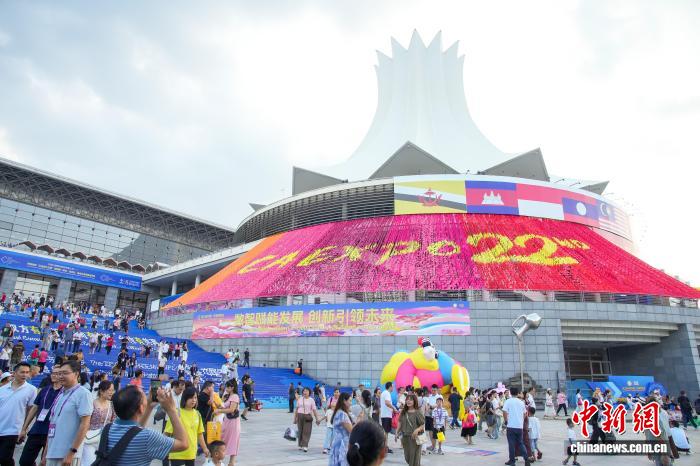
购在中国(广西站)暨广西丝路电商嘉年华活动在南宁启幕陈刚陈海泉等致辞 韦韬作主题发言
Guang Xi Ri Bao· 2025-12-21 01:51
Core Viewpoint - The event "Purchasing in China (Guangxi Station) and Guangxi Silk Road E-commerce Carnival" aims to enhance cooperation between Guangxi and ASEAN countries, leveraging the unique geographical advantages of Guangxi and the recent signing of the China-ASEAN Free Trade Area 3.0 upgrade protocol to promote trade and investment opportunities [1][2][3]. Group 1: Event Overview - The event was inaugurated in Nanning, attended by key officials including the Secretary of the Guangxi Autonomous Region and ambassadors from ASEAN countries [1][4]. - The event serves as a platform for deepening cooperation in trade, digital economy, and green economy between Guangxi and ASEAN nations [3][4]. Group 2: Key Statements - Chen Gang highlighted Guangxi's role as a frontier for China-ASEAN cooperation, emphasizing the region's commitment to open up and embrace global opportunities [1]. - Chen Haiquan noted the significant growth in trade between ASEAN countries and China since the establishment of the China-ASEAN Free Trade Area, with Guangxi playing a crucial role in international trade routes [2]. - Rahmani from Brunei expressed the potential for deepening bilateral cooperation, particularly in digital economy and e-commerce [2]. - Pham Thanh Binh from Vietnam emphasized the importance of enhancing transportation infrastructure and trade channels between Vietnam and Guangxi [2]. Group 3: Future Cooperation and Initiatives - The event aims to promote the "East ASEAN Production + Guangxi Distribution + China Sales" trade model, enhancing market access and cooperation in various sectors [3][4]. - The activities are designed to innovate consumer experiences and strengthen cross-border e-commerce through AI technology [4]. - The event includes six thematic sections focused on policy dialogue, consumption experience, and cultural exchange to foster deeper trade cooperation [4].
中国—东盟智库共探自贸区3.0版新机遇
Xin Lang Cai Jing· 2025-12-20 14:59
Group 1 - The forum focuses on exploring opportunities brought by the China-ASEAN Free Trade Area 3.0, aiming to deepen cooperation between China and ASEAN countries [1][2] - Key topics discussed include international situation changes, industrial linkage with the China-ASEAN Free Trade Area 3.0, digital empowerment, AI cooperation, and global South cooperation [1] - The upgraded agreement of the China-ASEAN Free Trade Area 3.0 covers critical areas such as digital economy, green economy, and supply chain connectivity, which are essential for ASEAN's development [1] Group 2 - ASEAN is identified as China's largest trading partner, with both sides having high economic complementarity, emphasizing the need for mutual connectivity and embracing new technologies for win-win development [2] - The forum also included a roundtable meeting for the "Digital Silk Road" (China-ASEAN) Think Tank Alliance, which released the "Nanning Initiative" for AI cooperation [2] - Discussions during the forum highlighted the importance of expanding connectivity beyond traditional infrastructure to include sectors like telecommunications, technology, finance, and standardization [2]
东盟国家冀借广西渠道扩大对华贸易
Xin Lang Cai Jing· 2025-12-20 08:46
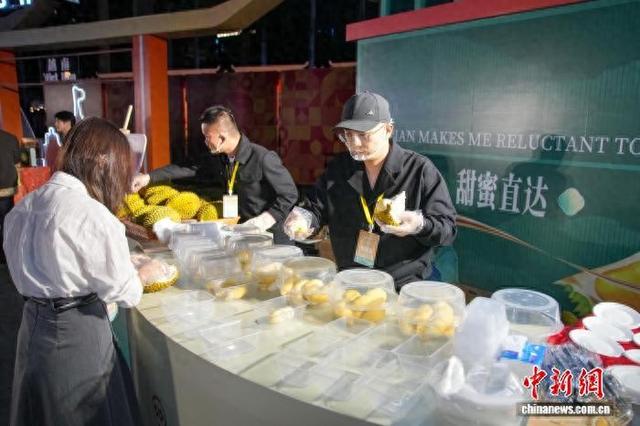
Group 1 - The core viewpoint of the article emphasizes that ASEAN countries are looking to leverage Guangxi as a channel to expand trade with China, highlighting the region's role as a frontier for cooperation between China and ASEAN [1][3]. - Vietnamese Ambassador to China, Pham Qingping, stated that Vietnam aims to enhance cooperation with Guangxi across various sectors, particularly in improving transportation infrastructure to facilitate the export of Vietnamese agricultural products to China [3]. - The event showcased durians from ASEAN countries, indicating a focus on promoting regional agricultural products in the Chinese market, with Thailand's consul noting that a significant portion of durians enters China through Guangxi [3]. Group 2 - The event featured six major sections, including diverse performances and creative displays, aimed at presenting the unique products of China and ASEAN countries, alongside a product selection and business negotiation meeting [4]. - The promotion of the China-ASEAN online New Year goods festival is part of the initiative to help ASEAN quality products expand their sales in China through e-commerce channels [4]. - Singapore's Ambassador to China highlighted the International Land-Sea Trade Corridor as an efficient trade route connecting Southeast Asia with China's western regions, emphasizing the need for continued collaboration with Guangxi to explore new trade and investment pathways [3].
许宁宁:海南自贸港全岛封关激活中国—东盟合作新动能
2 1 Shi Ji Jing Ji Bao Dao· 2025-12-19 09:05
Core Insights - The official launch of the Hainan Free Trade Port's full island closure operation marks a significant milestone in China's high-level opening-up process, demonstrating China's firm commitment to expanding its openness and injecting new momentum into regional and global economic growth [2] Trade and Economic Cooperation - In the first 11 months of this year, China's trade with RCEP member countries reached 12.54 trillion yuan, a year-on-year increase of 5.4%, accounting for 30.4% of China's total foreign trade [2] - Exports to RCEP countries amounted to 6.81 trillion yuan, up 10.1%, while imports were 5.73 trillion yuan, a slight increase of 0.5% [2] - Hainan's trade with RCEP countries is expected to grow significantly, with imports and exports projected to reach 102.98 billion yuan in 2024, a growth of 28.2%, and trade with ASEAN expected to reach 57.91 billion yuan, growing by 62.3% [4] Strategic Importance of Hainan - Hainan's closure operation establishes a framework for a free trade port, facilitating the free movement of goods, capital, and personnel, making it a crucial hub connecting the Chinese market with ASEAN supply chains [3] - The province is positioned to enhance its role as a "connector" for industrial cooperation, leveraging its tax and processing policies to attract ASEAN products and facilitate Chinese enterprises' investments in the region [3][7] Future Opportunities - The recent consensus reached at the fifth RCEP leaders' meeting and the advancement of the China-ASEAN Free Trade Agreement to version 3.0 are favorable conditions for Hainan's development and international cooperation [5] - The completion of the China-ASEAN Free Trade Area 3.0, which includes new chapters on digital economy, green economy, and supply chain connectivity, will promote deeper regional economic integration [6] Industry Cooperation - Industry cooperation is emphasized as a key focus for leveraging RCEP opportunities, with a call for Hainan to enhance its industrial cooperation level and establish itself as a hub for RCEP industry connections [7] - The provincial government and industry associations are encouraged to align local industrial policies with those of RCEP countries to identify complementary opportunities and implement cooperative plans [7][8]
专访东盟贸促会会长:3.0时代,中国与东盟合作如何开新局?
Zhong Guo Xin Wen Wang· 2025-12-02 07:16
Core Insights - The signing of the China-ASEAN Free Trade Area 3.0 upgrade protocol marks a new phase of economic cooperation that is more open, efficient, and modernized [1] - In 2024, the bilateral trade volume between China and ASEAN is projected to reach $982.3 billion, a 17-fold increase since the establishment of the free trade area in 2002 [1] Group 1: Trade and Economic Cooperation - The 3.0 version of the agreement addresses the diverse trade and investment needs of ASEAN economies by enhancing rule alignment and standard recognition, facilitating traditional trade [2] - The cooperation has evolved from "vertical division of labor" to "three-dimensional collaboration," linking China's high-end manufacturing with ASEAN's intermediate goods processing [2] - The integration of digital and green economies into the agreement creates new cooperation opportunities for economies at different development stages [2] Group 2: Emerging Fields and Industry Outlook - Future cooperation will focus on deep integration in the digital economy and comprehensive collaboration in the green economy [3] - The renewable energy, digital services, and modern agriculture sectors are highlighted as key areas for growth, with expectations for continued expansion in these fields [4] Group 3: Benefits for SMEs - The 3.0 version is expected to bring multiple benefits to enterprises, particularly small and medium-sized enterprises (SMEs), through simplified customs procedures and mutual recognition of standards [5] - A dedicated chapter for SMEs in the agreement aims to create a comprehensive support system, reducing cross-border transaction costs and facilitating better integration into regional value chains [5] Group 4: New Cooperation Models - Three innovative cooperation models are anticipated to inject new momentum into regional development: "co-creating rules and industries," "cross-border parks and capacity building," and "digital platforms for inclusive trade" [6][7] - These models aim to enhance collaboration between China and ASEAN, providing a more inclusive paradigm for global free trade agreements and addressing global development imbalances [7]