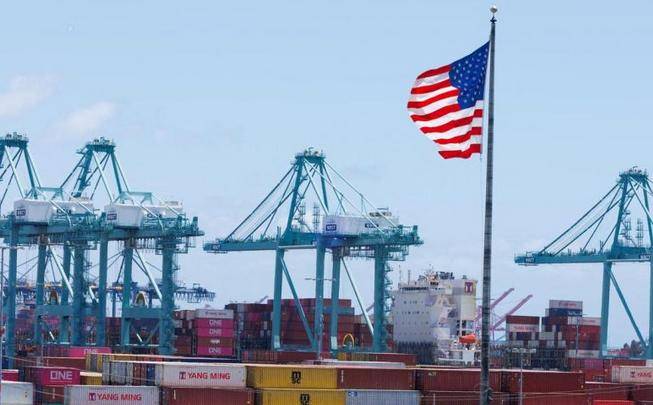
硬脱钩

Search documents
欧洲光伏90%靠中国,欧盟要强推禁令?德法西会反弹吗
Sou Hu Cai Jing· 2026-01-22 05:06
Group 1 - The EU is preparing a new proposal to shift from voluntary guidelines to mandatory regulations targeting Chinese suppliers, including telecom networks, security equipment, and solar systems [1] - The previous 5G security toolbox allowed member states to make their own decisions, leading to inconsistent implementations across countries, with some like Sweden and Germany tightening regulations while others like Spain and Greece continued using Huawei and ZTE due to cost and reliability [1] - The new proposal aims to unify regulations and impose penalties for using high-risk Chinese equipment in critical infrastructure, potentially leading to lawsuits and fines at the EU level [1] Group 2 - The EU's energy transition goals are at odds with the current supply chain realities, as over 90% of solar panels installed in the EU come from China, raising concerns about the feasibility of replacing these supplies without significant cost increases and project delays [3] - The push for strategic autonomy from China and the US is complicated by the lack of viable alternatives, leading to fears that a forced decoupling could harm the EU's green transition efforts [3] - The proposal's success depends on the reactions of member states, as national security is traditionally managed by individual countries, and the EU's attempt to enforce compliance may face strong resistance from nations like Germany and Spain [3] Group 3 - Telecom operators are particularly concerned about the financial burden of replacing Chinese equipment, which could cost billions of euros and slow down network development, ultimately impacting consumers through higher fees and reduced service quality [5] - Some countries, like Spain, are taking a pragmatic approach, with contracts in place that assert no security risks associated with Chinese suppliers, contrasting with the EU's more aggressive stance [5] - Germany's situation is sensitive due to the significant presence of Huawei equipment, and any forced timeline for equipment removal could lead to backlash from the government and industry, especially in a fragile economic environment [5] Group 4 - The proposal will undergo a lengthy legislative process, requiring approval from the EU Parliament and negotiations with member states, indicating that the path to implementation will be complex and contentious [7] - The debate reflects a clash between political correctness and economic rationality, with stakeholders weighing the importance of security against the potential costs and inefficiencies of strict regulations [7] - The overarching risk lies in potentially missing opportunities for digital and green advancements due to a focus on security, which could lead to greater inefficiencies and costs in the long run [7]



G7铁了心封锁稀土,北约秘书长突然改口:中国也算是北极国家!这波操作把美国整懵了
Sou Hu Cai Jing· 2026-01-19 07:17
Group 1 - The G7 finance ministers are determined to reduce imports of Chinese rare earths and are considering implementing a price floor to exclude China from the global supply chain, despite China holding 60% of global rare earth production and 58% of refining technology patents [1][3] - The refining cost of rare earths in China is only one-fourth of that in the United States, making it difficult for G7 countries to cut ties without impacting their own industries, particularly in automotive and wind energy sectors [1][3] - Countries like Germany and France recognize that their factories would face shutdowns without Chinese supplies, indicating that G7's aggressive stance may not translate into actionable policies [1][3] Group 2 - NATO Secretary General Jens Stoltenberg unexpectedly acknowledged China's status as a near-Arctic nation, which contrasts with previous Western positions and suggests a strategic shift to balance U.S. dominance in the Arctic [3][5] - The current geopolitical situation in the Arctic is tense, with the U.S. showing interest in Greenland, causing concern among European nations about U.S. intentions and the need for a collaborative approach involving China [3][5] - China's historical involvement in the Arctic, including signing the Svalbard Treaty in 1925 and conducting research at the Yellow River Station, legitimizes its role in Arctic affairs [5][7] Group 3 - The internal contradictions within Western alliances highlight a struggle over resource distribution and strategic interests, with G7's attempts to isolate China seen as ineffective [7][8] - The response strategy for China involves enhancing deep processing and technological capabilities in the rare earth sector, while maintaining lawful scientific cooperation in the Arctic [8]
稀土供应要“卡壳”?日本这回是真慌了!
Sou Hu Cai Jing· 2025-11-26 06:29
Group 1 - Japan's reliance on rare earths from China remains high, with over 60% dependency as of 2025, particularly for heavy rare earths essential for electric vehicles and semiconductors [2] - Japan has invested over 50 billion yen in deep-sea mining to extract rare earths, but the technology is complex and costs are significantly higher than land mining, with commercial viability still uncertain [2] - Efforts to develop rare earth-free magnets have not yielded satisfactory results, as performance is inferior or production costs are prohibitively high, making it difficult to meet current demand [2] Group 2 - Japan's attempts to reduce dependence on China for rare earths have been extensive but ineffective, with a focus on alternative sources without addressing technological shortcomings [4] - China controls 90% of global rare earth refining technology, which poses a significant challenge for Japan's strategy to diversify supply sources [4] - The situation highlights the importance of global cooperation and the need for countries to maintain resilient supply chains rather than pursuing decoupling strategies [4]
最后一刻,特朗普终于签字了!美国对华认输,再暂停24%关税90天(2)
Sou Hu Cai Jing· 2025-09-03 21:12
Group 1 - The trade negotiations between the US and China are currently stalled, which is seen as beneficial for China as it enhances its competitive position in global trade [1] - The US's inability to increase tariffs on Chinese goods means that the burden of tariffs will shift to other countries, thereby reducing their trade competitiveness and indirectly boosting China's competitiveness [1] - Trump's attempts to impose high tariffs on China are hindered by rising inflation and supply chain instability in the US, which makes Chinese products more accessible in the US market [1] Group 2 - The "tariff truce" between the US and China may influence upcoming US-Russia presidential talks, as Trump expresses a desire for a meeting between Putin and Zelensky [3] - Trump's signing of the "tariff truce" indicates his struggle to manage the trade conflict with China, leading him to seek a resolution in the Russia-Ukraine situation to free up resources for the trade battle [3] - Putin is likely aware of Trump's reliance on him for negotiations, which may allow him to leverage more conditions during the talks [3]