科技创新力

Search documents
半年研发“烧掉”1900亿,哪家科技创新力最强?
和讯· 2025-10-21 09:00
Core Viewpoint - Chinese hard technology companies are experiencing unprecedented development opportunities against the backdrop of accelerated global technological competition and industrial upgrades. Hard technology is becoming a focal point for capital markets and society, transitioning from laboratory research to large-scale industrialization [2]. Group 1: Innovation Evaluation Framework - The evaluation of a hard technology company's innovation capability should consider dimensions such as talent reserves, R&D investment, and technology output, rather than just market share and revenue [2]. - The "2025 China Hard Technology Listed Companies Innovation Power Ranking" focuses on the A-share information technology sector, using key indicators like the scale and proportion of technical personnel, R&D expenses and growth rates, R&D expense ratios, and patent numbers and structures [2]. - The ranking aims to provide a relatively objective and scientific reference for capital markets, industry research institutions, and the public regarding the innovation paths and development trends of Chinese hard technology companies [2]. Group 2: Ranking Results and Industry Insights - Leading companies in hardware sectors such as communication equipment, display panels, and servers continue to maintain leadership in technological innovation, while semiconductor companies demonstrate strong R&D resilience and technological breakthroughs [3]. - Software service companies are emerging with new achievements in cutting-edge fields like artificial intelligence, large models, security, and financial technology [3]. - The overall ranking reflects the real situation of hard technology companies in terms of talent accumulation, R&D intensity, and patent output, showcasing the technological ambition and industrial competitiveness of China's hard technology sector in 2025 [3]. Group 3: R&D Investment Trends - In the first half of 2025, the A-share information technology industry invested approximately 1900.90 billion yuan in R&D, a year-on-year increase of about 1.57%. Hardware equipment accounted for the largest share at approximately 1141.12 billion yuan, while the semiconductor sector saw the fastest growth with an investment of 396.84 billion yuan, up 13.96% year-on-year [25]. - The software service sector experienced a slight decline in R&D investment, reflecting structural adjustments and cyclical influences [35]. - The differentiation in R&D investment across hard technology sub-sectors indicates varying growth dynamics, with hardware benefiting from scale and semiconductor firms accelerating investments due to policy and capital support [25][34]. Group 4: Company-Specific Insights - The top companies in the innovation power ranking include ZTE Corporation, Dahua Technology, Hikvision, iFlytek, BOE Technology Group, Inspur Information, and others, each demonstrating significant R&D investments and technological capabilities [5][6][7]. - For instance, ZTE Corporation reported a technical personnel ratio of 49% and R&D expenses of 127 billion yuan in the first half of 2025, while Hikvision had a technical personnel ratio of 47% with R&D expenses of 57 billion yuan [22][23]. - The semiconductor sector's leading companies, such as Haiguang Information and Zhongwei Company, are also highlighted for their substantial R&D investments and patent outputs, indicating a robust innovation landscape [16][17]. Group 5: Future Trends in Hard Technology - The competitive advantage in hard technology is shifting from single-point breakthroughs to platform ecosystem development and controllable industrial chain capabilities, driven by market demands for comprehensive solutions [44][45]. - Companies are increasingly focusing on creating integrated solutions that combine hardware, computing power, algorithms, and applications, reflecting a strategic shift in response to complex competition [45]. - The future of hard technology companies will depend on their ability to build stronger comprehensive capabilities in platform ecosystem development and industrial chain control [46].






咖啡经济:“一粒豆子”释放新消费机遇
Zheng Quan Shi Bao· 2025-05-08 18:11
Core Insights - The coffee industry in China has transformed from an imported product to a significant domestic market, with a scale reaching 265.4 billion yuan in 2023 [1] - New local coffee brands like Luckin, Kudi, and Manner are disrupting the market, challenging established players like Starbucks and Nestlé, and creating a new coffee ecosystem [1][2] - Coffee has become a cultural symbol for the younger generation, particularly Generation Z, who view it as a social currency and a means to establish emotional connections [2] Industry Development - The coffee industry has evolved into a comprehensive value chain in China, encompassing cultivation, packaging, transportation, and branding, making it a key player in the global coffee supply chain [1] - The coffee market is now a trillion-dollar industry globally, with over 70 countries involved in its supply chain, providing numerous job opportunities and boosting local economies, such as in Yunnan [2] - The rise of new coffee brands has stimulated consumer activity through innovative marketing strategies, including IP collaborations and cross-industry partnerships [2] Market Challenges - The coffee cultivation process is vulnerable to environmental factors, which can lead to fluctuations in production and impact biodiversity [3] - Intense price competition may compromise the quality of coffee products, leading to a market where high-quality coffee struggles to find a place [3] - China's coffee market is transitioning from a follower to a leader, reshaping the global coffee consumption landscape through innovation and new production capabilities [3]
体验“中国制造”的魅力 多家企业迎来“外商探厂潮”
Yang Shi Wang· 2025-04-20 02:44
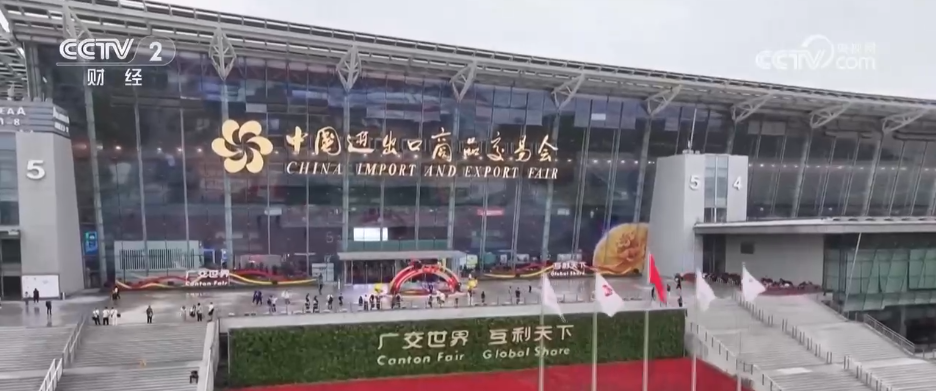
Group 1 - The 137th Canton Fair attracted over 140,000 international buyers, marking a year-on-year increase of approximately 20.2% compared to the previous spring fair [3][5] - The appeal of Chinese manufacturing is attributed to its stable social system, market, industrial chain, and product quality, which reassures international buyers [3][5] - The fair showcased technological innovations, including a service robot section featuring a commercial facade cleaning robot and a performing robot dog, highlighting China's technological advancements [5] Group 2 - Companies are adapting to challenges by shifting from foreign trade to domestic sales and exploring emerging markets, demonstrating resilience and innovation [5] - The Canton Fair serves as a platform for product display and trade, as well as for deepening cooperation between exhibitors and buyers [6] - Many foreign buyers visit local factories during the fair, which helps companies maintain existing clients and explore new market opportunities [10]