
服务机器人

Search documents
九号公司:2025Q4毛利率显著提升,两轮车和机器人增速亮眼-20260401
Tai Ping Yang Zheng Quan· 2026-04-01 02:40
Investment Rating - The report maintains a "Buy" rating for the company [1][7] Core Insights - The company reported a total revenue of 21.278 billion yuan in 2025, representing a year-on-year growth of 49.89%, with a net profit of 1.758 billion yuan, up 62.17% [4][9] - In Q4 2025, the company experienced a revenue of 2.888 billion yuan, a decrease of 12.22% compared to the previous quarter, attributed to the impact of new national standards [5] - The gross margin improved significantly to 27.99% in Q4 2025, an increase of 4.54 percentage points year-on-year, driven by product structure optimization and cost control [6] Revenue and Profitability - The company's revenue from electric two-wheelers, electric balance bikes, and service robots in 2025 was 11.859 billion, 4.329 billion, and 2.002 billion yuan respectively, with year-on-year growth rates of 64.45%, 28.05%, and 104.26% [5] - The net profit margin for Q4 2025 was 0.44%, a decrease of 3.07 percentage points, primarily due to fluctuations in operating expenses [6] Future Projections - The company is expected to achieve net profits of 2.285 billion, 2.941 billion, and 3.673 billion yuan in 2026, 2027, and 2028 respectively, with corresponding EPS of 31.62, 40.70, and 50.83 yuan [7][9] - The projected revenue growth rates for the next three years are 27.02%, 24.06%, and 22.53% [9] Market Position and Strategy - The company has a strong R&D capability and is expanding its product matrix in the mid-to-high-end market, particularly in the service robot sector, indicating robust growth potential [7]
碧桂园服务:2026年计划落地超1万台服务机器人
Xin Lang Cai Jing· 2026-03-27 12:25
Core Viewpoint - Country Garden Services (碧桂园服务) reported a revenue of 48.35 billion yuan for the fiscal year 2025, reflecting a year-on-year growth of 9.9% [1] Financial Performance - The company achieved a gross profit of approximately 8.46 billion yuan and a core net profit attributable to shareholders of 2.52 billion yuan [1] - The net cash flow from operating activities was about 2.51 billion yuan [1] - As of the end of the reporting period, the company had bank deposits, including cash and cash equivalents, time deposits, and restricted bank deposits, totaling 17.93 billion yuan [1] Operational Metrics - The total number of managed property projects reached 8,268, with the managed area increasing to 1.16 billion square meters, which includes approximately 8.9 million square meters of "Three Supplies and One Industry" management area [1] Strategic Initiatives - The management announced the deployment of 1,000 service robots in the previous year, with plans to deploy over 10,000 service robots by 2026, transitioning from purely human services to a PARA co-living model [1] - This shift aims to enhance property service effectiveness and improve operational efficiency through new productive forces [1]

利好来了!广东,重大发布!
券商中国· 2026-03-26 04:28
Core Viewpoint - The article discusses the "2026 Action Plan for Promoting the Coordinated Development of Manufacturing and Service Industries in Guangdong Province," which aims to enhance the integration of manufacturing and service sectors through various initiatives and policies [2][4]. Group 1: Key Policies and Initiatives - The action plan outlines 21 specific policy measures across six areas to promote the service-oriented manufacturing and manufacturing-oriented services [2]. - It emphasizes the importance of technological innovation, focusing on key core technology breakthroughs and the establishment of a "first-use, then-transfer" service platform to facilitate the transfer and transformation of technological achievements [4][5]. - The plan aims to establish over 200 smart factories and intelligent body factories by the end of 2026, enhancing the manufacturing sector's capabilities [6][7]. Group 2: Financial Support and Innovation - The action plan encourages financial institutions to leverage policies for technological innovation and increase credit support in the tech sector, including the development of specialized financial products [5]. - It aims to enhance industrial design levels by promoting collaboration between design hubs and industrial clusters, and by hosting international design competitions to attract global design resources [4][5]. Group 3: Focus on Emerging Industries - The plan targets emerging industries such as new-generation electronic information, smart connected vehicles, intelligent robotics, integrated circuits, and renewable energy, aiming to implement industrial innovation projects [6][7]. - It highlights the need for advanced technology innovation in future industries, including quantum technology, hydrogen energy, and deep-sea exploration [6]. Group 4: Application Scenarios and Cross-Industry Integration - The action plan promotes the creation of diverse application scenarios through initiatives like "AI + Manufacturing" and the establishment of innovation centers in the Guangdong-Hong Kong-Macao Greater Bay Area [7]. - It encourages the integration of various industries, such as marine equipment with marine ranching and tourism, to foster innovative application scenarios [7].

3万家酒店、50亿美元估值……藏在AI版图背后的“她力量”
创业邦· 2026-03-08 04:20
Core Viewpoint - Artificial intelligence is reshaping the technological landscape, with a significant contribution from women in key positions across various sectors of the AI industry [2]. Group 1: Influential Women in AI - Fei-Fei Li, known as the "AI Mother," created the ImageNet database, which has been foundational for breakthroughs in computer vision, leading to a company valuation increase from $1 billion to $5 billion [4]. - Hong Letong, founder of Axiom Math, developed an AI system that solved a 30-year-old mathematical problem and raised $64 million in funding, achieving a company valuation of $300 million [6]. - Luo Fuli, a key developer of the open-source model DeepSeek-V2, has led the MiMo model at Xiaomi, which has been widely adopted in the industry [8]. - Qiu Xiaoxin founded Aixin Yuanzhi, focusing on visual inference chips, with a global market share of approximately 24% in mid-to-high-end visual AI chips and a projected market value of about HKD 16.6 billion [10]. - Zhang Yutong, president of Moon's Dark Side, has driven the company's valuation to over $10 billion through multiple rounds of financing [12]. - Zhi Tao, founder of Yunji Technology, has deployed robots in 34,000 hotels, achieving a company valuation of approximately HKD 10.5 billion [14]. - Zhou Yuan, co-founder of Moore Threads, has built a company valued at 273 billion yuan, focusing on a complete ecosystem for domestic GPU hardware and software [16]. - Weng Li, a researcher in large model training and reinforcement learning, has contributed significantly to AI safety and alignment research [18]. Group 2: Impact on the AI Narrative - These women may not always be in the spotlight, but they play crucial roles in key breakthroughs and company growth, effectively rewriting the narrative of the AI era [20].

【宏观经济】一周要闻回顾(2026年2月26日-3月3日)
乘联分会· 2026-03-03 08:38
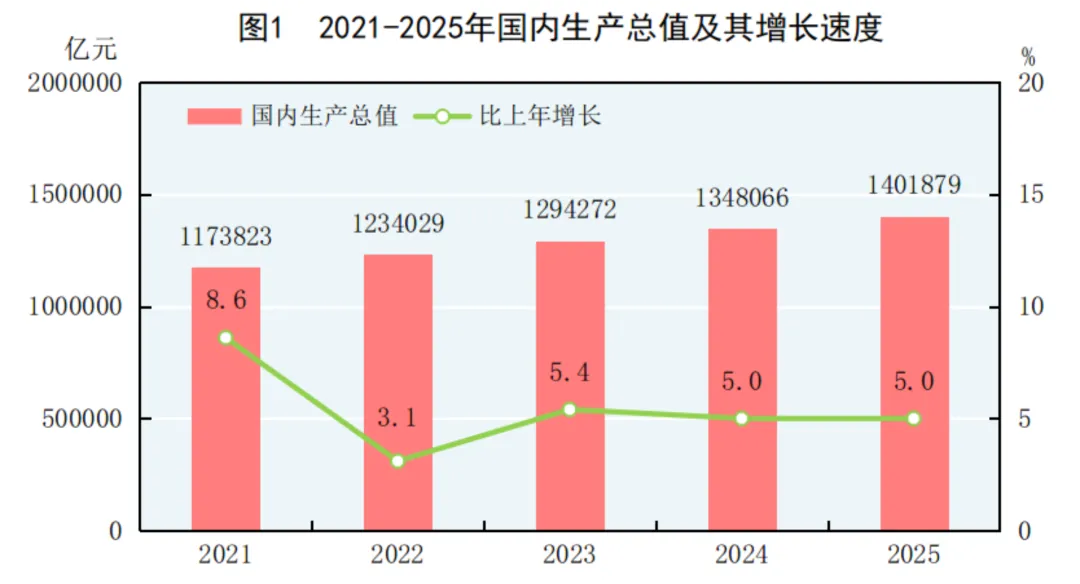
Economic Overview - In 2025, China's GDP reached 140,187.9 billion yuan, growing by 5.0% year-on-year, with the primary industry increasing by 3.9%, the secondary industry by 4.5%, and the tertiary industry by 5.4% [5] - The per capita GDP was 99,665 yuan, reflecting a 5.1% increase from the previous year [5] - The total national income was 1,393,700 million yuan, also up by 5.1% [5] Employment and Labor - The total employment reached 72,504 million, with urban employment accounting for 65.6% [6] - Urban new employment increased by 1,267 million, surpassing the previous year's figures by 110,000 [6] - The average urban survey unemployment rate was 5.2%, with a year-end rate of 5.1% [6] Industrial Growth - The total industrial output value was 416,826 billion yuan, marking a 5.8% increase [11] - The manufacturing sector saw a growth of 6.4%, with significant increases in automotive manufacturing (11.5%) and electrical machinery (9.2%) [12] - Profits from industrial enterprises reached 73,982 billion yuan, a slight increase of 0.6% [13] Agricultural Production - Total grain production was 714.88 million tons, an increase of 1.2% year-on-year [10] - The production of cotton rose by 7.7%, while oilseed production increased by 2.9% [10] Trade and Investment - The total import and export value was 454,685 billion yuan, growing by 3.8%, with exports increasing by 6.1% [20] - In January 2026, foreign direct investment amounted to 920.1 billion yuan, with a 25.5% increase in newly established foreign-invested enterprises [42] - The manufacturing sector attracted 260.9 billion yuan in foreign investment, while the service sector received 640.4 billion yuan [43] Consumer Market - The total retail sales of consumer goods reached 501,202 billion yuan, growing by 3.7% [16] - Online retail sales accounted for 26.1% of total retail sales, amounting to 130,923 billion yuan, a 5.2% increase [18] Financial Sector - The broad money supply (M2) increased by 8.5% to 340.3 trillion yuan [22] - The total social financing scale increased by 35.6 trillion yuan, with a year-end stock of 442.1 trillion yuan [22] Technological Development - R&D expenditure reached 39,262 billion yuan, growing by 8.1% [29] - The number of patents granted was 972,000, although this represented a 7.0% decrease from the previous year [29] Environmental Progress - Carbon emissions per unit of GDP decreased by 5.0% [9] - Clean energy generation increased by 14.4%, with significant growth in solar and wind energy [9]

第一创业晨会纪要-20260303
First Capital Securities· 2026-03-03 04:05
Group 1: Industry Overview - The semiconductor industry is expected to maintain a high growth trend, driven by increased demand for optical modules, as evidenced by NVIDIA's investment of $2 billion each in Lumentum Holdings Inc. and another company to support new product development [4] - Price increases in the semiconductor sector are becoming widespread, with companies like STMicroelectronics raising prices by 20% for certain products due to rising raw material costs [4] Group 2: Company Performance - Ninebot Company reported a revenue of 21.325 billion yuan for 2025, a year-on-year increase of 50.2%, and a net profit of 1.755 billion yuan, up 61.8% year-on-year, driven by strong sales in electric two-wheelers and service robots [7] - The company faced temporary profit pressure in Q4 2025 due to currency exchange losses and tax provisions, but anticipates a recovery in Q2 2026 with plans to launch new electric products [7] Group 3: Cosmetics Industry Insights - The cosmetics industry in 2025 showed moderate domestic demand recovery and strong export performance, with retail sales reaching 465.3 billion yuan, a year-on-year increase of 5.1% [8] - The total import and export value of cosmetics was $24 billion, with exports at $7.82 billion, reflecting a year-on-year increase of 9.2%, indicating a robust growth trajectory in emerging markets [8]
重磅!中华人民共和国2025年国民经济和社会发展统计公报
中汽协会数据· 2026-02-28 04:09
Core Viewpoint - The 2025 National Economic and Social Development Statistical Bulletin highlights China's economic performance, emphasizing steady growth, structural transformation, and advancements in various sectors amidst complex domestic and international challenges [1]. Economic Overview - The GDP for 2025 reached 140,187.9 billion yuan, growing by 5.0% year-on-year, with the primary industry contributing 93.3 billion yuan (3.9% growth), the secondary industry 499.7 billion yuan (4.5% growth), and the tertiary industry 808.9 billion yuan (5.4% growth) [3]. - Per capita GDP was 99,665 yuan, reflecting a 5.1% increase from the previous year [3]. - The national total income was 1,393,700 million yuan, also up by 5.1% [3]. Population and Employment - The national population at year-end was 1,404.89 million, a decrease of 3.39 million from the previous year, with an urban population of 953.8 million [6][7]. - The urban employment rate was 65.6%, with a total of 72.5 million employed individuals [7]. - The average urban unemployment rate was 5.2%, with a year-end rate of 5.1% [7]. Industrial and Agricultural Performance - The total industrial output value increased by 5.8%, with significant growth in manufacturing sectors such as automotive (11.5% growth) and high-tech manufacturing (9.4% growth) [22][23]. - Agricultural production saw a grain output of 714.88 million tons, a 1.2% increase, with notable increases in corn (2.1% growth) and soybean production (1.3% growth) [18][20]. Investment and Trade - Fixed asset investment decreased by 3.9% to 491,109 billion yuan, with significant declines in real estate investment (17.2% decrease) [42][46]. - The total value of imports and exports reached 454,685 billion yuan, a 3.8% increase, with exports growing by 6.1% [47][50]. Financial and Monetary Indicators - The general public budget revenue was 216,045 billion yuan, down by 1.7%, while expenditures increased by 1.0% to 287,395 billion yuan [60]. - The broad money supply (M2) grew by 8.5% to 340.3 trillion yuan [62].

国家统计局重磅发布:2025年GDP增长5%,全国人均可支配收入43377元,人均消费支出29476元!
Xin Lang Cai Jing· 2026-02-28 03:43
Economic Overview - The GDP for the year reached 140,187.9 billion yuan, growing by 5.0% compared to the previous year [1] - The contribution to GDP growth from final consumption expenditure was 2.6 percentage points, while capital formation contributed 0.8 percentage points, and net exports contributed 1.6 percentage points [1] - The per capita GDP was 99,665 yuan, reflecting a growth of 5.1% year-on-year [1] Population and Employment - The national population at year-end was 1,404.89 million, a decrease of 3.39 million from the previous year [4] - The urban employment population was 47,535 million, accounting for 65.6% of total employment [4] - The average urban survey unemployment rate was 5.2%, with a year-end rate of 5.1% [4] Foreign Exchange and Prices - The national foreign exchange reserves increased by 155.5 billion USD to 33,579 billion USD [7] - The average exchange rate for the year was 1 USD to 7.1429 yuan, a depreciation of 0.3% from the previous year [7] - The consumer price index remained stable, while industrial producer prices fell by 2.6% [8] Industrial and Technological Growth - The value added of the equipment manufacturing industry grew by 9.2%, accounting for 36.8% of the total industrial value added [11] - High-tech manufacturing value added increased by 9.4%, with profits rising by 13.3% [11] - E-commerce transaction volume reached 467,339 billion yuan, growing by 2.5% [11] Regional Development - The urbanization rate reached 67.89%, an increase of 0.89 percentage points from the previous year [12] - The GDP growth rates for different regions were: Eastern region 5.0%, Central region 5.2%, Western region 5.1%, and Northeast region 4.1% [12] Environmental and Energy Transition - Carbon dioxide emissions per unit of GDP decreased by 5.0% [14] - Clean energy generation increased by 14.4%, with renewable energy sources like hydropower and solar power contributing significantly [14] - The production of new energy vehicles rose by 25.1%, with a total of 16.524 million units produced [14] Income and Consumption - The per capita disposable income was 43,377 yuan, a growth of 5.0% [14][15] - The average per capita consumption expenditure was 29,476 yuan, reflecting a growth of 4.4% [16] - The Engel coefficient for residents was 29.3%, indicating the proportion of income spent on food [16]
国家统计局副局长盛来运评读《2025年国民经济和社会发展统计公报》
Guo Jia Tong Ji Ju· 2026-02-28 03:01
Core Viewpoint - The 2025 National Economic and Social Development Statistical Bulletin reflects China's economic resilience and progress amid complex domestic and international challenges, showcasing a commitment to stability and growth under the leadership of the central government [2][3]. Group 1: Economic Growth and Development - In 2025, China's GDP grew by 5.0%, surpassing 140 trillion yuan for the first time, marking a significant achievement in the "14th Five-Year Plan" [3]. - The per capita GDP reached 99,665 yuan, a 5.1% increase from the previous year, translating to approximately 13,953 USD, maintaining a level above 13,000 USD for three consecutive years [4]. - China's contribution to global economic growth is projected to remain around 30%, solidifying its position as the world's second-largest economy [5]. Group 2: Modernization and Technological Advancement - The investment in R&D increased by 8.1%, reaching 2.80% of GDP, surpassing the OECD average for the first time, with basic research funding accounting for 7.08% [6][7]. - The high-tech manufacturing sector saw a value-added growth of 9.4%, with its share of total industrial value-added rising to 17.1% [7]. - The digital economy flourished, with the value-added of the digital product manufacturing industry increasing by 9.3% [8]. Group 3: Domestic and International Circulation - Domestic consumption reached over 50 trillion yuan, growing by 3.7%, with domestic demand contributing 67.3% to economic growth [10]. - The total import and export volume exceeded 45 trillion yuan, marking a 3.8% increase, and maintaining China's position as a key player in global supply chains [11]. Group 4: High-Quality Development and Structural Reforms - The establishment of a unified national market progressed, with the market access negative list reduced to 106 items [12]. - The average urban unemployment rate was 5.2%, with 12.67 million new urban jobs created, reflecting a stable employment situation [15]. - The clean energy consumption ratio reached 30.4%, with significant reductions in energy consumption per unit of GDP and CO2 emissions [14]. Group 5: Social Welfare and Quality of Life - The average disposable income for urban residents increased by 5.0%, aligning with economic growth, while the share of service consumption in total spending reached 46.1% [15]. - The healthcare system expanded, with over 1 million hospital beds and 13.4 million healthcare professionals by year-end [16]. - Social insurance coverage increased, with 1.08 billion people enrolled in basic pension insurance and 1.33 billion in medical insurance [16].
盛来运:2025年规模以上高技术制造业增加值比上年增长9.4%
智通财经网· 2026-02-28 03:00
Core Viewpoint - The article emphasizes that 2025 is a significant year for China's economic and social development, marking the conclusion of the "14th Five-Year Plan" and showcasing the resilience and progress of the Chinese economy amidst complex domestic and international challenges [1][2]. Economic Performance - In 2025, China's GDP grew by 5.0%, surpassing 140 trillion yuan for the first time, reflecting a significant economic milestone [3]. - The economic growth corresponds to an increase of over 5 trillion yuan, indicating enhanced production capabilities in agriculture and industry, as well as a revitalized service sector [3]. Per Capita Development - China's per capita GDP reached 99,665 yuan, a 5.1% increase from the previous year, translating to approximately 13,953 USD, maintaining a level above 13,000 USD for three consecutive years [4]. - Labor productivity increased by 6.1%, outpacing economic growth by 1.1 percentage points [4]. International Influence - China's 5% economic growth places it among the top global economies, contributing approximately 30% to world economic growth [5]. - In 2025, China's total goods imports reached 18.5 trillion yuan, maintaining its position as the world's second-largest import market for 17 consecutive years [5]. Modern Industrial System - The construction of a modern industrial system accelerated, with a focus on technological innovation and the development of new productive forces [6][7]. - R&D expenditure increased by 8.1%, reaching 2.80% of GDP, surpassing the OECD average for the first time [7]. Digital Economy - The digital economy thrived, with the manufacturing value of digital products growing by 9.3% and the information technology service sector increasing by 11.1% [8]. - Online retail sales approached 16 trillion yuan, marking an 8.6% growth [8]. Domestic and International Circulation - Domestic consumption reached over 50 trillion yuan, growing by 3.7%, with domestic demand contributing 67.3% to economic growth [10]. - The total import and export volume exceeded 45 trillion yuan, marking a 3.8% increase from the previous year [11]. High-Quality Development - The focus on high-quality development led to significant reforms, including the reduction of market access restrictions and the promotion of a favorable business environment [13]. - The urbanization rate reached 67.89%, with a notable increase in rural residents' income [14]. Social Welfare - The urban unemployment rate averaged 5.2%, with 12.67 million new urban jobs created, supporting overall economic stability [16]. - Social insurance coverage expanded, with over 1.08 billion people enrolled in basic pension insurance [17].