科技原始创新

Search documents
多举措拓展中间品贸易
Jing Ji Ri Bao· 2025-11-10 03:37
Core Viewpoint - The article emphasizes the importance of expanding intermediate goods trade in China as a key strategy for enhancing economic security, promoting high-quality development, and optimizing trade structure during the 14th Five-Year Plan period [1] Summary by Sections Intermediate Goods Trade Overview - Intermediate goods trade involves cross-border transactions of raw materials, components, and semi-finished products, reflecting a country's participation in global production networks and industrial competitiveness [1] - China's intermediate goods trade has shown a trend of scale expansion and structural upgrading, with a shift from labor-intensive to technology-intensive products, enhancing the resilience of supply chains and mitigating external market risks [1] Challenges in Intermediate Goods Trade - China's high reliance on imports for intermediate goods indicates a lower position in the global value chain, particularly for high-end intermediate goods and core technologies [2] - The digitalization and standardization levels of intermediate goods trade need improvement, and there is insufficient pricing power and regulatory influence in global supply chains [2] Strategies for High-Quality Development - Strengthening original technological innovation is crucial to overcoming bottlenecks in high-end intermediate goods supply [2] - A dynamic assessment of the industrial chain is necessary to identify weak points and enhance collaboration on key technologies through national initiatives [2] Regional Layout and Industry Clusters - Optimizing regional layouts and cultivating industry clusters are essential for enhancing competitive advantages in intermediate goods trade [3] - Coastal regions should focus on technology-intensive intermediate goods, while central and western regions should develop advanced manufacturing bases to support global supply chains [3] Expanding Trade Networks - Developing a diversified trade network is vital for the quality of intermediate goods trade, with a focus on building high-quality trade networks along the Belt and Road Initiative [3] - Engaging in regional free trade agreements and participating in international standard-setting can enhance market access and reduce institutional barriers [3] Policy Support and Risk Management - Establishing a comprehensive policy support system is necessary to facilitate the development of intermediate goods trade, including financial and tax incentives [4] - Expanding export credit insurance and creating a dispute resolution mechanism can provide risk protection and legal support for businesses involved in intermediate goods trade [4]
王立勇:多举措拓展中间品贸易
Jing Ji Ri Bao· 2025-11-10 00:10
Core Viewpoint - The article emphasizes the importance of expanding intermediate goods trade in China as a key strategy for optimizing trade structure, enhancing industrial competitiveness, and ensuring economic security during the 14th Five-Year Plan period [1][2]. Group 1: Current State of Intermediate Goods Trade - China's intermediate goods trade has shown a trend of scale expansion and structural upgrading, with a shift from labor-intensive to technology-intensive products [1]. - The self-production and trade scale of key intermediate goods are gradually increasing, leading to higher added value and improved resilience of the industrial supply chain [1]. Group 2: Challenges in Intermediate Goods Trade - China's reliance on imports for intermediate goods indicates a lower position in the global value chain, particularly for high-end intermediate goods and core technologies [2]. - The digitalization and standardization levels of intermediate goods trade need improvement, and there is insufficient pricing power and regulatory influence in the global supply chain [2]. Group 3: Strategies for Development - Strengthening original technological innovation is crucial to overcoming bottlenecks in high-end intermediate goods supply [2]. - Optimizing regional layouts and cultivating industrial clusters for intermediate goods trade can enhance competitive advantages [3]. - Expanding diverse trade networks and solidifying overseas market foundations are essential for the quality development of intermediate goods trade [3]. Group 4: Policy Support and Infrastructure - Establishing a comprehensive policy support system for intermediate goods trade is necessary to address systemic barriers [4]. - Enhancing financial policies and risk protection mechanisms will provide a favorable environment for the development of intermediate goods trade [4].
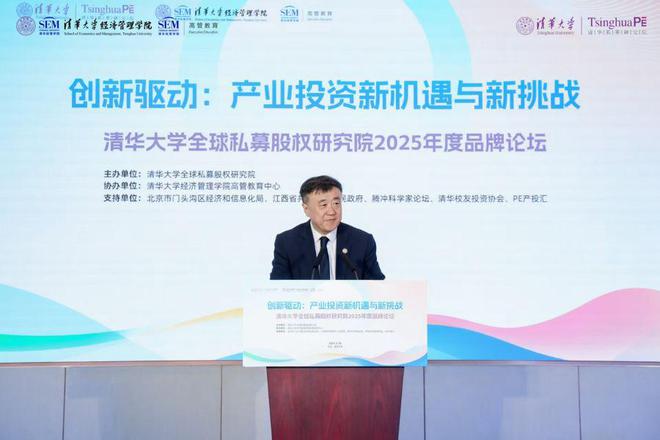
清华大学全球私募股权研究院“创新驱动:产业投资新机遇与新挑战”论坛成功举办
2 1 Shi Ji Jing Ji Bao Dao· 2025-05-26 09:46
Group 1 - The forum titled "Innovation-Driven: New Opportunities and Challenges in Industrial Investment" was successfully held on May 24, organized by Tsinghua University's Global Private Equity Research Institute [1] - The forum aimed to dissect investment opportunities and challenges in industrial transformation, explore the integration mechanism of industry, academia, and research, and promote the transformation of innovative achievements and the upgrading of strategic emerging industries [3][5] - The research institute unveiled its first book "Hard Tech Innovation Advancement," which summarizes years of observations and thoughts from researchers, presenting rich case studies of entrepreneurial companies in the hard tech field [5] Group 2 - The keynote speeches addressed macroeconomic trends and technological developments, highlighting structural issues in China's economy, such as low contributions from consumption and investment, and over-reliance on the U.S. market for exports [6] - Experts discussed the importance of embodied intelligence as a disruptive industry and its potential to drive the transition from "Made in China" to "Intelligent Manufacturing in China" [7] - The development of quantum computing was emphasized, with a focus on the advantages of cold atoms as a physical carrier for quantum computing, and the need for collaboration among academia, industry, and investment sectors in this field [8] Group 3 - A roundtable discussion focused on the collaborative mechanisms among industry, academia, research, and investment to promote the transformation of scientific and technological achievements [10] - Participants shared experiences and innovative ideas, emphasizing the importance of high-intensity research investment, policy iteration, and the construction of transformation systems [11] - The need for financial institutions to guide funds towards the sci-tech sector was highlighted, with a focus on long-term investment strategies in technology fields [11] Group 4 - The second roundtable discussed investment logic and pain points in industrial upgrading, with insights from various investment professionals [12] - Key areas of focus included the life and health sector, automotive industry, and the aging industry, emphasizing the need for financial innovation and data-driven efficiency improvements [12][13] - Participants expressed their views on investment opportunities for 2025, highlighting the importance of original technology with international potential, vertical applications of AI, and cross-industry collaboration [13]