
科普工作

Search documents
2024年全国科普经费筹集额超222亿元
Zhong Guo Qing Nian Bao· 2026-01-30 01:43
Core Insights - The Ministry of Science and Technology has released the 2024 national science popularization statistics, indicating steady growth in funding and personnel dedicated to science popularization efforts across the country [1][2]. Funding and Financial Overview - In 2024, the total funding for science popularization reached 22.22 billion yuan, marking a 3.32% increase from 2023 [1]. - Government allocations accounted for 17.12 billion yuan, a 2.46% increase from the previous year, representing 77.06% of the total funding [1]. - Per capita funding for science popularization was 5.60 yuan, with 8.06 billion yuan allocated for science popularization activities, 2.96 billion yuan for infrastructure, and 2.40 billion yuan for exhibits and facilities [1]. Personnel and Workforce Development - The workforce for science popularization grew to 2.21 million individuals in 2024, a 2.62% increase from 2023 [2]. - The number of full-time science popularization personnel reached 297,000, while part-time personnel totaled 1.92 million [2]. - There were 393,600 personnel involved in science communication and guidance, and 57,700 in science creation and research, with 22,600 dedicated to full-time science creation and research [2]. Infrastructure and Facilities - The number of science museums and technology-related museums increased to 1,890, with an exhibition area of 6.90 million square meters, reflecting a 4.49% increase in area from 2023 [2]. Online and Offline Science Communication - In 2024, there were 2,102 science-related websites and over 10,200 science public accounts on WeChat, with a total of 1.18 billion followers [3]. - The number of science videos published online reached 510,000, garnering 24.97 billion views [3]. - Television and radio stations broadcasted over 203,200 and 278,200 hours of science programs, respectively [3]. Public Engagement and Activities - A total of 1.44 million science lectures were organized, attracting 2.00 billion participants [4]. - There were 109,200 science exhibitions and 41,600 science competitions, with participation of 480 million and 222 million people, respectively [4]. - The 2024 National Science Activity Week featured 120,300 activities, engaging 385 million participants under the theme of "Promoting the Spirit of Scientists and Inspiring Innovation Across Society" [4]. Statistical Scope and Authority - The statistics cover 31 provinces, autonomous regions, and municipalities, as well as 32 central and national agencies, with a total of 86,100 survey forms collected, making it the most comprehensive and authoritative dataset on government science popularization efforts in China [4].
全国共有1890个科技馆和科学技术类博物馆
Xin Lang Cai Jing· 2026-01-29 21:59
Group 1 - The core viewpoint of the article highlights the continuous improvement in the infrastructure and funding for science popularization in China, as evidenced by the increase in the number of science museums and the growth in funding and personnel dedicated to science education [1][2] Group 2 - In 2024, there are 1,890 science museums and technology-related museums in China, an increase of 111 from 2023, with exhibition area growing by 4.49% [1] - National science popularization funding reached 22.22 billion yuan in 2024, marking a 3.32% increase from 2023, with an average of 5.60 yuan per person allocated for science popularization [1] - The workforce dedicated to science popularization has expanded to 2.21 million individuals in 2024, a growth of 2.62% from the previous year, including 297,000 full-time and 1.92 million part-time personnel [1] - A total of 7.615 million registered science volunteers are contributing to the efforts in science education [1] - In 2024, there were 1.4423 million science lectures organized, attracting 2.005 billion participants, and 109,200 science exhibitions held, with 480 million attendees [1] - Research institutions and universities opened 9,680 facilities to the public, receiving 24.9524 million visitors [1][2]
2024年全国科普工作经费投入达222.20亿元
Ke Ji Ri Bao· 2026-01-29 02:19
Core Insights - National science popularization funding reached a new high in 2024, totaling 22.22 billion yuan, a 3.32% increase from 2023 [1] - Government allocations accounted for 17.12 billion yuan, representing a 2.46% increase and 77.06% of the total funding [1] - The number of science popularization personnel grew to 2.21 million, a 2.62% increase from the previous year [1] Funding and Expenditure - The per capita science popularization funding in 2024 is 5.60 yuan [1] - Expenditures on science popularization activities amounted to 8.06 billion yuan, making up 37.97% of total funding [1] - Infrastructure spending for science popularization venues reached 2.96 billion yuan, accounting for 13.96% of total funding [1] - Spending on science exhibition items and facilities was 2.40 billion yuan, which is 11.32% of total funding [1] Infrastructure Development - The number of science museums and technology museums increased to 1,890, with an addition of 111 from 2023 [2] - There are 789 science museums and 1,101 technology museums across the country [2] - Youth science activity centers number 494, with community and rural science activity venues totaling 45,500 and 135,700 respectively [2] Public Engagement - The 2024 National Science Activity Week featured 120,300 events, attracting 385 million participants [2] - A total of 1.44 million online and offline science lectures were organized, engaging 2 billion participants [2] - There were 109,200 science exhibitions, with 480 million attendees [2] - Science competitions totaled 41,600 events, drawing 222 million participants [2] - Research institutions and universities opened 9,680 facilities to the public, receiving 24.95 million visitors [2] Statistical Authority - The national science popularization statistics are managed by the Ministry of Science and Technology, with data collection covering 31 provinces and 32 central government agencies [3] - A total of 86,100 survey forms were collected, making this the most comprehensive and authoritative dataset on government science popularization efforts in China [3]
增长3.32%!2024年全国科普工作经费投入达222.20亿元
Xin Lang Cai Jing· 2026-01-28 12:34
Core Insights - The total funding for national science popularization in 2024 reached 22.22 billion yuan, marking a 3.32% increase from 2023 [1] - Government allocations accounted for 17.12 billion yuan, a 2.46% increase, representing 77.06% of the total funding [1] - The per capita funding for science popularization in 2024 is 5.60 yuan [1] Funding and Expenditure - Total expenditure on science popularization activities was 8.06 billion yuan, making up 37.97% of the total funding [1] - Infrastructure spending for science popularization venues was 2.96 billion yuan, accounting for 13.96% of the total [1] - Spending on science exhibition items and facilities was 2.40 billion yuan, which is 11.32% of the total [1] Workforce Development - The number of science popularization personnel reached 2.21 million, a 2.62% increase from 2023 [1] - Among them, 297,000 are full-time personnel, while 1.92 million are part-time [1] - The number of science popularization personnel with intermediate titles or above, or with a bachelor's degree or higher, is 1.44 million, reflecting a 6.81% increase [1] Infrastructure and Activities - The number of science museums and technology museums increased to 1,890, with an addition of 111 from 2023 [2] - There are 494 youth science museums and 45,500 community science activity venues across urban areas, along with 135,700 in rural areas [2] - The 2024 National Science Activity Week featured 120,300 events, engaging 385 million participants [2] Engagement and Outreach - A total of 1.44 million online and offline science lectures were organized, attracting 2 billion participants [2] - There were 109,200 science exhibitions, with 480 million attendees [2] - Science competitions totaled 41,600 events, engaging 222 million participants [2] - Research institutions and universities opened 9,680 facilities to the public, receiving 24.95 million visitors [2] Statistical Authority - The national science popularization statistics are managed by the Ministry of Science and Technology, with data collection covering 31 provinces and 32 central government agencies [3] - The 2024 data collection involved 86,100 survey responses, making it the most comprehensive and authoritative dataset on government science popularization efforts in China [3]
全国政协“委员科学讲堂”传播科学声音:医学生的疑问 院士用40年坚守回答
Xin Lang Cai Jing· 2026-01-10 06:08
Core Viewpoint - The importance of pursuing a career in medicine, whether as a clinician or a researcher, is emphasized, highlighting the unique sense of achievement it brings in saving lives and contributing to scientific advancement [1][2]. Group 1: Medical Career Insights - A student expressed concerns about the pressures of being a clinical doctor and the uncertainties in medical research [1]. - The speaker, a member of the Chinese Academy of Engineering, shared personal experiences to illustrate the fulfillment derived from both clinical practice and research [1]. - The transition of China's scientific community from imitation to achieving significant advancements in certain fields is noted as a motivating factor for researchers [1]. Group 2: Immunology and Disease Prevention - The role of immunology in disease prevention, diagnosis, and treatment is highlighted, with a focus on aligning research with clinical needs [2]. - The speaker advocates for the integration of clinical disease treatment demands to drive the development and application of immunology [2]. - The establishment of the "Committee Science Lecture" series aims to promote scientific knowledge and foster a culture of science appreciation in society [2].
全国共有科协组织12.9万个
Ke Ji Ri Bao· 2025-11-09 01:11
Group 1 - The China Association for Science and Technology (CAST) reported a total of 129,000 associations nationwide as of December 2024 [1] - The 10th National Congress of CAST had 1,390 representatives, with 219 national scientific societies and 7.183 million individual members [1] - There are 3,202 local associations at the provincial, municipal, and county levels, with a total of 376,000 representatives [1] Group 2 - The national system manages 1,150 science popularization venues, 763 mobile science museums, and 1,350 science outreach vehicles, serving 150 million people throughout the year [2] - A total of 901,000 science popularization activities were held online and offline, with 1.69 million science communication websites and 3,713 WeChat public accounts [2] - There are 199.7 million part-time and full-time science communicators, and 516.6 million science volunteers engaged in various activities [2]
先生丨八旬院士变身百万粉丝“火山爷爷” 评论区葫芦娃集结
Yang Guang Wang· 2025-10-09 06:45
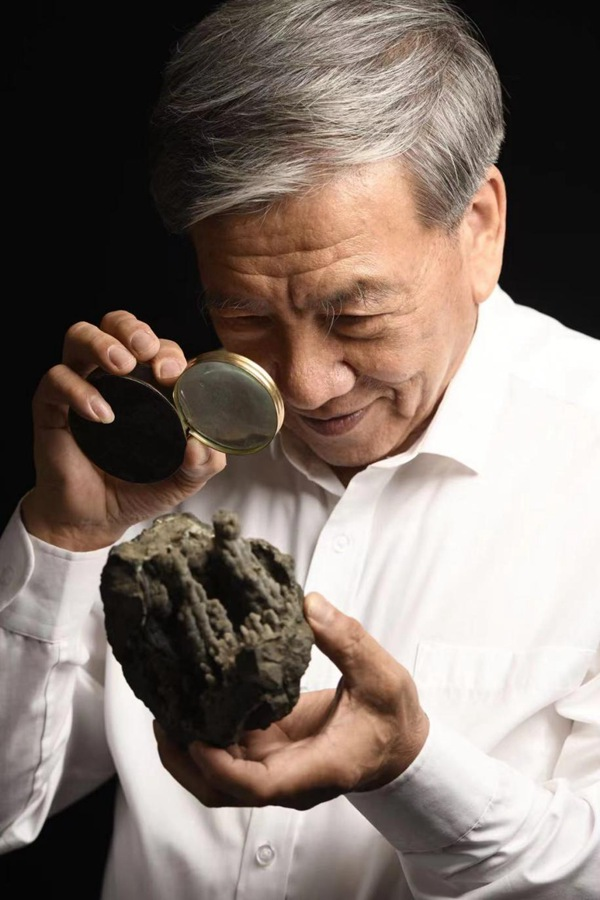
Core Viewpoint - The article highlights the significant contributions of Liu Jiaqi, a prominent volcanologist in China, who has advanced the understanding of volcanic activity and its implications for both scientific research and societal progress [4][18][21]. Group 1: Contributions to Volcanology - Liu Jiaqi is recognized as China's first academician in the field of volcanology, having established the existence and characteristics of volcanoes in China, countering the international misconception that China lacks volcanoes [4][21]. - He has published comprehensive works, including "Chinese Volcanoes," which systematically details the temporal and spatial distribution of volcanoes in China [21][25]. - Liu has linked volcanic activity to climate change, emphasizing its role as a significant factor in climate variations [23]. Group 2: Research and Exploration - Liu Jiaqi has conducted extensive field research across China, visiting 34 provinces and regions to gather evidence of volcanic activity [21]. - His research has led to the discovery of maar lakes, which serve as excellent indicators for studying ancient climates and environments [23]. - He has engaged in international research collaborations, bringing global attention to Chinese volcanology and hosting influential volcanic conferences in China [25]. Group 3: Innovation and Application - Liu has pioneered the conversion of basalt, a product of volcanic eruptions, into basalt fiber, which has significant commercial value, increasing its worth from approximately 50-60 yuan per ton to 20,000-100,000 yuan after processing [35]. - The basalt fiber has been utilized in advanced applications, including the production of materials for space exploration, such as the flag used in the Chang'e 6 lunar mission, which can withstand extreme temperatures [39]. Group 4: Public Engagement and Education - Liu Jiaqi has actively engaged in science communication, producing over 200 educational videos that have garnered a large following, making complex geological concepts accessible to the public [44]. - His dedication to education and outreach reflects a commitment to fostering a greater understanding of geology and its relevance to society [44].


陕西:加强科普工作 提升公民科学素质
Shan Xi Ri Bao· 2025-09-29 22:33
Group 1 - The Shaanxi Provincial Citizen Science Quality Competition concluded with the theme "Promoting Scientific Spirit and Cultivating Innovation" held in Yan'an, featuring 10 teams competing in various quiz formats [1] - Baoji City team won the first prize, while teams from Yan'an and Xi'an secured the second prize, and teams from Shangluo, Yulin, and Hanzhong received the third prize [1] - The competition aimed to enhance public scientific literacy and encourage participation from diverse sectors including universities, research institutions, and social organizations [1] Group 2 - Six new "Practicing Scientist Spirit Courtyards" were established, covering four districts, aimed at fostering collaboration between agricultural experts and local agricultural entities [2] - The initiative includes the awarding of "Chief Expert" certificates to seven agricultural specialists, promoting technology and knowledge transfer to support rural revitalization [2] - The Shaanxi Provincial Agricultural Society plans to continue leveraging these courtyards to enhance local agricultural practices through research and training [2] Group 3 - The Xi'an Science Experiment Exhibition Competition concluded, showcasing 30 teams competing in various scientific disciplines [3] - The event emphasized creativity in presenting scientific principles through engaging visual performances and experimental designs [3] - The "Science Xi'an" initiative aims to strengthen the integration of science communication and technological innovation, contributing to the city's development as an innovative hub [3]
把科学梦想“种”进更多人心田(弘扬科学家精神·关注科普月)
Ren Min Ri Bao· 2025-09-28 22:28
Core Viewpoint - The article highlights the importance of science popularization (popular science) efforts by Chinese academicians, emphasizing their role in enhancing public understanding of science and fostering interest in scientific knowledge [6][7][11]. Group 1: Importance of Science Popularization - Academicians play a crucial role in science popularization, helping the public understand scientific knowledge and improve scientific literacy [6][7]. - Engaging in popular science activities is seen as an obligation for academicians, contributing to the cultivation of scientific talent and innovation [8][9]. - The article discusses the positive impact of popular science on correcting misconceptions and providing accurate information about scientific developments [8][9]. Group 2: Targeted Approaches in Science Popularization - Different approaches are necessary for various audiences, such as middle school students, university students, and professionals in government and enterprises [9][10]. - For middle school students, interactive methods are emphasized, while university students benefit from broader interdisciplinary knowledge [9][10]. - Professionals require practical applications of scientific knowledge relevant to their fields [9][10]. Group 3: Diverse Formats for Science Communication - Science popularization can take many forms, including books, videos, lectures, and online platforms [11][13]. - The integration of scientific discoveries into educational materials, such as textbooks, is highlighted as an effective way to disseminate knowledge [13][14]. - The article mentions the significance of using various media to engage the public and enhance their understanding of scientific concepts [13][14]. Group 4: Personal Experiences and Insights - Academicians share their personal experiences in research and the importance of maintaining curiosity and resilience in scientific endeavors [15][17]. - The significance of igniting interest in science among students is emphasized, showcasing how storytelling can make science relatable [15][17]. - The article illustrates memorable moments from popular science activities, highlighting the positive reactions from students when they connect scientific principles to real-life scenarios [15][17].

全国政协“委员科学讲堂”以“航天逐梦,材料筑基”为题举办科普讲座
Ren Min Ri Bao· 2025-09-24 02:04
Core Points - The event "Committee Science Lecture" was held in Beijing, focusing on popular science education [1] - The significance of developing aerospace technology was emphasized, particularly through the lens of materials supporting aerospace equipment [1] - Over 600 participants attended, including members of the National Committee, representatives from the China Association for Science and Technology, and students [1] Group 1 - The event aims to implement Xi Jinping's important discourse on popular science work [1] - The platform allows committee members to fulfill their responsibilities and promote science for the public [1] - The initiative contributes to achieving high-level technological self-reliance and fostering a society that values and respects science [1]