
科研评价体系

Search documents
“指挥棒”变了创新的航道就变了
Xin Lang Cai Jing· 2026-02-01 21:21
Core Viewpoint - The article emphasizes the need for a reform in the technology evaluation system to better align scientific innovation with the high-quality development needs of the country, moving away from a focus on quantity and prestige towards innovation capability, quality, effectiveness, and contribution [1][2]. Group 1: Reform Objectives - The reform aims to shift the evaluation focus from "paper achievements" and quantitative indicators to a new emphasis on innovation capabilities and real-world impact [2]. - The new evaluation system will assess research based on its ability to solve critical technological challenges, convert into productive forces, enhance public welfare, and support national security and development [2]. Group 2: Implementation Examples - Universities like Xi'an Jiaotong University and China Agricultural University are already implementing new evaluation criteria that reward significant technology transfer achievements and practical impacts on agriculture, rather than solely academic publications [2]. Group 3: Challenges Ahead - The reform faces challenges in ensuring scientific and fair evaluation standards for different types of research activities, avoiding the emergence of new simplistic evaluation criteria [3]. - Balancing market evaluation with long-term strategic investments poses a challenge, particularly in ensuring that essential but currently unprofitable research is not neglected [3]. - Establishing a new, diverse, and credible evaluation system while transitioning from the old one requires careful planning and cultural shifts within the academic community [3]. Group 4: Strategic Considerations - The reform will disrupt existing interest structures and requires strategic wisdom from technology management departments to navigate resistance and avoid policy inconsistencies [4]. - The ultimate goal is to integrate technological innovation deeply into national modernization efforts, ensuring that researchers understand and respond to the real needs of society [4]. Group 5: Broader Implications - This reform represents a significant shift in the operational ecology of Chinese research and the overall direction of the innovation system, potentially reshaping resource allocation and the competitive landscape in global technology [5].
北京市政协委员辛兵:搭建北京青年科研人员发展联盟
Xin Lang Cai Jing· 2026-01-25 14:09
Group 1 - The Beijing government aims to create a high-level talent hub by implementing ten supportive measures for youth, including housing security and entrepreneurial services [1] - A proposal was made to establish a city-level development alliance for young researchers and to build regional innovation incubation bases in collaboration with international research institutions [1][4] - The current evaluation system for young researchers is criticized for being overly reliant on titles and projects, suggesting a need for a differentiated research evaluation system [3] Group 2 - Recommendations include creating a special fund for living security for core research personnel, enhancing support in housing, healthcare, and education for children [4] - An online platform for young researchers is proposed, featuring shared research literature, experimental equipment, and online courses, alongside offline branches for academic exchanges [4] - The establishment of a differentiated evaluation system is suggested, focusing on high-level academic papers and practical indicators for applied research [3]


“套路论文”谁之过 | 媒体札记
Xin Lang Cai Jing· 2025-12-27 12:29
Core Viewpoint - The case of a student from Wenzhou Medical University publishing 43 papers in a year raises concerns about academic integrity and the potential for "paper mill" practices, despite some arguing that exceptional talent can lead to such prolific output [1][3]. Group 1: Publication Details - The student has published approximately 50 articles since July 2024, with 44 being included in SCI journals and around 30 in top-tier journals as per the Chinese Academy of Sciences [2]. - Twelve of the student's papers prominently feature "Mendelian randomization" in their titles, indicating a reliance on specific methodologies [1]. Group 2: Academic Evaluation System - The incident highlights issues within the current academic evaluation system, which emphasizes quantity over quality, potentially leading students to engage in "publish or perish" mentality [3][4]. - The existing evaluation framework may inadvertently encourage the production of "routine papers," which, while methodologically sound, may lack genuine innovation [2][4]. Group 3: Institutional Responsibility - Wenzhou Medical University has a reward system for students publishing in recognized journals, which could incentivize the production of "routine papers" if not properly monitored [4]. - The university's investment in student innovation and entrepreneurship, while well-intentioned, may contribute to the proliferation of low-quality research if oversight is inadequate [4]. Group 4: Broader Implications - The phenomenon of "routine papers" could waste resources and pose risks in cross-disciplinary applications, potentially harming the academic ecosystem and long-term development of disciplines [4]. - The situation calls for a reevaluation of how academic success is defined and measured, emphasizing the need for a more balanced and fair assessment system [5].

“软件影响力测度与开源贡献评价”研讨会在南京大学举行
Xin Hua Ri Bao· 2025-12-16 21:49
Core Insights - The seminar on "Software Influence Measurement and Open Source Contribution Evaluation" was held at Nanjing University, focusing on the academic impact of scientific software and its evaluation [1][2] - The seminar discussed the book "Research on Intelligent Recognition and Influence Measurement of Scientific Software" by Professor Pan Xuelian, which consolidates over a decade of research and will be published in March 2024 [1][2] Group 1: Academic Contributions - The book presents a systematic analysis of the academic influence of scientific software through various dimensions such as mention, use, citation, and diffusion [1] - It introduces an innovative method for automatic recognition of scientific software based on full-text data from academic papers, contributing to the understanding of software as measurable research outcomes [1][2] Group 2: Industry Implications - Experts emphasized the need to increase investment in scientific software development and recognize its academic contributions, which are crucial for improving China's academic evaluation system [2] - The discussions included the impact of large language models on software development and quality, highlighting the transformative trends in scientific software development under AI empowerment [2]
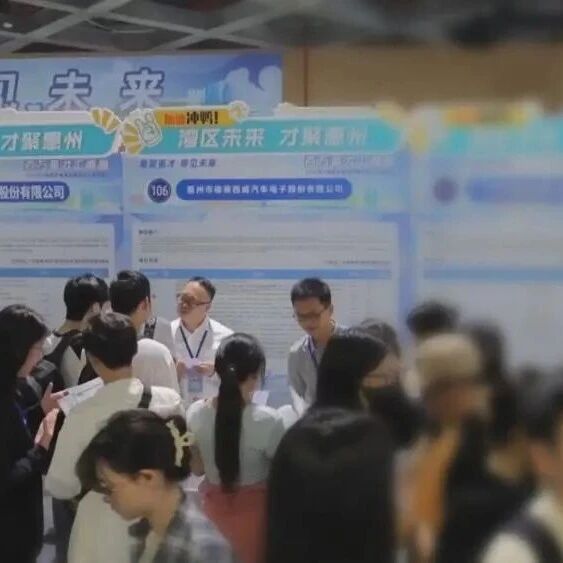
创新汇南粤:科技人才为何东南飞
21世纪经济报道· 2025-11-06 02:09
Core Insights - Guangdong province is becoming a hub for technology talent, with over 1.7 million postdoctoral researchers and 135 million R&D personnel, accounting for about 1/7 of the national total [1][6] - The province's diverse industries and robust research investment create a favorable environment for young talent, as evidenced by the "Million Talents Gather in South Guangdong" initiative, which aims to attract over 1 million graduates for employment and entrepreneurship [2][8] Group 1: Talent Attraction and Development - Guangdong has seen an increase in the number of academicians working in the region, rising from 135 in 2022 to over 150 in 2023, with 194 working full-time [2] - The province's talent policies are designed to support young professionals, offering competitive relocation subsidies, such as 300,000 yuan for postdoctoral researchers and an additional 400,000 yuan from local districts [5][10] - The "Million Talents Gather in South Guangdong" initiative focuses on key industries like AI, robotics, new energy, and biomedicine, with thousands of recruitment events held nationwide [8][11] Group 2: Industry Growth and Opportunities - The biomedicine and health industry in Guangdong is experiencing rapid growth, with projected revenues of approximately 448.66 billion yuan by 2024, and over 6,500 companies in the sector concentrated in Guangzhou [5][11] - Guangdong's biomedicine sector has seen a significant increase in the number of enterprises, from 1,000 in 2017 to 4,800 currently, with nearly 100 new drug clinical approvals each year [11] - The province's manufacturing landscape includes all 31 major categories, with nine industry clusters reaching trillion-yuan scale, contributing to its status as a leading economic region [10][11] Group 3: Future Prospects and Innovations - The collaboration between economic growth and technology talent is fostering a new model of value co-creation in Guangdong, enhancing the region's attractiveness to young professionals [3][6] - The ongoing development of AI and other advanced technologies is expected to further increase the demand for skilled talent in the province [6][12] - Companies like Yunzhou Biotech are at the forefront of innovation, focusing on antibody discovery technologies that address industry challenges such as long screening cycles and low efficiency [5][11]
王飞跃:加快构建自主学刊体系和评估制度
Huan Qiu Wang Zi Xun· 2025-05-20 22:47
Core Viewpoint - The article critiques the misinterpretation of China's academic journal evaluation system by an overseas publication, emphasizing the need for careful discernment by scholars and policymakers regarding the motivations behind the criticisms [1][2][4]. Group 1: Misinterpretation of Facts - The increase in the proportion of Chinese scholars leaving the country is inaccurately attributed to China's journal evaluation system, while the actual reasons are linked to specific policies from certain Western countries [1] - The current academic evaluation practices in China, including journal classification, are seen as attractive to overseas scholars, contrasting with the increasing pressures faced by researchers in the U.S. [1] Group 2: Oversight of Root Causes - The article argues that the issues within the research evaluation system should not be simplistically blamed on a single Chinese institution's journal classification system, as it overlooks the broader international academic environment influenced by Western commercial entities [2] - Over-reliance on metrics like the SCI impact factor has detrimental effects on the international research ecosystem, leading to unhealthy competition and the emergence of fraudulent practices [2] Group 3: Need for Independent Reform - There is a call for the establishment of an independent Chinese journal system and evaluation mechanism, advocating for continuous improvement and diversification in academic evaluation practices [3] - The article warns against the potential pitfalls of relying on opaque foreign commercial entities for academic evaluation, which could lead to significant financial and intellectual losses for Chinese researchers [3] Group 4: Global Academic Community and Economic Context - The article highlights the necessity for global scientific collaboration and awareness against the commodification of academic evaluation tools that threaten research integrity [4] - It points out that some countries are unfairly blaming China for their own economic challenges, while China's advancements in research benefit the global scientific community [4][5]