稀土问题

Search documents
连续三次喊话中国后,特朗普撒下弥天大谎,3亿多美国人被当猴耍
Sou Hu Cai Jing· 2026-02-27 04:21
Group 1 - The 2026 State of the Union address is crucial for Trump, especially in light of the upcoming midterm elections and challenges to his tariff policies [1] - U.S. Trade Representative Grier made three statements urging China not to unilaterally tear up trade agreements following a Supreme Court ruling [3] - Trump's confidence was bolstered by China's silence after Grier's statements, allowing him to deliver a lengthy State of the Union address [3] Group 2 - Trump made three significant false claims during his address, including assertions about inflation, investment figures, and the state of the U.S. economy [5] - The U.S. GDP growth for 2025 is projected at only 1.4%, which is below market expectations, contradicting Trump's claims of economic success [5] - Trump's speech largely avoided mentioning China, focusing instead on other international issues, indicating a strategic approach ahead of a planned visit to China [8] Group 3 - Trump is seeking China's support on key issues, including U.S. debt stabilization and increased purchases of American agricultural and energy products [8] - To gain China's backing, Trump has indicated discussions regarding arms sales to Taiwan, showcasing his willingness to make significant concessions for economic benefits [10]

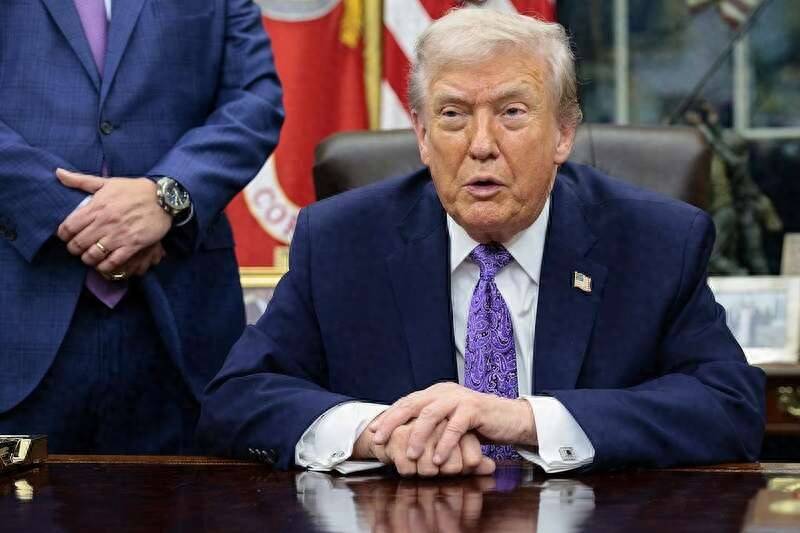
法国推迟举行可能讨论美国关税威胁的七国集团财长会议
Xin Lang Cai Jing· 2026-01-21 15:22
Group 1 - France has postponed its first finance ministers' meeting since taking over the G7 presidency, originally expected to discuss President Trump's tariff threats [1][2] - French Finance Minister Roland Lescure attempted to hold a video conference with other finance ministers, but the meeting was delayed due to scheduling conflicts related to the Davos World Economic Forum [1] - France assumed the G7 presidency in early January but has not yet clarified its priorities [2] Group 2 - Last week, the U.S. convened G7 members and a few other countries' ministers in Washington to discuss how to address rare earth issues [2] - French President Emmanuel Macron criticized Trump's strategies during a speech at Davos, stating that tariffs are "absolutely unacceptable" [2]
美议员出馊主意:不给稀土,就不让中国航班落地
Hu Xiu· 2025-09-22 05:06
Core Viewpoint - The letter from Muller-Nar to President Trump emphasizes the need for strong coordinated actions against China's landing rights in order to pressure China into supplying rare earth elements, indicating the U.S. anxiety over the rare earth issue [1] Group 1 - Muller-Nar's letter was sent on September 18, urging the Trump administration and U.S. allies to take decisive actions regarding China's landing rights [1] - The proposal appears to be a strong pressure tactic but reveals underlying concerns within the U.S. regarding rare earth supply [1]
“既然达成共识 双方都应遵守”
Bei Jing Qing Nian Bao· 2025-06-12 17:58
Core Viewpoint - The first meeting of the China-U.S. economic and trade consultation mechanism took place in London on June 9-10, where both sides reached a principled consensus on measures to implement the important consensus from the June 5 call between the two heads of state and to consolidate the results of the Geneva economic and trade talks [1][2]. Group 1: Meeting Outcomes - The China-U.S. economic and trade teams achieved a principled consensus on measures to address mutual economic concerns [1]. - Both sides will further utilize the consultation mechanism to maintain communication, enhance consensus, reduce misunderstandings, and strengthen cooperation [1]. Group 2: Stance on U.S. Relations - China views its relationship with the U.S. through the lens of mutual respect, peaceful coexistence, and win-win cooperation [2]. - China consistently opposes unilateral tariff measures and urges the U.S. to adhere to WTO rules while promoting stable and sustainable development of economic relations [2]. Group 3: Rare Earths Policy - China, as a responsible major country, considers the reasonable needs and concerns of other countries in the civilian sector regarding rare earth exports and has approved a certain number of compliant applications [2].
研客专栏 | 中美通话的“留白”
对冲研投· 2025-06-06 11:40
Core Viewpoint - The recent phone call between President Xi and President Trump marks a significant turning point in US-China relations, initiating trade negotiations while shifting the focus from tariff battles to fundamental competition and supply chain dynamics [1][2]. Group 1: Phone Call Details - The call lasted approximately 1.5 hours, similar to the shortest duration of previous calls between Xi and Biden, indicating a more focused discussion [1]. - The conversation primarily revolved around economic and trade issues, with minimal discussion on geopolitical matters, suggesting a strategic shift in priorities [1][4]. Group 2: Context and Signals - Prior to the call, there were clear signals indicating a potential high-level dialogue, including increased interactions from US officials and the Chinese Foreign Ministry [2]. - Historical patterns show that increased diplomatic activity often precedes significant discussions between the two nations [2][3]. Group 3: Trade Negotiation Insights - The discussions hinted at a framework for returning to normalcy in trade relations, with a focus on rare earth exports in exchange for easing restrictions on Chinese students and technology [4]. - Both sides expressed a commitment to continue implementing the Geneva consensus and to hold new rounds of talks within 1-2 weeks [4][6]. Group 4: Market Reactions - Historically, markets tend to react positively to US-China leader calls, with the Chinese yuan often appreciating and stock markets showing favorable performance [7][8]. - The extent of market movements is influenced by the significance of the call and the prevailing international and domestic contexts [7]. Group 5: Future Considerations - The path to resolving trade and geopolitical tensions remains complex, with ongoing negotiations expected to be gradual rather than immediate [7]. - The current environment of uncertainty may impact economic conditions, particularly in the US, where factors like weakening economic performance and debt issues could affect market stability [7].