
算力枢纽

Search documents
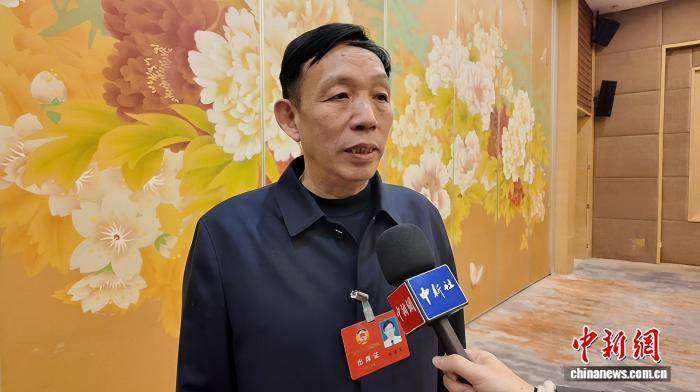
山东省政协委员“把脉”10万亿新起点、“新引擎”
Sou Hu Cai Jing· 2026-01-27 09:17
Core Insights - Shandong Province is projected to achieve a GDP of 10.3 trillion yuan by 2025, marking it as the first northern province and the third in China to enter the "trillion club" with a year-on-year growth of 5.5% [1][3] - The economic breakthrough is attributed to a combination of strengthening the real economy, activating growth momentum, and precise policy support, leading to both quantitative and qualitative improvements [1][3] Economic Structure - Shandong's industrial foundation is robust, with a projected year-on-year growth of 7.6% in industrial added value by 2025, supported by growth in 36 industrial sectors [1][3] - As an agricultural powerhouse, Shandong aims for a total agricultural output value of 1.3 trillion yuan by 2025, maintaining grain production above 110 billion jin for five consecutive years, showcasing a complementary economic structure between agriculture and industry [3][4] Transformation Strategy - The province is addressing its reliance on traditional industries through a three-step strategy: revitalizing traditional industries, expanding emerging industries, and planning for future industries [3][4] - Technological upgrades are being emphasized to transform traditional sectors like petrochemicals and steel into high-end, intelligent, and green industries [3][4] Green Transition - Shandong is positioned as a leader in green, low-carbon development, with non-fossil energy accounting for 54.2% of installed capacity by 2025, an increase of 23.4 percentage points since 2020 [4] - The province is breaking the notion that high energy consumption is necessary for high growth, achieving a balance between ecological and economic benefits [4] Trade and Openness - Shandong's foreign trade is shifting from a focus on goods to institutional and multidimensional collaboration, with a projected year-on-year growth of 4.5% in imports and exports by 2025 [4][5] - The province's general trade will account for 64.8% of its trade structure, with private enterprises contributing 76.3% to foreign trade growth [4][5] Future Directions - Moving forward, Shandong aims to focus on innovation, industrial upgrading, regional collaboration, improving livelihoods, and enhancing openness [5][6] - Recommendations include strengthening major technological breakthroughs, optimizing the innovation ecosystem, and promoting the integration of digital technology with the real economy [5][6] - The province is also encouraged to enhance its marine economy and develop new industries such as offshore wind power and marine biomedicine [5][6]

押注全球算力第三极:英伟达、xAI、联想沙特投资进入收获期
Ge Long Hui· 2025-12-18 05:50
Core Insights - Saudi Arabia is transforming into the world's third-largest computing hub, following the US and China, as part of its "Vision 2030" strategy aimed at diversifying its economy beyond oil dependency [2][16] - The country is investing heavily in high-performance computing and advanced technology, attracting global tech giants like NVIDIA, AMD, Amazon AWS, xAI, and Microsoft to establish partnerships and projects in the region [2][6] Investment and Infrastructure - The Saudi Public Investment Fund (PIF) is the driving force behind the AI transformation, acting as both a fund provider and a major customer [4] - PIF's subsidiaries, Alat and Humain, are focused on building a dual-driven system of manufacturing and computing capabilities, with Alat concentrating on hardware and Humain on AI technology and infrastructure [4][5] - A notable collaboration includes a $2 billion partnership with Lenovo to establish a server manufacturing facility in Riyadh, expected to produce millions of devices annually by 2026 [4][10] Strategic Partnerships - Major tech companies are entering the Saudi market, with NVIDIA planning to build an AI factory utilizing advanced GPUs, and AWS investing over $5 billion to create an "AI Zone" data center [6][7] - The partnerships aim to develop AI infrastructure and applications, including Arabic language models, enhancing Saudi Arabia's position in the global AI landscape [7][14] Economic Impact - The AI sector is projected to significantly contribute to Saudi Arabia's GDP, with estimates suggesting it could account for 12.4% of the GDP by 2030, translating to a substantial economic impact of $320 billion across the MENA region [14][15] - The region's IT spending is expected to reach $169 billion by 2026, indicating a robust growth trajectory as countries like Saudi Arabia and the UAE transition from traditional energy economies to AI powerhouses [15][16] Market Expansion and Diversification - Lenovo aims to increase its revenue from the Middle East to approximately $6 billion, reflecting the strategic importance of the region for tech giants seeking growth opportunities amid saturated traditional markets [13][15] - The establishment of a comprehensive AI ecosystem in Saudi Arabia, covering computing infrastructure, AI models, and industry applications, is creating a new cluster effect for global tech companies [15][16]


