算力稀缺

Search documents
AI芯片荒:当算力成为比电力更稀缺的资源
傅里叶的猫· 2026-03-14 02:04
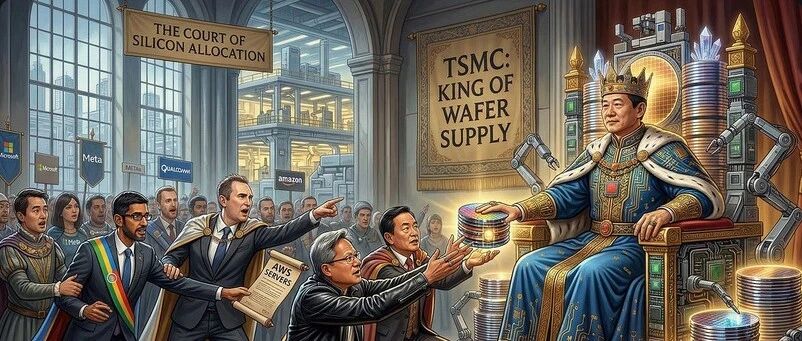
Core Viewpoint - The AI industry is entering a "chip shortage era," which is expected to last until at least 2027, highlighting the importance of supply chain management alongside technological capabilities [37]. Group 1: AI Chip Demand and Supply - Anthropic generated an additional $6 billion in annual recurring revenue in just one month, primarily through its AI programming tool, Claude Code [4]. - The demand for AI chips, particularly those using TSMC's 3nm process, is expected to consume nearly 60% of TSMC's 3nm capacity this year, rising to 86% next year, squeezing out traditional mobile chip customers [11][12]. - TSMC's 3nm capacity is under pressure as major AI chip manufacturers like NVIDIA, AMD, Google, and AWS are all vying for this advanced process technology [8][9]. Group 2: Supply Chain Dynamics - NVIDIA has strategically locked in supplies of logic wafers and memory components, positioning itself as a major beneficiary in the ongoing supply chain competition [33][34]. - The shift in focus from power supply to silicon wafer availability indicates that while data centers and power supply have expanded, the chip supply has not kept pace [28][32]. - The production of high-bandwidth memory (HBM) is also facing challenges, as HBM consumes 3 to 4 times the wafer capacity compared to standard DDR memory, exacerbating the supply constraints [17][22]. Group 3: Market Implications - The competition for chip resources is leading to a "reallocation of bits," where AI applications are prioritized over consumer electronics, potentially resulting in higher prices and slower product cycles for smartphones and PCs [23][38]. - The pricing dynamics for HBM are shifting, with DDR memory prices rising, which may reduce the incentive for manufacturers to shift production capacity from DDR to HBM [22]. - The AI industry's rapid growth is outpacing hardware supply capabilities, leading to a scenario where access to chips becomes a critical factor for success in AI deployment [38]. Group 4: Future Outlook - TSMC's role has become increasingly pivotal, as its capacity allocation decisions directly impact the competitiveness of major players like NVIDIA, Google, and AMD [38]. - The ongoing competition for silicon resources may lead to a significant transformation in the AI landscape, where the ability to secure chips becomes more crucial than algorithmic advancements [38]. - The consumer electronics sector may face significant challenges as AI demand continues to dominate chip production, potentially leading to a decline in smartphone demand and increased costs for consumers [38].


智谱涨幅持续扩大逾22% 中科曙光旗下SothisAI接入智谱GLM-5
Xin Lang Cai Jing· 2026-02-20 01:51
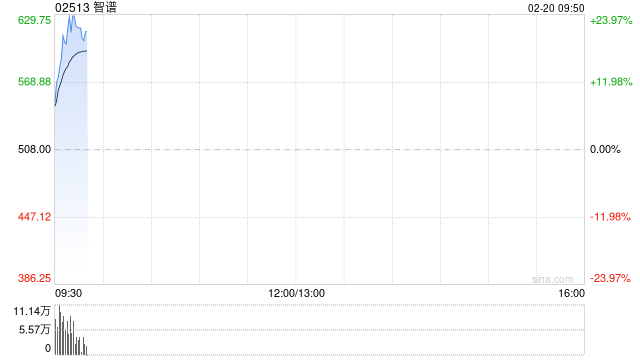
Core Viewpoint - The stock of Zhiyun (02513) opened high and continued to rise, currently up 22.05% at 620 HKD, with a trading volume of 647 million HKD, indicating strong market interest and positive sentiment towards the company's recent developments [6]. Group 1: Company Developments - Zhiyun has integrated its GLM-5 model and Alibaba's Qwen3.5 model into the SothisAI platform, enhancing the construction and operation processes of enterprise AI platforms [6]. - The "Taichu Yuqi" project has completed deep adaptation work for several mainstream domestic open-source large models, including Zhiyun's GLM-5.0 and Alibaba's Qwen3.5-397B-A17B [6]. Group 2: Pricing Strategy - On February 12, Zhiyun announced a price increase of "at least 30%" for its GLM Coding Plan subscription, reflecting a shift in industry pricing logic as overseas cloud vendors also raised prices [6]. - Guolian Minsheng Securities noted that the price increase of Zhiyun's GLM Coding Plan indicates a change in the pricing logic of the industry, where the consumption of inference becomes a production resource, allowing model vendors to convert "computing power scarcity" into gross profit and cash flow through tiered pricing and subscription products [6].

芯片的2025:“结构成型年”已至 AI算力与存储“两翼齐飞”
Xin Hua Cai Jing· 2025-12-31 02:57
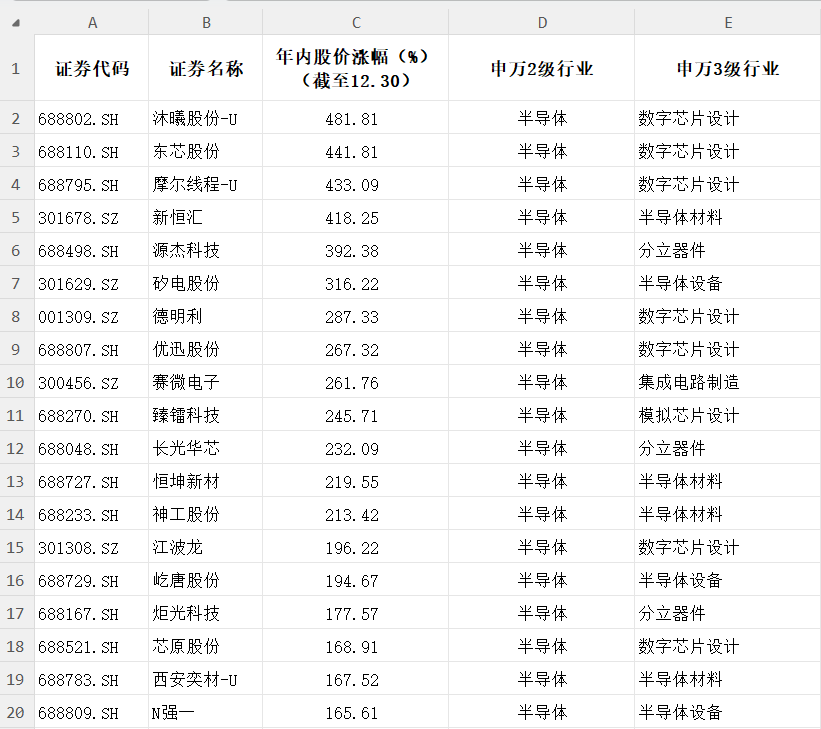
Group 1: AI Industry Overview - The AI industry is experiencing a paradigm shift from technological miracles to practical value, with capital markets transitioning from speculative hype to value reassessment [1] - 2025 is recognized as a "structural formation year" for the market, driven by policy support, explosive AI demand, industry cycle recovery, and accelerated domestic substitution [1] Group 2: Semiconductor Market Performance - Among 172 semiconductor listed companies in A-shares, 144 saw stock price increases in 2025, with 29 companies doubling their stock prices and 4 companies increasing by over 4 times [2][3] - The top three performers in the semiconductor sector were沐曦股份-U (481.81%), 东芯股份 (441.81%), and 摩尔线程-U (433.09%) [2][3] Group 3: AI Computing and Storage Chips - AI computing and storage chips emerged as standout performers in the capital market in 2025, with significant demand growth [4] - The release of DeepSeek-R1 in January 2025 marked a surge in AI model computing demand, leading to substantial orders for domestic GPU manufacturers like 沐曦股份 and 摩尔线程 [5] - Storage chip prices began to rise due to production cuts by major manufacturers, with DRAM and NAND prices increasing significantly [6] Group 4: Domestic GPU Companies - 摩尔线程 and 沐曦股份 are recognized as leading domestic GPU manufacturers, focusing on high-performance general-purpose GPU development [8] - Both companies successfully listed on the Sci-Tech Innovation Board in 2025, attracting significant institutional investment and achieving remarkable stock price increases post-IPO [9] Group 5: Hard Technology Market Trends - The A-share market in 2025 revolved around sectors like AI, computing, robotics, and commercial aerospace, with hard technology becoming a core investment focus [10] - The demand for AI computing is supported by breakthroughs in domestic AI chip technology and significant performance improvements from companies like 寒武纪 [10] - The energy sector is also becoming increasingly relevant due to the high electricity demand driven by AI, creating a synergistic market with technology and energy sectors [11][12]