算力霸权

Search documents
“图钉型”社会降临:马斯克预言下的中产崩塌与算力霸权
Tai Mei Ti A P P· 2025-12-24 09:48
Core Insights - Elon Musk predicts that in the future, work will become optional due to advancements in humanoid robots and AGI technology, leading to a potential collapse of the traditional labor-for-pay economic model [1][2] - The rise of AI and robotics will redefine poverty and wealth distribution, making survival resources more accessible while potentially increasing wealth inequality [2][3] Group 1: Economic Implications - The marginal cost of productivity is approaching zero, which could lead to a deflationary environment where the value of human labor diminishes significantly [1][2] - The traditional economic model, which has relied on labor as a core production factor since the Industrial Revolution, is being disrupted by technological advancements [1][3] Group 2: Social Structure Changes - The middle class's economic security is eroding as AI reduces the value of high-skill jobs, leading to a polarized "tack-shaped" society where wealth is concentrated among those who control computational power and algorithms [3][5] - In this new economic landscape, computational power and energy may become the new forms of currency, overshadowing traditional monetary wealth [3][5] Group 3: Human Capital and Innovation - Musk emphasizes that human creativity and intuition remain irreplaceable, as demonstrated by the development of the Starship, which was not reliant on AI [4][6] - The future economy will prioritize cognitive abilities and knowledge over traditional financial assets, as the ability to leverage AI for complex problem-solving will become crucial [7]
鹏城实验室主任高文:“中国算力网”是争夺“算力主权”的关键基础设施
Xin Lang Zheng Quan· 2025-11-28 09:51
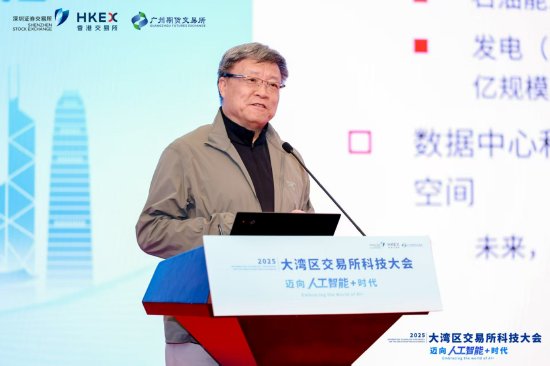
Core Viewpoint - The 2025 Greater Bay Area Exchange Technology Conference will focus on the theme of "Moving Towards the Era of Artificial Intelligence," highlighting the importance of optimizing computing resources in China and addressing national strategies related to computing power [1][3]. Group 1: Event Overview - The conference will be held on November 28-29, organized by the Shenzhen Stock Exchange in collaboration with the Hong Kong Stock Exchange and the Guangzhou Futures Exchange [1]. - Gao Wen, Director of the Pengcheng Laboratory and a distinguished professor at Peking University, will deliver a keynote speech on "China's Computing Network Plan and Pengcheng Brain Model" [1]. Group 2: Strategic Insights - The "China Computing Network" research initiative is rooted in the National Development and Reform Commission's "East Data West Computing" project, which aims to combine the abundant energy resources in the west with the dense computing demands in the east for optimized national computing resource allocation [3]. - Gao Wen emphasized the need to pay close attention to the U.S. initiatives like the "Gateway to the Stars" and "Genesis Mission," which aim to establish global computing power dominance [3]. - Accelerating the construction of the "China Computing Network" is deemed essential not only for economic development but also for ensuring national computing sovereignty in the digital age, thus avoiding dependency in future competitive scenarios [3].

突然,全线爆发!
Ge Long Hui· 2025-11-26 08:41
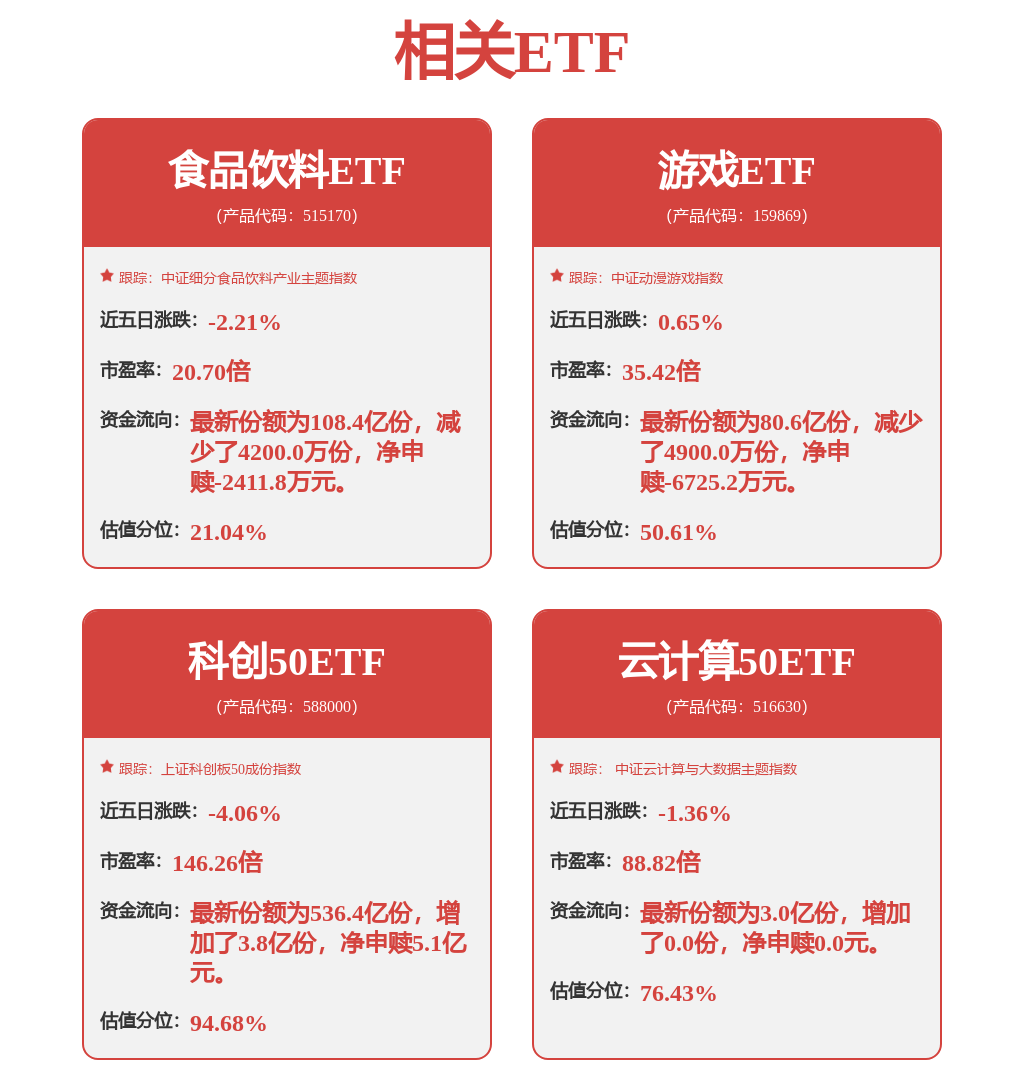
Core Insights - The competition for computing power among global giants is rapidly impacting the global supply chain [1] - The recent surge in AI-related stocks and ETFs indicates a strong market sentiment towards AI technologies [2][3][5] - Analysts highlight that the capital expenditure in the AI sector is consistently exceeding expectations, suggesting a bullish outlook for the industry [4] AI Market Dynamics - Several AI-related ETFs have shown significant gains, with the Artificial Intelligence ETF (159819) rising by 3.67% and a total increase of 5.88% over the past two days [3] - The AI-themed ETF (159819) has attracted a net inflow of 8.034 billion yuan this year, reaching a total size of 22.919 billion yuan, making it the largest in its category [5] - The Sci-Tech AI ETF (588730) has also seen a net inflow of 1.175 billion yuan this year, focusing on key players in the AI chip and application sectors [5] Competitive Landscape - Nvidia's market position is under severe threat as Google is reportedly negotiating with Meta to utilize Google's TPU computing power, potentially worth billions [16] - Nvidia's stock has experienced significant volatility, with a drop of over 7%, leading to a market cap loss of approximately 1 trillion USD [10][12] - The competition between Nvidia and Google is characterized as a struggle for "computing power hegemony," with market sentiment shifting rapidly [18][30] Economic Implications - Major tech companies are projected to spend 344 billion USD on capital expenditures this year, which constitutes about 1.1% of the US GDP [28] - Analysts warn that a downturn in AI tech stocks could have broader implications for the US economy, potentially dragging GDP down by 1-1.5% within a year [28][29] - The current market sentiment is divided, with some viewing the AI boom as a revolutionary leap, while others see it as a bubble nearing its peak [30][32]