紧缩性货币政策

Search documents
糜妓挠美联储“独立性”面临挑战,华尔街想确定“是敌是友”,美联储新主席提名引发市场猜测-沃什-特朗普-鲍威尔-美联储会议纪要
Sou Hu Cai Jing· 2026-02-06 07:53
Core Viewpoint - The appointment of Kevin Walsh as the new Federal Reserve Chairman by President Trump has raised concerns about the independence of the Federal Reserve and market reactions indicate uncertainty regarding Walsh's ability to maintain this independence and his suitability for the role [1][6]. Market Reactions - Following the announcement of Walsh's nomination, U.S. financial markets experienced volatility, with major stock indices declining, including a 0.9% drop in the Nasdaq Composite Index [3]. - Precious metal prices saw significant declines, with gold prices dropping by 11% and silver prices falling by 31%, marking the largest single-day declines since 1980 [3]. - The U.S. dollar and long-term bond yields increased, as some market participants viewed Walsh as a "relatively safe choice" due to his previous experience at the Federal Reserve and his firm stance on inflation, supporting tight monetary policy [3]. Walsh's Background and Position - Walsh served as a Federal Reserve Governor from 2006 to 2011 and has been labeled as having a "hawkish" stance on inflation, advocating against low interest rates and large-scale bond purchases [4]. - Recently, he has publicly supported lowering borrowing costs, aligning more closely with President Trump's views, which contrasts with his previous hawkish image [4]. - Walsh's belief in reducing the Federal Reserve's balance sheet has led some investors to think this could mitigate the impact of rate cuts [4]. Concerns About Independence - There are ongoing concerns regarding the potential loss of independence for the Federal Reserve due to Trump's influence, with questions about what Walsh's appointment means for this independence [6]. - Some Wall Street analysts view Walsh's hawkish background as a positive signal, while his recent alignment with Trump adds uncertainty to the market [6]. Political Implications - Walsh's nomination has sparked discussions in the political arena, with Senator Elizabeth Warren questioning him about the Trump administration's pressure on the Federal Reserve and its implications for the institution's independence [7]. - Senator Tom Tillis has stated he will oppose any nominee for the Federal Reserve Chairman until the investigation into current Chairman Powell is resolved [7]. Challenges Ahead - Despite appearing to meet Trump's requirements, Walsh faces significant challenges in implementing changes within the large structure of the Federal Reserve [9]. - The speed and extent of potential interest rate cuts under Walsh's leadership remain uncertain, with analysts predicting further rate cuts this year [9]. - If the Federal Reserve were to lower short-term rates too quickly and be perceived as politically motivated, it could lead to concerns about rising inflation and result in investors selling government bonds [9].

美联储“独立性”面临挑战,华尔街想确定“是敌是友”,美联储新主席提名引发市场猜测
Sou Hu Cai Jing· 2026-02-01 22:52
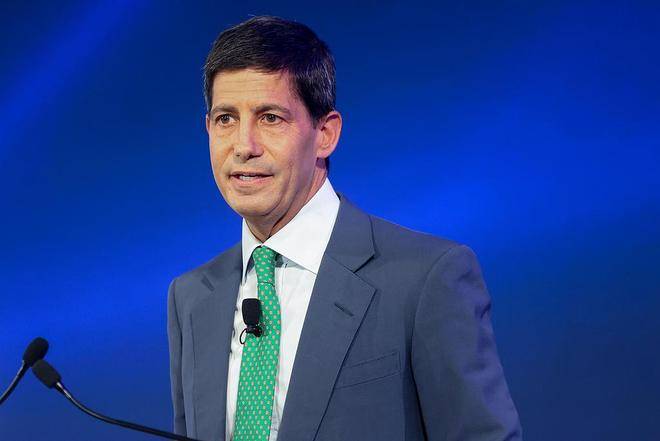
Core Viewpoint - The appointment of Kevin Warsh as the new Federal Reserve Chairman by President Trump has raised concerns about the independence of the Fed and market reactions indicate uncertainty regarding Warsh's ability to maintain this independence and his suitability for the role [1][5]. Market Reactions - Following the announcement of Warsh's nomination, major U.S. stock indices declined, with the Nasdaq Composite Index dropping by 0.9%. Precious metal prices also fell sharply, with gold down 11% and silver down 31%, marking their largest single-day declines since 1980 [3]. - The U.S. dollar and long-term bond yields increased, as some market participants viewed Warsh as a "relatively safe choice" due to his previous experience at the Fed and his firm stance on inflation, which supports tighter monetary policy [3]. Warsh's Background and Position - Warsh, who served as a Fed governor from 2006 to 2011, has been labeled as having a "hawkish" stance on inflation, advocating against low interest rates and large-scale bond purchases. However, he has recently expressed support for lowering borrowing costs, aligning more closely with Trump's views [3][4]. - His belief in reducing the Fed's balance sheet has led some investors to think this could mitigate the impact of rate cuts [3]. Concerns Over Fed Independence - There are ongoing concerns about the potential loss of the Fed's independence due to Trump's influence. The key question is what Warsh's appointment means for this independence, especially given his recent alignment with Trump's stance on interest rates [5]. - Senator Elizabeth Warren has raised questions about Warsh's views on the pressure exerted by the Trump administration on the Fed, emphasizing the need for the next Fed Chair to commit to policy-making free from political interference [5]. Challenges Ahead - Warsh's transition into the role may face significant obstacles within the large structure of the Fed. The extent and speed of potential interest rate cuts, as well as the implementation of policy changes, remain uncertain [8]. - Analysts predict that while there may be further rate cuts this year, if the Fed lowers rates too quickly and it appears politically motivated, it could lead to a sell-off in government bonds due to inflation concerns [8].
世界银行预计今年巴西GDP将增长2.4%
Shang Wu Bu Wang Zhan· 2025-10-17 17:29
Core Insights - The World Bank's latest report indicates that Brazil's GDP is expected to grow by 2.4% this year, slightly above the average growth rate of 2.3% for Latin America and the Caribbean [1] - Brazil's GDP growth is projected to be 2.2% in 2026 and 2.3% in 2027 [1] - Guyana is forecasted to be the fastest-growing economy in Latin America this year, with a GDP increase of 11.8%, followed by Argentina at 4.6% [1] Economic Challenges - The global economic slowdown and falling commodity prices have significantly impacted major commodity-exporting countries, including Brazil, Chile, Venezuela, and Bolivia [1] - Tight monetary policies adopted by Latin American countries, including Brazil, are putting pressure on economic growth [1] - Insufficient public and private investment, along with limited fiscal space, are critical factors constraining economic growth in Latin American countries [1]
美联储哈玛克:9月称需紧缩货币政策抑通胀
Sou Hu Cai Jing· 2025-09-29 13:08
Group 1 - The core viewpoint of the article emphasizes the need for a tightening monetary policy to curb inflation as stated by Federal Reserve's Hamak [1] Group 2 - The article highlights that the current economic conditions necessitate a reassessment of monetary strategies to address rising inflation [1]
面对通胀压力,俄央行维持21%基准利率
Sou Hu Cai Jing· 2025-05-25 23:11
Group 1 - The current annual inflation rate in Russia is 10.3%, with a seasonally adjusted price growth rate of 8.3% in the first quarter, lower than the projected 12.9% for Q4 2024, indicating significant achievements from the Central Bank's previous measures [3] - The Central Bank of Russia plans to maintain a tight monetary policy to ensure the inflation rate returns to the target level of 4% by 2026, which implies high interest rates and restrictions on consumption and credit will persist for an extended period [3] - The average benchmark interest rate for this year is projected to be between 19.5% and 21.5%, decreasing to 13.0% to 14.0% by 2026, with expectations that the inflation rate will drop to 7% to 8% by the end of this year and to 4% by 2026 [3] Group 2 - The Russian economy is deviating from a balanced growth trajectory, with rising household incomes and active budget spending being the main drivers of domestic demand [4] - Economic growth has slowed in the first quarter compared to the end of 2024, indicating a shift towards a more sustainable development model, while the labor market shows low unemployment but some relief in labor shortages across various regions and industries [4] - Wage growth is expected to be lower this year compared to the previous two years, although it will still exceed labor productivity growth, adding pressure to prices [4] Group 3 - Inflation risks may rise in the medium term due to sustained domestic demand, stable inflation expectations, and potential deterioration in external trade conditions [4] - Global economic weakness, falling oil prices, or escalating geopolitical tensions could pressure the ruble exchange rate, leading to further price increases in Russia [4] - The Central Bank does not rule out the risk of deflation, which could arise from a sharp decline in domestic demand, accelerated credit cooling, and improvements in the external economic environment [4]