
通胀鹰派

Search documents
糜妓挠美联储“独立性”面临挑战,华尔街想确定“是敌是友”,美联储新主席提名引发市场猜测-沃什-特朗普-鲍威尔-美联储会议纪要
Sou Hu Cai Jing· 2026-02-06 07:53
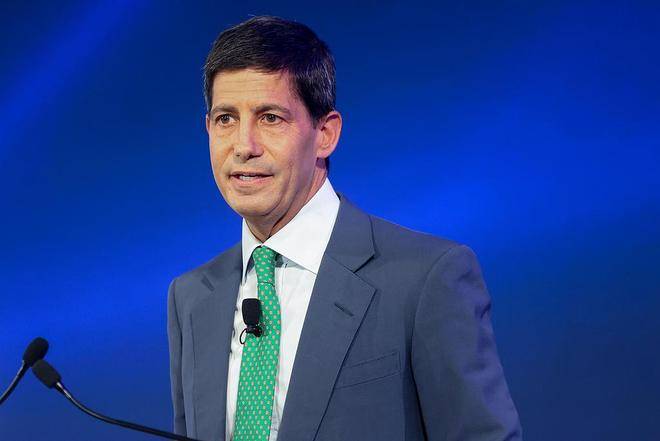
Core Viewpoint - The appointment of Kevin Walsh as the new Federal Reserve Chairman by President Trump has raised concerns about the independence of the Federal Reserve and market reactions indicate uncertainty regarding Walsh's ability to maintain this independence and his suitability for the role [1][6]. Market Reactions - Following the announcement of Walsh's nomination, U.S. financial markets experienced volatility, with major stock indices declining, including a 0.9% drop in the Nasdaq Composite Index [3]. - Precious metal prices saw significant declines, with gold prices dropping by 11% and silver prices falling by 31%, marking the largest single-day declines since 1980 [3]. - The U.S. dollar and long-term bond yields increased, as some market participants viewed Walsh as a "relatively safe choice" due to his previous experience at the Federal Reserve and his firm stance on inflation, supporting tight monetary policy [3]. Walsh's Background and Position - Walsh served as a Federal Reserve Governor from 2006 to 2011 and has been labeled as having a "hawkish" stance on inflation, advocating against low interest rates and large-scale bond purchases [4]. - Recently, he has publicly supported lowering borrowing costs, aligning more closely with President Trump's views, which contrasts with his previous hawkish image [4]. - Walsh's belief in reducing the Federal Reserve's balance sheet has led some investors to think this could mitigate the impact of rate cuts [4]. Concerns About Independence - There are ongoing concerns regarding the potential loss of independence for the Federal Reserve due to Trump's influence, with questions about what Walsh's appointment means for this independence [6]. - Some Wall Street analysts view Walsh's hawkish background as a positive signal, while his recent alignment with Trump adds uncertainty to the market [6]. Political Implications - Walsh's nomination has sparked discussions in the political arena, with Senator Elizabeth Warren questioning him about the Trump administration's pressure on the Federal Reserve and its implications for the institution's independence [7]. - Senator Tom Tillis has stated he will oppose any nominee for the Federal Reserve Chairman until the investigation into current Chairman Powell is resolved [7]. Challenges Ahead - Despite appearing to meet Trump's requirements, Walsh faces significant challenges in implementing changes within the large structure of the Federal Reserve [9]. - The speed and extent of potential interest rate cuts under Walsh's leadership remain uncertain, with analysts predicting further rate cuts this year [9]. - If the Federal Reserve were to lower short-term rates too quickly and be perceived as politically motivated, it could lead to concerns about rising inflation and result in investors selling government bonds [9].

国际金银价格延续跌势,金价暴跌8%银价累计跌幅超37%
Sou Hu Cai Jing· 2026-02-05 04:11
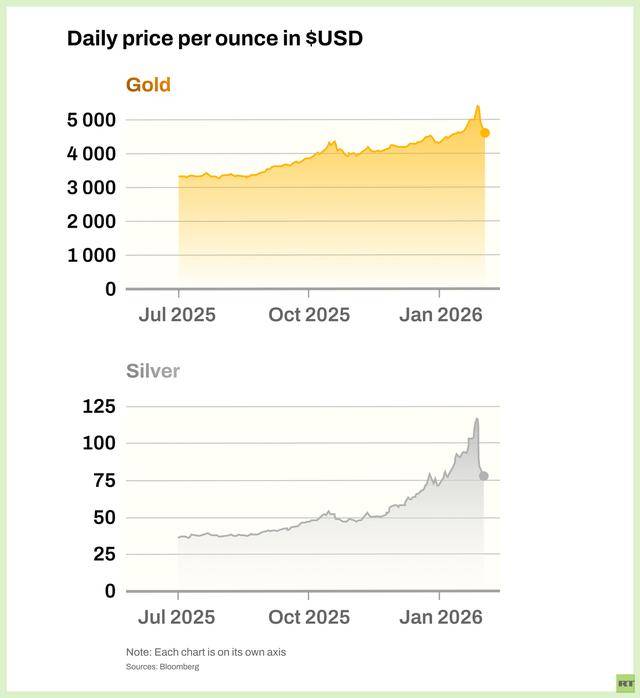
Core Viewpoint - Gold and silver prices have significantly declined after a recent rebound, which had previously pushed their prices to historical highs [1][3]. Group 1: Price Movements - Gold prices plummeted by 8% to $4,465 per ounce, breaking the previous historical high of nearly $5,600 [3]. - Silver prices fell by 7%, following a 30% drop the previous day [3]. - In late January, gold had surpassed $5,500 per ounce, and silver reached over $120 per ounce [4]. Group 2: Market Influences - The sell-off was triggered by President Donald Trump's nomination of Kevin Walsh, a "hawkish" figure, to potentially succeed Jerome Powell as Fed Chair, easing concerns about aggressive monetary policy [3][4]. - Speculative buying from China had previously driven gold and silver prices beyond historical trading ranges, contributing to the rapid price collapse [3]. Group 3: Market Dynamics - The recent price drop is attributed to a combination of factors, including the perception of Walsh's nomination as a means to restore Fed credibility and discipline in monetary policy [4]. - The market's vulnerability was exacerbated by the influx of leveraged funds, creating a crowded trading environment that led to forced liquidations and further price declines [5]. Group 4: Future Outlook - Despite the recent downturn, major Wall Street investment banks maintain a bullish outlook, with Deutsche Bank predicting gold prices could reach $6,000 per ounce by year-end [5]. - Long-term factors such as "de-dollarization" and rising U.S. debt risks are expected to support gold prices, indicating that the current pullback is a short-term correction rather than the end of a bull market [5].
金银惊魂跳水!现货黄金跌超2%、现货白银一度跌超17%,中东局势降温+美数据强劲,历史级回调还是趋势反转?
Jin Rong Jie· 2026-02-05 04:05
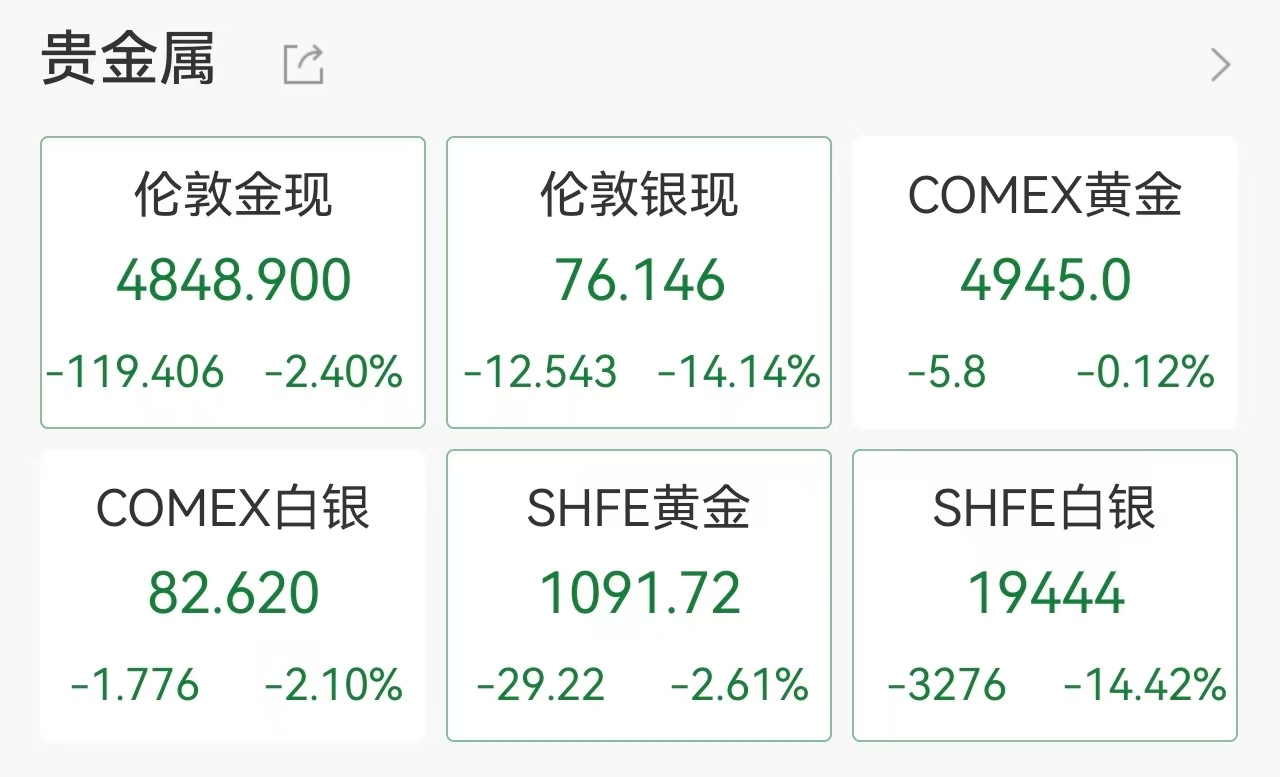
Core Viewpoint - The recent sharp decline in gold and silver prices is attributed to a combination of reduced geopolitical tensions and resilient U.S. economic data, which has diminished safe-haven demand [1] Group 1: Market Performance - As of the latest report, spot gold has dropped by 2.4% to $4848.9 per ounce, previously falling over 3.6% below $4800 per ounce; spot silver has decreased by 14.14% to $76.146 per ounce, having plummeted over 17% below $74 per ounce [1] - Last Friday marked the beginning of a significant downturn, with silver prices crashing by 26%, the largest drop in history, while gold fell by 9%, representing the worst single-day performance in nearly a decade [1] Group 2: Economic Indicators - Upcoming U.S. economic data to watch includes JOLTS job openings and initial jobless claims for the week ending January 31 [1] - The strengthening U.S. dollar and stable U.S. Treasury yields have also contributed to the downward pressure on gold prices [1] Group 3: Influential Factors - The nomination of Kevin Warsh as the next Federal Reserve Chairman by Trump has been identified as a catalyst for market panic, as Warsh is known for his hawkish stance on inflation and support for quicker interest rate cuts [1] - Warsh's views on excessive quantitative easing and support for balance sheet reduction may influence the narrative around de-dollarization and fiat currency proliferation [1] Group 4: Historical Context - Historical analysis indicates that significant price increases in gold typically require around six months to digest, with the current rapid price increases leading to a necessary correction to alleviate overbought conditions [2] - The report highlights that gold experienced 55 record highs in the previous year and surged over 20% in less than a month at the start of this year, indicating an unsustainable rate of increase [2]
刚厣秩美联储“独立性”面临挑战,华尔街想确定“是敌是友”,美联储新主席提名引发市场猜测-沃什-特朗普-鲍威尔-美联储会议纪要
Sou Hu Cai Jing· 2026-02-04 19:36
Core Viewpoint - The appointment of Kevin Walsh as the new Federal Reserve Chairman by President Trump has raised concerns about the independence of the Federal Reserve and market reactions indicate uncertainty regarding Walsh's ability to maintain this independence and his suitability for the role [1][6]. Market Reactions - Following the announcement of Walsh's nomination, U.S. financial markets experienced volatility, with major stock indices declining, including a 0.9% drop in the Nasdaq Composite Index [3]. - Precious metal prices saw significant declines, with gold prices dropping by 11% and silver prices falling by 31%, marking the largest single-day declines since 1980 [3]. - The U.S. dollar and long-term bond yields increased, as some market participants viewed Walsh as a "relatively safe choice" due to his previous experience at the Federal Reserve and his firm stance on inflation, supporting tight monetary policy [3]. Walsh's Background and Position - Walsh served as a Federal Reserve Governor from 2006 to 2011 and has been labeled as having a "hawkish" stance on inflation, advocating against low interest rates and large-scale bond purchases [4]. - Recently, he has publicly supported lowering borrowing costs, aligning more closely with President Trump's views, which contrasts with his previous hawkish image [4]. - Walsh's belief in reducing the Federal Reserve's balance sheet has led some investors to think this could mitigate the impact of rate cuts [4]. Concerns Over Independence - There are ongoing concerns about the potential loss of independence for the Federal Reserve due to Trump's influence, with questions arising about what Walsh's appointment means for this independence [6]. - Some Wall Street analysts view Walsh's hawkish background as a positive signal, while his recent alignment with Trump adds uncertainty to the market [6]. Political Implications - Walsh's nomination has sparked discussions in the political arena, with Senator Elizabeth Warren questioning him about the Trump administration's pressure on the Federal Reserve and its implications for the institution's independence [7]. - Senator Tom Tillis has stated he will oppose any Federal Reserve Chairman nominee until the investigation into current Chairman Powell is resolved [7]. Challenges Ahead - Despite appearing to meet Trump's requirements, Walsh faces significant challenges in implementing changes within the large structure of the Federal Reserve [9]. - The speed and extent of potential interest rate cuts under Walsh's leadership remain uncertain, with analysts predicting further rate cuts this year [9]. - If the Federal Reserve were to lower short-term rates too quickly and be perceived as politically motivated, it could lead to concerns about rising inflation and result in investors selling government bonds [9].
金荣中国:现货黄金小幅反弹,逐渐摆脱短期情绪逆转氛围
Sou Hu Cai Jing· 2026-02-03 07:46
Fundamental Analysis - The core point of the article highlights the recent volatility in the gold market, where spot gold prices experienced a dramatic drop from nearly $5600 to a low of $4401, a decline of nearly $1200, driven by margin increases from the Chicago Mercantile Exchange (CME) and market reassessment of the Federal Reserve's future leadership [1][3] - The market's reaction is attributed to a subtle shift in policy expectations following President Trump's nomination of former Fed Governor Walsh, which raised concerns about potential tightening of liquidity, thereby diminishing gold's appeal as a hedge against monetary easing [3][4] - The CME's decision to raise margin requirements for precious metal futures exacerbated the sell-off, forcing many speculative long positions to liquidate, creating a vicious cycle of price declines [3] - The strengthening of the US dollar during this period made gold more expensive for holders of other currencies, further suppressing demand and contributing to the outflow from gold ETFs [3] Market Outlook - The market is currently assessing Walsh's true policy stance, particularly whether he will lean towards dovish rate cuts or return to a hawkish approach, which could impact gold prices depending on his signals regarding financial conditions [4] - Recent data indicates a rebound in US manufacturing; however, uncertainty surrounding trade policies and the emergence of anti-US buyer sentiment suggest that the recovery may not be stable [4] - The partial government shutdown may delay the release of key employment data, increasing market information asymmetry, and the future attractiveness of gold will depend on whether the economy achieves a "soft landing" or faces further setbacks [4] - Until Walsh's policies are clarified and the macroeconomic landscape becomes clearer, market volatility is expected to remain high [4] Technical Analysis - On the daily chart, gold prices tested the $4400 support level, indicating potential market stagnation following the sharp decline [5] - In the 1-4 hour timeframe, the market continues to show selling pressure, with prices failing to recover from the recent lows [5] - Current trading conditions suggest a range between $4550 and $5050, with a cautious approach recommended due to potential liquidity risks [6]


长江有色:中国工厂数据亮眼提振多头 3日铜价或涨跌有限
Xin Lang Cai Jing· 2026-02-03 03:17
Group 1 - The copper price has been pressured by profit-taking and speculative selling, with LME copper closing down 1.3% at $12,900 per ton, a decrease of $171, and trading volume down by 2,065 contracts [1] - The Shanghai copper futures market also showed weakness, with the main contract closing at 100,820 yuan per ton, down 1.01% [1] - LME copper inventory decreased by 300 tons to 174,675 tons, reflecting a 0.17% decline [1] Group 2 - The significant drop in copper prices on February 2 was primarily due to market reactions to the potential appointment of a new Federal Reserve Chair, raising concerns about liquidity tightening [2] - The ISM manufacturing PMI in the U.S. rebounded to 52.6, the highest level since August 2022, indicating a recovery in the manufacturing sector [2] - In China, the manufacturing PMI rose to a three-month high of 50.3, boosting market confidence and driving a rebound in copper prices [2] Group 3 - Supply shortages are expected to persist due to overseas mine shutdowns, while domestic copper concentrate processing fees continue to decline, indicating tight supply conditions [3] - Demand remains weak due to seasonal factors and cautious purchasing behavior from downstream enterprises, leading to increased social inventory [3] - The market is currently dominated by a bearish sentiment, with concerns over demand and inventory accumulation exerting downward pressure on copper prices [3]

大宗商品价格暴跌冲击全球市场
Wen Hua Cai Jing· 2026-02-03 01:41
Group 1 - The commodity market experienced a significant decline, with gold, silver, crude oil, and industrial metals leading the drop, following President Trump's nomination of Kevin Warsh as the next Federal Reserve Chair, which triggered market sell-offs [1][4] - Gold prices fell by 5%, reaching a two-week low, while silver saw a decline of over 7% [3] - The MSCI global index dropped by 0.5%, marking a cumulative decline of 1.5% since its record high on January 27 [2] Group 2 - Crude oil prices decreased by nearly 5% from recent highs, and LME copper fell by 3% [4] - The market had anticipated a successor to Powell who would promote aggressive monetary easing, but Warsh's appointment disrupted this expectation, strengthening the dollar and making dollar-denominated commodities more expensive for holders of other currencies [4][5] - The recent sell-off in precious metals was exacerbated by the CME Group's announcement to raise margin requirements for metal futures contracts, leading to a significant increase in forced liquidations [6] Group 3 - Analysts noted that the current market conditions reflect a synchronized sell-off of precious metals and equities, indicating that investors perceive Warsh's stance as more hawkish, which could lead to higher interest rates for an extended period [5] - The energy market also faced downward pressure due to easing tensions between the U.S. and Iran, with reports suggesting that Iran is engaging in serious dialogue with Washington [6][7] - Concerns about high inventories and weak demand ahead of the Chinese New Year holiday are impacting copper and iron ore markets, with expectations of reduced trading activity as the holiday approaches [7]
为德雷肯米勒工作,沃什学到了什么?
Hua Er Jie Jian Wen· 2026-02-03 00:09
Core Viewpoint - Trump's nomination of Warsh as Federal Reserve Chair brings attention to billionaire investor Druckenmiller, who has significantly influenced Warsh's economic thinking through their long-term collaboration [1][2]. Group 1: Warsh's Background and Influence - Warsh worked with Druckenmiller for over a decade at Duquesne Family Office, where he learned to prioritize data-driven decision-making over reliance on Federal Reserve forecasts [1]. - Despite being viewed as an inflation "hawk," Warsh has recently adopted a more moderate stance, which is seen as a way to maintain the Federal Reserve's independence amid Trump's pressure for rate cuts [1][3]. - Druckenmiller supports Warsh's nomination, stating that labeling Warsh as always hawkish is inaccurate, as he has demonstrated flexibility in his positions [1]. Group 2: Druckenmiller's Investment Philosophy - Druckenmiller is known for one of the best investment records on Wall Street, with an average annual return of approximately 30% and no annual losses throughout his career [2]. - His notable achievements include a significant profit of over $1 billion from shorting the British pound in 1992 while working with Soros [2]. - Druckenmiller's investment strategy is enhanced by insights from influential corporate executives, as he regularly consults them on current business conditions [2]. Group 3: Expectations for Warsh's Leadership - Investors expect Warsh to rely on insights and intelligence gained from his experience with Druckenmiller, which is viewed as a valuable education [3]. - Druckenmiller has long criticized excessive government borrowing and has warned about the U.S. fiscal deficit, labeling it a "debt bomb" [3]. - There is uncertainty regarding the extent of Druckenmiller's influence on Warsh's policies if he becomes Federal Reserve Chair, as the Fed typically maintains a cautious approach to avoid conflicts of interest [5]. Group 4: Balancing Independence and Influence - Critics of Warsh argue that his cautious response during the 2008-09 financial crisis reflects a disconnect between his previous hawkish stance and his current views on deregulation and AI's potential to curb inflation [5]. - Despite concerns about the risks of direct connections between active investors and the Federal Reserve, there is optimism on Wall Street that Warsh can uphold the Fed's tradition of independence while embracing Druckenmiller's data-driven approach [5].
特朗普敲定的美联储主席人选沃什 究竟会表现出哪一面的他?
Xin Lang Cai Jing· 2026-02-02 14:46
Core Viewpoint - Kevin Warsh has been nominated by Trump to serve as the Chairman of the Federal Reserve, raising questions about his potential policy stance given his past views on inflation and interest rates [4][21]. Group 1: Background and Historical Context - In June 2008, Warsh expressed concerns about inflation risks, which he considered the primary threat to the U.S. economy, even as the financial crisis began to unfold [4][18]. - By early 2009, despite rising unemployment rates reaching 10%, Warsh continued to focus on inflation risks rather than the economic downturn [4][19]. Group 2: Current Economic Views and Predictions - Recently, Warsh has advocated for interest rate cuts, citing productivity gains and the impact of artificial intelligence as factors supporting rapid economic growth without high inflation [8][22]. - Analysts, including Michael Feroli from JPMorgan, predict that Warsh may push for rate cuts this year, but his stance could shift back to a more hawkish position after the midterm elections [8][22]. Group 3: Market Reactions and Implications - Following Warsh's nomination, U.S. stock markets declined, the dollar rebounded, and precious metals like gold and silver experienced significant drops, indicating market concerns about his potential hawkish policies [10][24]. - Gold fell by 8% and silver dropped 25%, marking the largest single-day decline since 1980, reflecting investor anxiety over inflation and Fed independence [10][24]. Group 4: Warsh's Career and Political Dynamics - Warsh's career has been characterized as hawkish, with a history of supporting tight monetary policies even during economic crises [25][27]. - Trump's nomination of Warsh is seen as a strategic choice for a traditional Republican candidate, with Warsh's extensive experience in economic policy making him a suitable candidate for the Fed [25][27]. Group 5: Future Considerations and Independence - Warsh's term as Fed Chairman could extend beyond Trump's presidency, potentially allowing him greater independence in decision-making [28][30]. - The Supreme Court's stance on Fed independence may further protect Warsh's position, especially if it rules against Trump's attempts to influence Fed appointments [30].
清醒的头脑比黄金更“贵”警惕金银市场那些暴富故事
Mei Ri Jing Ji Xin Wen· 2026-02-02 12:57
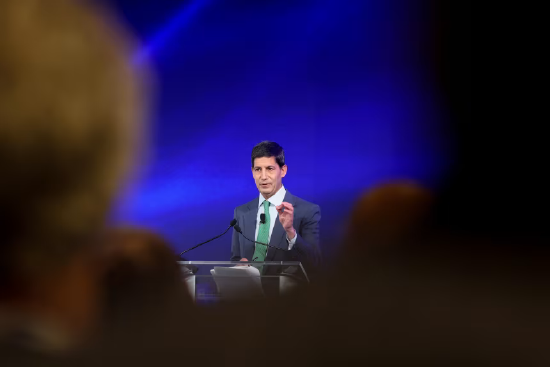
Group 1 - The gold and silver markets experienced a dramatic shift from extreme enthusiasm to panic within a month of 2026, with gold prices rising nearly 30% and silver prices over 60% before a significant drop [1] - On January 30, gold prices fell over 12%, marking the largest single-day drop since 1983, while silver prices dropped by 26.42% on the same day [1] - The decline in gold and silver prices had a cascading effect on the stock market, particularly impacting A-share gold concept stocks and resource stocks, leading to a broader market adjustment [1] Group 2 - The National Investment Silver LOF faced significant pressure due to high market premiums, which were unsustainable following the drop in silver prices, leading to a trading halt on February 2 [2] - The immediate cause of the price drop was linked to the nomination of a new Federal Reserve Chair known for a hawkish stance on inflation, which strengthened the dollar and negatively impacted gold and silver [2] - Market sentiment had already been fragile, with concentrated selling pressure and increased margin requirements contributing to the volatility [2] Group 3 - The decline in gold and silver prices signals a potential end to the investment frenzy, emphasizing the importance of maintaining a balanced asset allocation rather than succumbing to fear or greed [3] - Investors are advised to adhere to a "risk-neutral" principle, focusing on service and product profitability rather than speculating on price movements, as evidenced by recent failures in the Shenzhen gold market [3] - Despite the price drop, demand for physical gold remains, and the narrative of a weak dollar continues to provide some support for gold and silver prices [4]