
经济数据真空期

Search documents
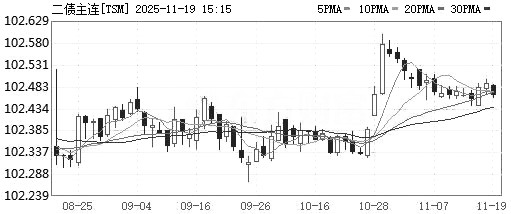
债市窄幅波动 进入数据“真空期”
Qi Huo Ri Bao· 2025-11-20 19:21
Group 1 - The central bank maintains a supportive stance on liquidity, with a low probability of interest rate cuts in the short term, leading to slight fluctuations in the bond market [1][6] - The bond market is expected to remain stable with narrow fluctuations as it enters a "data vacuum" period in late November [1][8] Group 2 - The central bank conducted a 800 billion yuan reverse repurchase operation on November 17, indicating a continued injection of medium-term liquidity into the market [3] - The total amount of reverse repos for both 6-month and 3-month terms in November is expected to increase by 500 billion yuan, reflecting a consistent effort to maintain liquidity [3] Group 3 - In October, new social financing amounted to 815 billion yuan, a year-on-year decrease of 597 billion yuan, while the stock of social financing growth rate fell to 8.5% [4] - Direct financing showed signs of recovery, with corporate bond financing increasing by 246.9 billion yuan and stock financing rising by 69.6 billion yuan, indicating a growing demand for capital market financing from non-financial enterprises [4] Group 4 - In October, the industrial added value of large-scale enterprises grew by 4.9%, driven by the equipment manufacturing and high-tech manufacturing sectors [5] - Fixed asset investment decreased by 1.7% year-on-year from January to October, but investment in high-tech industries, such as information services, increased by 32.7% [5] Group 5 - The necessity for short-term interest rate cuts is low, as the central bank emphasizes maintaining relatively loose social financing conditions while addressing weak financing demand [6] - Experts warn that while there is still some room for monetary policy, excessive easing could lead to negative effects, suggesting a cautious approach [6]

“美国政府很可能10月1日关门,且持续很久”?这意味着10月“非农、CPI等数据延迟”,美联储只能“遵循9月计划”
Sou Hu Cai Jing· 2025-09-23 01:05
Core Points - The risk of a government shutdown in the U.S. is increasing due to a stalemate between the two parties over spending issues, which could lead to a significant disruption in the release of key economic data [1][2] - If the government shuts down, major federal statistical agencies, including the Bureau of Labor Statistics (BLS), are expected to suspend operations, delaying critical reports such as employment data, CPI, PPI, and retail sales [1][3] - The Federal Reserve may find it challenging to assess economic conditions without the latest inflation and employment data, making it less likely to deviate from its previously established economic forecasts [1][4] Group 1 - The current fiscal year funding for the U.S. federal government will run out on September 30, and without congressional action, a government shutdown will begin on October 1 [2] - The political impasse is primarily due to irreconcilable differences between the two parties, with Republicans favoring a "clean" continuing resolution and Democrats seeking to reverse previous cuts to healthcare subsidies [2] - Unlike previous shutdowns, the debt ceiling is not a focal point in this situation, meaning there is no immediate risk of a technical default by the U.S. government [2] Group 2 - A government shutdown would create an "information vacuum" for the market, as the Labor Department and its agencies would likely close on October 1, affecting the release of key economic data [3][4] - Key reports that would be delayed include the employment report on October 4, CPI on October 15, PPI on October 16, and retail sales on October 16, along with the preliminary GDP for Q3 on October 30 [3] - Some data, such as industrial production reports from the Federal Reserve and private sector data, will not be affected by the shutdown [3] Group 3 - If the shutdown extends, the Federal Reserve will have limited access to top-tier official data, making it more likely to adhere to its September economic projections [4] - Historical data shows that government shutdowns can vary significantly in duration, impacting the timely release of economic data [4][5] - Even after the government reopens, statistical agencies may take considerable time to catch up on backlogged work, leading to further delays in data releases [5]