
结构性交易机会

Search documents
4100点以上的攻守投资之道
Xin Lang Cai Jing· 2026-01-23 12:04
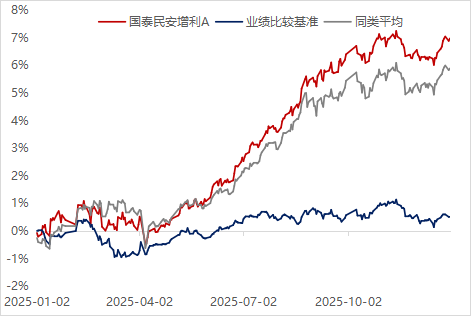
Group 1 - The market outlook for Q1 is optimistic, driven by the stabilization and appreciation of the RMB, along with the influx of incremental funds from A500 and insurance capital, suggesting a potential spring rally [1][24] - The fund manager plans to increase equity positions to capitalize on the expected spring market, focusing on sectors with improving prices such as non-ferrous metals, chemicals, and renewable energy [1][24] - The bond market is viewed with caution, with expectations of limited upside due to increased long-term bond supply and the central bank's liquidity measures aimed at mitigating rising interest rate pressures [1][25] Group 2 - The foundation for the stock market is solid, as the market has absorbed previous valuation discrepancies and profit-taking pressures, clearing short-term obstacles for the Q1 rally [24] - The dual benefits of capital inflow and currency appreciation are expected to create a favorable environment for A-shares, with multiple sources of incremental capital entering the market [24] - The rationale for focusing on non-ferrous metals, chemicals, and renewable energy is based on their price improvement potential, driven by emerging demands from sectors like AI and new energy [24][25] Group 3 - The bond market's short-term negative factors are diminishing, as the impact of the redemption fee regulations has been absorbed, allowing the market to return to normal trading logic [25] - The central bank's liquidity injections are anticipated to counterbalance the upward pressure on interest rates from increased bond supply, preventing sustained rate hikes [25] - The potential for bond market gains is capped, with expectations that it will not exceed the lows seen in 2025, limiting the scope for significant upward trends [25] Group 4 - The fund manager's approach has demonstrated success in enhancing returns through participation in the equity market, achieving a yield of 8.65% for the Guotai Tongli fund and 6.9% for the Guotai Min'an fund in a challenging bond market [26] - Historical performance indicates that the fund manager has effectively managed drawdowns, with the Guotai Min'an fund showing a maximum drawdown of -1.53%, outperforming the average of -2.57% for similar funds [26][29] - The strategy of maintaining a low equity position while selectively increasing exposure during favorable market conditions has proven effective in managing risk and enhancing returns [36][37]

2026年菜油年报:道是无晴却有晴
An Liang Qi Huo· 2026-01-07 01:51
Report Industry Investment Rating - Not provided in the content Core Viewpoints - In 2026, the domestic and international macro - cycles may not support a trend - upward movement in agricultural products such as oils. However, the weakening of the US dollar may support commodity prices to some extent [4][21]. - Newly - expected global rapeseed oil production and consumption will both increase slightly year - on - year, and the inventory - to - consumption ratio is expected to tighten from 13.54% to 12.48%. In the 2025/2026 season, the domestic rapeseed oil supply and demand will change little compared to the previous year, and the inventory - to - consumption ratio is expected to be 21.7%, lower than 24.5% of the previous year. Rapeseed oil may enter the end of active destocking and the passive destocking phase in 2026 [4][21]. - Rapeseed oil, soybean oil, and palm oil prices are highly correlated. Rapeseed oil may be more affected by capital. In the new year, soybean oil and palm oil may show volatile trends, with opportunities in structural trading. Overall, rapeseed oil may not form a large - scale trend and will mainly operate in a volatile manner. Traders should seize structural and phased trading opportunities [4][22][23]. Summary by Relevant Catalogs Global Market - **Diversified sources of rapeseed imports**: The EU, Canada, and China are the main rapeseed - producing regions, accounting for over 85% of global production. Canada is the largest exporter, the EU is a net importer, and China, as the largest consumer, relies on a large amount of imports. In recent years, China has increased imports from Russia and Australia [6]. - **Tightened inventory - to - consumption ratio of Canadian rapeseed**: In the 2025/2026 season, Canada's rapeseed production is expected to reach 21 million tons. The domestic crush volume is expected to increase to 11.75 million tons, and the ending inventory is 3 million tons. The inventory - to - consumption ratio tightens from 14.79% to 11.35% [7][8]. - **Tightened inventory - to - consumption ratio of global rapeseed oil**: In 2025/2026, global rapeseed oil production will increase to 32.06 million tons. Consumption will increase slightly, and the ending inventory will be 4.02 million tons. The inventory - to - consumption ratio tightens from 13.54% to 12.48% [9]. Domestic Rapeseed Oil - In the 2025/2026 season, the beginning inventory of rapeseed oil will increase slightly. The domestic production of rapeseed oil will decrease to 7.42 million tons due to a significant reduction in rapeseed imports. The direct import of rapeseed oil is expected to be 1.85 million tons. The total supply is expected to be 11.77 million tons, a decrease of 0.96 million tons from the previous year. The total demand is expected to slightly contract. The ending inventory is expected to be 2.1 million tons, and the inventory - to - consumption ratio is expected to be 21.7%, lower than the previous year [11][12]. Price Trends of the Oil Sector - **Soybean oil**: In 2025/2026, the global soybean supply will remain loose, but structural contradictions are prominent. The US soybean planting area is declining, Brazil's supply is abundant, and Argentina's supply faces risks from La Niña. The US biodiesel policy may boost demand but also brings uncertainties. Soybean oil may show a volatile trend, with trading opportunities in structural contradictions [17]. - **Palm oil**: In 2026, the global palm oil supply remains tight but increases slightly. Malaysia's production is flat, and Indonesia's production increases slightly. The US and Indonesia's biodiesel policies may affect demand. Palm oil will mainly show a volatile trend, with potential for structural trading opportunities [17][18].