
统种共富

Search documents
七道泉子村的幸福年
Xin Lang Cai Jing· 2026-02-25 18:57
Core Viewpoint - The article highlights the successful implementation of the "unified planting and common prosperity" model in Qidaoqianzi Village, which has significantly improved the living standards of the villagers through collective farming and diversified income sources [1][4]. Group 1: Economic Impact - The village party organization has innovatively promoted a model that integrates land resources and unites farmers, leading to a modern agricultural development path that enhances income for villagers [1][3]. - In 2025, the cooperative achieved an annual output value exceeding 12 million yuan, with an average dividend of over 1,200 yuan per participating villager [4]. Group 2: Individual Success Stories - Villager Liu Wenzhong reported a significant increase in income after investing his land in the cooperative, allowing him to focus on sheep farming, resulting in a net income exceeding 200,000 yuan from 70 sheep sold [2][3]. - Another villager, Zhang Chunsheng, who contributed 100 acres to the cooperative, saw his total income nearly double to around 200,000 yuan, benefiting from both land dividends and his work as a specialized agricultural machinery operator [3]. Group 3: Community Development - The cooperative model has led to the integration of 8,739 acres of land, with 89 households participating, thereby enhancing agricultural production efficiency and reducing costs through unified management and sales [4]. - The village has established a sustainable multi-channel income system, allowing villagers to engage in various activities such as local employment, livestock farming, or entrepreneurship based on their skills [3].
乡韵依旧、家园常新,这是内蒙古和美乡村的模样
Xin Lang Cai Jing· 2026-02-17 11:13
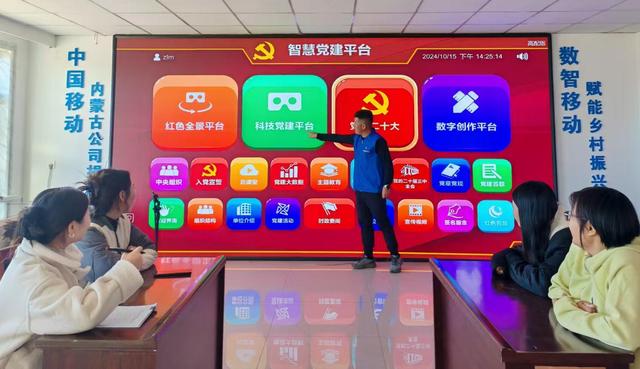
Core Viewpoint - The articles highlight the positive transformations in rural areas of Inner Mongolia, focusing on housing improvements, income growth through cooperative farming, and advancements in digital infrastructure, all contributing to a better quality of life for residents during the Spring Festival. Group 1: Housing Improvements - The story of Yu Chunlong, a poverty monitoring household, illustrates the impact of housing upgrades, as he moved into a new 96-square-meter brick house before the Spring Festival, enhancing his family's living conditions and overall happiness [2] - The Inner Mongolia government has been actively working to connect poverty alleviation efforts with rural revitalization, improving policies in various sectors such as housing, employment, and healthcare to ensure stability and development [2] Group 2: Income Growth - The "Unified Planting and Shared Prosperity" model in Dalate Banner has allowed farmers like Shi Haishu to benefit from cooperative farming, leading to significant income increases. For instance, he earned 33,600 yuan from his 30 acres of land through cooperative management and an additional 42,000 yuan from infrastructure projects [3] - This model promotes the integration of resources and labor, enabling small farmers to participate in larger agricultural industries, thus enhancing collective income and financial stability for both households and village collectives [3][4] Group 3: Digital Infrastructure and Community Engagement - The establishment of a smart party building room in Wushen Yihe Village has facilitated community engagement through digital means, allowing residents to enjoy shared experiences like watching the Spring Festival Gala together [5][6] - The integration of digital technology in rural governance and services, such as remote medical care and e-commerce, is transforming rural life, with significant improvements in infrastructure like high-speed internet and modern facilities [7] Group 4: Overall Rural Development - Inner Mongolia aims to maintain over 10 million acres of grain planting area by 2025, achieving stable production and ensuring food security through cooperative farming practices [4] - The region has made substantial progress in rural infrastructure, with 99.8% of administrative villages having access to fiber optics, and significant improvements in water supply and waste management, contributing to enhanced living conditions [7]

青海首所“全国共享农民田间学校”落成
Xin Lang Cai Jing· 2026-01-13 13:36
Core Viewpoint - The establishment of the first "National Shared Farmers' Field School" in Qinghai Province aims to cultivate skilled and business-savvy new farmers, thereby injecting talent into the local "unified planting and common prosperity" industry, significantly promoting the development of cold-resistant vegetable workshops and industrial bases [1] Group 1: School Establishment and Objectives - The school is located in Ganshuwan Village, Datong County, Xining City, and utilizes vast farmland as its classroom, focusing on practical production as its teaching material [1] - The initiative is part of a broader strategy to achieve common prosperity, with the brand "Ganshuwan Vegetable Rhythm, Neighborly Common Prosperity" being developed [1] Group 2: Training and Collaboration - The school has conducted a total of 800 training sessions to date, collaborating with Qinghai University and other research institutions to teach and promote advanced agricultural techniques such as crop selection and breeding, pest control, and water-saving irrigation [1] - The establishment of the school has led to the growth of a robust "unified planting and common prosperity" team, with many local experts emerging to address the "last mile" issue in agricultural technology promotion [1] Group 3: Future Plans - Datong County plans to deepen the educational model of the "National Shared Farmers' Field School," aiming to create a strong platform that fosters ethnic unity and stimulates internal motivation for development [1]
党建引领“统种共富”高原菜心香飘四方
Xin Lang Cai Jing· 2026-01-05 18:44
Core Viewpoint - The article highlights the successful implementation of a "party-led" model in Ganshu Bay Village, which has transformed agricultural practices and improved the economic conditions of local farmers through collective farming and mechanization [6][7][10]. Group 1: Agricultural Development - The Ganshu Bay Village has achieved a sales revenue of 5 million yuan from highland cool vegetables, with established market channels to major regions including the Greater Bay Area and Beijing [6][8]. - The village has integrated 66.87 hectares of land for large-scale cultivation of high-quality cool vegetables, enhancing income through a "three-gold" model: rental income from land transfer, wages from employment, and collective dividends [8][12]. - The introduction of mechanized farming and a cooperative model has allowed farmers to shift from individual efforts to collective development, significantly increasing productivity [7][10]. Group 2: Economic Impact - The cooperative model has led to an increase in collective economic income by 90,000 yuan annually, benefiting around 150 stable jobs in the region [8][11]. - The integration of over 2,600 acres of land has resulted in direct land transfer fees of 14.4 million yuan reaching farmers, creating 2225 stable jobs with a total annual income of 16.39 million yuan from labor [11][12]. - The establishment of a modern cold storage facility with a capacity of 4000 cubic meters has reduced vegetable spoilage rates from 20% to 5%, enhancing the quality and marketability of the produce [12]. Group 3: Infrastructure and Investment - An investment of 5.07 million yuan has been made in high-efficiency water-saving irrigation projects, improving irrigation efficiency over 1000 acres [12]. - The construction of a vegetable processing base with advanced equipment aims to transition from primary agricultural products to high-value processed goods [12][13]. - Future plans include the development of a smart agriculture model that integrates traditional farming with modern technology, enhancing the overall agricultural landscape of the region [13].
【铜川】288户村民喜领土地托管分红
Shan Xi Ri Bao· 2025-07-21 23:51
Core Viewpoint - The agricultural model in Wangyi District, particularly in Yixing Village, has successfully integrated land management and farming services, providing stable income for farmers despite adverse weather conditions like drought [1][2]. Group 1: Agricultural Model and Services - Wangyi District has implemented a "comprehensive agricultural service center + village collective + farmers" model, which consolidates fragmented land into larger plots for efficient mechanized farming [1]. - The service center has signed guaranteed income agreements with 288 farmers, ensuring a minimum annual dividend of 350 yuan per mu, resulting in a total distribution of 580,000 yuan [1]. - The model has led to a 20% reduction in costs through unified procurement of agricultural materials and scale operations, stabilizing overall farmer income despite yield fluctuations [1]. Group 2: Farmer Participation and Benefits - Farmers like Sun Jinchao have become shareholders in the service center, contributing their land and operating machinery, which has increased their annual income by 70,000 yuan [2]. - Since 2022, the establishment of a comprehensive agricultural service platform in Copper River has promoted a socialized service model for agriculture, enhancing farmer participation in collective farming initiatives [2]. - The service model addresses key challenges in agriculture, such as who will farm the land and how it will be cultivated, thereby supporting agricultural transformation and upgrading [2].