
综合实力

Search documents
审1过1!扣费净利润不足2000万元,过了!远低于市场传闻的3000万“隐形门槛”!
Xin Lang Cai Jing· 2026-02-11 07:01
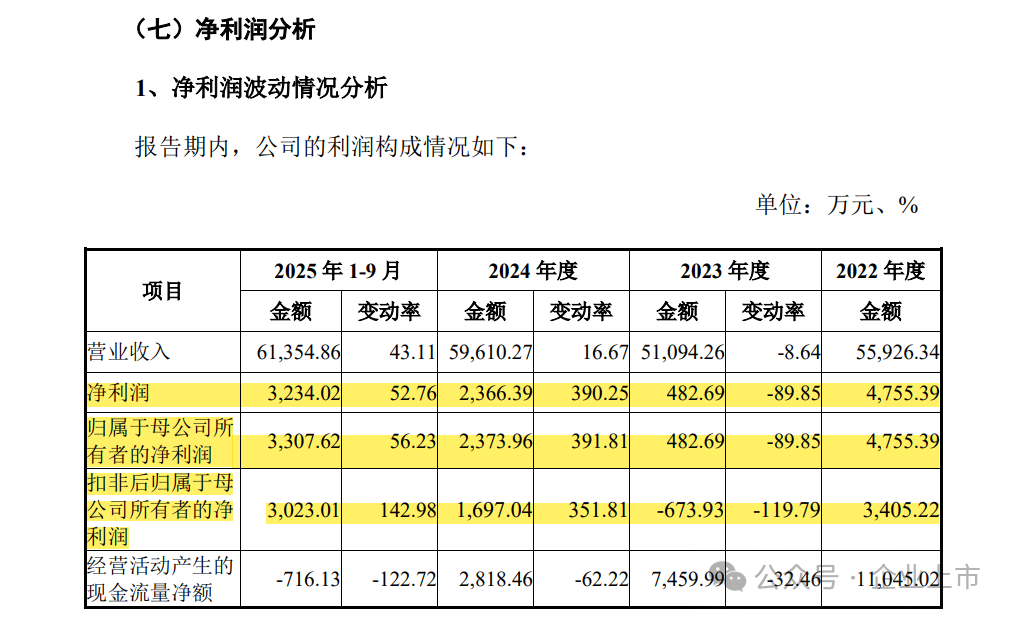
Core Viewpoint - The refinancing review process in the A-share market, especially for the ChiNext board, is shifting from a strict profit-based evaluation to a more comprehensive value judgment, focusing on potential, fundamentals, and growth trends rather than just past profits [25][26]. Group 1: Company Performance and Financials - The company, Benchuan Intelligent Circuit Technology Co., Ltd., demonstrated a significant rebound in its financial performance, with a projected non-net profit of 17 million in 2024 and 30.23 million in the first three quarters of 2025, indicating a recovery from a low point in 2023 [25][28]. - The company's revenue for 2025 (January to September) is reported at 61.35 million, reflecting a 43.11% increase compared to the previous year, while the net profit for the same period is 32.34 million, a 52.76% increase [28][19]. - The company’s non-recurring profit and loss significantly impacted its financials, with a net profit attributable to the parent company of 2.37 million in 2024, but only 1.69 million after excluding non-operating income [27][19]. Group 2: Business Strategy and Market Position - The company operates in the high-end circuit board sector, focusing on applications in communication, automotive electronics, new energy, and industrial control, aligning with national strategic priorities [25][26]. - The planned fundraising will be used for building new factories in Zhuhai and Thailand, which supports the company's expansion and aligns with the national strategy for supply chain diversification [26][24]. - The company’s product offerings include advanced circuit boards with high precision and reliability, catering to a growing demand in various high-tech fields, which positions it favorably in the market [37][38]. Group 3: Regulatory Environment and Future Outlook - The review process for refinancing has become more flexible, emphasizing the overall strength and future potential of the company rather than strictly adhering to past profit thresholds [25][26]. - The company’s ability to secure financing despite not meeting the previously perceived profit threshold indicates a shift in regulatory attitudes towards valuing growth potential and strategic alignment with national interests [25][26].


我国综合实力100强城市大洗牌:苏州领先成都,贵阳超越福州,临沂略胜洛阳!
Sou Hu Cai Jing· 2025-12-11 13:31
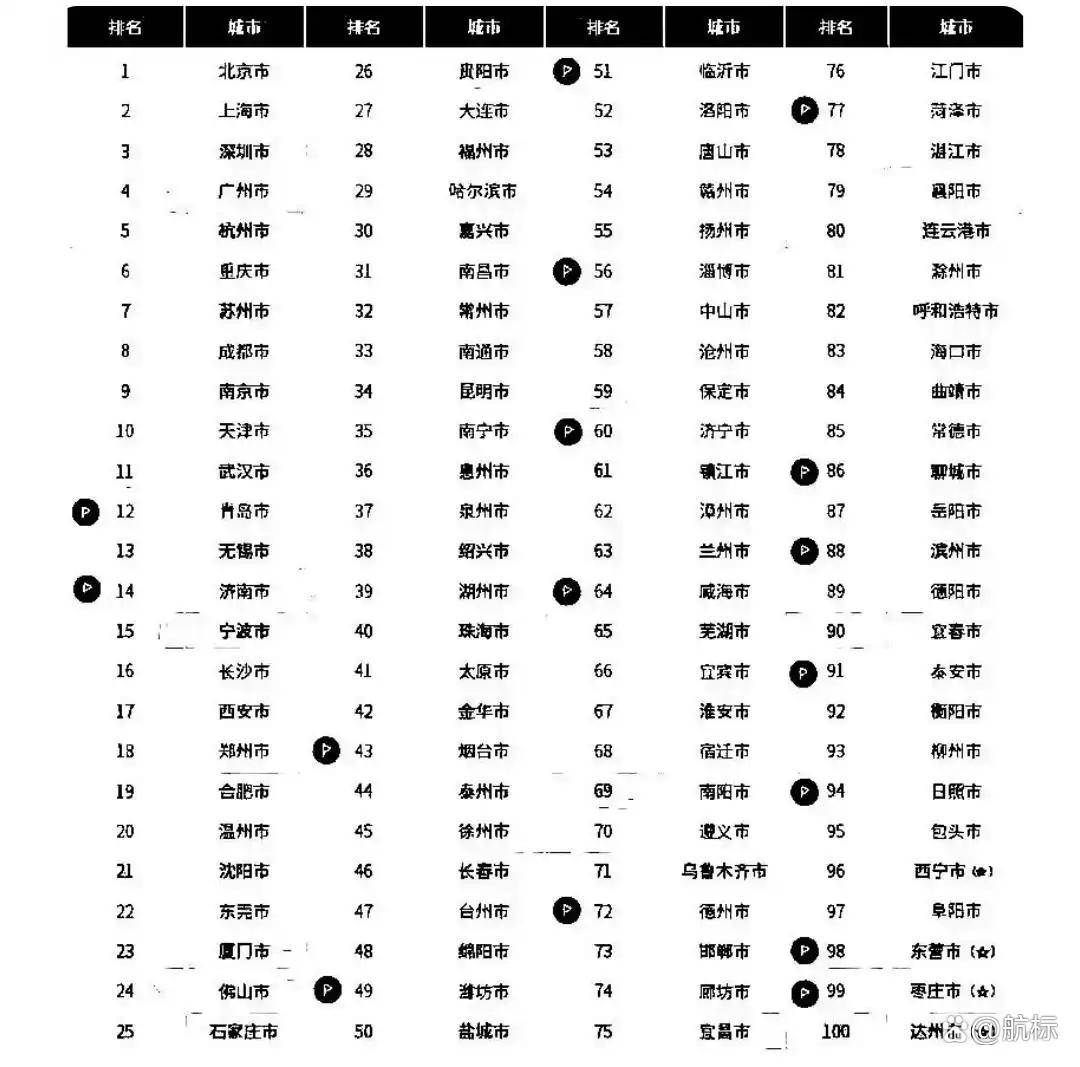
Core Insights - The ranking of Chinese cities in 2025 reveals subtle shifts, highlighting the competitive landscape among cities like Suzhou, Chengdu, Guiyang, and Fuzhou, as well as Linyi and Luoyang [1][3][4][6] Group 1: Suzhou vs. Chengdu - Suzhou ranks 7th, surpassing Chengdu, due to its strong industrial foundation and early advancements in high-end manufacturing sectors like integrated circuits and biomedicine [1] - The economic resilience of Suzhou is attributed to its robust manufacturing clusters, which contribute significantly to its industrial output [1] - Chengdu, while a central hub in Southwest China with strong consumer influence, lags in industrial density and advanced manufacturing compared to Suzhou [1] Group 2: Guiyang vs. Fuzhou - Guiyang's rise to 25th place, overtaking Fuzhou at 28th, signifies a shift in competitive dynamics, emphasizing the importance of digital economy and data-driven industries [3] - Guiyang has focused on becoming a "data hub," developing a complete ecosystem around data processing, trading, and software services, which has significantly boosted its economic contribution [3] - The transformation of Guiyang reflects a strategic pivot towards the digital economy, contrasting with Fuzhou's heavier industrial transition burdens [3] Group 3: Linyi vs. Luoyang - Linyi and Luoyang are closely ranked at 51st and 52nd, respectively, with Linyi's slight edge representing different developmental approaches [4] - Luoyang, as an established industrial base, faces challenges in transitioning due to its reliance on large state-owned enterprises and traditional manufacturing [4] - Linyi's growth is driven by grassroots economic activities and a dynamic trade network, allowing it to convert commercial flows into local manufacturing and brand value [4] Group 4: Overall Trends - The changes in city rankings indicate a new era of competition among Chinese cities, where scale alone is insufficient; cities must also focus on high-quality industries, future-oriented strategies, and market responsiveness [6] - The competition is evolving into a complex, multi-dimensional contest that tests endurance, agility, and foresight, rather than a simple race based on size or historical significance [6]
穿透市值迷雾:何为真正的全球银行价值标杆
2 1 Shi Ji Jing Ji Bao Dao· 2025-09-07 09:13
Core Viewpoint - The recent surpassing of Agricultural Bank's A+H share market value over Industrial and Commercial Bank (ICBC) has sparked discussions on how to measure the true value of global banks, emphasizing that metrics should go beyond mere market capitalization to include factors like operational resilience, risk management, and comprehensive strength [1][2] Group 1: Market Position and Valuation - ICBC's A/H share structure of "75/25" provides institutional resilience and mitigates market volatility, ensuring a balance between domestic capital dominance and international investor engagement [3] - Currently, ICBC's price-to-book ratio stands at 0.71, significantly lower than major international banks, indicating a valuation gap despite a high dividend yield of 5.8% for H shares and 4.2% for A shares, making it an attractive investment option [4] Group 2: Financial Performance and Growth - In the first half of 2025, ICBC reported a revenue of 4090.82 billion yuan, a year-on-year increase of 1.8%, and a net profit of 1688.03 billion yuan, maintaining its leading position among major banks [9] - The bank's total assets reached 52.32 trillion yuan, with a year-on-year growth of 7.2%, and customer deposits increased by 5.9% to 36.90 trillion yuan, showcasing robust growth [10] Group 3: Risk Management and Stability - ICBC maintains a non-performing loan ratio of 1.33% and a capital adequacy ratio of 19.54%, indicating strong risk management capabilities [11] - The bank's provision coverage ratio stands at 217.71%, providing a substantial buffer against potential loan losses, which is crucial in the context of rising global economic uncertainties [12]
