
网络战

Search documents
外媒爆料:美军想用新技术对付中国电网?
Xin Lang Cai Jing· 2026-02-27 15:21
Group 1 - The U.S. Department of Defense is seeking collaboration with American AI companies to develop intelligent cyber warfare tools aimed at attacking critical infrastructure in China, such as the power grid [1][2] - The envisioned AI-driven tools are designed to penetrate Chinese cyber defenses, conduct reconnaissance on vulnerabilities, and report these to the U.S. military for potential operational planning [1][2] - The use of AI technology is seen as a means to address manpower shortages and inefficiencies faced by the U.S. military in conducting cyber attacks [1][2] Group 2 - There have been multiple reports of U.S. cyber attacks against China, targeting various institutions, which highlights the ongoing cyber conflict between the two nations [2] - The integration of AI technology into cyber warfare is viewed as a potential game-changer in future military conflicts, particularly due to the strategic importance of the power grid and its connection to data centers [2] - There is significant controversy within the U.S. tech industry regarding the militarization of AI technology, leading to tensions between some tech companies and the U.S. government [2][3]
委内瑞拉,有“内鬼”?
Xin Lang Cai Jing· 2026-01-18 04:04
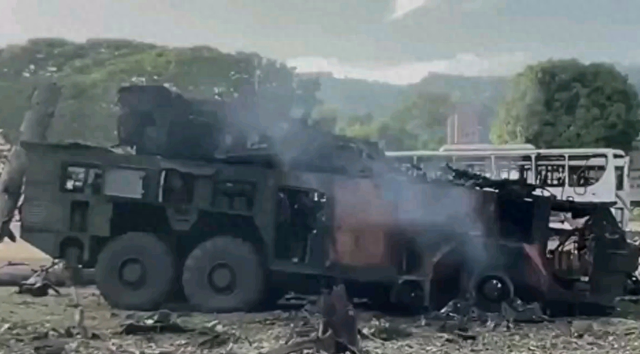
Core Viewpoint - The recent U.S. military operation in Venezuela has significantly altered the political landscape, with President Maduro being forcibly removed, highlighting the ineffectiveness of Venezuela's air defense systems against U.S. military capabilities [1][12]. Group 1: Military Operation Details - The U.S. deployed over 150 aircraft, including B-1B bombers, F-22, F-35, and various support vessels, to execute the operation, which involved a well-coordinated strike against Venezuelan defenses [4]. - The operation was characterized by a multi-layered attack strategy, utilizing both air and ground forces, with special operations successfully capturing President Maduro with minimal casualties [4][12]. Group 2: Venezuelan Air Defense System - Venezuela's air defense capabilities are primarily composed of the S-125, "Buk-M2E," and S-300VM systems, with the latter being the most formidable, capable of intercepting various aerial threats at ranges of up to 200 kilometers [6][9][11]. - The Venezuelan military has approximately 130,000 active personnel, with a mix of air, land, and naval forces, but suffers from outdated equipment and low operational readiness, particularly among its fighter jets [5][6]. Group 3: Internal Betrayal and Intelligence Operations - A key figure in the betrayal was Major Javier Marcano Tavares, who allegedly disabled Venezuela's air defense systems during the U.S. operation, indicating a significant internal security breach [1][12]. - The CIA had reportedly established a covert team in Venezuela since August 2025, providing continuous intelligence on Maduro's movements, which facilitated the U.S. operation [1][12]. Group 4: Electronic and Cyber Warfare - The U.S. employed a combination of intelligence, cyber warfare, and electronic warfare to suppress Venezuelan air defenses, including the use of advanced electronic jamming and network warfare tactics [12][13][14]. - The operation's success was attributed to the comprehensive intelligence gathering and the use of advanced technologies to disrupt Venezuelan defense systems, demonstrating a significant technological advantage [12][16].

解放军报文章:日本背离和平宪法,妄图卷土重来
Xin Lang Cai Jing· 2026-01-17 01:15
Group 1 - Japan's cabinet has approved a new "cybersecurity strategy" allowing the Self-Defense Forces to take offensive measures in response to cyberattacks, marking a significant shift from defense to offense in military policy [1][3] - Japan is accelerating the development of military capabilities in emerging fields such as space, electromagnetic, and cyber warfare, moving further away from its pacifist constitution [1][3] - The "low Earth orbit satellite constellation" project is expected to achieve initial operational capability by 2027, focusing on intelligence gathering related to missile launch platforms and troop movements in East Asia [1][2] Group 2 - The establishment of an electronic warfare command in March 2022 and the deployment of electronic warfare units in various locations indicate Japan's intent to monitor regional air and naval activities [2] - Japan is enhancing its cyber warfare capabilities by expanding its Cyber Defense Force and developing an integrated cloud platform for cyber operations, with a focus on collaboration with the U.S. military [3] - The "Proactive Cyber Defense Bill" passed in May 2025 allows Japan to preemptively attack or destroy the networks of perceived attackers, effectively loosening restrictions on offensive cyber operations [3]
“远超传统空袭”!美官员披露对伊朗行动方案
证券时报· 2026-01-14 09:14
Group 1 - The article discusses the military and covert operation options being considered by the U.S. government in response to the situation with Iran, indicating that these options are extensive and go beyond traditional airstrikes [1] - U.S. defense officials have stated that airstrikes and long-range missile strikes remain core potential military actions against Iran [1] - The U.S. Department of Defense is also preparing cyber warfare and psychological operations targeting Iran's command structure, communication systems, and state media, which can be conducted simultaneously with traditional military actions or independently [1] Group 2 - A meeting of the President's National Security team is scheduled to take place at the White House to discuss an "updated version" of the plans regarding the situation with Iran, although it is unclear if President Trump will attend [1]

最新消息!美方披露对伊朗行动方案!特朗普透露最终目标!伊朗警告:将誓死捍卫国家
Guo Ji Jin Rong Bao· 2026-01-14 07:55
Group 1 - The U.S. military options against Iran include a wide range of strategies beyond traditional airstrikes, with a focus on cyber warfare and psychological operations alongside conventional military actions [1] - The U.S. Defense Department is preparing to target Iran's command structure, communication systems, and state media, although specific targets have not been disclosed [1] - Iran's Defense Minister warned that the country is better prepared for potential aggression than during the previous conflict with the U.S. and Israel, indicating readiness for effective responses to further invasions [2] Group 2 - Iran's permanent representative to the United Nations called for condemnation of U.S. actions that incite violence and interfere in Iran's internal affairs, emphasizing the violation of international law [3] - The Iranian representative highlighted that the U.S. strategy of regime change through sanctions and threats has historically failed, asserting that the Iranian people will defend their nation [3]
美军在伊朗附近集结多少兵力
Xin Lang Cai Jing· 2026-01-14 06:16
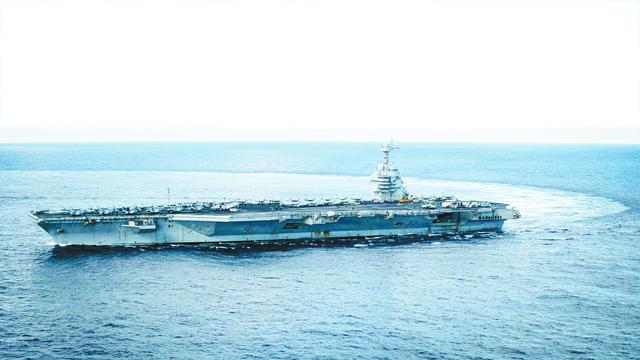
Group 1 - The U.S. is considering military options against Iran, with President Trump emphasizing that military force is not off the table despite preferring diplomatic solutions [2] - Military options being reviewed include airstrikes and long-range missile strikes, alongside cyber and psychological warfare strategies [2] - Currently, there are no significant signs of U.S. military buildup in the region, with only three aircraft carriers deployed, and no immediate plans for redeployment to the Iranian vicinity [2][3] Group 2 - The U.S. has numerous air bases in the region, including Qatar, Saudi Arabia, UAE, and Jordan, which could facilitate military operations against Iran [3] - Increased activity of U.S. military aircraft at the Al Udeid Air Base in Qatar has been reported, enhancing the U.S. strike capability close to Iranian territory [3] - If military action occurs, Iran's response could be more severe than previous engagements, with a significant arsenal of short-range ballistic and cruise missiles available to target U.S. bases [4]
美方披露对伊朗行动方案
财联社· 2026-01-14 00:15
Group 1 - The U.S. President Trump has received briefings on a wide range of military and covert operation options to address the situation with Iran, which go beyond traditional airstrikes [1] - Airstrikes and long-range missile strikes remain core potential military actions, while cyber warfare and psychological operations are also being prepared to target Iran's command structure, communication systems, and state media [1] - Trump has canceled all talks with Iranian officials, despite earlier indications of potential negotiations [2][3] Group 2 - The U.S. National Security team is set to meet to discuss updated strategies regarding the situation with Iran, although it is unclear if Trump will attend [4] - The U.S. State Department has issued a national security warning urging American citizens to leave Iran immediately and to avoid relying on direct government assistance for evacuation [5][6] - Iranians are prepared for negotiations with the U.S. based on mutual respect but are also ready for war [4]

美媒曝特朗普政府对 伊朗行动选项“远超传统空袭”
Xin Lang Cai Jing· 2026-01-13 17:45
Core Viewpoint - The article discusses the U.S. military options being considered by President Trump in response to the situation with Iran, highlighting a range of strategies that go beyond traditional airstrikes [1] Military Options - President Trump has received briefings on various military and covert operation options to address the Iran situation, which are described as "broad" and "far beyond traditional airstrikes" [1] - Airstrikes and long-range missile strikes remain central to potential military actions against Iran [1] Cyber and Psychological Warfare - The U.S. Department of Defense is preparing plans for cyber warfare and psychological operations targeting Iran's command structure, communication systems, and state media [1] - These cyber and psychological operations can be conducted simultaneously with traditional military actions or independently [1] Upcoming Discussions - A meeting of the President's national security team is scheduled to take place at the White House to discuss an "updated version" of the strategy regarding the Iran situation [1] - It remains unclear whether President Trump will attend this meeting [1]
外交部发言人就伊朗局势答记者问
Xin Hua She· 2026-01-13 13:06
Group 1 - The Chinese government supports Iran in maintaining national stability and opposes interference in other countries' internal affairs, as well as the use or threat of military force in international relations [1] - China firmly believes that there are no winners in a trade war and will protect its legitimate rights and interests regarding the tariffs imposed by the U.S. on countries doing business with Iran [1] - The Chinese government is closely monitoring the situation in Iran and will take necessary measures to ensure the safety of Chinese citizens [1]
美官员披露:对伊朗行动方案种类广泛 远超传统空袭
Jing Ji Guan Cha Wang· 2026-01-13 09:43
Core Viewpoint - The U.S. is exploring a wide range of military and covert operation options to address the situation with Iran, which go beyond traditional airstrikes [1] Group 1: Military Options - President Trump has received briefings on various military options, indicating a comprehensive approach to potential actions against Iran [1] - Airstrikes and long-range missile strikes remain central to the potential military actions being considered [1] Group 2: Cyber and Psychological Warfare - The U.S. Department of Defense is preparing cyber warfare and psychological operations targeting Iran's command structure, communication systems, and national media [1] - These cyber and psychological operations can be conducted simultaneously with traditional military actions or independently [1]