
网络餐饮服务食品安全监管

Search documents
市场监管总局新规要求外卖增设“无堂食”专项标识
Xin Hua She· 2026-02-26 12:19
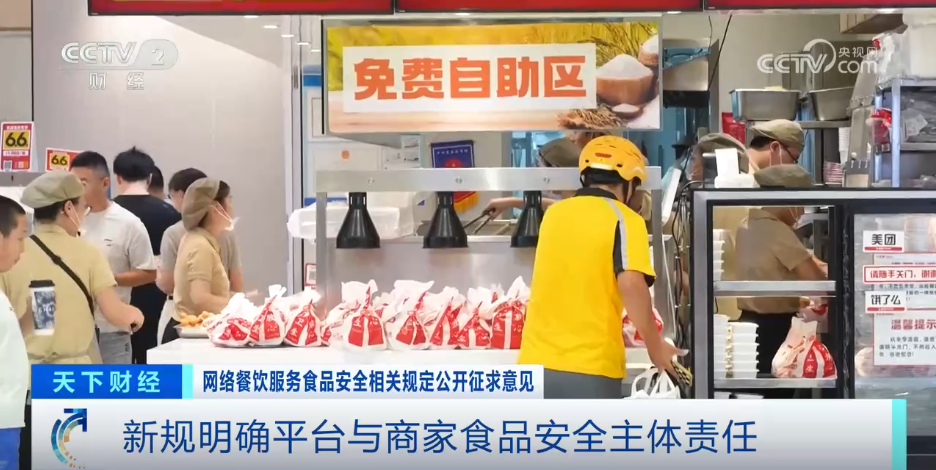
市场监管总局2月26日晚对外发布《网络餐饮服务经营者落实食品安全主体责任监督管理规定》,规定 明确专门从事外卖服务、不提供堂食的外卖商家必须在其主页面显著位置设置"无堂食"标识,且外卖平 台需将该标识同步展示在商家列表页面。 ...
整治“幽灵外卖” 网络餐饮服务经营者食品安全主体责任监管新规发布
Yang Shi Xin Wen Ke Hu Duan· 2026-02-26 12:03
同时,《规定》要求外卖平台将外卖商家的食品经营许可证等经营资质信息与省级市场监管部门掌握的 数据进行核验比对,核验不符的不得为其提供平台服务。打破外卖平台与监管部门之间的数据壁垒,破 除"信息孤岛",实现资质信息"一源核验、双向校准、实时反馈",切实阻断虚假、失效资质"带病入 网"的路径。 另外,《规定》要求外卖平台应当至少每六个月对外卖商家登记的实际经营地址、经营资质等信息核验 更新一次,保证上述信息与实际情况相符。这并非简单的定期打卡式更新,而是将静态准入转化为持续 跟踪的"生命周期管理",外卖平台须在核验窗口期主动进行信息复核、资质核验与实地抽查,确保外卖 商家经营情况持续真实有效。 (文章来源:央视新闻客户端) 记者今天从市场监管总局召开的新闻发布会上了解到,《网络餐饮服务经营者落实食品安全主体责任监 督管理规定》 将于6月1日正式实施。 《规定》细化了外卖平台对商户资质审核、信息公示、过程管控、问题处置等全链条的管理责任,要求 外卖平台做到备案即担责、上线即受管、经营即履责,切实将食品安全责任嵌入平台运营的每一个环 节、每一处流程、每一次决策。告诫外卖平台,不能只收佣金、不担责任;不能只管流量、不顾 ...
加强网络餐饮服务食品安全监管
Ren Min Ri Bao· 2025-10-17 22:13
Core Viewpoint - The article discusses the draft regulations aimed at enhancing food safety supervision in online catering services, focusing on clarifying responsibilities among platforms, service providers, and delivery units [1] Group 1: Regulatory Focus - The regulations address key issues in online food safety, including unclear platform responsibilities, lax management of service providers, and lack of transparency in food safety information [1] - The draft aims to establish systematic rules to prevent issues such as "ghost deliveries" by defining the responsibilities and authority boundaries among platforms, third-party institutions, and service providers [1] Group 2: Implementation Requirements - The regulations propose detailed requirements for platforms regarding the verification of service providers' operational qualifications, routine monitoring, and information disclosure [1]
市场监管总局新规征求意见 加强网络餐饮服务食品安全监管
Ren Min Ri Bao· 2025-10-17 21:59
Core Viewpoint - The article discusses the draft regulations aimed at enhancing food safety supervision in online food delivery services, focusing on clarifying responsibilities among platforms, food service providers, and delivery units [1] Group 1: Regulatory Focus - The regulations address key issues in online food service safety, including unclear platform responsibilities, lax management of food service providers, and lack of transparency in food safety information [1] - The draft aims to establish systematic regulations to prevent issues such as "ghost deliveries" by defining the responsibilities and authority boundaries among platforms, third-party institutions, and food service providers [1] Group 2: Implementation Requirements - The proposed regulations detail requirements for platforms regarding the verification of food service providers' operating qualifications, routine monitoring and inspections, and information disclosure [1]
事关外卖食品安全 这份征求意见稿有什么亮点?
Yang Shi Wang· 2025-10-17 10:03
Core Viewpoint - The State Administration for Market Regulation has released a draft regulation aimed at enhancing food safety supervision for online catering services, seeking public feedback on its provisions [1] Group 1: Responsibilities of Platform Providers - The draft regulation clarifies the food safety responsibilities of platform providers, requiring them to monitor and inspect the qualifications, processing, and hygiene of online catering service providers [3] - A minimum of 5% of online catering service providers must be inspected monthly, with a goal of achieving full coverage within two years [3] - Monitoring and inspection results must be retained for at least two years [3] Group 2: Implementation of "Internet + Bright Kitchen" - Online catering service providers are required to implement the "Internet + Bright Kitchen" initiative, ensuring that monitoring covers key processes in food preparation and that the system operates normally [5][7] - Orders cannot be delegated to other catering service providers for processing [7] Group 3: Packaging and Identification Requirements - Catering food must be packaged and sealed in a way that prevents contamination during delivery, with seals that cannot be restored once opened [9] - Platforms must label the homepage of non-dine-in providers clearly [9] Group 4: Information Disclosure and Compliance - The draft mandates that platform providers must prominently display the operating qualifications of online catering service providers on their main pages [11] - The "one certificate, one store" model is established, prohibiting the use of the same operating qualifications for multiple online stores on the same platform [12][13] Group 5: Penalties for Non-compliance - The draft specifies penalties for non-compliance, with fines ranging from 50,000 to 200,000 yuan for platforms that fail to act on reported violations [14] - Additional fines of 5,000 to 30,000 yuan may apply for discrepancies between the main ingredients of online and physical store offerings or failure to implement the "Internet + Bright Kitchen" initiative [16]

网络餐饮服务食品安全管理征求意见稿有哪些亮点?如何影响你我生活?
Yang Shi Wang· 2025-10-17 04:04
Core Viewpoint - The new draft regulation aims to enhance food safety supervision for online catering services by clarifying the responsibilities of platform providers and food service providers, ensuring compliance with food safety standards and improving consumer protection [1][5]. Group 1: Responsibilities and Monitoring - The draft regulation specifies that platform providers are responsible for monitoring the qualifications, processing, and hygiene of online food service providers, with a minimum of 5% of providers being inspected monthly, aiming for full coverage within two years [1]. - Monitoring and inspection results must be retained for at least two years, and platform providers must verify the qualifications of food service providers against provincial market supervision department records [1]. Group 2: Operational Standards - Online food service providers are required to implement "Internet + Bright Kitchen" practices, ensuring that monitoring covers critical food processing stages and that food packaging is tamper-proof and easily identifiable by consumers [3]. - The regulation prohibits food service providers from outsourcing order preparation to other providers, ensuring accountability and safety in food handling [3]. Group 3: Compliance and Penalties - The draft outlines penalties for non-compliance, with fines ranging from 50,000 to 200,000 yuan for platforms that fail to act on reported violations or do not verify provider qualifications [10]. - Specific fines of 5,000 to 30,000 yuan are set for providers that do not align their food ingredients with those offered at physical locations or fail to implement required monitoring practices [12]. Group 4: Regulatory Clarity - The regulation introduces a "one certificate, one store" model, preventing providers from using the same operating license for multiple online stores on the same platform [9]. - It addresses regulatory blind spots related to "ghost kitchens" and mandates clear public disclosure of provider qualifications on their main pages [5]. Group 5: Jurisdiction and Enforcement - The draft clarifies jurisdictional responsibilities, allowing provincial market supervision departments to penalize platforms for food safety violations occurring within their jurisdiction [14]. - This approach aims to enhance local regulatory engagement and distribute enforcement responsibilities effectively [14].

事关平台外卖食品安全 网络餐饮服务新规公开征求意见
Bei Jing Shang Bao· 2025-10-16 11:41
Core Points - The regulatory framework for food safety in online catering services is being strengthened to address key issues [1][2] - A draft regulation has been created to clarify responsibilities among third-party platforms and food service providers [1] - The regulation aims to enhance risk prevention throughout the food safety process and tackle issues like unclear platform responsibilities and lack of transparency [1] Group 1 - The draft regulation titled "Regulations on the Supervision and Management of Food Safety Responsibilities for Third-Party Platforms and Online Catering Service Providers" is open for public feedback until November 16 [1] - The regulation focuses on reinforcing the food safety responsibilities of third-party platforms and online food service providers [1] - It aims to prevent issues such as "ghost deliveries" by clarifying the responsibilities and rights of platforms, third-party institutions, and food service providers [1] Group 2 - The regulation also seeks to standardize takeout operations without dine-in services and improve collaboration between platforms and regulatory authorities [2] - The goal is to promote social governance in food safety for online catering services and enhance the overall safety of food for consumers [2] - This initiative is part of a broader effort to ensure the safety of food consumed by the public [2]
市场监管总局:外卖应对无堂食商家加专属标识
Yang Shi Xin Wen Ke Hu Duan· 2025-10-16 10:05
Core Viewpoint - The State Administration for Market Regulation has drafted a regulation to enhance food safety responsibilities for third-party online food delivery platforms and their partnered restaurants, with public feedback due by November 16 [1] Group 1: Regulatory Framework - The regulation aims to clarify the responsibilities and rights of platforms, third-party institutions, and restaurants regarding food safety, addressing issues like "ghost kitchens" [1] - It specifies that platforms must establish comprehensive food safety management systems and mechanisms, ensuring proper monitoring and inspection of partnered restaurants [1] Group 2: Operational Requirements - The regulation introduces a "one certificate, one store" model, prohibiting restaurants from using the same operating license to open multiple online stores on the same platform [1] - Platforms are required to continuously publicize their operating qualifications, ensuring that the names of online stores match those of their physical counterparts, and that pickup addresses align with the registered business locations [1] - Special identifiers will be assigned to "no dine-in" businesses, with regulations on their display positions and pages [1]