美国房地产周期

Search documents
光大证券:2026年“特朗普房改”呼之欲出 美国房地产能否迎来复苏周期?
智通财经网· 2025-12-28 00:46
Core Viewpoint - The U.S. real estate market is not experiencing a recovery cycle despite significant interest rate cuts by the Federal Reserve in 2024-2025, remaining in a "weak supply and demand" state [1][2][3]. Group 1: Current Market Conditions - The demand side is negatively impacted by high housing prices, elevated mortgage rates, and an affordability crisis, leading to a decline in home buying and mortgage demand, with 2025 new and existing home sales expected to be lower than in 2024 [3][4]. - On the supply side, the existing home market is constrained by a "lock-in effect," resulting in tight inventory, while new home supply is affected by rising material tariffs and interest rate fluctuations, keeping U.S. housing prices elevated [3][4]. Group 2: Future Outlook and Policy Implications - As the 2026 U.S. midterm elections approach, the potential for "Trump housing reform" is anticipated, which may focus on reducing mortgage costs, activating supply markets, and further interest rate cuts, including proposals to extend mortgage terms and make mortgage rates transferable [1][5]. - However, significant interest rate cuts may not effectively translate to lower mortgage rates due to legislative and judicial constraints, along with tariff risk premiums and construction cycle delays, making it difficult for the real estate supply-demand structure to reverse in the short term [2][5]. Group 3: Indicators for Monitoring the Real Estate Cycle - To observe the U.S. real estate cycle, monitoring the spread between current mortgage rates and existing mortgage rates is crucial, with historical data indicating that a spread of 90-100 basis points, corresponding to around 5% mortgage rates, could signal the start of a real estate cycle [6].

【宏观】特朗普如何激活美国地产:现实与挑战——解构美国系列第十六篇(赵格格/周欣平)
光大证券研究· 2025-12-28 00:20
Core Viewpoint - The article argues that Trump's housing reform is unlikely to boost the U.S. real estate market, which remains in a "weak supply and demand" state despite significant interest rate cuts by the Federal Reserve in 2024-2025 [4][5]. Group 1: Current Market Conditions - The U.S. real estate market has not entered a recovery cycle due to limited reductions in mortgage rates, which remain above 6%, significantly higher than the average of 4.3% for existing mortgages [5]. - Demand is declining due to high home prices, elevated mortgage rates, and an affordability crisis, with new and existing home sales expected to be lower in 2025 compared to 2024 [4]. - Supply is constrained by a "lock-in effect" in the existing home market and a decrease in new home supply due to rising material tariffs and interest rate fluctuations, leading to sustained high home prices [4][5]. Group 2: Future Outlook - As the 2026 midterm elections approach, Trump's housing reform is anticipated to focus on lowering mortgage costs, activating the supply market, and further interest rate cuts [6][7]. - However, significant interest rate cuts may not effectively translate to lower mortgage rates due to legislative and judicial constraints, as well as tariff risks and construction cycle delays, suggesting a baseline expectation of a weak recovery in the U.S. real estate market by 2026 [7]. Group 3: Forward-Looking Indicators - To observe the U.S. real estate cycle, it is important to construct forward-looking variables, particularly the spread between current mortgage rates and existing mortgage rates [8]. - Historical data indicates that a spread of 90-100 basis points, corresponding to around 5% mortgage rates, could signal the start of a new real estate cycle, with a corresponding 10-year U.S. Treasury yield expected to be around 3.2%-3.3% [8].


2026美国楼市或崩盘引发全球,18年魔咒再临!中国该如何破局?
Sou Hu Cai Jing· 2025-06-05 03:35
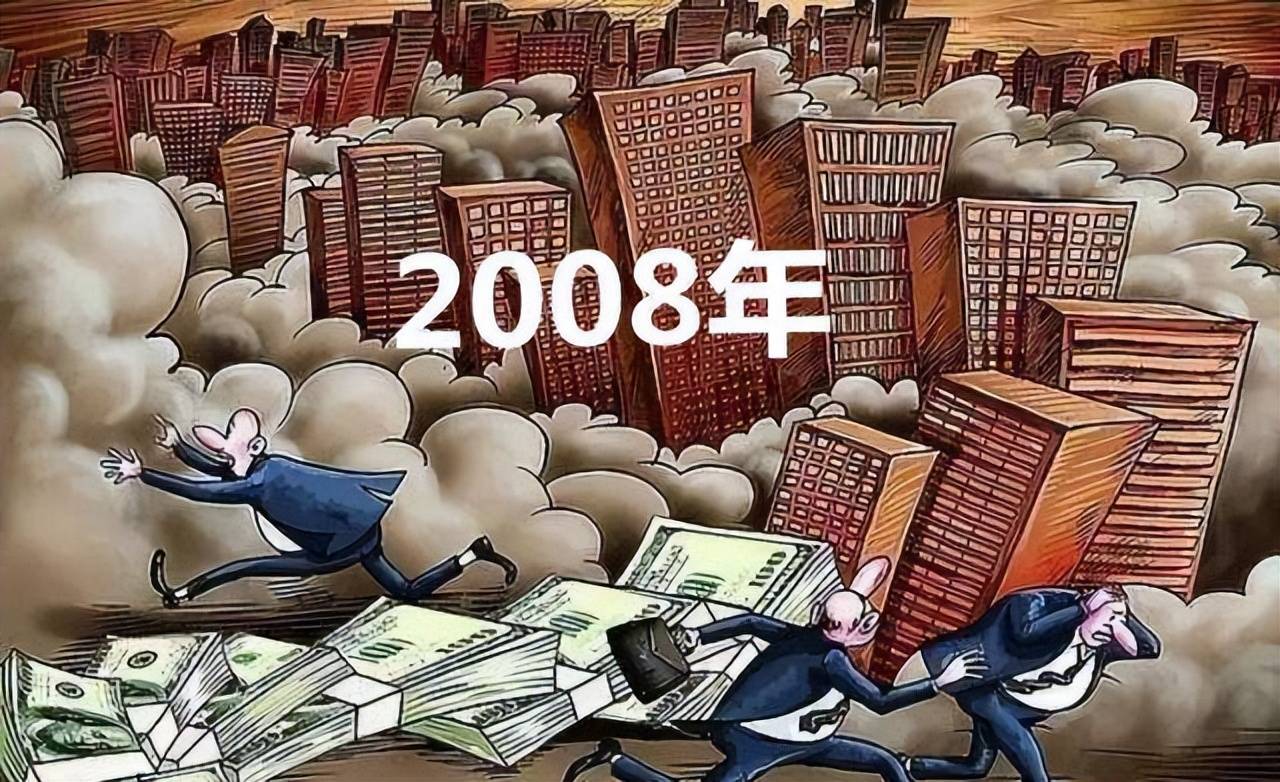
Group 1 - The U.S. real estate market follows an 18-year cyclical pattern, with a predicted downturn starting in 2026 that will have widespread negative impacts on the economy [1][3] - Historical data shows significant real estate crashes in the U.S. in 1972, 1990, and 2008, each occurring 18 years apart, indicating a strong correlation between real estate downturns and economic recessions [3][4] - The 2008 financial crisis exemplified how the collapse of the real estate market can lead to a broader financial crisis, as seen with the failures of Lehman Brothers and Fannie Mae [3][4] Group 2 - The upcoming downturn in the U.S. real estate market necessitates proactive strategies from China to mitigate potential impacts, including implementing policies to stabilize its own real estate market [6] - Chinese companies with overseas investments should conduct risk assessments to prepare for the underlying risks associated with the current U.S. real estate "prosperity" [6] - The potential recession in the U.S. could adversely affect China's export industries, highlighting the need for strategic development in relevant market sectors to counteract the effects of the U.S. real estate cycle [6]