聚合思维

Search documents
专论 || 张永伟:从出口“新三样”到聚合“三大件”
Zhong Guo Qi Che Bao Wang· 2025-09-29 02:27
Group 1 - The core idea of the article emphasizes the importance of "aggregated thinking" in driving the collaborative development of three key sectors: smart vehicles, smart robots, and low-altitude economy, which are interconnected through technology, supply chains, and application fields [1][3][4] - The article outlines that the current fourth industrial revolution is characterized by the convergence of various technologies, such as artificial intelligence and new energy, which were previously developed independently [1][2] - The potential of the "three key components" (smart vehicles, power batteries, and new energy represented by photovoltaics) is highlighted as a significant driver for export and economic growth, especially in the post-pandemic context [3][4] Group 2 - The shared industrial chain among smart vehicles, smart robots, and low-altitude flying is crucial for the aggregation effect, with over 60% of the automotive supply chain being applicable to these sectors [4][5] - The article discusses the rapid development of the perception field, where costs have significantly decreased, exemplified by the price drop of automotive laser radar from over 100,000 yuan to around 800 yuan within five years [5][6] - The demand for computing power in vehicles has increased, with modern cars requiring 300 to 400 chips, indicating a trend towards a unified operating system across vehicles, robots, and drones [6][7] Group 3 - The article suggests that the manufacturing sector must establish advantages quickly, drawing parallels with the electric vehicle industry, which saw a dramatic increase in sales from 1 million to 10 million units in five years due to a 50% reduction in component costs [9][10] - It is anticipated that the robotics sector may experience a similar "electric vehicle moment" in the near future, with prices potentially dropping from over 1 million yuan to 100,000 or 200,000 yuan [10][11] - The article emphasizes the need for component manufacturers to expand into the aggregation field, leveraging existing supply chains and fostering cross-industry collaborations to accelerate market entry [11][12] Group 4 - The internationalization of the autonomous and automated driving industry is highlighted, with increasing global demand for Chinese components and solutions, particularly in the robotics sector [12] - The article calls for a shift in thinking from single-industry development to a coordinated approach that breaks down barriers between industries, technologies, and policies [12][13] - It stresses the importance of infrastructure integration and policy adaptation to support the rapid development of industries like autonomous driving, low-altitude economy, and smart robotics [12][13]
车百会张永伟:从出口“新三样”到聚合智能“三大件”
Zhong Guo Jing Ji Wang· 2025-09-17 11:51
Core Insights - The conference highlighted the collaborative development logic and practical paths of three key industries: smart cars, embodied robots, and low-altitude economy [1][2] Group 1: Industry Integration - The concept of "aggregated thinking" is identified as a hallmark of the Fourth Industrial Revolution, emphasizing the deep integration of smart cars, embodied robots, and low-altitude economy [2] - These three sectors share commonalities: they rely on artificial intelligence as a foundational technology, have over 60% supply chain overlap, and show trends of application integration [2] - The smart car industry is projected to exceed $100 billion in global component output this year, with the Chinese market expected to surpass $50 billion [2] Group 2: Shared Supply Chain - The shared supply chain is crucial for the synergistic effect of the three key sectors, covering areas such as perception, computation, actuators, batteries, communication, and materials [2][3] - Significant cost reductions in core components have been observed, such as the price of lidar dropping from 100,000 yuan in 2019 to 800 yuan today, while performance has increased significantly [3] - The demand for chips in L2-level smart cars drives innovation in mobile terminal chips, with a notable increase in the number of chips required compared to traditional vehicles [3] Group 3: Development Paths - Four practical paths for the collaborative development of the three sectors were proposed: establishing manufacturing advantages, expanding single-component companies into aggregated fields, promoting internationalization, and advancing mechanism innovation [4][5] - The manufacturing cost control is critical, with electric vehicles achieving over 10% annual cost reduction in components, which is expected to be mirrored in the robotics sector [4] - The internationalization of the Chinese autonomous driving industry is accelerating, with many companies receiving overseas orders without actively seeking them [4] Group 4: Policy and Infrastructure - A shift from single-industry thinking to integrated thinking is necessary to break down barriers between industries, technology, policy, and departments [5] - Infrastructure planning should integrate air and ground facilities with computing platforms to avoid redundancy [5] - The collaborative development of smart cars, embodied robots, and low-altitude economy is seen as essential for China's industrial upgrade and a key direction for new productivity breakthroughs [5]


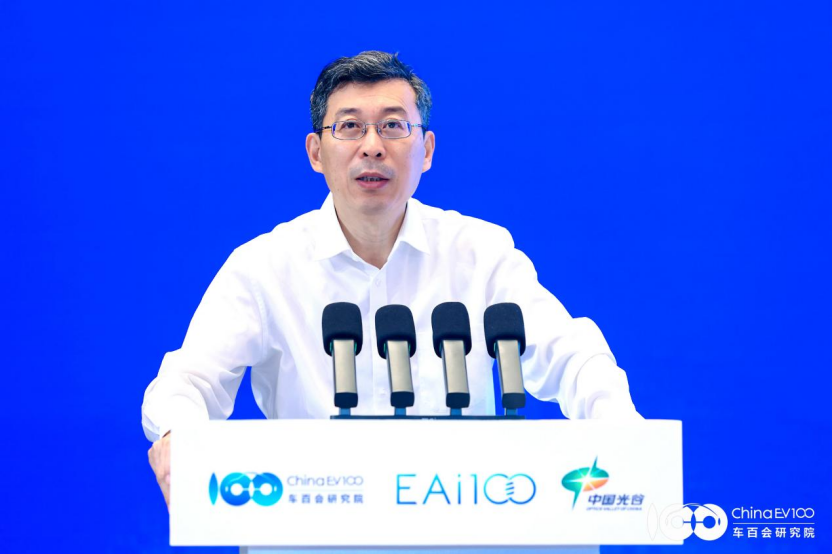
车百会理事长张永伟:以 “聚合思维” 推动智能产业迈入 “三大件” 时代
Zheng Quan Ri Bao Wang· 2025-09-17 08:28
Core Insights - The speech by Zhang Yongwei at the first Aggregated Intelligent Industry Development Conference emphasizes that "aggregated thinking" will be the core driving force for industrial breakthroughs, with collaborative and shared industrial chains as key pillars for achieving synergistic development [1][6] - The "three major components" (smart cars, embodied robots, and low-altitude economy) are highlighted as new engines for economic growth and overseas market expansion, succeeding the "new three samples" (electric vehicles, power batteries, and photovoltaics) [3][6] Summary by Sections Aggregated Thinking and Industrial Revolution - Aggregated thinking is identified as a hallmark of the Fourth Industrial Revolution, contrasting with the single-core dynamics of previous revolutions. Technologies like new energy and artificial intelligence are accelerating integration, necessitating a shift from single-industry thinking to cross-industry aggregated thinking [2][4] Synergy in the Three Major Components - The three major components exhibit deep coupling in three aspects: 1. Shared technology base, with AI as the core technology for smart cars, robots, and low-altitude vehicles [2] 2. Over 60% supply chain overlap among the three fields, indicating a shared industrial chain [3] 3. Emerging integrated applications and infrastructure, with interwoven application scenarios [2][3] Market Potential and Economic Impact - The global market for core components of smart vehicles (excluding complete vehicles) is projected to exceed $100 billion by 2025, with China accounting for over 50%, approximately $50 billion. By the end of the 14th Five-Year Plan, the market for smart driving components and systems is expected to double to over $200 billion, with China potentially reaching $100 billion [3][6] Development Paths for the Industry - Four development paths are proposed to deepen the synergy among the three major components: 1. Strengthening manufacturing advantages to accelerate cost reduction, aiming to lower robot prices from millions to between 100,000 and 200,000 yuan within five years [5] 2. Encouraging cross-industry expansion and supply chain collaboration, exemplified by Tesla's robot supply chain [5] 3. Expanding into international markets to seize blue ocean opportunities, particularly in the robot sector where trade barriers are minimal [5][6] 4. Innovating governance mechanisms to break down silos and promote integrated planning and policy adaptation across the three fields [6] Conclusion - The integration of smart cars, embodied robots, and low-altitude economy represents a significant opportunity for China to seize a competitive edge in the Fourth Industrial Revolution. By leveraging aggregated thinking and focusing on shared industrial chains, the country aims to create unique advantages in the aggregated intelligent industry, driving high-quality economic development [6]