
能源出口多元化

Search documents
加拿大拟新建输油管道开拓亚洲市场
Yang Shi Xin Wen· 2025-12-01 10:35
Core Viewpoint - The Canadian federal government has signed a memorandum of understanding with Alberta to construct a large oil pipeline aimed at Asian markets, reducing reliance on the U.S. market [1] Group 1: Pipeline Development - The new pipeline is expected to transport at least 1 million barrels of low-emission asphalt daily, significantly enhancing Canada's energy export capacity to Asia [1] - The initiative is part of a broader strategy to diversify export markets amid stalled trade negotiations with the U.S. [1] Group 2: Economic Strategy - Canadian Prime Minister Carney emphasized the need for large-scale investments and expedited approvals to boost the economy and decrease dependence on the U.S. [1] - The Canadian government is responding to changes in the global trade landscape and significant uncertainties by seeking to expand its energy export capabilities [1]
减少对美依赖,加拿大拟新建输油管道
中国能源报· 2025-11-28 07:37
Core Points - Canada aims to reduce its dependence on the U.S. oil market by constructing a new oil pipeline targeting Asian markets, as outlined in a memorandum of understanding signed between the federal government and Alberta province [1] - The new pipeline is expected to transport at least 1 million barrels of low-emission bitumen daily, significantly enhancing Canada's energy export capacity to Asia [1] - The initiative comes amid stalled trade negotiations with the U.S., which imports over half of its oil from Canada, prompting concerns over potential declines in oil export revenues [1] - The new infrastructure will complement the expansion of the Trans Mountain pipeline, which is set to begin commercial operations in May 2024, with a capacity of approximately 890,000 barrels per day [1] - The application for the new pipeline is expected to be submitted by July 1, 2026, with a maximum approval period of two years [1] - Canadian Prime Minister Carney emphasized the need for new partnerships to position Canada as an energy superpower while reducing emissions and diversifying export markets [1] Economic Strategy - The Canadian government is pursuing large-scale investments and expedited approvals to stimulate economic growth and further reduce reliance on the U.S. [2] - Future growth in Canada is anticipated to be driven by infrastructure development and resource strategies [2]


欧美不要的俄气转向中国,钱难回本,俄罗斯先争一口气
Sou Hu Cai Jing· 2025-11-09 06:18
Core Insights - The recent sanctions and embargoes imposed by the US and Europe on Russia have led to a shift in Russia's energy exports towards the East, particularly strengthening ties with China [1][2] - Europe's reliance on Russian energy has created internal divisions regarding the imposition of sanctions, with countries less dependent on Russian energy advocating for stricter measures, while those more reliant are more pragmatic [1][2] Group 1: Energy Supply Dynamics - The energy crisis in Europe has been exacerbated by insufficient renewable energy infrastructure and low natural gas reserves, leading to a dilemma of either accepting payments in rubles or facing supply disruptions [2][4] - Russia aims to become China's largest natural gas supplier by 2035, targeting over 25% of China's natural gas imports, indicating a strategic pivot towards Asian markets [2][4] - The ongoing energy crisis has resulted in rising natural gas prices in Europe, causing production halts in many industries and increasing inflationary pressures [4][7] Group 2: Strategic Partnerships - The partnership between Russia and China is characterized by mutual benefits, with Russia providing abundant resources and China ensuring stable demand [5][10] - Russia's strategy to diversify its energy exports towards Asia and Africa is a calculated move to mitigate risks associated with over-reliance on European markets [4][10] - The geopolitical landscape is shifting, with Russia's "Eastward Strategy" reflecting a reallocation of resources and a long-term commitment to stable partnerships [7][9] Group 3: Economic Implications - The economic foundation of Europe is at risk due to potential energy supply disruptions, which could lead to inflation, unemployment, and industrial instability [7][9] - The ability of Europe to maintain competitiveness in the future hinges on its willingness to prioritize public welfare over political posturing in energy policy [7][9] - The global energy market is witnessing a transformation, where energy remains a valuable commodity that will find new buyers despite sanctions [10]
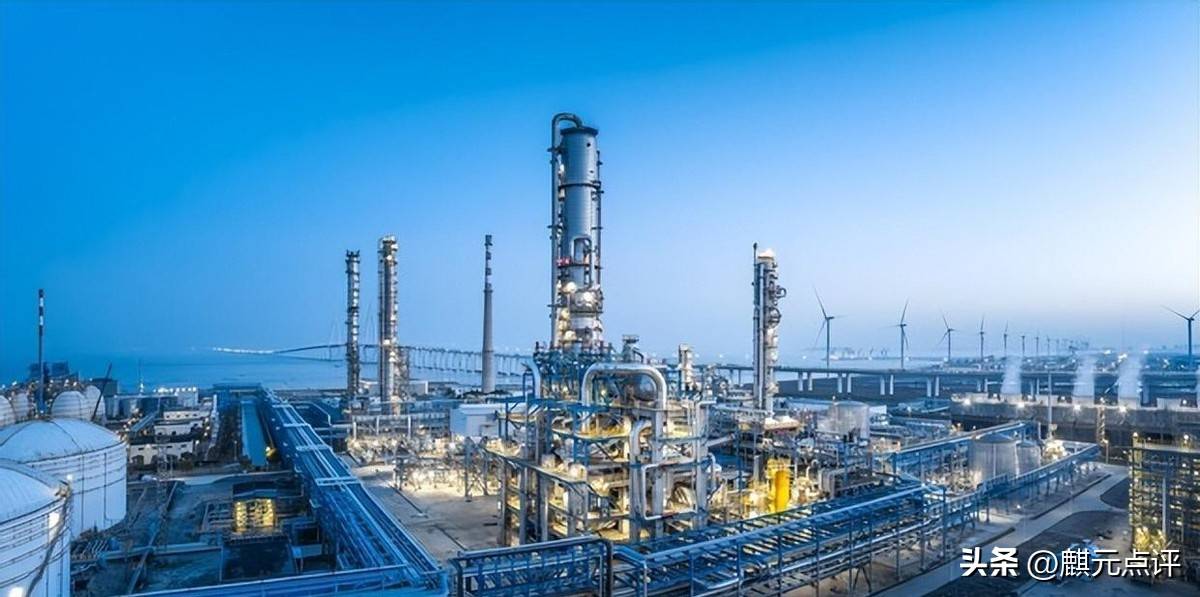
加拿大推进LNG Canada扩建项目
Zhong Guo Hua Gong Bao· 2025-09-19 02:27
Core Insights - The Canadian federal government has designated the LNG Canada Phase 2 expansion project as one of the country's five key energy projects, aiming to diversify energy exports and strengthen its position as a traditional and clean energy powerhouse [1] - The project is expected to double the LNG production capacity to 28 million tons per year, making it the second-largest LNG facility globally [1] - The new regulatory framework will streamline the approval process for strategic projects, reducing the maximum approval time to two years [1] Group 1: Project Overview - LNG Canada is located in Kitimat, British Columbia, and is developed by Shell, Petronas, China National Petroleum Corporation, Mitsubishi, and Korea Gas Corporation [1] - The project has recently achieved its first export, marking it as Canada's first large-scale LNG export facility [1] - The expansion aims to reduce Canada's over-reliance on the U.S. LNG export market by exporting natural gas to global markets via the Pacific coast [1] Group 2: Economic Impact - The federal government anticipates that the LNG Canada Phase 2 project will attract significant private capital and promote economic growth [1] - The project is expected to enhance Canada's trade partnerships, particularly increasing natural gas supply to Asian and European partners [1] Group 3: Additional Projects - Alongside LNG Canada Phase 2, the five key projects submitted for review include a small modular reactor (SMR) project, a container terminal project, and two mining projects aimed at increasing copper production in Canada [1]
中俄签天然气大单后,美国第一个跳出来喊疼,北溪爆炸案将重演?
Sou Hu Cai Jing· 2025-09-11 10:41
Core Viewpoint - The signing of the historic energy cooperation agreement between China and Russia, particularly the Power of Siberia-2 gas pipeline project, marks a significant shift in the global energy landscape, eliciting strong reactions from the United States [3][5][12]. Group 1: Energy Cooperation Agreement - The Power of Siberia-2 pipeline will enable the transportation of up to 50 billion cubic meters of high-quality Russian gas to China annually, with pricing mechanisms based on market principles, expected to be significantly lower than current prices for European customers [5][7]. - This project is seen as a critical turning point for Russia's energy strategy, especially under Western sanctions, as it seeks to diversify its energy export markets [7][14]. - By 2030, Russia's share of China's natural gas imports is projected to increase from approximately 10% to 20%, fundamentally altering the Eurasian energy trade dynamics [7]. Group 2: Strategic Implications for China - China stands to gain a stable land-based gas supply at competitive prices, reducing its reliance on maritime LNG transport routes, thereby enhancing its energy security [7][12]. - The deepening energy cooperation with Russia is expected to bolster China's geopolitical influence across the Eurasian continent [7]. Group 3: U.S. Response and Concerns - The U.S. has expressed strong dissatisfaction with the agreement, viewing it as a significant challenge to its energy industry and global energy dominance [8][9]. - Reports indicate that the U.S. is attempting to pressure Russia to abandon Chinese technology in favor of American equipment for its Arctic LNG projects, revealing a dual standard in U.S. foreign policy [8][9]. - Some U.S. commentators have even suggested potential sabotage of the pipeline, drawing parallels to the Nord Stream incident, indicating a heightened level of concern regarding the implications of the Sino-Russian partnership [9][10]. Group 4: Future of Sino-Russian Energy Cooperation - The ongoing development of projects like Power of Siberia-2 signifies a new height in Sino-Russian energy cooperation, which is expected to reshape the energy geopolitical landscape of Eurasia [14]. - The collaboration is framed as a strategic choice based on mutual long-term national interests, resilient against external pressures [12][14].
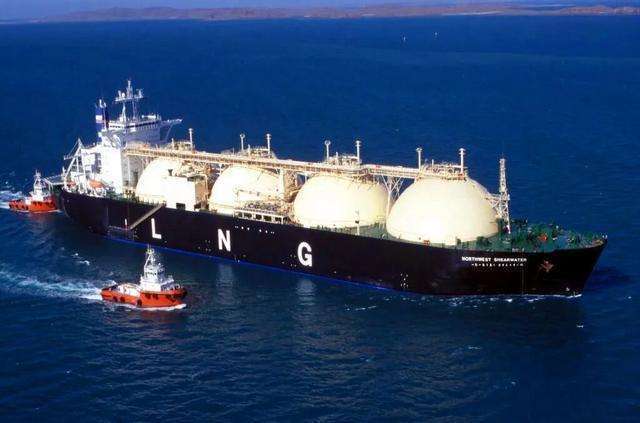
加拿大艾伯塔省拟投资日本炼油业
Zhong Guo Hua Gong Bao· 2025-09-02 02:34
Core Viewpoint - Alberta province in Canada is considering financial investments in Japan's refining industry to reduce its reliance on oil exports to the United States [1] Group 1: Investment Strategy - Alberta government is in preliminary talks with several Japanese refining companies to explore joint ventures for funding the construction of coking facilities [1] - This would enable Japanese companies to process heavy crude oil produced from Alberta's oil sands [1] - If an agreement is reached, it would mark Alberta's first overseas investment in energy infrastructure [1] Group 2: Market Implications - The initiative aims to leverage the increased oil transportation capacity along the Pacific coast from the recently operational expansion of the Trans Mountain pipeline [1] - Collaborating with Japan could enhance the utilization of this pipeline and support Alberta's plans for new export pipeline projects [1] Group 3: Japanese Refining Capacity - The coking facilities will improve Japan's ability to process heavy crude oil, as most of its refining facilities currently cannot handle high-sulfur heavy crude [1] - Japan's crude oil imports are primarily reliant on the Middle East [1] Group 4: Canadian Oil Export Landscape - Canada is the world's fourth-largest oil producer, but Alberta, as its core production area, is landlocked with limited port resources [1] - Approximately 90% of Canada's crude oil exports are transported to the U.S. via north-south pipelines [1]