
减少对美依赖

Search documents
【环时深度】减少对美依赖,加拿大的战略转身?
Huan Qiu Shi Bao· 2026-02-04 22:53
Core Viewpoint - Canada is facing increasing pressure from the United States, leading to a growing national consensus on the need for independence and reduced reliance on the U.S. [1][7] Trade and Economic Strategy - The Canadian government, under Prime Minister Carney, has announced a significant economic strategy aimed at doubling exports to markets outside the U.S. by 2035, which is currently progressing steadily [4][5] - Canada signed a trade agreement with Indonesia in September 2025, aiming for 95% of Canadian exports to enjoy duty-free access within a year [5] - Canada is also pursuing closer cooperation with ASEAN in energy, defense, and investment sectors, and has engaged in negotiations with India to double bilateral trade by 2030 [5] Defense and Security Measures - In response to perceived threats from the U.S., Canada is planning to establish a new civil defense force and conduct military exercises for the first time in nearly a century to simulate strategies against potential U.S. aggression [4][9] - The Canadian government has acknowledged its over-reliance on the U.S. in defense spending and is taking steps to address this issue [9] Diplomatic Relations - Canada is actively working to repair strained diplomatic relations, particularly with China, as evidenced by Prime Minister Carney's recent visit, which is the first by a Canadian Prime Minister to China since 2017 [6] - Public sentiment in Canada is shifting towards a desire for reduced dependence on the U.S., with over 70% of Canadians willing to accept slower economic growth for greater independence [7] Historical Context and Future Outlook - Historically, Canada has attempted to reduce its dependence on the U.S. but has often faced challenges due to the attractiveness of the U.S. market [8] - The current efforts by the Carney government may signify a strategic shift rather than a temporary reaction, as there is a growing recognition that dependence on the U.S. has become a weakness [9][10] - The concept of "middle powers" is emerging, with Canada advocating for collaboration among these nations to create a more balanced international order [10][11]

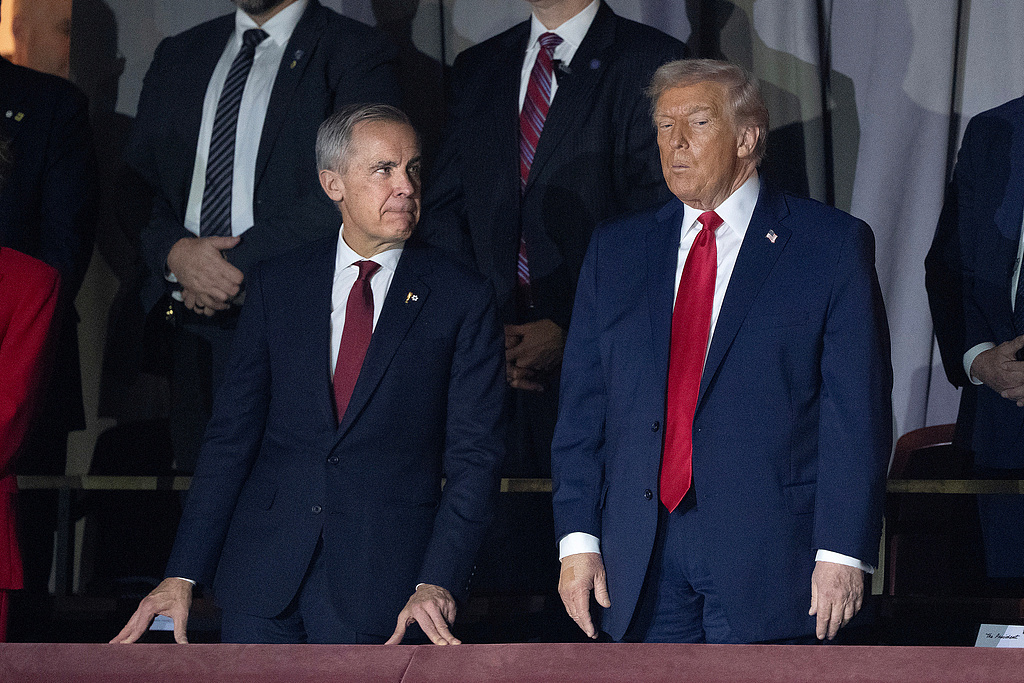
加拿大总理访华第3天,终于见到最想看的人,一开口连说了3句谢谢
Sou Hu Cai Jing· 2026-01-16 13:51
Group 1 - The visit of Canadian Prime Minister Carney to China marks a significant thaw in the previously frozen relations between Canada and China, which had been strained since the "Meng Wanzhou incident" in 2018 [3][5] - Bilateral trade between Canada and China is projected to decline to $89.62 billion by 2025, a decrease of 3.6% from the previous year, largely due to tariffs and restrictions imposed by Canada following U.S. policies [3][5] - The agricultural sector in Canada, particularly in Saskatchewan, has suffered significantly due to China's imposition of a 100% tariff on Canadian canola, resulting in losses of approximately CAD 450,000 for local farmers [3][7] Group 2 - Canada is heavily reliant on the U.S. market, with 75% of its exports going to the U.S., but this figure is expected to drop to 72% by 2025, highlighting the economic vulnerability of Canada [5][9] - The Canadian government is actively seeking to diversify its energy exports, aiming to increase its capacity to export oil to Asia by 30% following the completion of the Trans Mountain pipeline expansion in June 2024 [7][9] - The recent imposition of a 75.8% temporary anti-dumping duty on Canadian canola by China has led to a 20% drop in export value from Saskatchewan, emphasizing the critical nature of agricultural negotiations [7][11] Group 3 - The joint statement from the leaders of Canada and China indicates a commitment to building a "new type of strategic partnership," with cooperation outlined in six key areas including trade, energy, and climate change [9][11] - Public opinion in Canada shows strong support for enhancing trade with China, with 54% of Canadians favoring increased trade relations, reflecting a shift in sentiment towards reducing reliance on the U.S. [11][13] - The Canadian government is considering adjustments to electric vehicle tariffs in exchange for concessions on agricultural tariffs from China, indicating a more pragmatic approach compared to previous administrations [11][13] Group 4 - The Arctic security agenda is a hidden aspect of Carney's visit, as Canada seeks to counter U.S. claims over Arctic territories and enhance its patrol capabilities in the region [13][15] - The restoration of direct flights between China and Canada, along with the anticipated return of Chinese tourists, is expected to significantly benefit the Canadian economy, particularly in tourism [15] - The trend of U.S. allies, such as Australia and the UK, improving relations with China suggests a potential shift in the geopolitical landscape, which Canada is also attempting to navigate [15]
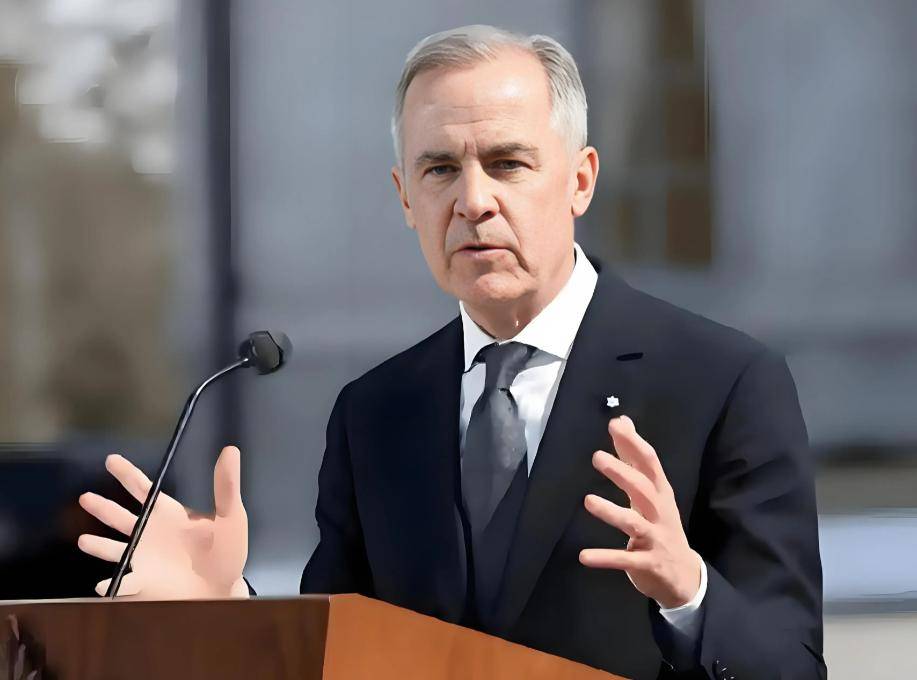
减少对美依赖,加拿大拟新建输油管道
中国能源报· 2025-11-28 07:37
Core Points - Canada aims to reduce its dependence on the U.S. oil market by constructing a new oil pipeline targeting Asian markets, as outlined in a memorandum of understanding signed between the federal government and Alberta province [1] - The new pipeline is expected to transport at least 1 million barrels of low-emission bitumen daily, significantly enhancing Canada's energy export capacity to Asia [1] - The initiative comes amid stalled trade negotiations with the U.S., which imports over half of its oil from Canada, prompting concerns over potential declines in oil export revenues [1] - The new infrastructure will complement the expansion of the Trans Mountain pipeline, which is set to begin commercial operations in May 2024, with a capacity of approximately 890,000 barrels per day [1] - The application for the new pipeline is expected to be submitted by July 1, 2026, with a maximum approval period of two years [1] - Canadian Prime Minister Carney emphasized the need for new partnerships to position Canada as an energy superpower while reducing emissions and diversifying export markets [1] Economic Strategy - The Canadian government is pursuing large-scale investments and expedited approvals to stimulate economic growth and further reduce reliance on the U.S. [2] - Future growth in Canada is anticipated to be driven by infrastructure development and resource strategies [2]

“加美关系不复从前”,加拿大总理:将减少对美依赖,正与中印重新接触
Xin Jing Bao· 2025-10-23 08:53
Core Points - The Canadian government is set to reduce its economic and security dependence on the United States in the upcoming budget [1] - Canada aims to double its exports to non-U.S. markets over the next decade, with renewed engagement with India and China [1] - During a meeting on October 7, Trump expressed that he views Canada as an economic competitor and reiterated the idea of integrating Canada into the U.S. [1]
加拿大总理说将减少对美依赖 正与中印重新接触
Xin Jing Bao· 2025-10-23 07:29
Core Points - The Canadian government is set to reduce its economic and security dependence on the United States [1] - Canada aims to double its exports to non-U.S. markets over the next decade [1] - Canada is re-engaging with India and China [1] - U.S. President Trump views Canada as an economic competitor and has mentioned the possibility of integrating Canada into the U.S. [1] - There is still no agreement on tariff issues between the two countries [1]
减少对美依赖 加拿大宣布首批重点基建项目
Xin Hua She· 2025-09-12 07:46
Core Points - Canadian Prime Minister Carney announced the launch of five key infrastructure projects to address the impact of U.S. trade policies [1] - The total investment for these projects exceeds 60 billion CAD (approximately 43 billion USD) [1] - The projects include LNG plant expansion in British Columbia, small modular reactor construction in Ontario, Montreal port container terminal expansion, and two critical mineral development projects in Saskatchewan and British Columbia [1] - A future development project includes a high-speed rail line from Toronto to Quebec City [1] - Carney's government established a key project office in August to streamline regulatory assessments and financing support, aiming to reduce project approval times to within two years [1] - The initiative is a response to the economic impact of the Trump administration's trade policies, with Canada's GDP contracting by 1.6% year-on-year in Q2, marking the first decline in seven quarters [1] - The unemployment rate in August reached 7.1%, the highest level since 2016 outside of the pandemic [1] - Since taking office in March, Carney has emphasized the need for significant infrastructure investment and productivity improvements to revitalize the economy and reduce dependence on the U.S. [1]
美媒:减少对美依赖,加拿大与欧盟签署防务协议
Huan Qiu Shi Bao· 2025-06-24 22:49
Group 1 - The core point of the articles is the signing of a comprehensive security and defense agreement between Canada and the European Union, marking a significant step in deepening their partnership and reducing Canada's reliance on the United States [1][2] - The agreement was signed during a Canada-EU summit in Brussels, with Canadian Prime Minister Carney meeting with EU leaders to discuss the partnership [1] - The EU's President von der Leyen emphasized that this partnership will enhance Canada's role in the evolving European defense architecture, indicating that this is just the beginning of a stronger collaboration [1] Group 2 - Canada will collaborate with the EU on the €150 billion "European Security Action" (SAFE) plan, which aims to provide loans to member states for weapon purchases and allows for joint procurement [2] - Both Canada and NATO countries have committed to significantly increasing defense spending, a commitment that will be reiterated at the upcoming NATO summit [2] - The EU and Canada are both seeking to distance themselves from the unpredictable strategies of the U.S. government, aiming for broader trade partnerships and diversification of supply chains [2]
减少对美依赖?加拿大要加入欧洲防务计划
news flash· 2025-05-28 06:57
Group 1 - The core viewpoint is that Canada aims to join the "Rearm Europe" initiative by July 1 to reduce its reliance on the U.S. for weapons and ammunition [1] - Canadian Prime Minister Carney stated that 75 cents of every dollar spent on defense goes to the U.S., which he considers unwise [1] - Negotiations with the European Union regarding Canada's participation in the "Rearm Europe" initiative are reportedly progressing well, with expectations for substantial results by July 1 [1]