
能源安全保障

Search documents
煤炭行业周报需求淡季不淡,煤价震荡上行
Datong Securities· 2026-03-24 03:35
Investment Rating - The report rates the coal industry as "Positive" [1] Core Viewpoints - The coal market is experiencing a resilient demand despite being in a traditionally weak season, with coal prices showing an upward trend [1] - Domestic thermal coal prices are stable with slight increases, supported by both domestic supply recovery and international price stability [12][18] - Coking coal prices are also on the rise due to improved demand from the steel industry and limited new mining capacity [32] Summary by Sections Market Performance - The A-share market has shown a mixed performance, with coal stocks underperforming compared to the CSI 300 index, which fell by 2.19% [5] - The coal sector specifically saw a decline of 2.46%, with major coal companies mostly experiencing price drops [5] Thermal Coal - The domestic thermal coal market is characterized by a balance of increasing domestic supply and tightening international supply, leading to stable prices [12] - The price of Qinhuangdao port thermal coal (Q5500) increased to 735 CNY/ton, reflecting a week-on-week rise [18] - Factors such as rising international energy prices and seasonal demand from power plants are supporting the market [12][13] Coking Coal - The coking coal market is witnessing a positive trend with both supply and demand improving, leading to price increases [32] - Prices for major coking coal types have risen, with Shanxi Gujiao No. 2 coking coal priced at 1270 CNY/ton, up by 36 CNY/ton week-on-week [34] - The demand from steel mills is expected to further enhance price stability and growth [32] Shipping Conditions - Shipping metrics indicate an increase in both the number of vessels and shipping rates, reflecting a robust coal transport environment [42] Industry News - The report highlights significant developments in the coal sector, including new projects and production targets aimed at stabilizing coal supply [43][45] - The coal industry is adapting to geopolitical tensions and market dynamics, with companies focusing on enhancing operational efficiency and resource management [45]


日美就重要矿物供应短缺时开展合作达成新框架
日经中文网· 2026-03-16 03:06
Group 1 - The core viewpoint of the article highlights the collaboration between Japan and the United States to ensure the stability of resource supply chains, particularly in light of China's dominance in rare earth elements [2][4] - Japan's Minister of Economy, Trade and Industry, Akira Amari, announced the establishment of a rapid response team to facilitate information sharing and cooperation during disruptions in critical mineral supply chains [4] - The recent ministerial meeting also focused on deepening cooperation in areas such as liquefied natural gas (LNG) and nuclear energy, laying the groundwork for the upcoming Japan-U.S. summit [4][5] Group 2 - The ministerial meeting, attended by leaders and energy ministers from 18 countries, emphasized a collective commitment to ensuring regional energy supply stability [5] - Discussions included the impact of the blockade of the Strait of Hormuz on energy transportation, showcasing the unity of Indo-Pacific nations in strengthening energy security amid Middle Eastern tensions [5] - Japan signed memorandums of cooperation with Indonesia and Singapore in the fields of nuclear energy, critical minerals, and hydrogen energy [5]


中煤4×1000MW煤电项目可行性研究报告评审会召开
Xin Lang Cai Jing· 2026-02-09 10:09
Core Viewpoint - The feasibility study report review meeting for the coal power projects at the Longqing Bridge and Lintai Chemical Park in Gansu Province marks a significant step towards the implementation of the coal power projects associated with the Longdong Comprehensive Energy and Chemical Base [1][4]. Group 1: Meeting Overview - The meeting was held from February 3 to 6, 2023, in Qingyang City, Gansu Province, and was hosted by the Electric Power Planning and Design Institute [1][4]. - Over 100 representatives from various government departments and companies, including China Coal Energy Group and China Coal Power Co., attended the meeting [1][4]. Group 2: Site Investigation and Expert Review - Prior to the meeting, an expert group conducted site visits to the proposed locations in Qingyang and Lintai, focusing on key aspects such as land planning, water resource assurance, solid waste utilization, and transportation conditions [2][5]. - The expert group acknowledged the favorable conditions for constructing large coal power projects at the selected sites, providing a solid basis for the feasibility report [2][5]. Group 3: Feasibility Report Content - The Northwest Electric Power Design Institute presented the feasibility report, covering project site selection, technical routes, environmental measures, investment estimates, and economic benefit analysis [2][5]. - Experts reviewed the report comprehensively, discussing technical feasibility, economic rationality, and environmental compliance, and provided optimization suggestions for the project's advancement [2][5]. Group 4: Future Steps - The project leaders expressed their commitment to incorporating expert feedback to expedite the completion of the feasibility report and advance project approval processes, aiming for an early start of construction [6]. - The successful hosting of the review meeting not only provided scientific support for the project's preliminary verification but also fostered consensus among stakeholders for the collaborative advancement of the Longdong Energy Base [6].
中金 • 全球研究 | 日本自民党大胜对资本市场影响几何?
中金点睛· 2026-02-08 23:37
Core Viewpoint - The recent Japanese House of Representatives election resulted in a significant victory for the Liberal Democratic Party (LDP), securing 316 seats, which is over two-thirds of the total, indicating potential constitutional amendments in the long term, while short-term economic policies remain the priority [1][2]. Election Results - The LDP achieved 316 seats, up from 198, representing approximately 68% of the total 465 seats, marking the largest single-party representation since 1945 [1]. - The Komeito party, part of the ruling coalition, gained 36 seats, while the largest opposition party, the Constitutional Democratic Party, saw a significant drop to 49 seats from 167 [1]. - The National Democratic Party maintained its seat count at 28, and the Future Team party made a notable breakthrough with 11 seats [1]. Constitutional Amendment Possibility - The current political landscape allows for a potential constitutional amendment, as parties supporting such changes hold over two-thirds of the seats in both houses of parliament [2]. - However, the focus will likely remain on economic policies in the short term, as public concern centers around inflation and purchasing power [2]. Economic Policy Focus - The LDP's election manifesto emphasizes crisis management investments across various sectors, including technology, energy, and healthcare, aiming to enhance national resilience and competitiveness [2][3]. - Specific strategies include promoting Japan as a technology powerhouse, reducing dependency on specific countries, and ensuring supply chain security for critical resources [3]. Energy Security Measures - The manifesto outlines plans to restart nuclear power plants and maximize the use of renewable energy sources, aiming for a more diversified and self-sufficient energy structure [4]. - It also includes measures to regulate solar energy projects to balance development with local community and environmental needs [4]. Fiscal Responsibility - The LDP aims to achieve strong economic growth through bold investments while ensuring fiscal sustainability, with plans to reduce government debt as a percentage of GDP [4]. Market Impact - The election outcome is expected to lead to a significant rise in Japanese stocks, with the Nikkei index potentially surpassing 56,000 points [5]. - Japanese bond yields may rise in an orderly manner, with the LDP's victory suggesting a focus on responsible fiscal policies [6]. - The impact on U.S. Treasury yields is expected to be minimal, as Japan's holdings of U.S. debt are relatively small [7]. - There may be foreign exchange interventions if the yen depreciates excessively, with potential intervention levels around 158-160 yen per dollar [8]. - Global market sentiment may improve as a result of the election, reducing downward risks to capital prices [8]. Political Dynamics - Despite the LDP's strong position, concerns exist regarding the potential for overreach in policy implementation, drawing parallels to past political disappointments in Japan [9]. - Ongoing monitoring of cabinet approval ratings and financial market reactions will be crucial in shaping future policies [10].

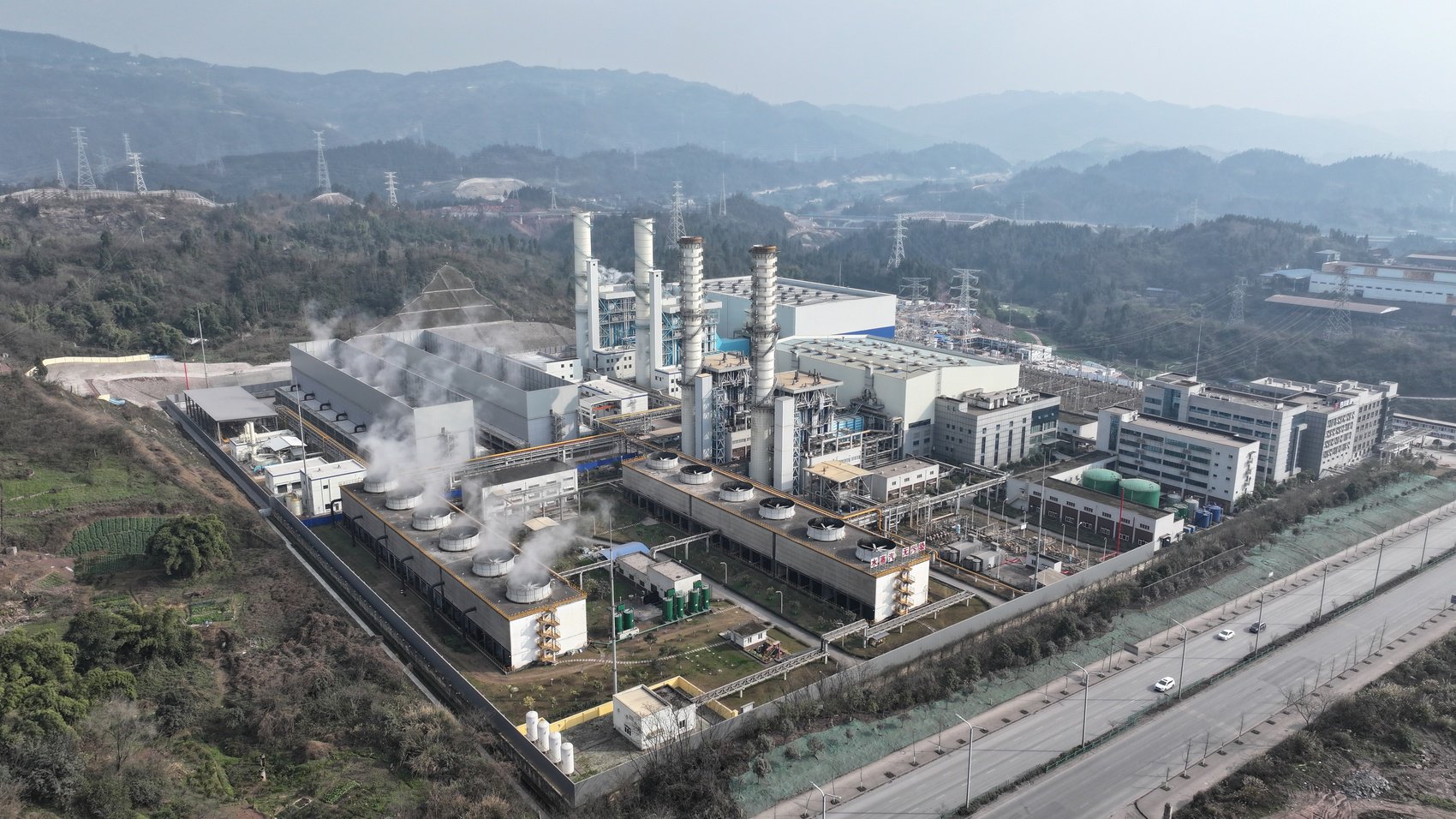
四川最大燃气电站4号机组投产发电
Xin Lang Cai Jing· 2026-02-07 08:28
Core Viewpoint - The Dazhou Gas Power Plant's Phase II project has successfully commenced commercial operations with the completion of the 4th unit, increasing the total installed capacity to 2.18 million kilowatts, making it the largest gas power plant in Sichuan [1][3]. Group 1: Project Overview - The Dazhou Gas Power Plant Phase II project began construction in November 2023 with a total investment of approximately 3.4 billion yuan, and it is a key project in Sichuan's "14th Five-Year" energy development plan [3]. - The project includes the construction of two gas-steam combined cycle generator units, the 3rd and 4th units, each with a capacity of 740,000 kilowatts [3]. Group 2: Technical and Operational Efficiency - The new units in the Phase II project have a gas-steam combined cycle efficiency exceeding 60%, significantly reducing the cost per kilowatt-hour and emissions, while also enhancing rapid startup capabilities and operational flexibility [5]. - The estimated annual gas consumption for the four units is approximately 785 million cubic meters, with an expected annual power generation of 3.924 billion kilowatt-hours [5]. Group 3: Regional Energy Impact - The Dazhou Gas Power Plant will enhance energy security in the Chengdu-Chongqing economic circle and promote the local conversion and efficient use of natural gas [5]. - Dazhou's total installed capacity is projected to increase significantly, with plans for additional coal-fired and renewable energy projects, aiming to reach nearly 7 million kilowatts by 2027 and over 8 million kilowatts by 2030 [5].
中国煤炭行业展望
Zhong Cheng Xin Guo Ji· 2026-02-05 06:34
Investment Rating - The report maintains a stable outlook for the coal industry, indicating that the overall credit quality of the industry is not expected to change significantly in the next 12 to 18 months [6]. Core Insights - Coal demand growth has significantly slowed, but it remains a cornerstone for energy security. The domestic coal production is expected to continue rising due to the release of previously constructed capacities, while coal imports are projected to decline [6][7]. - The coal price is anticipated to exhibit a "high first, low later, and then rebound" V-shaped trend throughout the year, with a stable price center expected [6][28]. - The financial performance of coal enterprises is under pressure due to rising debt levels, but their operational cash flow and refinancing capabilities remain relatively strong [6][35]. Summary by Sections Key Focus Areas - Since 2025, national coal consumption has been weak, primarily supported by the power sector. However, the continuous push for clean energy has negatively impacted thermal power demand, leading to a decline in both thermal power generation and coal consumption [7][9]. - The construction and real estate sectors are experiencing a downturn, further weakening coal demand in the building materials industry [7][15]. - The chemical industry has seen a slight increase in coal demand due to new coal chemical projects, but the overall consumption scale remains relatively small [7][16]. Industry Fundamentals - The coal consumption growth rate has continued to slow, with total coal consumption in China for January to November 2025 at 4.69 billion tons, unchanged from the previous year [9]. - The power sector remains the largest consumer of coal, accounting for over 50% of total coal consumption. However, traditional thermal power is facing significant pressure from clean energy sources [11][12]. - The steel industry, as the second-largest consumer of coal, has also seen a decline in coal consumption due to reduced demand from downstream sectors [14]. Financial Performance - The profitability of coal enterprises is closely tied to coal prices, which have been declining. In the first three quarters of 2025, the net profit of sample enterprises dropped by 25.65% year-on-year to 135.93 billion yuan [36]. - The average operating profit margin for sample enterprises decreased by 3.22 percentage points to 19.09% due to falling coal prices [36]. - The financial health of coal enterprises is under pressure, but the overall debt structure has improved, and the refinancing environment remains favorable [6][35]. Supply and Demand Dynamics - The coal supply is expected to grow at a slower pace, with domestic production and imports both facing constraints. The overall supply-demand balance is under structural pressure, which will support the price center in the medium to long term [27][33]. - The introduction of a floating pricing mechanism for long-term contracts is expected to enhance contract compliance and stabilize market price fluctuations [28]. Price Trends - The coal price has shown a V-shaped trend, with a significant drop followed by a rebound. The average price of Qinhuangdao thermal coal (Q5000) fell by 12 yuan/ton by the end of December compared to the beginning of the year [29][30]. - The pricing mechanism for coking coal varies by region, with long-term contracts generally exhibiting less volatility compared to market pricing [31]. Inventory Levels - Coal inventories remain high due to a continuous supply surplus, with total coal inventories exceeding 350 million tons [25][26]. - The high inventory levels are expected to exert downward pressure on thermal coal prices in the short term [25].
光伏行业周报(20260126-20260130):本周光伏设备(申万)指数表现
Guoxin Securities Co., Ltd· 2026-02-04 13:25
Investment Rating - The report suggests focusing on companies benefiting from supply-side reforms, technological iterations, and marginal changes in demand expectations, with a long-term view on efficient technologies and leading companies in the industry [4] Core Insights - The photovoltaic equipment industry index decreased by 6.19% during the week of January 26 to January 30, 2026, underperforming the broader market index by 5.18 percentage points [12][14] - Key companies in the photovoltaic equipment sector showed varied performance, with notable gains from Yamaton, Jincheng Co., and others, while significant losses were observed in Mingguan New Materials and others [17] - The report highlights the stability in prices of key materials such as silicon, wafers, and batteries, with slight increases in component prices [19] Summary by Sections Market Performance - The Shanghai Composite Index increased by 0.08%, while the photovoltaic equipment industry index fell by 6.19%, indicating a challenging week for the sector [12][14] Industry Chain Price Trends - As of January 21, 2026, the prices for key materials were as follows: silicon at 59 CNY/kg, wafers at 1.50 CNY/piece, batteries at 0.42 CNY/W, and components at 0.81 CNY/W, with a slight increase in component prices [19] Industry News - Guangdong province is advancing offshore photovoltaic construction as part of its action plan for high-quality marine economic development, promoting the integration of offshore wind and photovoltaic projects [26] - The National Energy Administration announced that by 2025, the country expects to add over 430 million kW of wind and solar capacity, with significant investments in renewable energy projects [27][28]




中俄东线连通工程冲刺“最后百米”
Xin Lang Cai Jing· 2026-02-01 22:23
Core Viewpoint - The construction of the China-Russia East Line connection project in Shenyang is crucial for enhancing energy security in the region, with the project nearing completion and set to be operational by the end of February [1][2]. Group 1: Project Overview - The China-Russia East Line connection project involves the construction of a 7.9-kilometer DN300 natural gas pipeline with a design pressure of 4.0 MPa, aimed at providing a stable and efficient gas supply to Shenyang [1]. - As of now, 7.8 kilometers of the pipeline have been laid, achieving an overall progress of 98.7%, indicating that the project has entered the final sprint phase [2]. Group 2: Construction Challenges and Innovations - The project team has faced significant challenges due to winter construction conditions but has successfully optimized processes to complete preliminary work in just 20 days [2]. - Innovative technologies have been implemented, including solar-powered smart warning bands that provide real-time pipeline status updates and an epoxy glass fiber protective layer to enhance corrosion resistance and physical damage protection in low-temperature environments [2]. Group 3: Workforce and Morale - Despite harsh weather conditions, the construction site operates efficiently, with workers maintaining high-quality standards in welding and machinery operation [2]. - The project manager expressed a strong commitment to delivering natural gas to households, emphasizing the team's dedication despite the cold and challenging work environment [2].
2025年全国能源投资保持较快增长
Xin Lang Cai Jing· 2026-02-01 00:45
Group 1 - The core viewpoint of the articles indicates that national energy investment in China is expected to maintain rapid growth in 2025, with key project investments surpassing 3.5 trillion yuan for the first time, representing a year-on-year increase of nearly 11% [1] - The investment growth rate in the energy sector outpaces that of infrastructure and manufacturing by 12.9 and 10.1 percentage points, respectively [1] - Five provinces (Inner Mongolia, Xinjiang, Shandong, Guangdong, and Jiangsu) each completed energy investments exceeding 200 billion yuan last year [1] Group 2 - In 2025, investments in green energy transition new formats are accelerating, with new installed capacity for wind and solar power exceeding 430 million kilowatts and cumulative installed capacity surpassing 1.8 billion kilowatts [1] - Investment in onshore wind power is showing strong growth, with key projects seeing a year-on-year investment increase of nearly 50% [1] - The new energy storage and hydrogen energy industries are experiencing significant growth, with key project investments doubling compared to the previous year [1] Group 3 - Investment in energy security key areas is expanding effectively, with good growth in coal power and conventional hydropower investments [1] - Major hydropower projects in the southwestern region are progressing steadily, increasing physical workload [1] - Investment in the power grid is maintaining stable growth, with accelerated construction of cross-provincial and cross-regional transmission channels [1] Group 4 - Private enterprises in the energy sector are also experiencing rapid investment growth, with key project investments increasing by 12.9% year-on-year, surpassing the national energy project growth rate by approximately 2 percentage points [2] - Private investments are primarily focused on solar power generation, wind power, and coal mining, with double-digit growth in onshore wind and distributed solar photovoltaic sectors [2]
2025年全国能源投资保持较快增长 年度重点项目完成投资额首超3.5万亿元
Xin Lang Cai Jing· 2026-01-31 20:32
Core Insights - The national energy investment in China is expected to maintain rapid growth, with the annual investment in key projects exceeding 3.5 trillion yuan in 2025, representing a year-on-year increase of nearly 11% [1] - The investment growth rate outpaces that of infrastructure and manufacturing by 12.9 and 10.1 percentage points, respectively [1] Group 1: Energy Investment Overview - In 2025, five provinces (Inner Mongolia, Xinjiang, Shandong, Guangdong, and Jiangsu) each completed energy investments exceeding 200 billion yuan [1] - The new energy sector, particularly wind and solar power, is projected to see an addition of over 430 million kilowatts in installed capacity, with a cumulative installed capacity surpassing 1.8 billion kilowatts [1] - Investment in onshore wind power projects is expected to grow nearly 50% year-on-year [1] Group 2: Private Sector Investment - Private enterprises in the energy sector are also experiencing rapid growth, with a year-on-year increase of 12.9% in investment for key projects, which is about 2 percentage points higher than the national average [2] - The focus of private investment is primarily in solar power generation, wind power, and coal mining, with double-digit growth in onshore wind and distributed solar photovoltaic sectors [2]