能源融合

Search documents
打造能源电力高质量发展“湾区样本”
Zhong Guo Dian Li Bao· 2026-01-21 07:49
Core Insights - The Guangdong-Hong Kong-Macao Greater Bay Area (GBA) is projected to achieve an economic total of 14.79 trillion RMB in 2024, surpassing major global bay areas like New York and San Francisco, and ranking alongside Tokyo Bay as a leader in the global first tier [1] - The GBA is focusing on high-quality development in energy and electricity, aiming to lead the transition towards greener energy solutions [1] Energy and Electricity Development Achievements - The GBA's electricity consumption is expected to reach 696.2 billion kWh in 2024, marking an increase of 76.1 billion kWh from 2020, with an average annual growth rate of 5.1% [2] - By the end of 2024, the total installed capacity of power sources in the GBA will be 136.06 million kW, with clean energy accounting for 76.8% of this capacity, a nearly 20% increase since 2020 [2] - The rapid growth of photovoltaic installations has led to a 15% share in total installed capacity, while offshore wind power in Guangdong has reached 11.98 million kW, ranking first in the country [2] Acceleration of Electrification and Low-Carbon Transition - As of July 2024, the number of electric vehicles in the GBA has surpassed 700,000, with the electric public transport rate in Guangdong reaching 98.6% [3] - Shenzhen has initiated pilot projects for near-zero carbon emission zones, promoting green factories and digital production to enhance energy efficiency and reduce carbon levels [3] - The Nansha district is developing a zero-carbon electric vehicle charging station that integrates photovoltaic, energy storage, and charging capabilities [3] Challenges in Energy and Electricity Development - The GBA has a high dependency on external energy supplies, with local energy production primarily concentrated in Guangdong, leading to a reliance on external coal, oil, and gas [4] - There is a spatial mismatch between energy supply and demand, with local power generation only accounting for 55.9% of total electricity consumption [4] - The interconnectivity of energy transport channels among Guangdong, Hong Kong, and Macao is insufficient, affecting the efficiency of cross-regional energy transport [4] Trends in Energy and Electricity Development - The "14th Five-Year Plan" period is critical for achieving carbon peak targets, with the GBA expected to establish a new energy system by 2028 and reduce total carbon emissions by over 10% by 2035 [6] - The GBA aims to achieve over 90% clean energy installed capacity during this period, significantly increasing the scale of green electricity [6] - The integration of artificial intelligence in energy systems is anticipated to enhance operational efficiency and support the development of a digital energy city in Shenzhen [7] Recommendations for Energy and Electricity Development - Optimize the energy structure by exploring deep-sea resources and promoting offshore wind power development [8] - Expand comprehensive energy services and create a multi-dimensional energy network that includes electricity, hydrogen, and heat [9] - Improve collaborative mechanisms for energy dispatch and market transactions, enhancing the integration of the GBA's electricity market with the national unified electricity market [9]
蔚来上海第200座换电站投运,携手中石化共筑能源融合新生态
Zhong Guo Qi Che Bao Wang· 2025-12-28 10:27
Core Viewpoint - NIO has launched its 200th battery swapping station in Shanghai, marking a significant milestone in its collaboration with Sinopec, indicating a new phase of strategic cooperation and scaling in the energy sector [1] Group 1: Company Developments - The newly opened station is the first directly operated by NIO in collaboration with Sinopec in Shanghai [1] - NIO has established a total of 356 battery swapping stations in partnership with various oil companies, including Sinopec, PetroChina, CNOOC, and Shell across the country [1] Group 2: Industry Collaboration - The launch signifies the deepening collaboration between NIO's energy system, which is characterized by "chargeable, swappable, and upgradable" capabilities, and the traditional energy network [1] - This development represents a new stage of large-scale development in the energy sector, highlighting the integration of electric vehicle infrastructure with conventional energy sources [1]


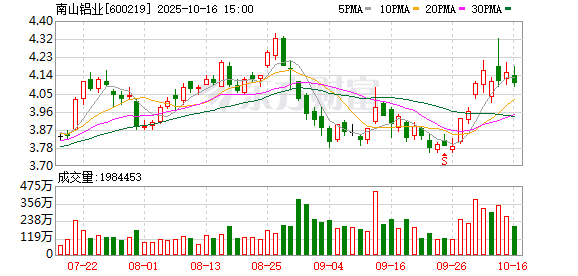
南山铝业:公司充分融合传统能源稳定性与新能源低碳优势,力求实现碳排放量的最小化
Zheng Quan Ri Bao· 2025-10-16 13:40
Core Viewpoint - Nanshan Aluminum is focusing on integrating traditional energy sources with renewable energy to minimize carbon emissions in its Indonesian project [2] Group 1: Company Strategy - The Indonesian project primarily relies on thermal power, supplemented by some photovoltaic power generation [2] - The company aims to achieve production stability while reducing carbon emissions by leveraging the advantages of both traditional and renewable energy sources [2]


让用电从成本变利润!星星充电6月30日揭晓未来能源新生态
中关村储能产业技术联盟· 2025-06-24 13:40
Core Viewpoint - The integration of AI with energy assets is set to transform the value of renewable energy equipment and create new opportunities for all participants in the energy market through the launch of the "Three Networks Integration Platform" and "Taiyi Trading System" by Xixing Charging [1] Group 1: Three Networks Integration Platform - The Three Networks Integration Platform is a comprehensive energy coordination and scheduling operation system that integrates "smart charging networks, scenario microgrids, and virtual power plant operation networks" [2] - The smart charging network connects a vast number of new energy vehicles and charging facilities, aggregating over 20 million adjustable load users, serving as the entry point for energy interaction [3] - The scenario microgrid covers various settings such as factories, homes, parks, and villages, enabling local collaboration of photovoltaic, energy storage, and charging for green electricity consumption [3] - The virtual power plant operation network aggregates distributed energy resources, flexibly responding to grid demands and deeply participating in electricity market transactions [4] - The platform allows electric vehicle owners to charge during off-peak hours and sell electricity back to the grid, transforming electricity costs into income, while commercial users can enhance annual revenue by 10%-20% through energy storage device scheduling [5] Group 2: Taiyi Trading System - The Taiyi Trading System aims to bring order to the chaotic electricity trading market by utilizing both general and specialized AI to process vast amounts of data daily, effectively acting as an "AI supercomputer" for electricity trading [8] - The combination of the Three Networks Integration Platform and Taiyi Trading System is expected to revolutionize the industry by transforming charging stations into energy dispatch nodes, enabling businesses to easily engage in electricity markets, and creating a closed-loop ecosystem for green electricity consumption and virtual power plant scheduling [8] Group 3: Industry Impact - The integration of these systems not only reconstructs the energy value chain but also significantly alters urban energy landscapes, injecting strong momentum into the development of a clean, low-carbon, safe, and efficient modern energy system [9]