自媒体创业

Search documents
赚了一百万的外卖员
Zhong Guo Qing Nian Bao· 2026-01-21 23:34
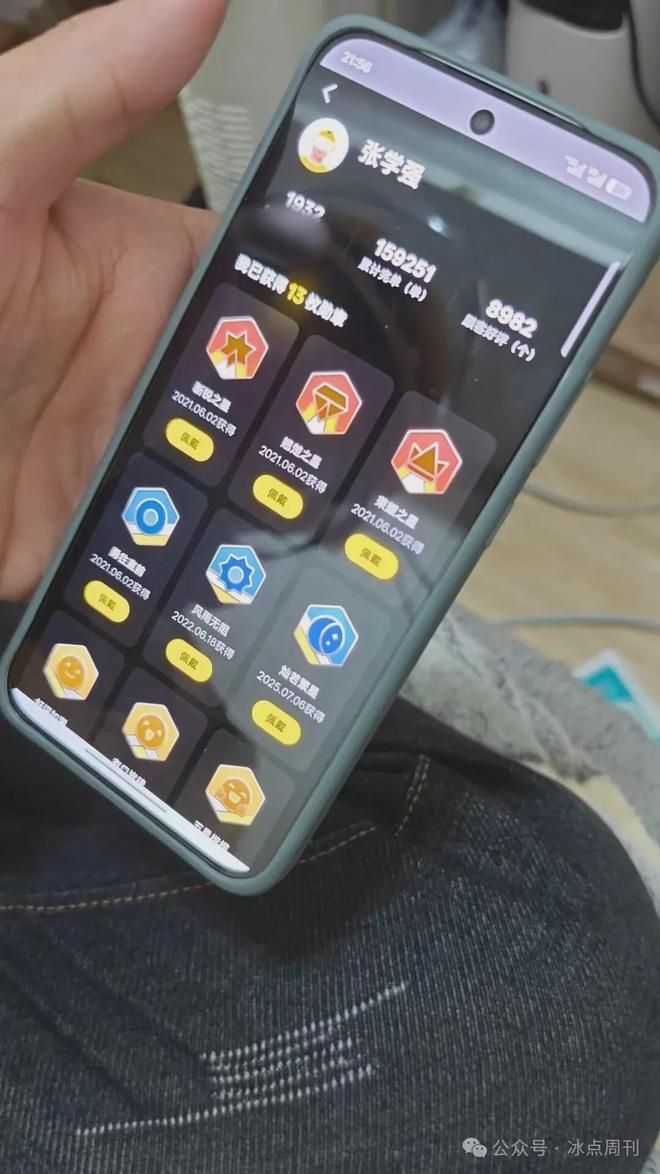
Core Insights - Zhang Xueqiang, a delivery rider in Shanghai, has achieved significant financial success, accumulating over 1 million yuan through hard work and dedication in the delivery industry [1][4][20] - The rapid growth of the food delivery market in China, particularly during the pandemic, has created numerous opportunities for individuals like Zhang to earn substantial incomes [7][20] Financial Performance - Over five years, Zhang completed nearly 160,000 deliveries, with a total distance of 320,000 kilometers, and saved 1.12 million yuan [4][20] - His monthly income reached as high as 40,000 yuan, with an average monthly income exceeding 10,000 yuan [4][8] - Zhang's earnings included various bonuses and incentives from the delivery platform, totaling 27,000 yuan in rewards for the year [10][12] Work Ethic and Lifestyle - Zhang worked 12 to 14 hours daily, maintaining a rigorous schedule to maximize his earnings, often sacrificing personal time and leisure [4][12] - He adopted a frugal lifestyle, controlling his monthly expenses to around 4,000 yuan, which included basic food and rent [12][14] - His commitment to work and saving was driven by a desire to achieve financial stability and improve his living conditions [5][18] Industry Context - The food delivery industry in China has seen explosive growth, with the market reaching 650 billion yuan in 2020 and a significant increase in the number of delivery riders [7][20] - Despite the growth, competition remains fierce, and Zhang noted a decrease in order volume, attributing it to market saturation and increased competition among platforms [22] Future Aspirations - Zhang aims to save 3 million yuan to achieve a more comfortable lifestyle, including the ability to travel and enjoy life without financial stress [21][23] - He has expressed interest in transitioning to a more stable business model, such as opening a breakfast shop, to leverage his delivery experience and build a customer base [23]

起号最快的离职博主,闯入10元工地盒饭赛道
36氪· 2025-12-04 00:36
Core Viewpoint - The article discusses the journey of a young individual, Xiao Bing, who transitioned from being a laid-off programmer to selling affordable lunch boxes at construction sites in Shanghai, leveraging social media to document his experiences and attract a following of 200,000 fans in just half a month [6][10][52]. Group 1: Xiao Bing's Business Model - Xiao Bing sells lunch boxes at construction sites for 10 yuan, offering generous portions that appeal to workers looking for affordable meals [11][20]. - His business model emphasizes quality and quantity, with each box containing nearly half a kilogram of meat, which he claims is necessary to sustain the physical demands of labor [23][24]. - The operation is simple, using a four-wheeled cart and a 30L thermal container for the food, allowing him to serve quickly and efficiently [18][20]. Group 2: Social Media Impact - Xiao Bing's rise to fame is attributed to the authentic interactions he showcases in his videos, highlighting the lives of construction workers and the community around him [9][10]. - His social media presence not only serves as a marketing tool but also creates a sense of community, where he refers to his followers as "义父" (benefactors) [52]. - Despite the initial success, he faces challenges with content repetition and the need to innovate to maintain viewer engagement [55]. Group 3: Economic Context - The article highlights the economic pressures faced by young professionals in Shanghai, particularly in the wake of layoffs and the high cost of living [12][31]. - Xiao Bing's story reflects a broader trend of young individuals turning to self-employment and entrepreneurship as traditional job security diminishes [10][31]. - The construction site environment is characterized by a lack of dining options, making Xiao Bing's offering particularly valuable to workers [15][20].

潮汕男人成功三件套
投资界· 2025-12-01 11:26
Group 1 - The article discusses the increasing difficulty of employment and the phenomenon of young people relying on their parents for financial support, coining terms like "啃老" (living off parents) and "嘬老" (occasionally asking for money) [3] - It highlights the rise of "family story bloggers" who leverage their family dynamics for content creation, blurring the lines between independence and dependence [3] - The narrative follows a character named 阿游, who transitioned from being laid off to creating a successful self-media account by documenting his father's life, which resonated with a wide audience [4] Group 2 - The article portrays the cultural significance of gift-giving in潮汕, emphasizing the role of local customs and social networks in shaping personal and business relationships [5][6] - It describes the decline of a family business due to market changes and personal challenges, illustrating the impact of economic shifts on family dynamics and individual aspirations [8][10] - The narrative reflects on the generational expectations and pressures within the family, particularly the father's desire for his son to achieve traditional success, such as becoming a civil servant [17]

起号最快的离职博主,闯入10元工地盒饭赛道
虎嗅APP· 2025-11-30 13:06
Core Viewpoint - The article highlights the story of a young man, Xiao Bing, who transitioned from being a programmer to selling affordable lunch boxes at construction sites in Shanghai, illustrating the intersection of self-media entrepreneurship and the realities of labor in urban China [5][7]. Group 1: Xiao Bing's Business Model - Xiao Bing sells lunch boxes for 10 yuan, which are popular among construction workers for their generous portions and affordability, reflecting a demand for substantial meals at low prices [8][15]. - His setup includes a four-wheeled cart and a 30L thermal container for the meat, allowing him to serve a high volume of customers quickly [13][14]. - The business has gained traction, with Xiao Bing selling out quickly, indicating a successful model that meets the needs of laborers who prioritize value for money [15][30]. Group 2: Background and Motivation - Xiao Bing, born in 1999, faced unemployment after being laid off as a programmer, prompting him to explore self-employment through food sales [18][20]. - His previous experience in the food industry and a desire to escape the pressures of corporate life motivated his shift to selling lunch boxes [20][21]. - The financial pressures of a mortgage and family responsibilities further fueled his decision to start this venture [20]. Group 3: Social Media Impact - Xiao Bing's journey gained significant attention on social media, with his account amassing 200,000 followers in just 15 days, showcasing the potential for self-media to create new opportunities for young entrepreneurs [27]. - His content resonates with viewers due to its authenticity and the portrayal of real interactions with customers, contrasting with the often curated nature of social media [7][34]. - Despite the initial challenges and negative feedback, his persistence led to a successful online presence that complements his food business [25][27]. Group 4: Community Engagement - Xiao Bing emphasizes the importance of providing affordable meals to workers, often giving away food to those in need, such as elderly scavengers, highlighting a sense of community responsibility [30][31]. - His interactions with customers reflect a deep understanding of their needs, as he adapts his offerings based on feedback to ensure satisfaction [17][34]. - The article illustrates the transient nature of the labor force in construction, with workers frequently moving, which adds a layer of complexity to maintaining customer relationships [32]. Group 5: Challenges and Future Considerations - Despite the success of his food sales, Xiao Bing faces challenges in maintaining viewer engagement on social media, as content can become repetitive [39]. - He is cautious about expanding his business model, preferring to focus on quality food service rather than diverting attention to elaborate content creation [39]. - The article concludes with Xiao Bing's commitment to authenticity in his work, choosing to remain true to his original concept rather than conforming to external pressures for change [39].

张雪峰又开了一家新公司
Xin Lang Cai Jing· 2025-11-20 02:56
Group 1 - Zhang Xuefeng has established a new company, Suzhou Wujiao Cultural Media Co., Ltd., with a registered capital of 1 million RMB, focusing on various media and cultural services [2] - The company is co-owned by Zhang Zibiao (Zhang Xuefeng's real name), Ding Yu, and Kang Li, holding 60%, 30%, and 10% of the shares respectively [2] - Zhang Xuefeng currently has 11 associated companies, with 9 still active, including Suzhou Fengxue Weilai Education Technology Co., Ltd. and Suzhou Yantu Education Technology Co., Ltd., covering sectors like education, tourism, and technology [2] Group 2 - Zhang Xuefeng's social media accounts faced a suspension due to inappropriate remarks during a live broadcast, leading to a loss of nearly 1 million followers across platforms [3] - His accounts were reinstated on October 22, 2023, after a period of reflection and handling the situation [3] - As of the latest data, Zhang Xuefeng has over 40 million followers across various platforms, including Douyin and Weibo [3] Group 3 - Suzhou Fengxue Weilai has applied for nearly 40 trademarks under the name "Nianhan," covering a wide range of international classifications [4] - The majority of these trademarks are currently in the initial review stage [4] - The name "Nianhan" is derived from Zhang Xuefeng's daughter, indicating a personal connection to the brand [4]

经历账号被禁止关注风波后,张雪峰又开了一家新公司
Xin Lang Cai Jing· 2025-11-19 06:31
Group 1 - Zhang Xuefeng has established a new company, Suzhou Wujiao Cultural Media Co., Ltd., with a registered capital of 1 million RMB, focusing on various media and cultural services [1] - The company is owned by Zhang Zibiao (Zhang Xuefeng's real name) and two other shareholders, with Zhang holding 60% of the shares [1] - Zhang Xuefeng currently has 11 associated companies, 9 of which are active, covering sectors such as education, tourism, and technology [1] Group 2 - Zhang Xuefeng's social media accounts faced a suspension due to inappropriate remarks during a live broadcast, resulting in a loss of nearly 1 million followers across platforms [2] - After the suspension, his accounts were reinstated, and he has over 40 million followers across various platforms, including Douyin and Weibo [2] - Zhang Xuefeng gained fame in 2016 with his online content and has since expanded his business into multiple educational services [2] Group 3 - Suzhou Fengxue Weilai has applied for nearly 40 trademarks under the name "Nianhan," covering various international classifications, with most currently in the initial review stage [3] - The trademark name "Nianhan" is derived from Zhang Xuefeng's daughter [3]
拒绝“吃苦为美”,金融人开启半卷模式!
Sou Hu Cai Jing· 2025-08-09 16:59
Group 1 - The article discusses the shift from a growth-focused narrative in the financial industry to a more cautious approach as the economy enters a downturn [2][5][7] - It highlights the challenges faced by professionals in the finance sector, leading to a trend of individuals leaving traditional roles for self-media entrepreneurship [2][5][8] - The podcast format is emphasized as a new medium for financial discussions, with a focus on authenticity and the sharing of real experiences [8][9] Group 2 - The conversation touches on the changing dynamics of the investment landscape, where the emphasis on scale is diminishing [7][8] - It notes the increasing complexity and competition in the self-media space, making it more challenging for new entrants [8] - The article reflects on the emotional and psychological aspects of leaving established career paths, indicating a shift in mindset among finance professionals [5][6][8]
自媒体创业趋势分析:普通人逆袭的下一个五年
Sou Hu Cai Jing· 2025-08-05 06:38
Group 1 - The self-media industry is set to undergo a significant transformation starting in 2025, with AI tools enhancing efficiency and enabling mass content production [1][3] - Virtual anchors are becoming commonplace in live streaming, with software capable of accurately replicating human expressions and generating personalized scripts, leading to substantial increases in sales and reduced marketing costs [3][5] - The rise of digital humans is expected to reshape the cost structure of the live streaming industry, allowing for the creation of live streaming matrices at a fraction of the cost of human hosts [3][5] Group 2 - Major platforms are restructuring traffic rules, with various social media and content platforms competing for creators and offering diverse monetization options [5][7] - The emergence of new content formats, such as comic videos generated from text using AI tools, is streamlining production times significantly [5][7] - The future of content creation will focus on emotional resonance rather than mere information transmission, emphasizing the importance of understanding user psychology [5][7] Group 3 - The self-media sector is entering an era of human-machine collaboration, where AI becomes an essential tool for creators, providing unprecedented opportunities for ordinary individuals [7] - Emphasis is placed on the need for creators to master tools, understand platforms, and gain insights into human behavior to succeed in the evolving landscape [7] - As marginal costs approach zero, even small individuals can create substantial business opportunities, highlighting the importance of adapting to future trends [7]


2025年自媒体创业生存指南:后流量时代的破局之道
Sou Hu Cai Jing· 2025-04-22 04:29
Group 1 - The article discusses the pitfalls of buying fake followers and engagement, highlighting that such practices can permanently damage account credibility and lead to account bans by platforms [1] - It emphasizes the misconception that frequent posting guarantees success, revealing that 72% of content may go unnoticed, with only 8% generating revenue [1] - The article suggests that individuals should focus on unique content niches and avoid common pitfalls in self-media entrepreneurship [2][4] Group 2 - It outlines methods for ordinary individuals to break through in self-media, including finding a unique niche and leveraging existing trends [2] - The article warns against scams related to AI-driven content creation, where individuals are misled into believing they can easily generate viral content [4] - It stresses the importance of data analysis and strategic planning in self-media entrepreneurship, advocating for a shift from content labor to digital asset management [5][6] Group 3 - The article encourages creators to document their ideas and establish a content library for efficient production [6] - It highlights the need to identify and address unmet needs in the market by analyzing successful content [7] - The piece concludes that the future of self-media entrepreneurship will reward genuine and professional content over mere algorithmic manipulation [9]