芯片法

Search documents
台积电在美国,再建5座晶圆厂
半导体行业观察· 2026-01-13 01:34
Core Viewpoint - The Trump administration is finalizing a trade agreement with Taiwan that aims to reduce tariffs on Taiwanese exports and encourage significant investments from Taiwan's largest chip manufacturer, TSMC, in the U.S. [1][2] Group 1: Trade Agreement Details - The agreement is expected to lower U.S. tariffs on Taiwanese goods to 15%, aligning with the tariff rates agreed upon with Japan and South Korea [1]. - TSMC has committed to building at least five additional semiconductor factories in Arizona, effectively doubling its presence in the state [1][2]. - The negotiations have been ongoing for several months and are currently undergoing legal review, with an announcement anticipated this month [1]. Group 2: TSMC's Investment Plans - TSMC has already established one factory in Arizona since 2020, with a second factory under construction set to begin operations in 2028, and plans for four more factories in the coming years [2]. - The total investment by TSMC in the U.S. is projected to reach $165 billion, including a previously announced $100 billion investment [5][6]. Group 3: U.S.-Taiwan Trade Relations - The trade negotiations have faced challenges, particularly regarding tariff disputes, with Taiwan's products currently subject to a 20% tariff on imports to the U.S. [2][3]. - The U.S. government has exempted semiconductors and many electronic products from tariffs under national security provisions [2][3]. - Taiwan's government has reached a broad consensus on the trade agreement, which includes tariff reductions and favorable treatment under Section 232 of U.S. trade law [3].


美商务部长称台积电或将在美投资加码至超2000亿美元,再度加深岛内“美积电”疑虑
Xin Lang Cai Jing· 2026-01-12 23:09
Core Viewpoint - TSMC's investment in the U.S. has reached $165 billion, but the U.S. government is pushing for further investment, raising concerns in Taiwan about TSMC becoming "Americanized" [1][2]. Investment Plans - TSMC announced an additional $100 billion investment in the U.S. last year, bringing the total investment to $165 billion, which includes a $65 billion plan for a semiconductor factory in Arizona [2][3]. - U.S. Commerce Secretary Gina Raimondo indicated that TSMC's future investments may exceed the current $165 billion, hinting at further expansions [3]. Compliance and Conditions - The U.S. government pressured TSMC to comply with "DEI (Diversity, Equity, and Inclusion)" clauses in their contracts, which led to the additional investment requirement [2][3]. - TSMC's compliance with these clauses was a condition for the U.S. to waive certain contractual obligations, resulting in the current investment agreement [3]. Manufacturing Costs - TSMC's manufacturing costs in Arizona are significantly higher than in Taiwan, with the cost per wafer at $16,123 in Arizona compared to $6,681 in Taiwan, primarily due to labor and material costs [7]. - The higher costs in the U.S. are expected to pressure TSMC's profit margins, with predictions of continued financial strain from its U.S. operations [7]. Strategic Implications - The U.S. aims to reduce reliance on Taiwan for semiconductor manufacturing, positioning TSMC as a strategic asset in its efforts to bolster domestic production [5][6]. - Concerns have been raised in Taiwan regarding the potential "de-Taiwanization" of TSMC, as the company may shift its focus and resources to the U.S. market, impacting Taiwan's semiconductor industry [8]. Political Context - The Taiwanese government is perceived to be leveraging TSMC's investments in the U.S. for political support, which may ultimately weaken Taiwan's position in the global technology landscape [8]. - The situation reflects broader geopolitical tensions, with the U.S. using economic strategies to influence Taiwan's semiconductor sector and its relationship with China [8].
传美国入股?台积电不予置评
Sou Hu Cai Jing· 2025-08-20 14:51
Group 1 - The U.S. government plans to acquire equity in semiconductor companies that receive subsidies under the CHIPS Act, which may involve TSMC [1][3] - NVIDIA and AMD have agreed to return 15% of their sales revenue from chip sales to China to the U.S. government, and discussions are ongoing with Intel for a 10% stake conversion [3] - The potential U.S. stake in TSMC raises concerns about governance and operational autonomy, with Taiwan's economic department emphasizing the need for expert evaluation before drawing conclusions [5] Group 2 - The Taiwanese authorities are monitoring the situation closely and will develop measures to assist the semiconductor industry if significant impacts arise from potential U.S. tariffs [5]
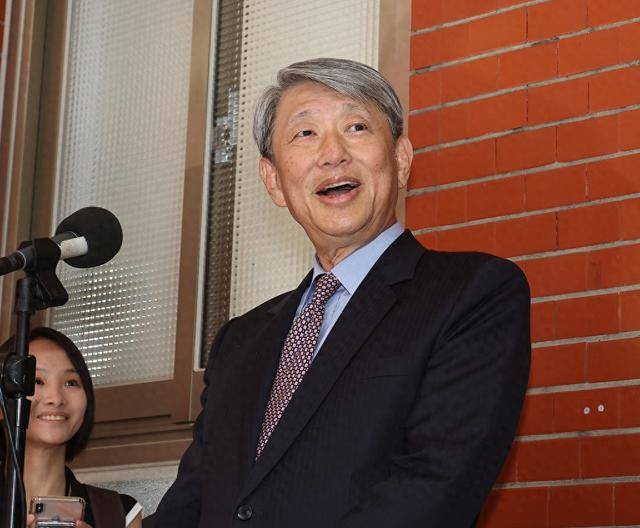
美政府想拿补助款换入股?台积电称“不回答假性议题”,岛内网民:一步步变美积电
Huan Qiu Wang Zi Xun· 2025-08-20 04:03
Core Viewpoint - The U.S. government is considering acquiring stakes in semiconductor companies, including Intel, Micron, TSMC, and Samsung, in exchange for cash subsidies under the "Chip Act" [1][2]. Group 1: U.S. Government Actions - The U.S. Commerce Secretary is exploring how to exchange cash subsidies for equity stakes in semiconductor firms [1]. - The Trump administration previously emphasized attracting companies to invest in the U.S. through subsidies and high tariffs [2]. - The "Chip Act," promoted during Biden's presidency, requires actual execution progress for fund disbursement, with TSMC and GlobalWafers being the only companies currently receiving funds [2]. Group 2: Industry Reactions - TSMC declined to comment on hypothetical issues regarding U.S. equity stakes [2]. - Micron and Samsung have not responded to inquiries about whether they received requests from the White House [2]. - There is a growing concern among Taiwanese netizens about the implications of U.S. investments in TSMC, with some expressing fears of U.S. dominance over Taiwanese companies [3][4][5]. Group 3: Economic Implications - The potential $300 billion investment by TSMC in Arizona is expected to significantly impact Taiwan's economy, reducing its development momentum and autonomy [6]. - Criticism has been directed at the Taiwanese government for its perceived failure to protect local industries and for facilitating U.S. interests at the expense of Taiwan's economic well-being [6].