营销体系整合

Search documents
华帝人事调整立足长远发展,营销升级赋能长期增长
Xin Lang Zheng Quan· 2025-11-24 08:45
Core Insights - Recent personnel changes at Vatti have drawn industry attention, with Vice Presidents Wang Cao and Jiang Lingwei resigning for personal reasons, while Han Wei has been appointed as Vice President overseeing the marketing system and various channels [1] - This adjustment is a key part of the company's strategic deployment, focusing on the integration of the marketing system and the upgrade of channel unification, aimed at enhancing brand competitiveness through systematic transformation [1] - Han Wei's extensive experience in marketing aligns with Vatti's current "channel unification" strategy, which is expected to improve decision-making and execution efficiency, accelerating the realization of the core goal of "integrated product and sales" [1] Company Performance - Han Wei's strategic leadership in marketing has been validated by past performance; after his appointment in 2015, Vatti's revenue grew from 4.395 billion yuan in 2016 to 6.095 billion yuan in 2018, with net profit reaching 677 million yuan in 2018, a year-on-year increase of 32.83% [3] - Under Han Wei's leadership, Vatti transitioned its channel structure from "traditional reliance" to "diversified collaboration," establishing a comprehensive network covering offline, online, and engineering channels, with the engineering channel achieving a significant 25.11% growth in 2022, reaching 629 million yuan [3] - The offline channel also showed resilience, generating 2.555 billion yuan in revenue in 2022, a year-on-year increase of 7.24%, demonstrating strong channel resilience and expansion capabilities [3] Industry Analysis - Industry analysts indicate that this personnel adjustment is a crucial step in Vatti's strategic inheritance and deepening, with Han Wei's return expected to accelerate the "online and offline integration" process, enhancing operational efficiency through marketing integration and channel unification [4] - This move is anticipated to solidify the foundation of Vatti's "integrated product and sales" strategy, providing a stronger long-term advantage in an increasingly competitive industry [4]


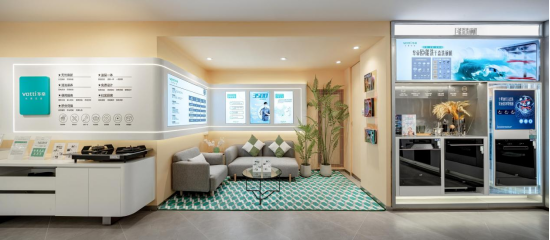
统管华帝销售全渠道,韩伟或将升任公司执行总裁
Xin Lang Zheng Quan· 2025-11-24 08:45
Group 1 - The core point of the article is the strategic personnel adjustment at Vatti Corporation, with Han Wei reappointed as Vice President and expected to become the Executive President, focusing on integrating the company's omni-channel business [1] - The personnel change is part of a strategic planning layout for the marketing system's integration and development, aimed at enhancing the efficiency and quality of the marketing system [1] - The organizational restructuring is expected to facilitate Vatti's channel strategy, sales tactics, and the rapid implementation of product and sales linkage [1] Group 2 - In the increasingly competitive kitchen appliance industry, companies must maintain strategic focus and deepen industry engagement, leveraging user insights for product innovation and enhancing channel operational capabilities [3] - Vatti has followed a development path aligned with the "scientific brand" concept, achieving innovative breakthroughs in various product categories such as ultra-thin range hoods, high-end gas water heaters, dishwashers, steam ovens, and wall-mounted boilers [3] - The adjustment in Vatti's marketing strategy is particularly relevant in the post-subsidy era, where reduced national subsidies are expected to intensify industry competition, making the integration of channel strategies and sales tactics more crucial [3]
新任执行总裁韩伟,如何带领华帝走进营销整合新时代?
Xin Lang Zheng Quan· 2025-11-24 08:43
Core Insights - The company has announced a significant personnel adjustment in its marketing leadership, appointing Han Wei as Vice President to oversee marketing efforts, which is part of a strategic upgrade in response to industry changes [1][4] - The strategic upgrade focuses on "channel integration" and "sales and marketing synergy," aiming to enhance brand influence and sales conversion in a competitive market [4][6] Group 1: Personnel Changes - Han Wei has been appointed as Vice President and will also serve as the Executive President, indicating a strong leadership role in the company's marketing strategy [1][4] - This personnel change is seen as a proactive measure to improve the marketing system's efficiency and effectiveness [1][4] Group 2: Strategic Focus - The company is transitioning from a "dual-line" strategy to a "channel integration" approach, which combines sales and marketing efforts [5][6] - The strategic upgrade is designed to build long-term competitiveness in a saturated market by leveraging past management efforts in brand channel development and product system enhancement [5][6] Group 3: Historical Performance - Han Wei previously led the company through a significant turnaround, increasing revenue from 3.72 billion in 2015 to 6.146 billion in 2018, with net profit rising from 207 million to 677 million, marking a 32.83% year-on-year growth [4][5] - The historical success under Han Wei's leadership reinforces the company's confidence in his ability to execute the new strategic initiatives effectively [4][5]
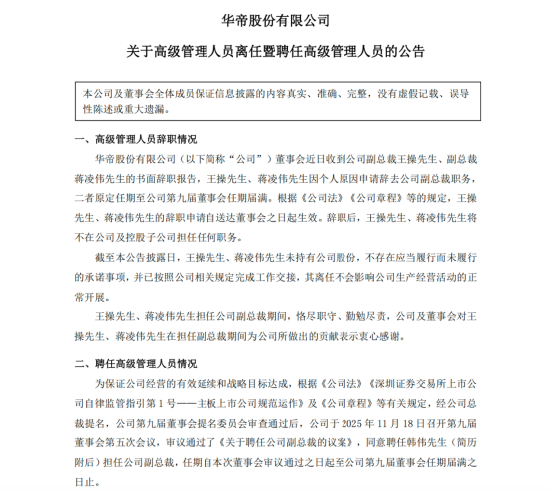
营销体系“变天”带来的行业剧变
Zhong Guo Qi Che Bao Wang· 2025-09-25 10:47
Core Viewpoint - The automotive industry in China is undergoing a significant transformation as leading companies like SAIC, Chery, and Geely are merging their marketing resources to enhance efficiency and collaboration, marking a shift from individualistic strategies to a more integrated approach [2][4][10]. Group 1: Mergers and Restructuring - Geely has announced the privatization of Zeekr, with 95.14% of independent shareholders approving the move, which is expected to be completed by the end of the year [3][10]. - Chery has established a domestic business group that consolidates four major divisions, aiming for better resource allocation and management [3][10]. - SAIC is preparing to create a "large passenger car marketing company" to integrate the marketing resources of its brands, including Roewe and Feifan [2][3]. Group 2: Market Dynamics and Challenges - The automotive market in China is facing intense price competition, with over 200 models experiencing price cuts in 2024, leading to a decline in profit margins [6][7]. - The industry's revenue grew by only 2% from January to October 2024, while profits fell by 3.2%, resulting in a profit margin of just 4.5% [6][7]. - Companies are recognizing the need to optimize resource allocation and improve operational efficiency to combat internal competition and resource wastage [7][10]. Group 3: Strategic Focus and Future Outlook - The restructuring efforts are aimed at enhancing long-term competitiveness by focusing on user needs and efficient resource integration [10][12]. - The shift towards a user-centric approach and data-driven marketing strategies is seen as essential for transitioning from merely selling cars to managing customer relationships [12]. - Industry experts anticipate a return to the essence of vehicle manufacturing, emphasizing the importance of understanding user demands and building resilient systems [8][10].