厨电

Search documents
家电周报:泡泡玛特进军小家电,三大白电2026年4月排产数据发布-20260328
Shenwan Hongyuan Securities· 2026-03-28 14:57
Investment Rating - The report maintains a "Positive" investment outlook for the home appliance sector, highlighting the potential for growth and stability in leading companies [3]. Core Insights - The home appliance sector has underperformed compared to the broader market, with the home appliance index declining by 1.6% while the Shanghai and Shenzhen 300 index fell by 1.4% [5][6]. - Key companies such as Beike (up 24.0%), Xinbao (up 11.6%), and XGIMI (up 7.1%) showed strong performance, while Haier Smart Home (down 9.3%), Yitian Smart (down 8.2%), and Joyoung (down 7.0%) faced declines [5][8]. - The report notes significant developments, including Pop Mart's entry into the small appliance market and the production data for major appliances in April 2026, indicating a decline in production for air conditioners, refrigerators, and washing machines compared to the previous year [11]. Summary by Sections Industry Performance - The home appliance sector has shown a decline in production, with air conditioner production at 21.32 million units (down 4.9% year-on-year), refrigerators at 8.21 million units (down 0.1%), and washing machines at 8.11 million units (down 3.7%) [11]. - Domestic production of air conditioners was 12.70 million units (down 0.5%), while exports were 8.62 million units (down 12.2%) [11]. Sales Data - In February 2026, online retail sales of air conditioners dropped by 59.3% to 810,000 units, while offline sales fell by 55.6% to 119,000 units. However, the average price for online sales increased by 6.8% to 3,174 yuan per unit, and offline prices rose by 2.4% to 4,250 yuan per unit [35]. - For kitchen appliances, online sales of range hoods decreased by 22.4% to 321,000 units, while offline sales fell by 36.9% to 41,000 units. The average online price increased by 12.8% to 1,418 yuan, while offline prices decreased by 16.6% to 3,479 yuan [37]. - Dishwashers saw an increase in online sales by 9.9% to 66,000 units, but offline sales dropped by 59.7% to 4,000 units, with average prices declining for both online and offline sales [41]. Investment Highlights - The report identifies two main investment themes: 1. The leading white and black appliance companies are characterized by low valuations, high dividends, and stable growth, making them attractive investments. The domestic market is expected to remain stable due to the continued effects of the trade-in policy [5]. 2. Some appliance companies are diversifying into emerging technology sectors such as robotics and semiconductors, which could provide new growth avenues [5]. Macro Environment - As of March 27, 2026, the USD to RMB exchange rate has decreased by 1.63% since the beginning of the year, impacting the cost structure of imports and exports in the appliance sector [45].





海尔智家(600690.SH)发布2025年度业绩,归母净利润195.53亿元,同比增长4.39%
智通财经网· 2026-03-26 16:02
Core Insights - Haier Smart Home (600690.SH) reported a revenue of 302.347 billion yuan for the year 2025, representing a year-on-year growth of 5.71% [1] - The net profit attributable to shareholders reached 19.553 billion yuan, with a year-on-year increase of 4.39% [1] - The company proposed a cash dividend of 8.867 yuan per 10 shares (including tax) to all shareholders [1] Group 1: Refrigeration Industry - The global revenue for the refrigeration industry was 84.762 billion yuan, showing a year-on-year growth of 1.4% [1] - Revenue from emerging overseas markets in the refrigeration sector experienced rapid growth [1] - The domestic offline retail market share reached 47.7%, an increase of 3.6 percentage points year-on-year [1] Group 2: Kitchen Appliances Industry - The global revenue for the kitchen appliances industry was 41.538 billion yuan, reflecting a year-on-year growth of 0.9% [1] Group 3: Laundry Industry - The laundry industry faced high pressure, with diminishing returns from national subsidies, shifting market growth logic from policy-driven to product-driven [1] - The global revenue for the laundry industry was 65.565 billion yuan, with a year-on-year increase of 3.5% [1] Group 4: Smart HVAC Industry - The global revenue for the smart HVAC industry reached 72.356 billion yuan, marking a year-on-year growth of 10% [2] - Revenue from air smart solutions was 54.392 billion yuan, with a year-on-year increase of 9.6% [2] - Revenue from whole-house water solutions was 17.964 billion yuan, reflecting a year-on-year growth of 11.1% [2]
家电行业周报(2026/3/16-2026/3/20):创想三维提交招股书,3D打印加速普及-20260322
Hua Yuan Zheng Quan· 2026-03-22 12:21
Investment Rating - The investment rating for the home appliance industry is "Positive" (maintained) [1] Core Viewpoints - The report highlights the submission of an IPO application by Chuangxiang Sanwei, a leading provider of consumer-grade 3D printing products and services, which has seen revenue exceed 3.1 billion yuan in 2025, marking a year-on-year growth of 36.7% [3][6] - The consumer-grade 3D printing industry is expected to grow significantly, with a projected market size exceeding 4 billion USD in 2024 and a compound annual growth rate (CAGR) of 33% from 2024 to 2029 [3][7] - The competitive landscape of the consumer-grade 3D printing market is highly concentrated, with the top five players holding over 70% market share, and Chuangxiang Sanwei being the second-largest player with an 11.2% market share [3][13] Industry Overview - The consumer-grade 3D printing market primarily targets individual consumers and maker communities, serving as a tool for creative projects, prototyping, and light commercial needs [7][9] - The industry is currently in a phase of accelerated penetration, with generative AI technology lowering the barriers to entry for users, allowing for easier participation in 3D creation [9][10] - The global consumer-grade 3D printing market is expected to reach 4.1 billion USD in 2024 and grow to 16.9 billion USD by 2029, with a CAGR of 33.0% [8][9] Competitive Landscape - The consumer-grade 3D printer market has a high concentration, with a CR5 exceeding 70%, indicating a competitive environment where product capabilities and AI integration will be key differentiators [13][14] - Chuangxiang Sanwei is recognized as a leader in integrating AI technology across the 3D printing process, which positions the company to continue leading in performance and innovation [27] Investment Recommendations - The report suggests a "barbell strategy" focusing on dividend stocks and new overseas products, with three main investment lines: 1. Companies with improving operational efficiency and potential for recovery, such as Jimi Technology and Boss Electric [32] 2. Companies redefining products for international markets, including Jimi Technology, Ninebot, and Roborock [32] 3. Quality dividend stocks with low valuations, such as Midea Group and Haier Smart Home [33]
厨房开始“长脑子”了丨品牌新事
吴晓波频道· 2026-03-12 00:29
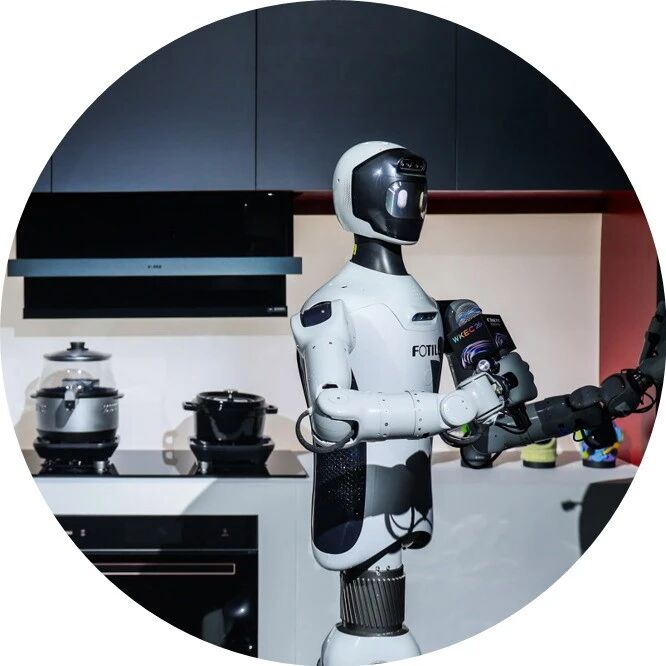
Core Insights - The article discusses the increasing integration of AI into daily life, particularly in the kitchen, where AI is expected to play a supportive role in cooking and meal management [2][3][20] - The focus is on creating a user-friendly experience that addresses specific pain points in cooking, rather than just showcasing advanced technology [19][20] Group 1: AI in Daily Life - The application rate of generative AI has reached 42%, indicating a significant adoption among users [3] - AI is becoming a common tool for various tasks, including cooking, shopping, and managing daily activities [3][4] Group 2: Challenges in Traditional Cooking - Cooking in Chinese culture is complex, with a wide variety of ingredients and methods, making it difficult for AI to provide effective assistance [13][14] - Traditional kitchen appliances often lack practical AI applications, leading to a disconnect between technology and user needs [15][16] Group 3: Future of AI in Kitchens - The concept of "Subtle Tech" is emerging, emphasizing the need for AI to seamlessly integrate into the cooking process without being overly intrusive [18][19] - AI should assist in meal planning, cooking, and cleaning, addressing specific needs such as food storage, preparation, and health management [20][21][27] Group 4: Innovations in Smart Kitchens - Companies like Fotile are developing integrated kitchen systems that cover all aspects of meal preparation and health management [36][37] - The smart refrigerator is positioned as a central hub for managing food and cooking processes, enhancing efficiency and user experience [39][42] Group 5: Health and Nutrition Management - AI can analyze family health data to provide personalized meal recommendations, ensuring dietary needs are met [24][46] - The integration of AI in kitchen appliances aims to create a holistic approach to family health and nutrition [21][47] Group 6: Industry Trends and Future Directions - The article highlights the potential for Chinese companies to lead in the development of smart kitchen technologies that prioritize user experience and cultural nuances [55][56] - The ongoing evolution of AI in kitchens reflects a broader trend of making technology more accessible and integrated into everyday life [58][60]

华帝四大品类齐登销量TOP1,用权威认证印证厨电领军实力
Xin Lang Cai Jing· 2026-02-25 06:45
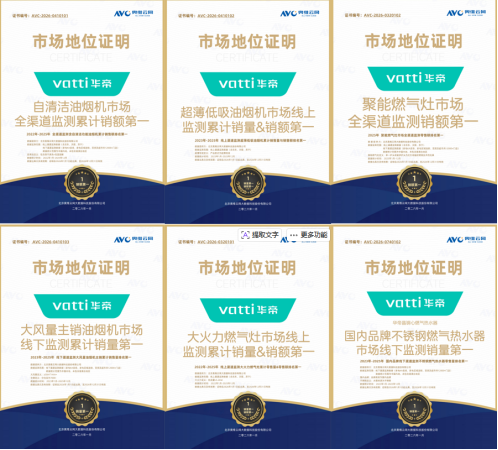
Core Insights - The kitchen appliance industry has entered a "deep water zone," requiring companies to enhance their internal capabilities and innovation engines to navigate successfully [1][11] - Vatti, one of the "three giants" in the kitchen appliance sector, has shown remarkable performance in innovation, achieving top sales in multiple segments according to AVC's 2025 market monitoring results [1][12] Market Performance - Vatti ranked first in online sales and revenue for ultra-thin low-suction range hoods, self-cleaning range hoods with steam cleaning and high-temperature dissolution features, and gas stoves across various channels [1][12] - The data monitoring covered major online platforms like JD.com, Tmall, and Suning, as well as over 12,000 offline stores, ensuring objective and authoritative results [1][12] User-Centric Approach - Vatti emphasizes a "user-first" philosophy, recognizing that modern consumers seek kitchens that provide emotional and social value beyond mere cooking functionality [3][14] - The company has distilled user needs into three core aspects: usability, aesthetics, and cleanliness, leading to innovative products like the ultra-thin range hood with advanced self-cleaning technology [3][14] Technological Innovations - Vatti's new generation of gas stoves, the 聚能灶 8Z37, achieves a thermal efficiency of 78%, surpassing the national standard of 70%, catering to high-temperature cooking demands [5][16] - The company has pioneered the "晶钢心" platform in water heaters, utilizing 316L food-grade stainless steel to ensure long-lasting water purity [5][16] - Vatti's square all-domain dishwashers have become market leaders, achieving the highest sales in 2025, thanks to their innovative "双子方形全域洗技术" that addresses traditional cleaning blind spots [5][16] R&D and Digital Transformation - Vatti's leadership in the industry is supported by continuous R&D investment, with over 1.8 billion yuan allocated from 2017 to 2024, and 1.72 million yuan in the first three quarters of 2025, representing over 4% of revenue [8][19] - The company has accumulated 4,939 national patents and has been involved in the formulation of over 40 national and industry standards, reinforcing its innovation capabilities [8][19] Service Enhancement - Vatti has introduced a "product + service" renewal plan, aiming for a 1.5-hour response time for customer service, improving upon the industry standard of two hours [10][21] - The company continues to focus on user experience, leveraging AI technology to address service pain points and set new benchmarks in customer satisfaction [10][21]

2022年天猫烘焙厨电行业趋势白皮书
Sou Hu Cai Jing· 2026-02-24 09:49
Core Insights - The Tmall baking kitchen appliance market is undergoing significant changes, driven by the rise of the "stay-at-home economy" and consumer upgrades, with a focus on user experience rather than just functionality [1][3]. Consumer Insights - The primary consumer group for baking kitchen appliances consists of young women aged 18 to 39 with mid-to-high spending power, who prioritize nutritional balance and prefer baking as a cooking method [1][11]. - This demographic seeks appliances that enhance quality of life and offer both fun and practicality, leading to a comprehensive iteration in market supply and marketing strategies [1][3]. Product Trends - The market exhibits a "polarized" landscape, with air fryers dominating sales due to the popularity of mid-range, visual products, while traditional electric ovens face declining demand [2][34]. - New growth engines for electric ovens include multifunctional devices like convection ovens and steam ovens, which integrate air frying and steaming technologies [2][34]. - The "micro-steam-bake" integrated machine is emerging as a high-potential product, with rapid growth despite low current market penetration, as consumers demand compact, smart, and self-cleaning features [2][46]. Marketing Strategies - Marketing strategies are shifting from a product-centric approach to a consumer-centric model, focusing on identifying and educating "seed users" in emerging categories like steam ovens and integrated machines [3][70]. - Scene-based marketing combined with social media is becoming crucial for consumer engagement, as baking evolves into a lifestyle and social topic [3][68]. - Brands need to leverage social media to showcase beautiful baking scenes and share successful cooking experiences to stimulate emotional resonance and purchasing desire [3][68]. Market Dynamics - The Tmall baking kitchen appliance market is entering a new phase driven by consumer demographics and experience innovation, with trends towards functional integration, smart operation, stylish design, and compact size becoming irreversible [3][60]. - Brands that can deeply understand and meet the new generation's comprehensive demands for health, convenience, aesthetics, and enjoyment will gain a competitive edge in this vibrant market [3][60].

2025 年 12 月厨电品类零售数据点评:25H2 厨电换新高基数压力渐显,26 年补贴聚焦核心品类
Shenwan Hongyuan Securities· 2026-02-13 07:09
Investment Rating - The report maintains a positive outlook on the home appliance industry, with a focus on the "buy" and "outperform" ratings for specific companies within the sector [10]. Core Insights - The "old-for-new" policy implemented in 2024 has significantly stimulated the home appliance market, expanding the subsidy scope to include eight categories, resulting in notable retail growth for certain products [4]. - The report highlights a divergence in performance among kitchen appliance categories, with traditional products facing declining sales while emerging categories show mixed results [4]. - The 2026 "old-for-new" policy is expected to benefit leading brands with superior energy efficiency and performance, particularly in the kitchen appliance sector [4]. Summary by Sections Retail Data Analysis - In 2024, the retail sales of kitchen appliances are projected to reach CNY 362 billion for range hoods (up 14.9% YoY), CNY 204 billion for gas stoves (up 15.7% YoY), CNY 236 billion for electric water heaters (up 1.3% YoY), and CNY 296 billion for gas water heaters (up 8.8% YoY) [4]. - For 2025, the overall retail sales of kitchen and bathroom appliances are expected to decline to CNY 1,613 billion (down 8.5% YoY), with a total volume of 89.77 million units (down 5.3% YoY) [4]. Market Share Insights - In the offline market, leading brands like Boss and Fotile dominate with nearly 60% market share in range hoods and gas stoves, while online competition is intensifying with brands like Midea and Xiaomi rapidly gaining market share [4]. - The report notes that in the dishwasher category, Boss and Fotile each hold close to 20% market share, disrupting the previous dominance of Siemens [4]. Investment Recommendations - The report recommends investing in established brands such as Boss Electric and Huashang Co. in traditional categories, and Wanhe Electric in the water heater segment, which are expected to benefit from the new subsidy policies [4].


亿田智能2025年预亏,业务转型与股价波动引关注
Jing Ji Guan Cha Wang· 2026-02-13 05:53
Core Viewpoint - The company Yitian Intelligent (300911) has announced a projected net loss for 2025, attributed to various factors including industry slowdown and operational challenges [2]. Group 1: Financial Performance - The company expects a net profit loss of between 152 million to 186 million yuan for 2025, with a non-recurring net profit loss estimated between 167 million to 204 million yuan [2]. - The primary reasons for the losses include a slowdown in the real estate sector leading to decreased demand, product price impacts from consumer downgrade, and underperformance in the computing power business [2]. Group 2: Project Development - The company’s wholly-owned subsidiary, Gansu Yisuan, plans to sell 600 units of computing machines to Huqing Supercomputing for a total price of 156 million yuan, with a payment structure that reflects strategic adjustments [3]. - The company has reported an order scale of approximately 10 billion to 11 billion yuan in its computing power business, with a contract duration of five years [4]. Group 3: Business Progress - A partnership has been established with the high-end brand SMEG to enter the high-end kitchen appliance market, aiming to leverage a "kitchen appliance + computing power" dual-engine model to tackle industry challenges [4]. Group 4: Stock Performance - On February 6, 2026, the company's stock price increased by 5.18% to 37.78 yuan per share, with a cumulative increase of 7.13% over three consecutive trading days, indicating heightened market interest [5]. Group 5: Subsidiary Development - The company’s subsidiary, Hangzhou Shuyun Zhili (AIGC business), is currently in a nurturing phase with low revenue contribution and has not set specific performance guidance for 2026 [6].

2025年12月厨电品类零售数据点评:25H2厨电换新高基数压力渐显,26年补贴聚焦核心品类
Shenwan Hongyuan Securities· 2026-02-13 05:44
Investment Rating - The industry investment rating is "Overweight" indicating a positive outlook for the sector compared to the overall market performance [4][10]. Core Insights - The "old-for-new" policy in 2024 is expected to significantly activate the home appliance market, expanding the subsidy range to include eight categories, which will drive demand effectively [4]. - Retail sales data for kitchen appliances in 2025 shows a decline in overall demand, with a projected retail sales value of 161.3 billion yuan, down 8.5% year-on-year [4]. - The report highlights a differentiation in performance among kitchen appliance categories, with traditional appliances like range hoods and gas stoves experiencing declines, while emerging categories like dishwashers show varied results [4]. - The report recommends investing in leading brands such as Robam Appliances and Vatti, which are expected to benefit from the new subsidy policies focusing on energy-efficient products [4]. Summary by Sections Market Overview - The "old-for-new" policy will include subsidies for six major appliance categories, with a 15% subsidy on the sales price, capped at 1,500 yuan per item [4]. - Retail sales for range hoods are projected at 36.2 billion yuan in 2024, with a year-on-year growth of 14.9%, while gas stoves are expected to reach 20.4 billion yuan, growing by 15.7% [4]. Performance Analysis - In Q4 2025, the kitchen appliance sector is expected to see a retail sales decline of 8.5% year-on-year, with total sales volume dropping by 5.3% [4]. - Traditional kitchen appliances like range hoods and gas stoves are projected to see declines of 3.6% and 4.9% respectively, while newer categories like dishwashers are also facing challenges with a 3.2% decline [4]. Competitive Landscape - In the offline market, leading brands like Robam and Fotile dominate with nearly 60% market share in range hoods and gas stoves [4]. - Online competition is intensifying, with brands like Midea and Xiaomi rapidly increasing their market shares in various categories [4]. Investment Recommendations - The report suggests focusing on brands with strong market positions and energy-efficient products, particularly Robam Appliances, Vatti, and Wanhe Electric, which are well-positioned to benefit from the upcoming subsidy policies [4].
海尔厨电3项科技被中轻联认证为国际领先
Xin Lang Cai Jing· 2026-02-11 03:38
Core Viewpoint - Haier Kitchen Appliances has received certification for three core technologies, recognized as internationally leading by the China Light Industry Federation, enhancing its position in the smart kitchen sector [1][5][11] Group 1: Technology Innovations - The certified technologies address three key cooking scenarios: smoke extraction during high-heat cooking, intelligent dry-burning prevention for gas stoves, and energy-saving techniques for dishwashers [1][5][11] - The all-embedded smart range hood utilizes AI visual recognition to detect smoke size and location, automatically adjusting suction power to eliminate smoke effectively [6][8] - The intelligent dry-burning prevention technology employs AI algorithms and temperature sensors to identify pot material and temperature, automatically reducing heat to prevent safety hazards [3][8] - The heat pump dishwasher uses heat from the air to warm washing water, significantly reducing energy consumption, with some models being 50% more energy-efficient than European standards [9][11] Group 2: Market Position and Future Plans - Haier has previously received multiple "international leading" certifications for various appliances, reinforcing its technological leadership in the smart kitchen domain [5][11] - The company aims to continue addressing user pain points, evolving kitchens from merely functional to intelligent systems that can perceive and think, enhancing safety, energy efficiency, and user convenience [5][11]