虚空造牌

Search documents
夹在财政和通胀之间的“虚空造牌”
Hua Er Jie Jian Wen· 2026-02-24 06:12
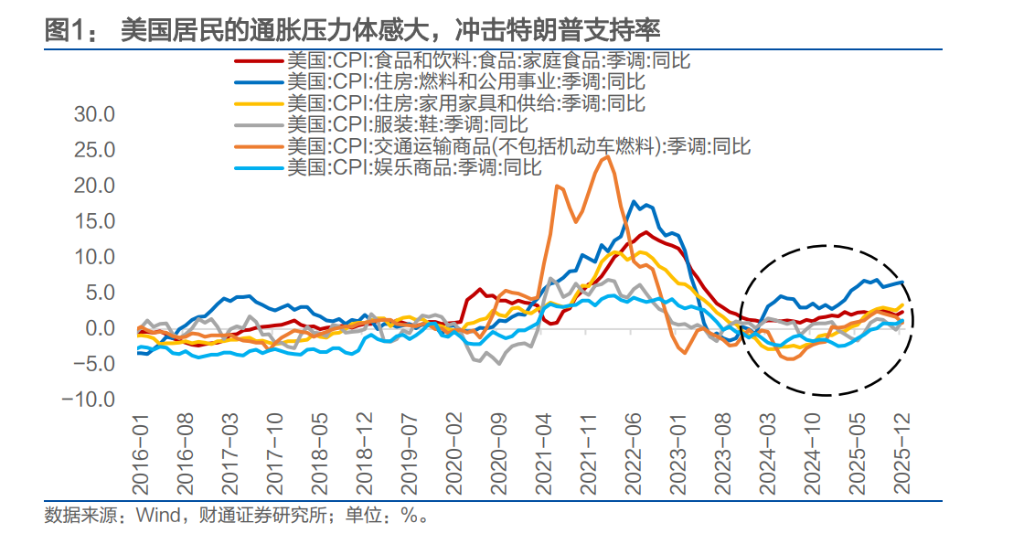
Core Viewpoint - The report from Caitong Securities highlights Trump's strategic shift to utilize Section 122 of the Trade Act after losing the tariff legal battle, indicating a tactic of "virtual card playing" to maintain negotiation leverage and garner votes ahead of the midterm elections [1][2]. Group 1: Legal and Policy Analysis - Following the Supreme Court's ruling against the IEEPA-based tariffs, the Trump administration quickly invoked Section 122 to impose a 10% uniform tariff on global imports, with plans to increase it to 15% [1]. - The use of Section 122 is characterized as a common negotiation tactic by Trump, aimed at creating new leverage when previous options fail [2]. Group 2: Trade Implications - The shift to Section 122 has technically lowered the tariff barrier, as the nominal tariff under IEEPA was 20%, while the new maximum under Section 122 is 15%, creating a temporary arbitrage opportunity for global traders [4]. - This change opens a "window" for countries with previously high effective tax rates to increase exports, while also providing U.S. traders a chance to boost imports [4]. Group 3: Future Trade Strategy - The report warns that the decrease in tariffs should not lead to blind optimism, as the real challenge lies in the potential initiation of Section 301 and 232 investigations within the next 150 days, marking a period of intensified trade negotiations and market volatility [6]. - Trump's strategy may involve maintaining pressure through Section 122 tariffs while simultaneously launching investigations under Sections 301 and 232, creating a cycle of "investigation-threat-negotiation-compromise" to achieve favorable trade outcomes [6]. Group 4: Political Context - Trump's actions are heavily influenced by the need for votes, as he requires tariff revenue to address a fiscal gap equivalent to 0.55% of GDP while avoiding inflation that could anger voters [6]. - The upcoming 2026 tariff policy is expected to navigate a narrow path between fiscal needs and inflation concerns, with Trump's tax increase rhetoric aimed at ultimately achieving tax reductions to secure votes [6].

刚说要访华,特朗普就逮捕中国公民,中方直接出手,断掉美国后路
Sou Hu Cai Jing· 2025-07-23 02:50
Group 1 - The article discusses the recent developments regarding U.S.-China relations, highlighting President Trump's planned visit to China amidst ongoing tensions and arrests of Chinese citizens by the U.S. government [1] - It suggests that Trump's administration is attempting to leverage these arrests to gain negotiation advantages, despite his previous statements emphasizing the importance of amicable relations with China [1] - The article indicates that Trump's strategic errors, such as the suspension of trade talks with Japan, may provide China with opportunities to counter U.S. strategies in the region [4] Group 2 - The article mentions that Federal Reserve Chairman Jerome Powell indicated that U.S. tariffs have disrupted potential interest rate cuts, suggesting that the economic situation in the U.S. is not as favorable as portrayed [3] - It highlights that the U.S. is facing challenges with its dollar dominance and potential inflation issues, which could worsen if the current economic policies continue [3] - The article also points out that the U.S. Treasury Secretary's criticisms of China regarding rare earth exports are misplaced, as the U.S. initiated the trade conflict and should first lift its own restrictions [6]