
表决权委托

Search documents
ST新动力股东会现争议投票:投票是否“被代表”成为分歧点,深交所火速发出关注函
Mei Ri Jing Ji Xin Wen· 2026-01-21 14:00
Core Viewpoint - The shareholder meeting of ST New Power revealed conflicting voting opinions from major shareholders, raising concerns about the validity of the voting process and the adherence to agreements [1][5] Group 1: Shareholder Voting Discrepancies - ST New Power's first extraordinary shareholder meeting in 2026 saw South Changda Yi Investment Co., Ltd. voting in favor of key proposals while the represented parties voted against them through online channels [1][2] - The voting conflict stems from a "Voting Rights Delegation Agreement" signed in August 2025, which terminated a previous "Joint Action Agreement" and allowed South Changda Yi to independently exercise voting rights [2][3] - The disagreement over which agreement governs the voting rights has led to significant confusion, with implications for the legitimacy of the decisions made during the meeting [6][4] Group 2: Regulatory Concerns - Following the announcement of the conflicting votes, the Shenzhen Stock Exchange issued a notice to ST New Power, questioning whether the company violated the terms of the Joint Action Agreement [1][5] - The exchange requested clarification on the timely disclosure of the Voting Rights Delegation Agreement and its compliance with the Joint Action Agreement [1][5] - The company is required to provide a detailed account of the voting rights exercised by the involved parties since the signing of the Voting Rights Delegation Agreement [1][5] Group 3: Historical Context and Implications - The contentious proposals discussed at the meeting were a continuation of unresolved issues from the fourth extraordinary shareholder meeting in 2025, where several proposals were not approved [5][6] - The proposed amendments to the company's articles of association included provisions affecting shareholder rights, indicating ongoing tensions between management and shareholders [6][5] - Legal opinions suggest that the conflict arises from the theoretical clash between irrevocable voting rights delegation and the revocation rights outlined in civil law, necessitating a clear resolution to maintain corporate governance stability [6][4]

强瑞技术:接受铝宝科技部分股东表决权委托并将铝宝科技纳入合并报表范围
Ge Long Hui· 2026-01-07 12:11
Core Viewpoint - Strong瑞 Technology (301128.SZ) plans to invest 70 million yuan to acquire a 35% stake in Dongguan Aluminum Bao Metal Technology Co., Ltd. (Aluminum Bao Technology) [1] Group 1: Investment Details - The investment decision was approved during the third board meeting on October 31, 2025, and the related business registration procedures were completed by November 20, 2025 [1] - In December 2025, the controlling shareholder of Aluminum Bao Technology, Diba Technology Co., Ltd., transferred a total of 16% of the shares to six shareholders, including company executives and employees [1] Group 2: Voting Rights and Control - The six shareholders signed a voting rights entrustment agreement, irrevocably delegating their voting rights to the company [2] - After accepting the voting rights, the company will control 51% of the voting rights of Aluminum Bao Technology, allowing it to consolidate Aluminum Bao Technology into its financial statements [2] - This control will facilitate business synergies and enhance the company's presence in the liquid cooling heat dissipation sector, ultimately increasing shareholder value [2]

表决权委托“罗生门”:谁是ST银江“话事人”?表决权委托“罗生门”:谁是ST银江“话事人”?
Zhong Guo Zheng Quan Bao· 2026-01-04 06:10
Core Viewpoint - The regulatory letter from the Shenzhen Stock Exchange reveals a power struggle over the control of ST Yinjian, involving undisclosed agreements between its major shareholder, Yinjian Technology Group, and other parties [1][8]. Group 1: Control and Financial Issues - Yinjian Group and its actual controller, Wang Hui, signed multiple agreements, including a "Voting Rights Entrustment and Joint Action Agreement," which were not disclosed properly in the company's board resolutions [1][8]. - Wang Hui borrowed nearly 200 million yuan to repay non-operational fund usage to maintain ST Yinjian's listing status, with funds sourced from Yao Chengling and Shanghai Yuanzhuo [2][3]. - From 2023 to mid-2024, non-operational fund usage amounted to 663 million yuan and 435 million yuan, respectively, with end balances of 28.83 million yuan and 19.7 million yuan [3]. Group 2: Agreements and Financial Transactions - As of June 2025, Yao Chengling provided 198 million yuan to Wang Hui and Yinjian Group, with 153 million yuan used to repay funds owed to ST Yinjian [4]. - Shanghai Yuanzhuo provided 92 million yuan, with 70 million yuan allocated for repaying Yinjian Group's debts to Yao Chengling [4][6]. - A "Cooperation Memorandum" was signed, stipulating that Shanghai Yuanzhuo would provide additional funding to Yinjian Group to settle debts with Yao Chengling [5][6]. Group 3: Board Dynamics and Governance Issues - The board of ST Yinjian faced criticism for irregularities in the meeting process, particularly regarding the removal of directors nominated by Shanghai Yuanzhuo [8][9]. - The board's decision-making process was questioned, as two directors were excluded from a critical meeting, leading to allegations of governance failures [9][11]. - Despite the existence of the "Voting Rights Entrustment Agreement," Yinjian Group denied any delegation of voting rights, contradicting the agreements in place [11][12]. Group 4: Future Prospects and Performance - ST Yinjian's financial performance has been declining, with revenues of 548 million yuan in 2024 and a net loss of 941 million yuan, indicating a deteriorating financial health [14]. - The company aims to leverage strategic partnerships in artificial intelligence and other emerging sectors to improve its business outlook, although uncertainties remain due to governance issues [13][14]. - Shareholders have expressed concerns over internal conflicts and governance, emphasizing the need for stability to enhance stock performance [15].

廉价的易主,埋了多少雷?
财联社· 2025-12-29 14:12
Core Viewpoint - The article discusses the surge in A-share listed companies undergoing ownership changes, highlighting the low barriers to entry for acquiring control through mechanisms like voting rights delegation and abandonment, which can lead to significant risks and governance issues [1][2][4]. Group 1: Ownership Change Trends - Over 300 listed companies have changed ownership this year, with a notable increase in cases involving voting rights delegation, which has more than doubled compared to the previous year [2]. - The lowest price for acquiring control of a listed company this year was under 100 million yuan, exemplified by cases like Bangjie Co., which saw a 5.14% stake sold for approximately 96.56 million yuan [4][5]. - Approximately 80 cases of ownership changes involving voting rights delegation have been recorded, with nearly 30 companies experiencing "control inversion," where the new controlling party holds a lower percentage of shares than the voting rights they control [2][5]. Group 2: Regulatory Environment - The regulatory stance is shifting, with new rules set to take effect on January 5, 2024, prohibiting shareholders from delegating voting rights to others, aiming to close loopholes that allow evasion of shareholder obligations [2][5]. - The upcoming regulations are expected to address the misuse of voting rights delegation, which has been a common practice in recent ownership changes [2][5]. Group 3: Risks of Control Inversion - Control inversion poses multiple risks, as new controlling parties often lack the necessary financial or operational strength to support the companies, leading to deteriorating business conditions and governance issues [2][4]. - Historical data indicates that companies with control inversion frequently experience rapid declines in stock prices following speculative trading [2][4]. Group 4: Legal and Governance Issues - The legal framework surrounding voting rights delegation is contentious, with arguments suggesting that such practices effectively amount to voting rights transfer, which is not compliant with existing laws [9][10]. - The separation of voting rights and financial rights can lead to agency costs, where decisions made by the new controlling party may not align with the overall interests of the company, potentially resulting in disputes among shareholders [11][12]. Group 5: Market Manipulation Concerns - There is a significant concern regarding market manipulation, as approximately 40% of ownership change cases involving voting rights delegation have shown abnormal stock price increases prior to announcements [17][20]. - The use of leverage in ownership changes, including both equity and debt financing, raises questions about the sustainability of such transactions and the potential for inflated stock valuations [21][22]. Group 6: Historical Context and Future Outlook - Previous ownership change waves have led to numerous companies facing severe financial distress or even delisting, highlighting the risks associated with low-cost ownership changes [22][23]. - The ongoing regulatory reforms aim to stabilize the market and improve corporate governance, suggesting a shift towards more sustainable ownership practices in the future [24][25].


表决权委托“罗生门”: 谁是ST银江“话事人”?
Zhong Guo Zheng Quan Bao· 2025-12-28 22:19
Core Viewpoint - The regulatory letter from the Shenzhen Stock Exchange reveals a power struggle over ST Yinjian, with the controlling shareholder, Yinjian Technology Group, and its actual controller, Wang Hui, failing to fulfill information disclosure obligations [1] Group 1: Control and Financial Issues - Wang Hui has borrowed nearly 200 million yuan to repay funds owed to ST Yinjian, with the loans coming from Yao Chengling and Shanghai Yuanzhuo [2] - The urgent need for Wang Hui and Yinjian Group to return occupied funds to ST Yinjian is highlighted, as failure to do so could lead to delisting [3] - The total amount of non-operating fund occupation reached 663 million yuan in 2023 and 435 million yuan in the first half of 2024 [3] Group 2: Agreements and Commitments - A series of agreements, including the "Voting Rights Entrustment and Joint Action Agreement" and "Cooperation Memorandum," were signed to address the occupied funds [1][6] - The "Cooperation Memorandum" stipulates that Yinjian Group will delegate voting rights of its 10.3% stake in ST Yinjian to Yao Chengling and Shanghai Yuanzhuo [6][7] - Shanghai Yuanzhuo has committed to providing additional loans to Yinjian Group to facilitate the repayment of debts to Yao Chengling [4][6] Group 3: Board Dynamics and Governance - The board of directors faced controversy over the process of electing new members, with two directors nominated by Shanghai Yuanzhuo being removed [8][9] - The board's decision-making process has been criticized for lacking transparency and failing to allow all directors to participate [9][11] - The ongoing disputes regarding the delegation of voting rights and the legitimacy of board decisions indicate significant governance challenges within ST Yinjian [11][12] Group 4: Business Outlook and Performance - ST Yinjian's financial performance has deteriorated, with a reported revenue of 548 million yuan and a net loss of 941 million yuan in 2024 [14] - The company is exploring business recovery strategies, including leveraging artificial intelligence and optimizing existing operations [13] - Shareholder concerns about internal conflicts and governance issues are prevalent, with calls for improved management to stabilize stock prices [15]
表决权委托“罗生门”:谁是ST银江“话事人”?
Zhong Guo Zheng Quan Bao· 2025-12-28 21:08
Core Viewpoint - The regulatory letter from the Shenzhen Stock Exchange reveals a power struggle over ST Yinjian, involving undisclosed agreements between its controlling shareholder, Yinjian Technology Group, and other parties, raising concerns about governance and financial stability [1][7]. Group 1: Control and Governance Issues - The regulatory letter indicates that Yinjian Group and its actual controller, Wang Hui, failed to fulfill information disclosure obligations, leading to a conflict regarding the control of ST Yinjian [1]. - Agreements such as the "Voting Rights Entrustment and Joint Action Agreement" and "Cooperation Memorandum" were signed, but the board's announcements contained conflicting information [1][9]. - Wang Hui's alleged misuse of non-operating funds led to a significant financial shortfall, necessitating borrowing to repay these funds to maintain ST Yinjian's listing status [2][3]. Group 2: Financial Transactions and Borrowing - Wang Hui repaid nearly 200 million yuan, primarily sourced from loans provided by Yao Chengling and Shanghai Yuanzhuo, to address the company's financial issues [2][3]. - Shanghai Yuanzhuo has committed to providing additional loans to Yinjian Group to facilitate the repayment of debts owed to Yao Chengling [3][4]. - The total amount of non-operating fund occupation reached 663 million yuan in 2023 and 435 million yuan in the first half of 2024, indicating a severe liquidity crisis [2]. Group 3: Board Dynamics and Conflicts - The board of ST Yinjian faced criticism for procedural irregularities during the election of new directors, with two directors nominated by Shanghai Yuanzhuo being removed [7][8]. - The board's decisions have been challenged due to the lack of transparency regarding the agreements that affect voting rights and control [8][9]. - The ongoing disputes and lack of clarity regarding the control structure have raised concerns among minority shareholders about the company's governance and future direction [11][12]. Group 4: Future Prospects and Market Reactions - Despite efforts to stabilize the company, ST Yinjian's financial performance remains poor, with significant losses reported in recent quarters [11]. - The potential for a shift in control dynamics exists as individual shareholders are increasingly buying into ST Yinjian, which could lead to a coalition that challenges the current governance structure [12]. - The company aims to leverage strategic partnerships and technological advancements to improve its business outlook, but uncertainties surrounding governance persist [11].
告别“纸面控制”,23亿“实质性控股”:拆解嘉美包装易主
Xin Lang Cai Jing· 2025-12-22 10:18
Core Viewpoint - The new regulations from the China Securities Regulatory Commission (CSRC) significantly alter the landscape of corporate control, making it more challenging for capital players to use previous tactics like "voting rights entrustment" to gain control over listed companies [3][21][41] Group 1: Regulatory Changes - On December 5, 2025, the CSRC released a draft regulation stating that "shareholders shall not transfer voting rights to others to be exercised according to others' will," effectively ending the common practice of "shell games" by capital giants [3][23] - The new rules aim to close loopholes that allowed for low-cost control of companies through voting rights entrustment, which often led to internal conflicts and harmed minority shareholders [6][21][41] Group 2: Case Study of Jiamai Packaging - Zhuyao Hongzhi plans to acquire control of Jiamai Packaging (002969.SZ) using a combination of "agreement transfer + voting rights waiver + voluntary offer," with a total cash outlay of 22.82 billion [4][25] - The first step involved acquiring 29.9% of shares (2.79 billion shares) for 12.43 billion, strategically avoiding triggering mandatory takeover rules [10][31] - The agreement included a waiver of voting rights from the original controlling shareholder, allowing Zhuyao Hongzhi to effectively control the company with less than 30% ownership [11][32] Group 3: Financial Performance and Future Outlook - Jiamai Packaging has faced financial difficulties, with revenues around 3 billion but profits fluctuating significantly, including a profit of only 17 million in 2022 and a 47% year-on-year decline in profits to 39.16 million in the first three quarters of 2025 [17][37] - The acquisition strategy reflects a shift towards substantial control, aligning with the new regulatory emphasis on ownership and control matching, which may lead to a more stable governance structure [14][34][41] - The market is observing whether this new acquisition model will become the norm, as Zhuyao Hongzhi's significant investment suggests a long-term commitment to Jiamai Packaging's operational improvement [15][35][41]


告别“纸面控制”,23亿“实质性控股”:拆解嘉美包装易主
市值风云· 2025-12-22 10:07
Core Viewpoint - The new regulations from the China Securities Regulatory Commission (CSRC) significantly alter the landscape of corporate control, making it more challenging for capital players to use low-cost methods like "voting rights entrustment" to gain control over listed companies. This shift emphasizes the importance of substantial equity acquisitions for long-term development [3][28]. Regulatory Restructuring: End of Voting Rights Entrustment - The previous method of "agreement transfer + voting rights entrustment" allowed capital players to control a listed company with minimal investment, leading to potential conflicts and instability within the company [6][8]. - Historical examples, such as *ST Xinyuan and Wantu Technology, illustrate the fragility of voting rights entrustment, which can lead to internal strife and financial losses for minority shareholders [7][8]. New Acquisition Strategies: Case of Jiamei Packaging - In response to the new regulations, market participants are pushed towards a more thorough acquisition approach that aligns ownership with control [14]. - The acquisition strategy employed by Zhuyue Hongzhi involved a combination of "agreement transfer + voting rights waiver + active offer," allowing them to secure a 29.9% stake in Jiamei Packaging without triggering mandatory takeover rules [15][19]. - This strategy not only establishes a strong shareholder position but also provides a clear exit path for the original controlling shareholders, ensuring a smooth transition of control [20]. Future Landscape: Will New Models Become the Norm? - Zhuyue Hongzhi's significant investment of over 2 billion yuan in Jiamei Packaging indicates a strategic interest in the company's tangible assets and potential for growth [21][24]. - The success of this acquisition model will depend on whether it can lead to improved operational performance and shareholder value in the long term, marking a departure from previous practices reliant on superficial agreements [28].

300551闪电式易主!停牌前股价异常大涨
Shang Hai Zheng Quan Bao· 2025-12-14 15:52
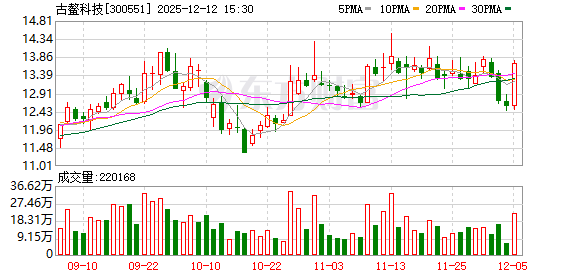
Core Viewpoint - The actual controller of Guoao Technology has changed from Chen Chongjun to Xu Yinghui, who will exercise voting rights over 67.69 million shares, representing 24.41% of the total voting rights after the agreement takes effect [2][5]. Group 1: Shareholder Changes - Chen Chongjun signed a voting rights delegation agreement with Xu Yinghui on December 12, transferring the voting rights of 67.69 million shares unconditionally and irrevocably [5]. - After the agreement, Xu Yinghui directly holds 4.50% of the shares and, through the delegated voting rights, controls a total of 24.41% of the voting rights [5][6]. - The stock of Guoao Technology was suspended from trading before the announcement and surged by 8.9% to 13.7 yuan per share before resuming trading on December 15 [2][3]. Group 2: Capital Increase Plan - Guoao Technology plans to issue up to 40 million shares to Xu Yinghui at a price of 10.8 yuan per share, aiming to raise no more than 432 million yuan, which will be used to supplement working capital [5][6]. - After the completion of this issuance, Xu Yinghui's voting rights in Guoao Technology could increase to 32.36% [5]. Group 3: Company Performance - Guoao Technology reported a revenue of 109 million yuan for the first three quarters of 2025, a year-on-year decrease of 49.58%, with a net loss of 164 million yuan [6]. - In the third quarter, the company achieved a revenue of 37.24 million yuan, down 47.92% year-on-year, with a net loss attributable to shareholders of 50.82 million yuan [6]. Group 4: Company Overview - Guoao Technology specializes in providing comprehensive solutions for smart financial systems and financial software products, serving clients including banks, securities firms, and other financial institutions [6].
古鳌科技实控人变更 “80后”老板产业版图主要涉及算力企业
Mei Ri Jing Ji Xin Wen· 2025-12-14 13:35
Group 1 - The actual controller of Guao Technology will change to Xu Yinghui, a post-80s entrepreneur in the computing power industry, following the signing of a voting rights entrustment agreement with the previous controller, Chen Chongjun [2][3] - Xu Yinghui currently holds 4.50% of the company's shares directly, and with the voting rights entrusted to him, his total voting rights will amount to 24.41% [3] - Guao Technology plans to issue up to 40 million shares to Xu Yinghui at a price of 10.8 yuan per share, aiming to raise no more than 432 million yuan for working capital [3] Group 2 - Xu Yinghui's main holding company, Guanghui Shilian, has established computing power centers in 14 cities across China, focusing on key technology research in industrial computing [4] - Xu Yinghui has previously invested in the Sci-Tech Innovation Board company, Maixinlin, indicating his active role in the technology investment sector [4] - Guao Technology's main business includes financial equipment and derivatives, with a reported revenue of 298 million yuan in 2024, a year-on-year decrease of 47.60%, and a net loss of 351 million yuan [7]