
证券行业数字化转型

Search documents
定了!这一券商高管“转会”揭晓:新东家是
Zheng Quan Shi Bao Wang· 2025-12-05 09:56
Group 1 - The core point of the article is the recent personnel changes at Ping An Securities, with Lei Jie joining as Chief Information Officer, which is expected to enhance the company's technological and business integration capabilities [1][2][4] - Lei Jie has a diverse and extensive background in various sectors including securities registration, wealth management, internet finance, technology, and risk control, which positions him well to contribute to Ping An Securities [1][3] - The recruitment of Lei Jie and other experienced executives reflects Ping An Securities' commitment to upgrading its business through strategic talent acquisition amid a rapidly digitizing securities industry [1][4] Group 2 - Lei Jie officially joined Ping An Securities on December 1, following his resignation from Yuekai Securities, where he served as Co-President and Chief Information Officer [2][3] - The company has recently hired two other experienced executives, including Li Qian, who has a strong background in fixed income and investment trading, and Yang Weidong, a veteran in investment banking [4][5] - The addition of these executives, all born in the 1980s, indicates a trend towards a younger and more professional management team within the securities industry, which may strengthen the company's competitive position [4][5]
定了!这一券商高管“转会”揭晓:新东家是.....
券商中国· 2025-12-05 06:54
Core Viewpoint - Recent personnel changes at Ping An Securities, including the appointment of Lei Jie as Chief Information Officer, reflect the company's strategy to enhance its management team and drive business upgrades through experienced talent acquisition [1][5][6]. Group 1: Personnel Changes - Lei Jie, former Co-President and Chief Information Officer of Yuekai Securities, has officially joined Ping An Securities as Chief Information Officer, bringing extensive experience in securities registration, wealth management, internet finance, technology, and risk control [1][2]. - In October, Li Qian, former Deputy General Manager of GF Securities, also joined Ping An Securities as General Manager, contributing significant expertise in fixed income and investment trading [1][5]. - Lei Jie is the third senior executive recruited externally by Ping An Securities since last year, indicating a commitment to strengthening the management team with diverse backgrounds [5][6]. Group 2: Background of Lei Jie - Lei Jie has a solid IT background, holding a Ph.D. in Computer Science from Huazhong University of Science and Technology, and has worked in various roles within the securities industry since 2014, including positions at Hualin Securities and Yuekai Securities [2][3]. - His career trajectory includes significant roles in wealth management and compliance, culminating in his appointment as Chief Information Officer at Yuekai Securities before moving to Ping An Securities [3]. Group 3: Industry Trends - The recruitment of younger executives, including three members born in the 1980s, reflects a broader trend towards the professionalization and modernization of management within the securities industry [5][6]. - The strategic adjustments in Ping An Securities' executive team are expected to lay a foundation for deepening company strategy, upgrading service systems, and enhancing internal control management in a competitive market [6].


恒生电子张国强:证券业核心系统升级窗口期已至 金融科技业迎来发展新机遇
Shang Hai Zheng Quan Bao· 2025-10-09 18:39
Core Insights - The core viewpoint of the article emphasizes the necessity of upgrading core trading systems as a fundamental requirement for digital transformation in the securities industry [3][7] - The shift in client demands from basic availability to personalized, accurate, and timely services is driving this transformation [3][4] Digital Transformation Imperative - The securities industry is undergoing a profound change from a "transaction-centered" model to a "customer-centered" approach, making digital transformation crucial for service efficiency and core competitiveness [3][4] - Upgrading core trading systems is now a focal point for the industry, as traditional systems are increasingly inadequate to meet evolving client needs [4][5] Challenges with Traditional Systems - Traditional centralized architectures struggle to cope with the increasing business volume and diverse service models, leading to performance pressures [4][5] - The rapid growth of individual investors and trading frequency has pushed existing systems to their limits, necessitating a shift to more flexible and scalable solutions [4][5] Technological Innovations - The UF3.0 system from 恒生电子 employs a "dual-mode" architecture that combines stable and agile systems to enhance performance and reliability [5][6] - The system's design focuses on low-latency, high-concurrency capabilities, which are essential for modern trading environments [5][6] Collaboration and Innovation - 恒生电子 collaborates with various technology partners to innovate and adapt core trading systems, ensuring high security and control while reducing reliance on traditional foreign databases [6][7] - The establishment of innovation labs and industry alliances aims to explore and implement autonomous innovation practices across the entire technology stack [6][7] Opportunities for Financial Technology Firms - The ongoing digital transformation and core system upgrades present significant opportunities for financial technology companies to participate in the reshaping of the industry [7] - Regulatory support for distributed and open architecture systems further enhances the business prospects for local technology service providers [7]


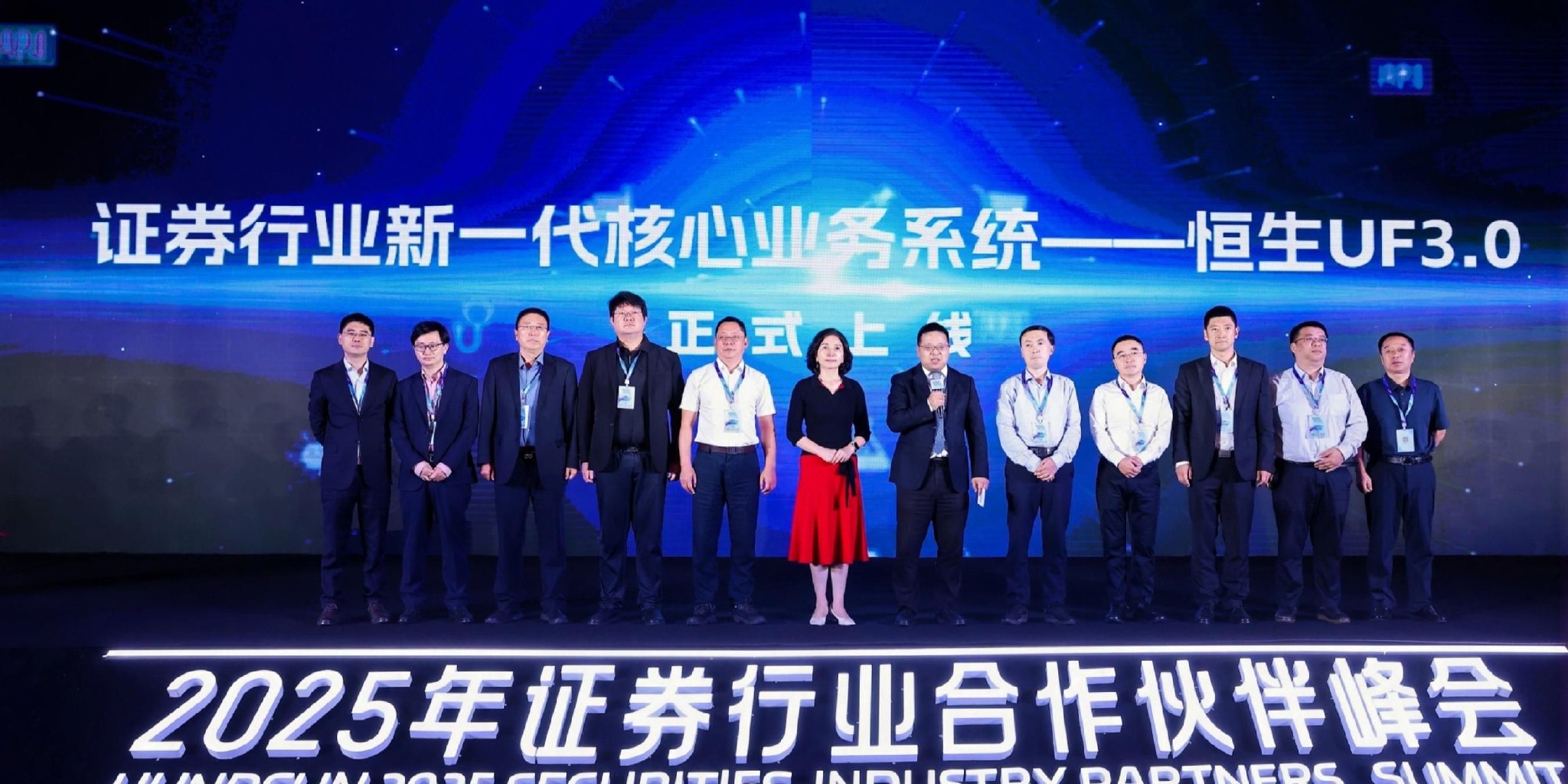
中国证券业迎来“新核时代” 恒生UF3.0落地11家券商
Jing Ji Guan Cha Wang· 2025-09-10 10:45
Core Insights - A significant system upgrade is occurring in the Chinese securities industry, marked by the launch of the new core business system UF3.0 by Hengsheng Electronics [2][3] - UF3.0 represents a shift from a "trading channel" to a "wealth management engine," supporting 24/7 operations with high concurrency and low latency [2][4] - The successful implementation of UF3.0 in 11 securities firms, including major players like China Merchants Securities and Dongfang Securities, sets a benchmark for digital transformation in the industry [2][5] Industry Transformation - The core business system is essential for various operations such as account opening, trading, clearing, risk control, and customer service, serving as a foundational infrastructure for business operations [4] - The transition towards wealth management and internationalization in the securities sector presents challenges to traditional core business systems, necessitating the development of UF3.0 [4][5] - UF3.0 is designed to support comprehensive financial services and modern IT infrastructure, addressing the evolving needs of the securities industry [4][5] Technological Advancements - UF3.0 employs a cloud-native architecture and distributed, full-stack technology to enhance system capabilities, ensuring high performance and flexibility [2][7] - The system features a dual-state architecture that separates stable and agile operations, allowing for rapid iteration and innovation in response to business demands [7][9] - The integration of self-developed technologies and products into UF3.0 is crucial for maintaining financial information security and achieving IT autonomy in the securities industry [8] Implementation and Collaboration - The successful rollout of UF3.0 involved deep collaboration between Hengsheng Electronics and various securities firms, establishing a solid foundation for its implementation [3][9] - The transition to UF3.0 was managed through agile methodologies, automated data migration tools, and comprehensive operational monitoring to ensure a smooth upgrade process [9] - As more firms adopt UF3.0, the Chinese securities industry is poised to build a digital ecosystem based on the new core business system, marking a new phase in wealth management transformation [9]


东北证券: 东北证券股份有限公司2025年面向专业投资者公开发行短期公司债券(第六期)信用评级报告
Zheng Quan Zhi Xing· 2025-08-21 16:48
Company Overview - Northeast Securities Co., Ltd. has a long-standing history, originally established in 1988, and has undergone several transformations to become a comprehensive national listed securities company [9][10] - The company has a registered capital of 2.34 billion RMB as of March 2025, with a diversified ownership structure and no controlling shareholder [9][10] Credit Rating - The company received a long-term credit rating of AAA and a short-term credit rating of A-1, with a stable outlook as of August 15, 2025 [3][4] - The issuance scale for the upcoming short-term corporate bonds is capped at 1.5 billion RMB, with a maturity of 345 days [3][13] Financial Performance - As of March 2025, the total assets of the company amounted to 883.95 billion RMB, with net capital at 140.18 billion RMB [6][19] - The company reported a total operating income of 14.85 billion RMB and a net profit of 2.75 billion RMB for the first quarter of 2025, showing an increase compared to previous periods [6][19] Business Operations - The company operates a comprehensive range of services including wealth management, securities investment, fund management, asset management, investment banking, and futures brokerage [9][10] - It has established a marketing network covering 66 major cities across 28 provinces, with a strong competitive advantage in Jilin Province [5][17] Risk Management and Governance - The company has a well-structured governance framework with a clear separation of powers among the shareholders, board of directors, and management [21][22] - The internal control and risk management systems are in place, although there is room for improvement in internal control management [23] Industry Context - The securities industry is experiencing significant regulatory scrutiny, with a notable increase in penalties for non-compliance, which may impact operational performance [15][16] - The market remains sensitive to economic cycles, with performance closely tied to capital market fluctuations and regulatory changes [14][15]

公募豪掷逾140亿元参与定增,电子、化工受青睐;券商年内已宣布撤销87家分支机构 | 券商基金早参
Mei Ri Jing Ji Xin Wen· 2025-08-12 01:50
Group 1 - The brokerage industry has announced the closure of 87 branches this year, reflecting an accelerated digital transformation within the sector [1] - Major brokerages like Guosen Securities and Founder Securities are leading in branch closures, aiming to optimize resource allocation and enhance operational efficiency [1] - The shift towards online services is expected to become a core competitive advantage for brokerages, with those investing heavily in technology likely to gain market favor [1] Group 2 - Public funds have invested over 14 billion yuan in private placements this year, with electronics and chemicals being the favored sectors [2] - Among the 24 public institutions participating in A-share private placements, Nord Fund has emerged as the leader with a total allocation of 5.633 billion yuan [2] - This trend indicates a growing confidence among institutional investors in the real economy, potentially enhancing market risk appetite and optimizing capital allocation [2] Group 3 - The new fund issuance market remains robust, with over 30 new funds launched for three consecutive weeks, and equity funds making up over 80% of the total [3] - The majority of newly launched equity funds are index funds, indicating a strategic focus on systematic opportunities by institutions [3] - This influx of new funds is expected to inject additional liquidity into the A-share market, benefiting the brokerage sector and supporting core assets like technology and consumer stocks [3] Group 4 - Hongta Securities has conducted its first share buyback, repurchasing 2.22 million shares for approximately 20.01 million yuan, signaling confidence in its own value [4] - The buyback is likely to boost investor confidence and provide support for the company's stock price, potentially leading to a revaluation of the brokerage sector [4] - The trend of share buybacks among listed companies is seen as a positive signal for market sentiment, reflecting recognition of long-term value by industry capital [4]

中泰证券: 中泰证券股份有限公司向特定对象发行A股股票募集说明书(修订稿)
Zheng Quan Zhi Xing· 2025-07-15 09:23
Core Viewpoint - Zhongtai Securities Co., Ltd. plans to issue A-shares to specific investors, aiming to raise up to 6 billion RMB for capital increase and business expansion, while ensuring that the controlling shareholder structure remains unchanged [1][7]. Group 1: Issuance Details - The issuance will target no more than 35 specific investors, including qualified institutional investors and natural persons, with the exception of the controlling shareholder, Zaozhuang Mining Group [3][5]. - The final issuance price will be determined based on the average trading price of the company's shares over the 20 trading days prior to the pricing date, with a minimum price set at 80% of this average or the latest audited net asset value per share [4][5]. - Zaozhuang Mining Group will not participate in the pricing process but commits to subscribe at the market price determined through the auction process [5][6]. Group 2: Use of Proceeds - The funds raised will be used entirely to increase the company's capital, specifically for business expansion and debt repayment, with a total planned investment of no more than 6 billion RMB [7][9]. - The issuance will not change the controlling shareholder or the distribution of shares that meets listing requirements [7]. Group 3: Shareholding Structure - As of March 31, 2025, the total number of shares is approximately 6.97 billion, with Zaozhuang Mining Group holding 32.62% and its concerted action partner, Xin Mining Group, holding a combined 36.09% [12][14]. - The actual controller of the company is the Shandong Provincial State-owned Assets Supervision and Administration Commission, which controls 58.15% of the voting rights through various entities [14]. Group 4: Industry Context - The securities industry in China has evolved significantly since the establishment of the first securities company in the 1980s, with ongoing reforms aimed at enhancing market stability and investor protection [15][16]. - Recent regulatory changes, including the introduction of a registration system for IPOs, are expected to improve the efficiency and maturity of the capital market [16][17].
