证券行业转型

Search documents
招商证券“瘦身”:挂牌转让5处深圳不动产,2025年减员千余,密集调整分支机构
Jin Rong Jie· 2026-03-09 09:20
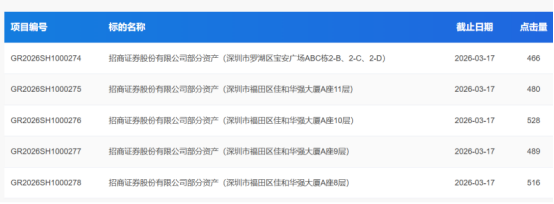
Group 1 - The core strategy of the company is to implement a "lean and quality improvement" approach through asset revitalization, personnel optimization, and organizational restructuring in response to the deepening transformation and cost reduction trends in the securities industry [1] - The company is initiating the transfer of five properties in Shenzhen, with a total starting price of approximately 148 million yuan, as part of its asset disposal strategy [2][4] - The properties being disposed of are older assets acquired during the 1990s, indicating a focus on revitalizing idle assets and shedding non-core properties [3][4] Group 2 - The company reduced its workforce by 1,292 employees, with a focus on optimizing the personnel structure rather than simple downsizing, particularly in traditional brokerage roles [5] - Despite achieving revenue and profit growth in 2025, the company faces pressure from industry differentiation, prompting a need for cost reduction and efficiency improvement [5][8] - The company is undergoing significant organizational and personnel adjustments, including changes in executive leadership and branch management, to enhance operational efficiency [6][7] Group 3 - The asset disposal, personnel optimization, and organizational adjustments are part of a systematic layout during a critical transformation period in the securities industry, where cost reduction and focusing on core business have become common goals among leading firms [8] - The new president, Zhu Jiangtao, is expected to strengthen strategic collaboration with China Merchants Bank and drive the company's focus on digital development and core business areas [7][8] - The ongoing asset transfer process, personnel optimization, and organizational restructuring are aimed at enhancing the company's competitive advantage amid industry challenges [8]


A股三大指数冲击马年“开门红”!证券ETF(159841)盘中获净申购超5000万份,机构:证券行业转型有望带来新的业务增长点
2 1 Shi Ji Jing Ji Bao Dao· 2026-02-24 05:57
Group 1 - The A-share market indices opened significantly higher, with the securities sector showing slight activity, as evidenced by the CSI Securities Company Index rising by 0.02% [1] - The Securities ETF (159841) recorded a trading volume exceeding 120 million yuan, with a real-time premium rate of 0.13%, and saw a net subscription of over 50 million units during the trading session [1] - The Securities ETF has experienced a net inflow of 59.09 million yuan on the previous trading day (February 13), marking two consecutive days of net inflows, totaling 117 million yuan [1] Group 2 - In 2023, securities firms have completed bond issuance totaling 426.04 billion yuan, representing a substantial year-on-year increase of 243.97% [2] - The approved bond issuance quota for the year has reached 322 billion yuan, creating a significant capital raising environment, with several small and medium-sized securities firms entering the hundred billion yuan bond approval category [2] - The transformation of the securities industry is expected to bring new business growth points, benefiting from market recovery and favorable policy environments across brokerage, investment banking, and capital intermediary services [2]
交投火热,证券板块有望受益,资金积极布局,证券ETF(512880)近5日资金净流入超16亿元
Sou Hu Cai Jing· 2026-02-03 02:16
Group 1 - The core viewpoint of the article highlights the positive outlook for the securities sector, driven by increased trading volumes and favorable policy changes [1] - The securities industry is expected to see a significant increase in trading volume by January 2026, with an average daily trading amount of 34,743 billion yuan, representing a 58.94% increase from December 2025 [1] - Margin financing balances have also shown a year-on-year increase of 54.42%, indicating a growing investor confidence and market activity [1] Group 2 - The China Securities Regulatory Commission (CSRC) plans to expand the types of strategic investors and clarify minimum shareholding requirements, aiming to strengthen the market's stable growth [1] - The upcoming "14th Five-Year" capital market planning meeting emphasizes the importance of deepening comprehensive reforms in investment and financing [1] - The recovery of the market and a friendly policy environment are expected to benefit brokerage, investment banking, and capital intermediary businesses, potentially leading to new growth points for the industry [1] Group 3 - The securities ETF (512880) has seen a net inflow of over 1.6 billion yuan in the past five days, reflecting strong investor interest [1] - The ETF tracks the securities company index (399975), which includes representative companies in the A-share market, indicating the overall performance of the sector [1] - The index is characterized by strong cyclicality and market sensitivity, making it a key indicator for the performance of listed securities companies [1]

证券从业人员总规模回落至32万人,分析师人数逆势增长,保代人数8年来首次出现年度下滑
Xin Lang Cai Jing· 2026-01-30 10:30
Core Insights - The securities industry is experiencing a significant transformation, with a reduction in workforce and a shift towards a more professional and service-oriented model [3][10]. Workforce Changes - By the end of 2025, the total number of employees in the securities industry is projected to decrease by 5,897, bringing the total to 320,000, marking three consecutive years of decline since 2023 [13]. - The number of employees in general securities business and securities brokers has significantly decreased, with both categories losing over 5,000 employees [10]. - Conversely, the number of analysts increased by 336, and investment advisors saw a net increase of 5,754, indicating a shift towards specialized roles [10][12]. Analyst Growth - The analyst workforce has seen a notable increase, surpassing 6,000 by 2025, doubling from around 3,000 before 2022 [12]. - Despite pressures in other business lines, competition for research talent among brokerages has intensified, with several prominent analysts switching firms [12]. - The top ten firms with the largest increases in analyst numbers include Guotai Junan Securities, CITIC Securities, and Founder Securities, with Guotai Junan adding 43 analysts [14]. Decline in Sponsoring Representatives - The number of sponsoring representatives has decreased for the first time in eight years, totaling 8,526 by the end of 2025, down by 180 from the previous year [15]. - This decline is attributed to a slowdown in equity financing and stricter regulatory requirements, leading to a "project drought" in the market [15].





证券ETF(512880)回调超1%,市场回暖催化行业景气,回调或可布局
Mei Ri Jing Ji Xin Wen· 2026-01-29 07:59
Core Insights - The securities industry is expected to see a month-on-month increase in trading volume by January 2026, with the average daily trading volume of stock funds reaching 34,578 billion yuan, a rise of 58.18% compared to the previous month [1] - The margin financing and securities lending balance has increased by 49.27% year-on-year, indicating a positive trend in market activity [1] - A favorable policy environment is highlighted by the China Securities Regulatory Commission's release of guidelines for the performance comparison benchmarks of publicly offered securities investment funds, aimed at standardizing performance management [1] - The industry transformation is anticipated to create new business growth opportunities, benefiting brokerage, investment banking, and capital intermediary services due to market recovery [1] - The average predicted price-to-book (PB) ratio for the sector in 2026 is 1.2 times, suggesting that quality and distinctive securities firms are likely to stand out given the positive development policies [1] - The Securities ETF (512880) tracks the securities company index (399975), which includes listed companies involved in securities brokerage, underwriting, and asset management, reflecting the overall performance of the securities industry [1] - The constituent stocks of the index are primarily large comprehensive securities firms, which possess significant market influence and represent cyclical industry characteristics [1]
证券从业人员总量缩减背后:人才流动出现新格局
Mei Ri Jing Ji Xin Wen· 2026-01-08 13:28
Core Insights - The total number of employees in the securities industry is projected to decrease to 328,900 by the end of 2025, a reduction of nearly 7,800 from the end of 2024, marking a shift in talent dynamics within the industry [1][2] - The number of investment bankers, specifically sponsors, is expected to decline for the first time in eight years, contrasting with the growth of investment advisors and analysts [1][3] Industry Overview - The total number of employees in the securities industry has fluctuated between 320,000 and 360,000 since 2017, peaking at 354,500 in 2022 [1] - By the end of 2025, five major brokerages will employ over 10,000 people each, accounting for nearly 20% of the total workforce in the industry [2] - Some large and medium-sized brokerages are experiencing workforce reductions due to mergers, restructuring, and the establishment of subsidiaries [2] Talent Dynamics - Internet-based brokerages such as Dongfang Caifu, Guojin Securities, and Maikao Securities are actively hiring, with Dongfang Caifu increasing its workforce by 630 to reach 3,334 employees [2] - The number of investment bankers has decreased to 8,519 by the end of 2025, down 293 from the previous year, marking the first annual decline in eight years [3] - The decline in investment bankers is attributed to a slowdown in equity financing and stricter regulatory environments [3][4] Growth in Advisory Roles - The number of investment advisors has reached a record high of 86,100 by the end of 2025, an increase of 5,782 from 2024, reflecting a shift towards high-quality talent strategies [5][6] - The number of securities brokers has significantly decreased from 90,400 in 2017 to 22,900 in 2025, indicating a transition away from traditional brokerage roles [5] Analyst Trends - The number of analysts has surpassed 6,056 by the end of 2025, marking a growth of 338 from the previous year, with a notable increase since 2022 [6][7] - High-profile analysts are increasingly changing firms, indicating a competitive environment for talent acquisition among brokerages [7] - The demand for research and analysis is supported by the expansion of listed companies and the growth of institutional investors, despite challenges in commission income [7]
2025年证券从业者跌破33万大关
Xin Lang Cai Jing· 2026-01-06 12:28
Core Insights - The total number of employees in the securities industry is projected to decline to 328,900 by the end of 2025, a decrease of nearly 7,800 from the end of 2024 [1] - Since 2017, the total number of industry employees has fluctuated between 320,000 and 360,000, peaking at 354,500 in 2022 [1] - Internet brokerages like East Money have been hiring talent despite the overall decline, while some medium and large brokerages have reduced their workforce by over 500 due to mergers and restructuring [1] - The number of licensed securities representatives has decreased for the first time in eight years, while the number of investment advisors and analysts has reached record highs of 86,100 and 6,056, respectively, indicating a shift from a "manpower strategy" to a focus on "high quality and efficiency" [1]
证券ETF(512880)收涨超4.1%,行业转型有望带来新增长点
Sou Hu Cai Jing· 2026-01-06 11:20
Core Viewpoint - The securities ETF (512880) has risen over 4.1%, indicating potential new growth points for the industry due to ongoing transformations [1] Group 1: Industry Developments - The third phase of public fund fee reductions has officially launched, resulting in an overall fee reduction of approximately 30 billion yuan, a decrease of 34% [1] - The China Securities Regulatory Commission (CSRC) is promoting the high-quality development of the REITs market by clarifying definitions and operational requirements for commercial real estate REITs, encouraging medium to long-term capital to enter the market [1] - The transformation of the securities industry is expected to create new growth opportunities, benefiting from a recovering market and a favorable policy environment, with brokerage, investment banking, and capital intermediary services all poised to gain [1] Group 2: Securities ETF Details - The securities ETF (512880) tracks the securities company index (399975), which selects listed companies involved in securities brokerage, underwriting, and proprietary trading from the A-share market [1] - The index aims to reflect the overall performance of listed companies in the securities industry, characterized by a strong cyclical nature and market sensitivity, closely related to the activity level of the capital market [1]
向全周期赋能者转型 券业持续提升服务能力
Shang Hai Zheng Quan Bao· 2025-12-10 17:57
Core Insights - The securities industry is evolving from a "transaction channel" to a "value creation platform," enhancing its role from a traditional intermediary to a builder of a comprehensive financial service ecosystem [1][2] - In the past four years, securities firms have assisted nearly 1,200 technology innovation companies in going public and facilitated over 51 trillion yuan in domestic equity and debt financing [1] - The industry is transitioning from scale-driven growth to a focus on functionality, deeply integrating into the "technology-industry-finance" virtuous cycle [1] Financing and Mergers - Securities companies have seen a significant increase in bond underwriting, with the amount exceeding 700 billion yuan, representing a 58% year-on-year growth [1] - The number of strategic emerging industry mergers and acquisitions facilitated by securities firms has notably increased, promoting industrial integration and technological upgrades [1] - A notable merger involving China International Capital Corporation (CICC), Dongxing Securities, and Xinda Securities is underway, which will enhance CICC's total assets to 1,009.6 billion yuan and net assets to 171.5 billion yuan, ranking it fourth in the industry [2][3] Future Directions - The securities industry aims to enhance its service capabilities across five key areas, including improving functional performance, showcasing professional service capabilities, achieving breakthroughs in differentiated development, and strengthening compliance management and risk prevention [3][4] - There is a focus on constructing a financing service system that covers the entire lifecycle of technology companies, addressing their differentiated financing needs [3] - The industry is encouraged to innovate mechanisms and upgrade tools to lower financing thresholds for technology companies, enhancing market inclusivity for unprofitable hard-tech firms [3][4]


国信证券股东拟减持 券商转型格局加速分化
Jing Ji Guan Cha Wang· 2025-12-09 15:57
Group 1 - The core viewpoint of the articles highlights a significant transformation in the Chinese securities industry, marked by shareholder reductions and mergers and acquisitions among brokerage firms, indicating a structural adjustment during the "14th Five-Year Plan" period [2][4][5]. - Multiple brokerage firms, including Guosen Securities and Huaxi Securities, have announced shareholder reduction plans, reflecting diverse motivations such as asset allocation adjustments and operational funding needs [2][3]. - The market is currently experiencing relatively low valuations, with the securities sector's price-to-book ratio at approximately 1.36, indicating cautious expectations regarding short-term challenges but also highlighting long-term value potential [5][6]. Group 2 - The ongoing mergers and acquisitions, such as China International Capital Corporation's plan to absorb Dongxing Securities and Cinda Securities, represent a strategic path for enhancing competitiveness through consolidation [3][4]. - Regulatory encouragement for top brokerage firms to enhance their comprehensive strength through mergers contrasts with a more focused development path for smaller firms, which are urged to leverage their advantages in niche markets [6][7]. - The industry is facing multiple risks, including market volatility and regulatory challenges, necessitating a heightened focus on compliance and risk management as firms navigate the evolving landscape [7][8].