
行业并购重组

Search documents
招商证券净利润创新高背后:自营收入保守 同行“吃肉”自己“喝汤”
Xin Lang Cai Jing· 2026-03-31 14:44
Group 1: Company Performance - In 2025, the company achieved an operating income of 24.972 billion yuan, a year-on-year increase of 19.53% [1] - The net profit attributable to shareholders reached 12.350 billion yuan, reflecting a year-on-year growth of 18.91% [1] - Wealth management and institutional business generated revenue of 13.825 billion yuan, a significant increase of 35.1%, accounting for 55.36% of total revenue [1][6] Group 2: Market and Industry Context - The A-share market showed overall recovery in 2025, with major indices such as the Shanghai Composite Index, Shenzhen Component Index, and ChiNext Index rising by 18.41%, 29.87%, and 49.57% respectively [2][7] - Daily average trading volume in the stock market reached 1.98 trillion yuan, a year-on-year increase of 67% [2][7] - The securities industry experienced a comprehensive recovery, with several core indicators showing significant improvement [2][7] Group 3: Business Segments and Risks - The company's credit and brokerage businesses are highly interconnected, with the amount of funds lent increasing by 40% to 133.353 billion yuan by the end of 2025 [1][6] - The market share of margin trading and securities lending rose from 4.87% at the end of 2024 to 5.06% [1][6] - Proprietary trading income was 9.785 billion yuan, with a modest growth of 2.70%, indicating a more conservative performance compared to the brokerage business [1][7] Group 4: Strategic Developments - In September 2025, a significant capital operation occurred with the unconditional transfer of 50% equity in Jisheng Investment from shareholder Chuyuan Investment to China Merchants Jin控, resulting in full ownership of Jisheng Investment by China Merchants Jin控 [4][9] - This transfer allows for vertical management integration and may facilitate future cross-business segment consolidation opportunities [4][9]

财达证券公开选聘首席经济学家,行业核心研究人才正高频变动
Nan Fang Du Shi Bao· 2026-02-27 11:26
Core Viewpoint - Recently, Caida Securities officially announced the recruitment of a Chief Economist, aiming to attract core research leaders to support its strategic planning and enhance its market presence [2][4]. Group 1: Recruitment Announcement - Caida Securities is recruiting a Chief Economist to lead the construction of a macroeconomic and capital market research system, providing decision-making support for the company's "14th Five-Year Plan" [2]. - The recruitment is open for positions in Beijing and Shijiazhuang, with a deadline for applications set for March 8, 2026 [2]. Group 2: Job Responsibilities and Requirements - The Chief Economist will represent the company at high-end industry forums and assist in building the macro research team [2]. - Candidates must hold a PhD from a prestigious institution, be under 45 years old, and have over 10 years of experience in macroeconomics, public policy, or financial market research, including at least 2 years in a senior economist role at leading financial institutions or think tanks [4]. Group 3: Industry Trends - Since 2025, over 10 chief economist positions in various brokerages have experienced personnel changes, including departures and transitions due to mergers [4][5]. - Notable departures include prominent economists from major firms, indicating a significant reshuffling within the industry [5]. - The frequency of changes in chief economist roles has increased due to factors such as a 34% year-on-year decline in brokerage commission rates and a shift in research focus from "expansion" to "value" [6]. Group 4: Recruitment Trends - Public recruitment has become a key method for smaller brokerages to attract talent, with several firms, including Dongxing Securities and Guohai Securities, also announcing similar recruitment efforts [6]. - Policy guidance is further promoting market-oriented recruitment, with the China Securities Association encouraging chief economists to actively engage with the media [6].


硅料行业大事件! 通威股份拟并购丽豪清能
Mei Ri Jing Ji Xin Wen· 2026-02-25 11:18
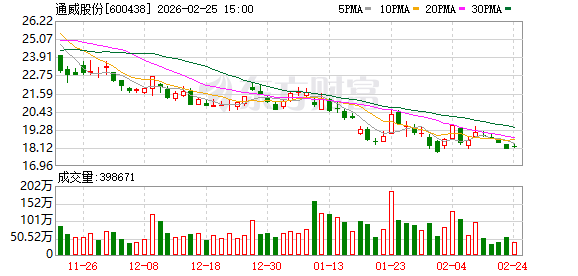
Core Viewpoint - The acquisition of Qinghai Lihua Qingneng Co., Ltd. by Tongwei Co., Ltd. is a significant move in the silicon material industry, aiming to enhance production capacity and optimize the industry structure amidst current challenges [2][4]. Group 1: Acquisition Details - Tongwei Co., Ltd. plans to acquire 100% of Qinghai Lihua Qingneng through a combination of issuing shares and cash payments, with the transaction currently in the planning stage [3][5]. - The acquisition is expected to increase Tongwei's silicon material production capacity to over 1 million tons annually, combining its existing capacity of over 900,000 tons with Lihua Qingneng's planned capacity of 200,000 tons [4][6]. Group 2: Strategic Implications - This merger is seen as a key initiative to address "involution" in the photovoltaic industry, promoting a more optimized industrial landscape [2][7]. - The integration of the two companies is expected to enhance operational synergy and cultural alignment, given the historical connections between the management teams [5][6]. Group 3: Financial Considerations - The acquisition strategy involves issuing shares and cash, which is anticipated to alleviate cash pressure and optimize the capital structure, ensuring stable cash flow [8]. - This strategic move is viewed as a long-term investment in high-quality assets and resources, positioning Tongwei for future growth despite current market challenges [8].

证券ETF(159841)近10日净流入超5亿元,申万宏源预测券商净利润大幅增长47%
Mei Ri Jing Ji Xin Wen· 2026-01-30 06:17
Group 1 - The core viewpoint of the articles indicates that the securities sector is experiencing a downturn, with specific ETFs reflecting this trend, yet there is a notable inflow of funds into the securities ETF, suggesting underlying investor interest [1][2] - The securities ETF (159841) has seen a net inflow of 516 million yuan over the last ten trading days, despite a 1.1% drop in its underlying index during the trading session [1] - The latest fund size of the securities ETF (159841) is reported to be 10.614 billion yuan, with its top five constituent stocks being Dongfang Wealth, CITIC Securities, Guotai Junan, Huatai Securities, and GF Securities [1] Group 2 - The macroeconomic environment is currently slowing down, but the securities company ETF is recommended for industry allocation due to its relative attractiveness in counter-cyclical investment strategies [2] - The securities industry fundamentals remain solid, with a forecasted 47% increase in net profits for the brokerage sector by 2025, supported by recent regulatory policies encouraging mergers and acquisitions [1]



国信证券股东拟减持 券商转型格局加速分化
Jing Ji Guan Cha Wang· 2025-12-09 15:57
Group 1 - The core viewpoint of the articles highlights a significant transformation in the Chinese securities industry, marked by shareholder reductions and mergers and acquisitions among brokerage firms, indicating a structural adjustment during the "14th Five-Year Plan" period [2][4][5]. - Multiple brokerage firms, including Guosen Securities and Huaxi Securities, have announced shareholder reduction plans, reflecting diverse motivations such as asset allocation adjustments and operational funding needs [2][3]. - The market is currently experiencing relatively low valuations, with the securities sector's price-to-book ratio at approximately 1.36, indicating cautious expectations regarding short-term challenges but also highlighting long-term value potential [5][6]. Group 2 - The ongoing mergers and acquisitions, such as China International Capital Corporation's plan to absorb Dongxing Securities and Cinda Securities, represent a strategic path for enhancing competitiveness through consolidation [3][4]. - Regulatory encouragement for top brokerage firms to enhance their comprehensive strength through mergers contrasts with a more focused development path for smaller firms, which are urged to leverage their advantages in niche markets [6][7]. - The industry is facing multiple risks, including market volatility and regulatory challenges, necessitating a heightened focus on compliance and risk management as firms navigate the evolving landscape [7][8].




机构集体唱多!券商板块2026年投资价值凸显
Huan Qiu Wang· 2025-11-13 07:29
Core Viewpoint - Major brokerage firms are optimistic about the securities industry in 2026, anticipating a "Davis Double Play" due to recovering market conditions and improving fundamentals, while current valuations remain at historical lows [1] Group 1: Performance Growth - The A-share market's upward trend has significantly boosted brokerage firms' performance, with a total margin balance nearing 2.4 trillion yuan and a record high trading volume of 301.56 trillion yuan in the first three quarters of 2025 [2] - Listed brokerages achieved a net profit of 169.4 billion yuan in the first three quarters of 2025, marking a 63% year-on-year increase, with the third quarter alone reaching a record 72.5 billion yuan [2] - Core business segments such as brokerage, investment banking, asset management, interest income, and investment returns saw year-on-year growth rates of 74%, 23%, 2%, 56%, and 43% respectively, indicating a broad-based recovery [2] Group 2: Valuation Discrepancy - Despite strong performance, the brokerage sector's stock prices have lagged, with the Wind brokerage index rising only 6.02% year-to-date compared to significant gains in major indices [3] - The industry is expected to see a return on equity (ROE) of approximately 7.2% in 2026, which is above the 70th percentile since 2016, while current valuations are at the 40th percentile, indicating substantial room for future growth [3] - Institutional holdings in the brokerage sector are at a historical low, with the sector accounting for only 0.86% of actively managed fund holdings as of Q3 2025, underweighting the standard allocation by 3.21 percentage points [3] Group 3: Future Growth Drivers - Wealth management, institutional business, and internationalization are identified as the three main growth engines for the brokerage industry moving forward [6] - The wealth management sector is expected to see a clear upward trend, with daily trading volumes in A-shares potentially stabilizing at 2 trillion yuan, and a recovery in financial product distribution [6] - The investment banking market is recovering, and the international business is benefiting from improved liquidity in the Hong Kong market, with major brokerages increasing their overseas revenue contributions [6] - Mergers and acquisitions, along with the application of AI technology, are anticipated to catalyze further growth in the sector, with policies encouraging consolidation among quality brokerages [6]




券商首席经济学家及核心研究员“转会”持续升温
Zheng Quan Ri Bao Zhi Sheng· 2025-09-12 16:12
Core Viewpoint - The recent recruitment of chief economists by securities firms highlights the ongoing talent movement in the brokerage research sector, driven by multiple factors including policy guidance, industry mergers, fee reforms, and AI empowerment [1][3]. Group 1: Talent Movement in Brokerage Research - There has been a high frequency of personnel changes in key research positions within brokerage firms this year, with notable figures such as Xun Yugen and Yan Xiang switching firms [2]. - The movement of prominent research talents reflects not only personal career choices but also the dynamic adjustments in the brokerage research business landscape [2]. Group 2: Influencing Factors - The deepening reform of public fund fee structures is a key variable triggering talent movement and restructuring within the brokerage research industry, with brokerage commission rates dropping by 33.98% year-on-year in the first half of the year [3]. - Policy guidance has provided direction for the development of brokerage research businesses and talent flow, with new evaluation indicators introduced to encourage positive contributions from chief economists [4]. Group 3: Talent Acquisition Strategies - The demand for research talent is increasing, leading to a clear differentiation in talent acquisition paths, with smaller brokerages relying more on public recruitment to attract top research talent [5]. - Larger brokerages prefer internal cultivation or targeted recruitment to build their research talent pool, ensuring continuity in research style and team stability [6]. Group 4: Future Outlook - The transition of chief economists and core researchers is seen as an inevitable result of changes in industry development stages and competitive landscapes, with expectations for further professional orientation and value creation in brokerage research [6].
派林生物又“卖身”,中国生物吞下血液制品龙头
Xin Jing Bao· 2025-09-12 13:54
Core Viewpoint - The control of the domestic blood product company, Palin Bio (000403), is set to change hands as its controlling shareholder, Shengbang Yinghao Investment Partnership, has signed a share transfer agreement with China National Biotechnology Group, which will acquire 21.03% of the shares for approximately 4.699 billion yuan, making it the new controlling shareholder of the company [1][2]. Group 1: Share Transfer Details - Shengbang Yinghao will transfer a total of 199,878,656 shares, representing 21.03% of the total share capital, to China National Biotechnology Group at a price of approximately 46.99 billion yuan, equating to about 23.51 yuan per share, which reflects a premium of approximately 27.77% over the closing price of 18.4 yuan per share on September 9 [2][8]. - Following the completion of the share transfer, the controlling shareholder will shift from Shengbang Yinghao to China National Biotechnology Group, with the actual controller changing from the Shaanxi Provincial State-owned Assets Supervision and Administration Commission to China National Pharmaceutical Group [2][4]. Group 2: Company Performance and Industry Context - Palin Bio's main business involves the research, development, production, and sales of blood products, which are derived from human plasma and include human albumin, human immunoglobulin, and human coagulation factors [6][10]. - In the first half of 2025, Palin Bio reported a revenue of 986 million yuan, a year-on-year decrease of 13.18%, and a net profit attributable to shareholders of 236 million yuan, down 27.89% [8][9]. - The decline in performance is attributed to the growing pains of expansion, as the company has been increasing its plasma collection capacity, which has temporarily reduced product supply [9][10]. Group 3: Industry Dynamics and Competition - Since 2001, China has stopped approving new blood product manufacturing enterprises, leading to a competitive landscape dominated by major players such as Tian Tan Bio, Shanghai Lai Shi, Hualan Bio, and Palin Bio [1][10]. - The acquisition of Palin Bio by China National Biotechnology Group signifies a further increase in industry concentration, as the group already controls Tian Tan Bio, the largest blood product company in China [11][12]. - Post-acquisition, there will be potential competition issues as both Palin Bio and Tian Tan Bio produce overlapping blood product categories, which may lead to market competition concerns [12].

山西证券研究早观点-20250820
Shanxi Securities· 2025-08-20 00:27
Core Insights - The report highlights the significant growth in revenue and profitability for various companies in the technology and energy sectors, indicating a positive trend in their respective markets [6][23][15]. Industry Overview - The non-bank financial sector is experiencing a resurgence, with a focus on investment value as half-year reports are being released [5]. - The semiconductor and advanced packaging industries are seeing increased demand, driven by technological advancements and market expansion [8][11]. Company Analysis - **Stone Technology (688169.SH)**: The company reported a revenue of 7.903 billion, a year-on-year increase of 78.96%, but a decline in net profit by 39.55% [6]. - **Jiaocheng Ultrasonic (688392.SH)**: The company experienced a significant improvement in profitability, with a focus on scaling its advanced packaging business [8]. - **Green's Harmonics (688017.SH)**: The company achieved a revenue growth of 45.8% in the first half of 2025, driven by a recovery in the industrial robot market [15]. - **Hongyuan Co., Ltd. (920018.BJ)**: Recognized as a national champion in the electromagnetic wire industry, the company is leveraging its advantages in the ultra-high voltage sector [14]. - **JianTou Energy (000600.SZ)**: The company reported a substantial increase in net profit by 169.37% in the first half of 2025, attributed to effective cost management and stable power generation performance [23][24]. Financial Performance - **Stone Technology**: The company’s H1 revenue reached 7.903 billion, with a net profit of 678 million, reflecting a significant year-on-year revenue increase [6]. - **Jiaocheng Ultrasonic**: The company’s H1 gross margin was 44.56%, with a net margin of 8.57%, indicating improved profitability [8]. - **Green's Harmonics**: The company’s Q2 revenue grew by 69.5%, with a net profit increase of 101% [15]. - **JianTou Energy**: The company’s H1 revenue was 111.13 billion, with a net profit of 8.97 billion, showcasing strong financial health [23]. Investment Recommendations - The report suggests a "Buy-A" rating for companies like Stone Technology and Jiaocheng Ultrasonic, indicating strong future growth potential [8][11]. - JianTou Energy is also recommended for investment due to its robust financial performance and strategic project developments [23][26].


非银行金融半年报陆续披露,关注板块投资价值
Shanxi Securities· 2025-08-19 11:34
Investment Rating - The non-bank financial industry is rated as "Leading the Market - A" [3] Core Viewpoints - The report highlights the significant improvement in the performance of brokerage firms, with major players like Southwest Securities and Oriental Fortune reporting substantial revenue and profit growth in the first half of 2025, driven by active market trading and recovery in investment banking [4][11] - The industry is experiencing a breakthrough in mergers and acquisitions, with an increase in valuation potential, as evidenced by the approval of West Securities becoming the major shareholder of Guorong Securities [12] - The report emphasizes the active trading environment and the recovery of the primary market, suggesting that investors should pay attention to the investment value of brokerage firms [12] Summary by Sections Investment Suggestions - The report indicates that the performance of brokerage firms has significantly improved, with Southwest Securities achieving a revenue of 1.504 billion yuan, a year-on-year increase of 26.23%, and a net profit of 423 million yuan, up 24.36% [11] - Oriental Fortune reported a revenue of 6.856 billion yuan, a year-on-year increase of 38.65%, and a net profit of 5.567 billion yuan, up 37.27% [11] Market Review - The major indices showed varying degrees of increase, with the Shanghai Composite Index rising by 1.70%, the CSI 300 by 2.37%, and the ChiNext Index by 8.58% [13] - The non-bank financial index increased by 6.48%, ranking third among 31 primary industries [13] Key Industry Data Tracking 1) Market Performance and Scale: The total trading amount in A-shares reached 10.51 trillion yuan, with an average daily trading volume of 2.10 trillion yuan, reflecting a 23.90% increase [13] 2) Credit Business: As of August 15, the market pledged shares totaled 303.891 billion shares, accounting for 3.71% of the total share capital, with a margin balance of 2.06 trillion yuan, up 2.64% [18] 3) Fund Issuance: In July 2025, new fund issuance reached 95.689 billion shares, with a decrease of 21.65% in the number of funds issued [18] 4) Investment Banking: In July 2025, the equity underwriting scale was 66.182 billion yuan, including 24.164 billion yuan for IPOs [18] 5) Bond Market: The total price index of bonds decreased by 1.35% since the beginning of the year, with the 10-year government bond yield at 1.75%, up 13.88 basis points [18] Regulatory Policies and Industry Dynamics - The China Securities Regulatory Commission (CSRC) is enhancing the supervision of financial reporting and disclosure among listed companies, aiming to improve regulatory efficiency [24] - The activity of brokerage apps has increased, with 167 million active users in July 2025, marking a 3.36% increase from the previous month [24]


