
负熵

Search documents
黄金到底还能不能买?
Ge Long Hui· 2025-11-11 00:47
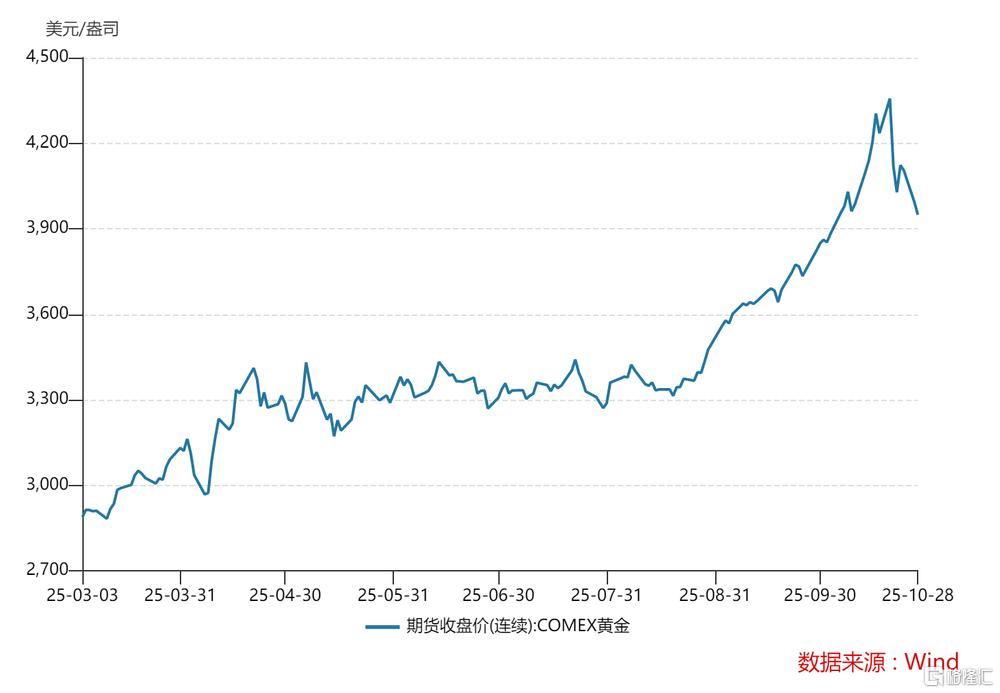
Core Viewpoint - The article discusses the recent surge and subsequent decline in gold prices, suggesting that while gold has not yet peaked, it has moved past its explosive growth phase and should now be viewed more as a wealth protection tool rather than a high-return investment vehicle [4][25]. Market Sentiment - There is an increasing bearish sentiment in the market, with approximately 52,000 put options accumulated in the $4000-$3900 range [3]. - Rumors indicate that the Central Bank of the Philippines may sell gold, which has further intensified bearish sentiment [3]. Historical Context - Gold prices have historically surged during periods of energy price instability and geopolitical tensions, such as the oil crises in the 1970s and the financial crisis in the early 2000s [8][12][13]. - The article highlights that gold's price movements are often correlated with the stability of the dollar and energy prices, suggesting that disruptions in these areas can lead to significant increases in gold prices [7][14]. Current Economic Environment - The article notes that the current economic landscape is characterized by rising fiscal deficits and monetary expansion, which could lead to inflationary pressures [15]. - The U.S. fiscal deficit is projected to exceed $2.2 trillion, with other major economies also facing unprecedented fiscal pressures [15][18]. Gold's Role in Investment Strategy - Gold is increasingly being viewed as a hedge against market risks rather than a primary investment tool, especially in light of rising geopolitical tensions and central banks' increasing gold reserves [21][25]. - The article suggests that the logic for gold investment has shifted, with central banks becoming key players in the gold market, altering traditional pricing dynamics [21][22]. Future Outlook - While the long-term outlook for gold remains positive due to ongoing central bank purchases and structural risks, the short-term drivers for steep price increases are weakening [22][23]. - Investors are advised to adopt a cautious approach, focusing on low-cost entry points rather than chasing high prices, especially given the potential for volatility in risk assets [27][28].

把人民至上作为推进共同富裕的根本遵循
Huan Qiu Shi Bao· 2025-10-31 04:24
Group 1 - The core viewpoint emphasizes the importance of improving and safeguarding people's livelihoods as a key focus of the "15th Five-Year Plan" [1][7] - The plan aims to enhance public products and services, balancing economic vitality with social inclusion and ecological stability [8][12] - The government will prioritize high-quality employment and income distribution reforms to ensure social equity [3][11] Group 2 - The "15th Five-Year Plan" highlights the need for investment in human capital to adapt to the challenges posed by artificial intelligence and emerging technologies [4][13] - There is a focus on improving healthcare systems and increasing life expectancy, with a target of reaching an average life expectancy of 80 years [5][6] - The plan includes measures to ensure equal access to basic public services, addressing regional disparities and enhancing social mobility [6][10] Group 3 - The strategy involves strengthening the collaboration between industry and employment, promoting short-term skills training to meet market demands [2][11] - The plan aims to innovate asset accumulation systems to optimize income distribution and support low-income groups [3][12] - The government will enhance public investment in healthcare, education, and social security to foster economic resilience and social cohesion [9][12]
负熵、牛市和趋势投资(策略哲思系列之一):股市中的正反馈机制
ZHESHANG SECURITIES· 2025-10-24 07:57
Core Insights - The report emphasizes the presence of positive feedback mechanisms in the stock market, including herd behavior, incremental capital inflows, and leverage trading as amplifiers of trends [1][2][3] - It suggests maintaining high confidence in the current systematic slow bull market while cautiously avoiding increased volatility in high-positioned sectors [6][4] Understanding Positive Feedback - Positive feedback is characterized as a "negative entropy" accumulation, explaining why prices can temporarily deviate from fundamentals, leading to accelerated trends in both bull and bear markets [2][4] - The mechanisms driving positive feedback include behavioral psychology, trading systems, buyer incentives, and the cyclical behavior of listed companies [3][4] Switching Between Strategies - Investors are encouraged to switch between trend-following and reversal strategies based on market conditions, which can help identify signals of market overheating or cooling [4][5] Investment Recommendations - The current A-share market is in a systematic slow bull phase, with expectations of continued incremental capital inflows and wealth effects [6][28] - It is advised to maintain a balanced style allocation while increasing the decision weight of mean-reversion factors [6][42] Sources of Positive Feedback Mechanisms - Herd behavior and incremental capital inflows are driven by fear of missing out and the anxiety of being left behind, leading to a self-reinforcing cycle in bull markets [28][29] - Leverage trading acts as a trend amplifier, where rising stock prices lead to increased borrowing and further price increases [37][38] Market Dynamics - The report highlights that in bull markets, positive feedback can lead to significant price increases, while in bear markets, it can result in accelerated declines [26][40] - The relationship between leverage and market trends is crucial, as high leverage can exacerbate price movements in both directions [42][43]