
财政预算管理

Search documents
关于四川省2025年预算执行情况和2026年预算草案的报告
Xin Lang Cai Jing· 2026-02-27 22:32
Core Viewpoint - The Sichuan Provincial Government presented the 2025 budget execution report and the 2026 budget draft, highlighting stable revenue growth, balanced expenditures, and ongoing support for economic development and social welfare initiatives. Budget Execution in 2025 - The total local general public budget revenue reached 585.39 billion yuan, an increase of 3.9% year-on-year, with tax revenue contributing 373.21 billion yuan, up 3.6% [2][3] - The total general public budget expenditure was 1.36976 trillion yuan, growing by 1.9%, which is above the national average, supporting key areas such as infrastructure and social welfare [3][4] - The overall budget execution achieved balance, with total revenue and expenditure both at 1.69691 trillion yuan, ensuring fiscal stability [4] Government Fund Budget - The government fund budget revenue was 378.93 billion yuan, a slight increase of 0.7%, while expenditures decreased by 1.8% to 591.86 billion yuan [5] - Land transfer revenue was 314.7 billion yuan, down 1.1%, indicating challenges in this revenue stream [5] State-owned Capital Operating Budget - The state-owned capital operating budget revenue was 22.7 billion yuan, up 12.5%, with expenditures of 9.26 billion yuan, reflecting a 2% increase [6] Social Insurance Fund Budget - The social insurance fund budget revenue reached 721.09 billion yuan, increasing by 5.6%, while expenditures were 635.11 billion yuan, up 6.5% [7] Local Government Debt - In 2025, local government bonds issued totaled 527.73 billion yuan, focusing on infrastructure projects, with the total government debt reaching 28.015 trillion yuan, an increase of 3.9861 trillion yuan from the previous year [9][10] Key Fiscal Work in 2025 - The government implemented various strategies to expand domestic demand, including issuing special bonds for over 2,400 projects and supporting consumption initiatives that generated over 166 billion yuan [11] - Significant funding was allocated for technological development, with 41.12 billion yuan supporting 145 key projects [12] - The government focused on urban-rural integration, with 158.7 billion yuan allocated for housing projects and agricultural modernization [13] Social Welfare and Development - A total of 2.4694 trillion yuan was allocated for 30 key social welfare projects, with a 5.2% increase in funding for social policies [14] - The government emphasized cultural and tourism development, allocating 5 billion yuan to enhance tourism services and promote local culture [15] Environmental Protection Initiatives - The government allocated 51.9 billion yuan for ecological projects, including pollution control and forest conservation [16] 2026 Budget Draft Overview - The 2026 budget anticipates a general public budget revenue of 597.1 billion yuan, a 2% increase, with total expenditures projected at 1.41369 trillion yuan, up 3.2% [32] - The government plans to issue 161.9 billion yuan in new debt to support economic development, maintaining debt levels within approved limits [37] Principles for 2026 Budget Preparation - The budget will focus on optimizing revenue structure, enhancing expenditure efficiency, and ensuring fiscal safety while supporting social welfare and economic growth [25][26]
惠州发布审计整改情况,莞惠城际项目多计多付2600多万元
Nan Fang Du Shi Bao· 2026-01-09 16:20
Core Insights - The audit report from Huizhou's Audit Bureau indicates a 100% completion rate for issues identified in the 2024 budget execution audit, with significant financial recoveries and savings achieved through corrective actions [1][2] Financial Management and Audit Findings - The audit revealed that the city-level general public budget expenditure amounted to 3.594 billion, lacking detailed allocation to specific departments and projects [3] - Issues included uncollected fees totaling over 60 million for sewage and garbage treatment, and unauthorized expenditures due to unanticipated budget adjustments [3][4] - The audit identified over 26 million in overpayments related to the Dongguan-Huizhou Intercity project, with specific overcharges detailed [6][7] Corrective Actions and Improvements - The city has implemented measures to recover outstanding fees, with full collection of sewage and garbage treatment fees in the Daya Bay area [4][5] - The audit findings prompted a reduction in the number of budgeted projects from 17 to 14 for 2025, enhancing budget management [4] - Significant recoveries from overpayments have been made, with 387.86 million retrieved and additional adjustments in ongoing projects [14] Policy and Program Audits - The audit highlighted issues in the implementation of rural development projects, with funds totaling 1.14691 million unallocated for cultural heritage protection and tourism development [10] - Corrective measures have been taken to ensure timely disbursement of funds, with 304.47 million allocated for various cultural and tourism initiatives [11] Asset Management and Compliance - The audit of state-owned enterprises revealed overpayments exceeding 16.81 million due to non-compliance with contract terms [13] - Actions have been taken to rectify these issues, including the recovery of overpayments and improved asset management practices [14] Water Resource Management - A total of 102 construction projects were found to lack necessary water and soil conservation approvals, with associated fees uncollected [15] - Corrective actions included the approval of 58 projects and the collection of 13.92 million in conservation fees [16] Procurement and Contract Management - The audit identified 46 procurement projects with delayed contract signing, involving 1.69688 million in funds [18] - Recommendations for improved budget management and compliance with procurement regulations have been made following the audit findings [18]
西区街道:人大代表听取财政及经济运行情况报告
Sou Hu Cai Jing· 2025-08-23 09:42
Core Viewpoint - The meeting organized by the West District Street People's Congress aims to enhance the supervisory role of representatives regarding the financial situation and economic performance of the street office for 2024 and the first half of 2025 [1][3]. Financial Overview - City representatives reviewed the "2024 West District Street Financial Settlement Report and Draft" and the "West District Street 2025 First Half Budget Execution Report" to understand the general public budget revenues and expenditures, fiscal income, and annual forecasts [3]. - The representatives acknowledged the street's adherence to a stable and progressive work approach, implementing strict financial management, optimizing expenditure structures, and ensuring the protection of basic public services [3]. Recommendations for Future Work - Representatives suggested strengthening budget management to improve the quality of budget preparation and execution, focusing on revenue generation and expenditure control to maintain fiscal stability [4]. - Emphasis was placed on prioritizing public welfare, particularly in education, healthcare, and social security, while supporting infrastructure development and rural revitalization [5]. - There is a call for standardized government debt management, ensuring repayment responsibilities are met, curbing the increase of hidden debts, and ensuring efficient use of bond funds [6]. Conclusion - The meeting concluded with representatives committing to enhance budget review supervision, promote transparent budgeting, and ensure that fiscal resources are allocated effectively to meet public needs [6].

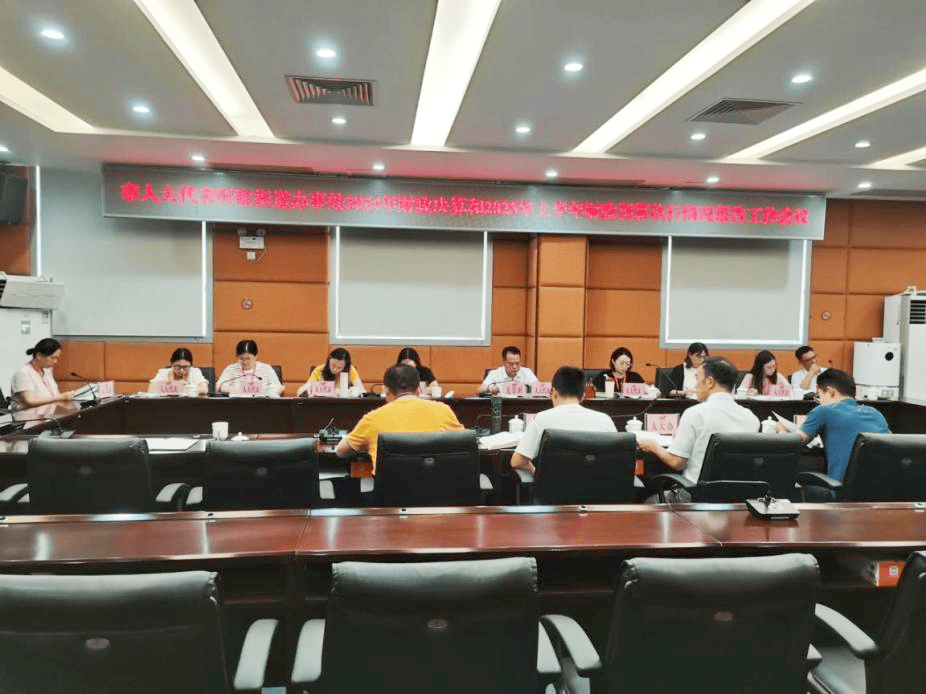
四川省第十四届人民代表大会预算委员会关于四川省2024年省级决算草案审查结果的报告——2025年7月28日在四川省第十四届人民代表大会常务委员会第二十次会议上
Si Chuan Ri Bao· 2025-08-07 00:48
Core Viewpoint - The report on the 2024 provincial budget execution and financial audit highlights the overall positive performance of the provincial budget execution, while also identifying several challenges and areas for improvement in fiscal management and revenue generation [4][5]. Provincial Budget Execution - The provincial general public budget revenue is 97.57 billion yuan, achieving 96.3% of the budget, with a year-on-year decrease of 1.8% [2] - The total revenue, including central transfers and other sources, amounts to 990.37 billion yuan [2] - The provincial general public budget expenditure is 224.19 billion yuan, completing 85.5% of the budget, with an 8.3% increase compared to the previous year [2] - The total expenditure, including transfers and debt repayments, is 952.25 billion yuan, resulting in a carryover fund of 38.12 billion yuan [2] Government Fund Budget - The provincial government fund budget revenue is 13.19 billion yuan, exceeding the budget by 15.4%, with a total revenue of 46.92 billion yuan [2] - The expenditure is 1.608 billion yuan, completing 70% of the budget, leading to a carryover fund of 689 million yuan [2] State-owned Capital Budget - The provincial state-owned capital operating budget revenue is 3.13 billion yuan, achieving 125.3% of the budget, with a total revenue of 3.87 billion yuan [3] - The expenditure is 1.64 billion yuan, completing 70.6% of the budget, resulting in a carryover fund of 680 million yuan [3] Social Insurance Fund Budget - The provincial social insurance fund budget revenue is 622.72 billion yuan, achieving 101.1% of the budget, with a total revenue of 1,363.99 billion yuan [3] - The expenditure is 560.71 billion yuan, completing 99.2% of the budget, leading to a cumulative surplus of 791.1 billion yuan [3] Debt Management - The total local government debt at the end of 2024 is 2,402.89 billion yuan, with the provincial debt at 140.65 billion yuan, both within the approved limits [3] Recommendations for Improvement - The budget committee suggests enhancing budget management and execution, addressing issues such as revenue generation challenges and debt repayment pressures [5] - Recommendations include strengthening performance evaluation in budget management, improving the quality of budget preparation, and ensuring timely execution of budgetary policies [5][6][7][8]
政策高频 | 中央财经委员会第六次会议召开(申万宏观·赵伟团队)
赵伟宏观探索· 2025-07-13 03:33
Group 1 - The Central Economic Committee emphasized the need to deepen the construction of a unified national market and promote high-quality development of the marine economy, focusing on legal governance of low-price competition and enhancing market systems [1][2] - The People's Bank of China proposed to strengthen monetary policy adjustments, maintain liquidity, and support financial institutions in increasing credit supply to stabilize economic growth [4][5] - The State Council issued a plan to improve the credit repair system, aiming to create a better social credit environment and facilitate the normal operation of restructured enterprises [6][7] Group 2 - The State Council highlighted the importance of accelerating technological breakthroughs and integrating technological innovation with industrial innovation to enhance competitiveness [8][9] - The National People's Congress Finance and Economic Committee reviewed the 2024 central budget, identifying issues in budget management and suggesting reforms to enhance fiscal policy effectiveness [11][12]
第十四届全国人民代表大会财政经济委员会关于2024年中央决算草案审查结果的报告
news flash· 2025-06-27 10:34
Group 1 - The central financial and economic committee highlights issues in the 2024 central budget management and audit report, indicating a lack of standardization in budget management and instances of excessive tax collection in some regions [1] - There are significant discrepancies between actual revenue and expenditure compared to the budget, suggesting ineffective targeting and execution of certain fiscal policies [1] - Government investment fund allocation and management are criticized for being insufficiently regulated, with some special bond projects lacking proper oversight, leading to concerns about investment efficiency [1] Group 2 - The effectiveness of budget performance management is under scrutiny, with calls for better utilization of evaluation results [1] - Local fiscal revenue and expenditure conflicts are prominent, with grassroots entities facing significant pressure to maintain "three guarantees" (basic living, education, and healthcare) [1] - Some local departments are not adequately enforcing financial discipline, resulting in frequent occurrences of unauthorized new hidden debts [1]