贸易摩擦风险

Search documents
【UNforex财经事件】避险资金持续流入 黄金多头格局延续
Sou Hu Cai Jing· 2026-01-21 09:33
Core Viewpoint - The international gold price continues to rise, reaching a new historical high due to escalating geopolitical tensions and increased global trade friction, with significant inflows of safe-haven funds supporting a bullish trend in gold [1][2] Group 1: Geopolitical and Economic Factors - The market's risk appetite has notably declined, primarily driven by U.S. President Trump's strong stance on Greenland, which has led to increased tensions in U.S.-Europe relations and raised tariff risks [1] - The uncertainty surrounding trade policies has amplified volatility in global financial markets, prompting investors to seek traditional safe-haven assets like gold [1] - The U.S. dollar index has weakened, reducing the relative attractiveness of dollar-denominated assets and creating a favorable environment for gold prices [1] Group 2: Central Bank Activities - Central banks are continuing to increase their gold holdings, with the Polish central bank recently approving a plan to buy up to 150 tons of gold, aiming to elevate its reserves to 700 tons [2] - The rationale for increasing gold reserves includes the absence of credit risk and immunity from foreign monetary policies, which enhances the robustness of national balance sheets amid rising global financial uncertainty [2] - The ongoing trend of central banks accelerating gold purchases is a significant structural force driving the upward movement of gold prices [2] Group 3: Market Outlook - The focus is shifting to the upcoming U.S. Personal Consumption Expenditures (PCE) price index, a key inflation indicator that will provide important insights into future monetary policy [2] - Despite stabilizing expectations regarding Federal Reserve policies, the logic of "selling U.S. assets" and persistent safe-haven sentiment are likely to keep gold prices elevated near historical highs in the short term [2]
9月进出口数据解读:为何进出口数据再超预期?
Yin He Zheng Quan· 2025-10-13 09:22
Group 1: Import and Export Data Overview - In September, total exports reached 328.6 billion, with a growth rate of 8.3% year-on-year, while imports were 238.1 billion, growing by 7.4%[1] - The rebound in export growth is supported by global economic recovery and market diversification, alongside a low base effect from the previous year[1] - The global manufacturing PMI remained above the neutral line, with September's PMI at 50.8%[1] Group 2: Factors Influencing Export Growth - Market diversification continues to support export growth, with significant increases in exports to regions like APEC (up 56.4%) and ASEAN (up 25.9%) in September[1] - The low base effect from last year contributed to the improved export figures, with September 2022 showing a decline of 2.3%[1] Group 3: Import Dynamics - Import growth exceeded historical levels, driven by improved demand and China's proactive opening-up policies[1] - In September, imports from Africa, ASEAN, and the EU showed significant increases, while imports from the US saw a reduced decline[1] - The low base effect also played a role in the recovery of import figures, with September 2022 showing a decline of 0.13%[1] Group 4: Future Outlook and Risks - The export outlook may face pressure due to potential trade friction and a forecasted global economic slowdown, with BIMCO projecting a growth rate of only 1.6% for 2025-2026[1] - The possibility of marginal increases in tariff levels between China and the US post-November could further impact export dynamics[1]
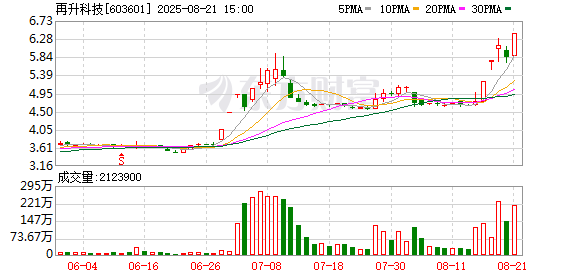
西南证券给予再升科技买入评级,2025年半年报点评:海外结构优化,业绩阶段承压
Mei Ri Jing Ji Xin Wen· 2025-08-21 07:23
Core Viewpoint - Southwest Securities issued a report on August 20, giving a "buy" rating to Zai Sheng Technology (603601.SH, latest price: 6.41 yuan) based on several factors [2]. Group 1: Demand and Market Conditions - There is a phase decline in demand, but overseas structural optimization is taking place [2]. - The new national standards are expected to expand demand, leading to an overall optimization of the downstream industry [2]. Group 2: Financial Performance - The company is experiencing an increase in gross profit margin, although there is a rise in expense ratio [2].