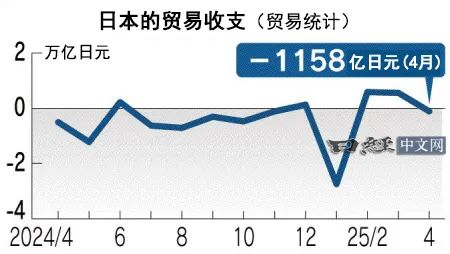
贸易收支顺差

Search documents
今夜!人民币,突发!
Zhong Guo Ji Jin Bao· 2026-02-16 16:33
Core Viewpoint - The offshore RMB exchange rate has strengthened, breaking the 6.89 mark, attributed to strong export growth and seasonal factors related to year-end bonuses [1]. Group 1: RMB Exchange Rate - On February 16, the offshore RMB exchange rate rose over 100 points, reaching a new high [1]. - Goldman Sachs forecasts a 3% appreciation in the nominal effective exchange rate of the RMB for this year [1]. - The appreciation of the RMB is partly due to seasonal factors, as companies repatriate funds to pay year-end bonuses before the upcoming Spring Festival [1]. Group 2: Trade Balance - A significant factor behind the RMB's appreciation is the record growth in trade surplus [1]. - The strong trade surplus supports the notion that the RMB can appreciate alongside robust export performance [1]. Group 3: Market Context - The U.S. stock market was closed for Presidents' Day, leading to lower trading volumes in the overall market [1]. - The A-share market was also closed for the Lunar New Year holiday, contributing to the sparse trading activity [1].

总统亲自喊话稳汇率!李在明:韩元有望两月内企稳回升至1400水平
智通财经网· 2026-01-21 06:51
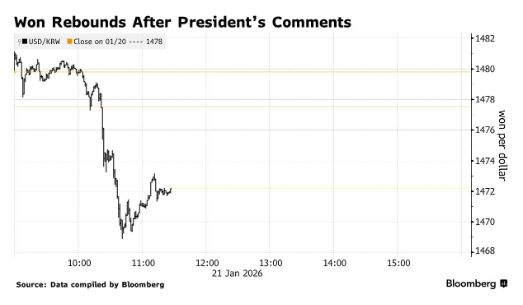
Group 1 - The South Korean President Lee Jae-myung stated that the long-pressured Korean won is expected to stabilize and recover in the next two months, with the exchange rate against the US dollar likely stabilizing around 1400 won [1] - The recent depreciation of the won is not unique to South Korea, as the Japanese yen is experiencing even more significant devaluation pressure [1] - Despite multiple government interventions and measures, the won has depreciated over 8% since the second half of 2025, approaching its lowest point since the global financial crisis [1] Group 2 - South Korea's commitment to invest $350 billion in the US under a trade agreement has raised concerns about its capital expenditure financing capabilities, leading to a postponement of this year's $20 billion investment commitment [3] - Retail investors in South Korea have shown a strong preference for US stocks, with their holdings reaching a record high of nearly $172 billion this month, contributing to the pressure on the won [3] - Lee Jae-myung noted that if the won depreciated at the same rate as the yen, the current exchange rate could reach around 1600 won per dollar, indicating that the won's performance is relatively strong [3] Group 3 - The ongoing geopolitical tensions, including actions related to Greenland by the US, have heightened global risk aversion, which could impact the won's performance [4] - If the trend of a weakening dollar continues due to the Greenland situation, there may be further room for the won to rebound [4] Group 4 - Lee Jae-myung also provided positive signals for the stock market, suggesting that the benchmark index could reach the promised target of 5000 points during his campaign [5] - He emphasized that the valuation of the South Korean stock market is significantly undervalued compared to Taiwan and other emerging markets [5]
日本对美出口额4个月来首次减少
3 6 Ke· 2025-05-21 09:22
Group 1: Trade Statistics with the US - In April, Japan's exports to the US amounted to 1.7708 trillion yen, a decrease of 1.8%, marking the first decline in four months [1] - The decline in exports is attributed to the tariffs imposed by the Trump administration, including a 10% reciprocal tariff and a 25% tariff on Japanese automobiles and steel [1] - Despite the decrease in export value, the volume of automobile exports increased by 11.8%, reaching 125,817 units, continuing a four-month growth trend [1] Group 2: Import Statistics from the US - Japan's imports from the US in April totaled 990.2 billion yen, a decrease of 11.6%, influenced by high-priced and volatile aircraft imports [2] - Liquefied natural gas (LNG) imports fell by 50.7%, and coal imports decreased by 43.8% [2] - The trade surplus with the US was 780.6 billion yen, an increase of 14.3%, continuing a four-month growth streak [2] Group 3: Overall Trade Balance - Japan experienced a trade deficit of 115.8 billion yen in April, the first deficit in three months, with exports growing by 2.0% to 9.1571 trillion yen and imports decreasing by 2.2% to 9.273 trillion yen [2] - Exports of semiconductor electronic components, food, and pharmaceuticals increased, while coal and crude oil imports decreased [2] - Coal import volume decreased by 8.9%, and import value decreased by 38.6%, while crude oil import volume increased by 0.2% but value decreased by 10.1% [4]