费曼学习法

Search documents
费曼学习法
猛兽派选股· 2026-02-06 08:39
Core Concept - The Feynman Learning Method, proposed by Nobel laureate Richard Feynman, emphasizes that if one cannot explain a concept in simple terms, they do not truly understand it [1] Group 1: Learning Methodology - The Feynman Learning Method promotes active learning through teaching, which significantly enhances knowledge retention rates, with a retention rate of up to 90% when teaching others compared to only 5% when passively listening [1] - The process of outputting knowledge forces individuals to clarify their understanding, aiming for simplicity and thoroughness in explanations [2] Group 2: Market Insights - Current market conditions indicate a decline in trading volume, dropping below the 25-day average, leading to uncertainty about whether the market will experience sideways movement or continued decline [2] - Human behavior in the market is primarily driven by emotions, which have cyclical fluctuations, suggesting that significant opportunities may arise after a market correction [2] - The market is often incorrect, as the majority of participants tend to make mistakes, indicating that collective errors do not lead to accurate outcomes [2]


我发现,孩子一定要有输出型爱好
Jing Ji Guan Cha Bao· 2026-01-22 01:55
Core Idea - The article emphasizes the importance of cultivating "output-oriented" hobbies for children, suggesting that these hobbies are more beneficial than enrolling them in multiple tutoring classes. It argues that active engagement and expression are crucial for a child's development, rather than passive information intake. Group 1: Importance of Output-Oriented Hobbies - Cultivating an output-oriented hobby is more effective than enrolling a child in ten tutoring classes [3] - Children today receive excessive input information, leading to a lack of active engagement and expression [4][5] - Long-term passive input can result in a decline in expression, thinking, and action abilities [6][7] Group 2: Benefits of Output-Oriented Hobbies - Output-oriented hobbies enhance core soft skills such as expression, creativity, and practical abilities [13][14] - These hobbies provide children with a sense of control and motivation, transforming their learning from passive to active [16][18] - The ability to express and apply knowledge is increasingly valuable in society, making output-oriented skills essential for future success [20][22] Group 3: Methods to Cultivate Output-Oriented Hobbies - Suggested activities include family presentations, story creation, and hands-on projects to encourage expression and creativity [24][25][26][27] - Outdoor activities can help develop resilience and problem-solving skills while promoting physical output [28][29] - Engaging children in teaching others can reinforce their understanding and expression of knowledge [31][32][33]
费曼学习法落地 课堂刮起“主动”风
Xin Lang Cai Jing· 2026-01-16 00:33
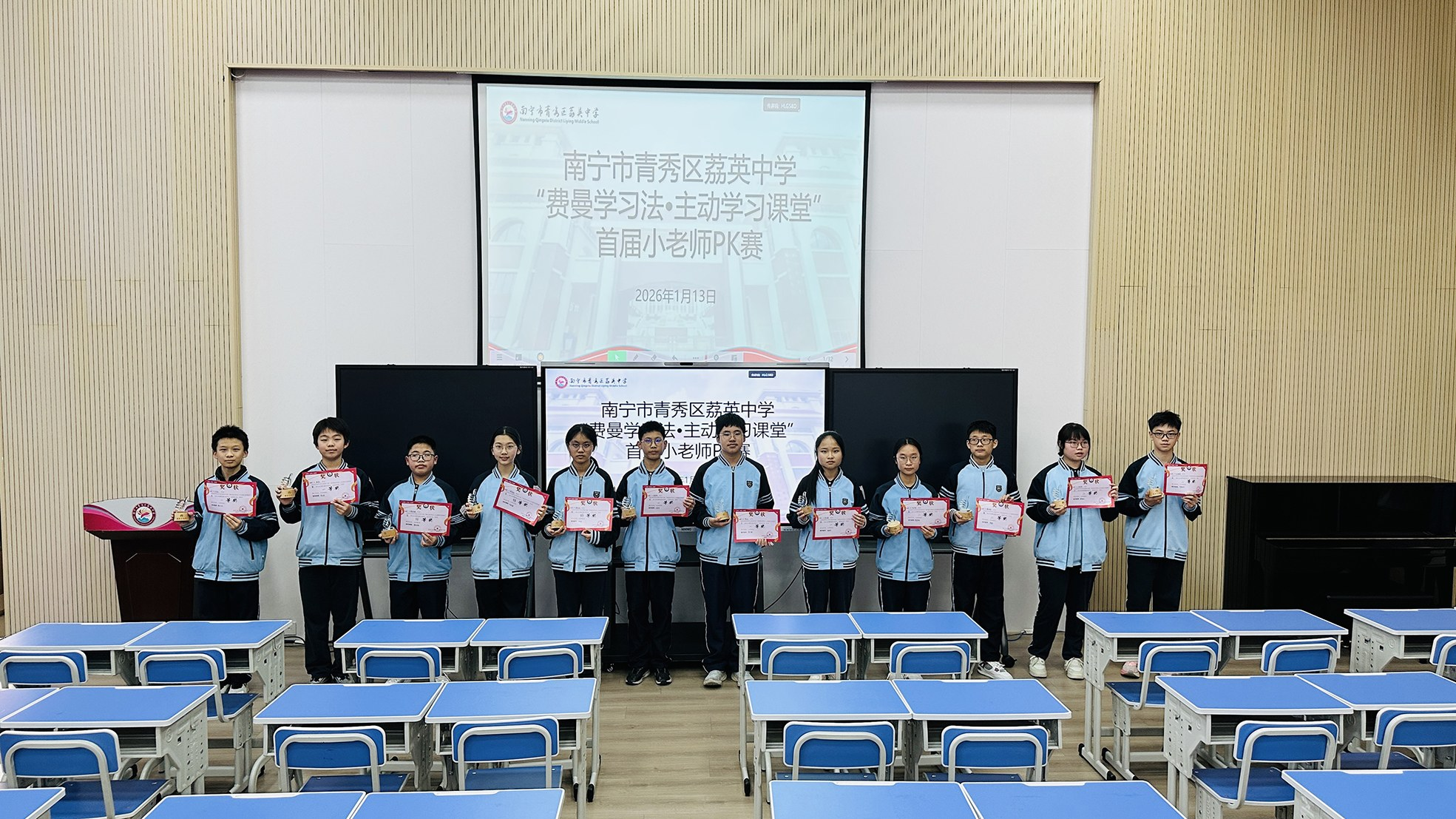
Core Viewpoint - The article highlights the successful implementation of the "Feynman Learning Method" at Li Ying Middle School in Nanning, showcasing a student-centered approach to education through the "Little Teacher" PK competition, which encourages active learning and knowledge sharing among students [4][7]. Group 1: Event Overview - The first "Little Teacher" PK competition was held on January 13, featuring students taking on teaching roles to promote active learning and knowledge transfer [4]. - The event attracted participation from over a hundred students in the seventh grade, focusing on the transition from primary to middle school [7]. Group 2: Student Experience - Participants, referred to as "Little Teachers," demonstrated their teaching skills in various subjects, enhancing their language expression, logical thinking, and classroom organization abilities [5][6]. - Students reported significant improvements in their learning efficiency and engagement, transitioning from passive listeners to active presenters [5]. Group 3: Educational Impact - The competition is part of a broader initiative to enhance student autonomy and engagement in learning, aligning with the school's educational reforms [7][8]. - The school aims to cultivate a unique educational model that emphasizes student participation and critical thinking, contributing to the overall development of students' core competencies [8]. Group 4: Institutional Recognition - The event is recognized as a significant achievement in the school's efforts to reform classroom teaching and explore innovative educational models [8]. - Local education authorities have praised the Feynman Learning Method for its effectiveness in promoting student-centered learning and enhancing classroom participation [8].
想要期末逆袭?心理学帮你破局
Xin Lang Cai Jing· 2026-01-10 00:55
Core Insights - The article emphasizes the importance of adjusting one's mindset, utilizing effective study strategies, and leveraging AI tools to enhance academic performance during exam periods [1][2][3]. Group 1: Mindset Adjustment - It is crucial to find an optimal level of stress for effective learning, as both excessive anxiety and complete relaxation can hinder performance [1]. - Students should aim to create a balanced state of mind by setting specific goals and providing themselves with positive feedback to regain motivation [1]. Group 2: Effective Study Strategies - Active recall is more effective than passive repetition; students should test themselves on the material rather than just rereading it [2]. - Adequate sleep is essential for memory consolidation, and students should prioritize rest over all-night study sessions before exams [2]. - Engaging in physical movement and changing study environments can enhance memory retrieval during exams [2]. Group 3: Leveraging AI - AI can significantly improve academic performance, but over-reliance on it may lead to procrastination and hinder memory retention [3]. - Students should use AI as a supportive tool rather than a crutch, asking for hints or clarifications instead of direct answers [3]. - Maintaining critical thinking and verifying information from authoritative sources is essential when using AI tools for learning [3].
打造智能工作台——江苏交通执法率先开启“AI+”实战新模式
Yang Zi Wan Bao Wang· 2025-12-11 06:51
Core Insights - Jiangsu Province Transportation Comprehensive Law Enforcement Bureau has launched the first intelligent workstation in the national traffic law enforcement sector, integrating AI technology to enhance law enforcement efficiency and credibility [1] Group 1: AI Integration in Law Enforcement - The intelligent workstation utilizes AI to consolidate over a thousand regulations, typical cases, and authoritative interpretations, allowing law enforcement personnel to resolve on-site questions instantly and handle complex cases accurately [1][2] - The "Transportation Law Enforcement Exclusive Knowledge Base" is designed to be an interactive system that understands natural language, enabling officers to describe scenarios conversationally and receive structured, case-supported responses [2] Group 2: Training and Learning Enhancement - AI serves not only as a legal advisor but also as a training tool, employing the Feynman learning method to facilitate immersive practice sessions for law enforcement personnel [3] - Officers can engage in simulated scenarios where AI poses challenging questions, providing immediate feedback and suggestions for improvement, thus transforming regulatory learning into an interactive experience [3] Group 3: Continuous Improvement and Impact - The intelligent workstation is continuously evolving with frequent use and input from law enforcement personnel, standardizing enforcement measures across the province and enhancing legal literacy and case handling efficiency [4] - The initiative aims to create a smarter, more precise, and efficient approach to safeguarding transportation safety and smoothness in Jiangsu Province [4]
在这个脑腐危及人人的时代,你不变笨就是最高级的自律
洞见· 2025-11-05 12:37
Core Viewpoint - The article discusses the phenomenon of "brain rot," a term selected by Oxford University as the word of the year for 2024, which refers to the decline of independent thinking, focus, critical thinking, and cognitive depth in the face of overwhelming information [5][6]. Group 1: The Impact of Information Overload - The article highlights how individuals are inundated with information yet struggle to form their own insights, leading to a crisis of thought [4][6]. - An experiment involving adults showed that those who limited their exposure to short videos had a significantly higher retention rate of information compared to those who consumed them excessively [10][11]. - Children exposed to excessive television showed a marked decline in creativity and detail in their drawings, indicating that fragmented information consumption affects cognitive development [12][14]. Group 2: The New Ignorance Era - The article references David Brooks, who argues that the internet has not improved human ignorance but has instead ushered in a "new ignorance era," where superficial knowledge replaces deep understanding [16][17]. - It points out that many individuals can recall trivial internet trends but struggle with deeper intellectual engagement, reflecting a shift in thinking habits rather than a decline in ability [18][19]. Group 3: Strategies to Combat Brain Rot - The article proposes a "brain shaping plan" to regain cognitive control, which includes actively filtering information sources, engaging in deep reading, and establishing "phone-free" zones to enhance focus [29][30][32]. - It emphasizes the importance of the Feynman Technique, which involves explaining concepts clearly to others as a measure of understanding [34]. - Encouraging cross-disciplinary learning is suggested as a way to foster innovative thinking and break down cognitive barriers [35].

从大厂管理层到独立开发者!AI技术拓宽新职业边界
Zheng Quan Shi Bao· 2025-10-14 05:07
Core Insights - The article discusses the transformative impact of AI technology on career opportunities, highlighting the shift from traditional roles to independent developer positions enabled by AI tools [1][3][4]. Group 1: Career Transformation - AI tools have significantly lowered the skill barriers for independent developers, allowing individuals without extensive programming knowledge to create complex applications [3][4]. - The experience gained in traditional roles can enhance the effectiveness of new career paths, as demonstrated by the case of a former user researcher who successfully transitioned to an independent developer [4]. Group 2: Expanding Employment Demographics - The emergence of new careers driven by AI technology has eliminated age and educational barriers, enabling younger individuals and those with no prior experience to enter the tech field [6][8]. - A notable example includes a high school student who, with the help of AI, was able to participate in a hackathon and gain recognition, showcasing the potential for youth in the tech industry [6]. Group 3: Evolving Work Models - The article emphasizes a shift towards flexible work models where employment is centered around ideas and AI tools rather than fixed roles and teams [8]. - The diversification of income streams for independent developers, such as through content creation and app monetization, reflects a broader trend towards stability in new career paths [8].
量产CEO这事儿,是怎么被宝洁办成的?
Sou Hu Cai Jing· 2025-09-26 01:05
Core Insights - Procter & Gamble (P&G) has announced a change in its CEO, with Jon Moeller stepping down and Shailesh Jejurikar, an internal candidate, taking over. Jejurikar has been with the company for 36 years and has risen through the ranks to become the global COO [1] - P&G is recognized for its internal talent development system, which has produced numerous executives not only for itself but also for other major companies in the consumer goods sector, making it a "CEO factory" [1] Talent Development Mechanism - P&G's recruitment process emphasizes identifying innate traits through its famous "P&G Eight Questions," focusing on leadership, initiative, purpose, and persuasion [3][4] - The company prioritizes candidates with strong drive, resilience, and leadership qualities, which are considered more critical than acquired skills [4][5] - P&G's approach to talent development includes a "coach" model, where managers guide employees through questioning and discussions, fostering independent thinking and problem-solving [12][14] Corporate Culture - P&G's corporate culture encourages managers to engage directly with retail environments, ensuring they remain connected to consumer insights [13] - The company promotes a safe environment for knowledge sharing, which is essential for effective coaching and mentorship [20][21] - Employees are motivated to become coaches themselves, as this aligns with their career advancement goals and contributes to a supportive workplace culture [18][20] Recruitment and Retention Strategies - P&G's recruitment strategy focuses on finding candidates who demonstrate a genuine interest in their work and a willingness to reflect on their experiences [6][7] - The company recognizes that high-quality talent is less motivated by financial incentives and more by the opportunity for personal and professional growth within a supportive environment [9][10] - P&G's internal promotion paths are a significant draw for potential employees, as they can see clear career advancement opportunities [10][11] Lessons for Other Companies - Other companies, especially in the tech sector, can learn from P&G's structured approach to talent development and the importance of fostering a culture that values internal growth and mentorship [23][24] - The emphasis on quality over speed in talent development can lead to more effective outcomes, as seen in P&G's practices [24] - Companies should focus on creating a supportive environment that encourages employees to share knowledge and grow together, which can enhance overall organizational performance [20][21]