资源战

Search documents
1.2黄金暴走 涨看4400!
Sou Hu Cai Jing· 2026-01-02 07:17
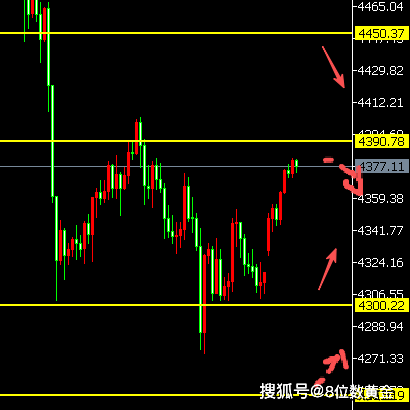
Core Viewpoint - The gold market has experienced significant volatility, with a recent sharp decline followed by a strong rebound, indicating a return of bullish sentiment as it aims for the 4400 level. Group 1: Market Movements - Gold prices recently dropped to new lows but rebounded strongly, stabilizing around 4300 and aiming for 4400 [1][6] - After a rapid increase, gold has shown a tendency to correct, with potential resistance at 4390 and 4450 [3][6] - The market is currently in a high position adjustment phase, with support levels at 4300 and 4250 [6][5] Group 2: Influencing Factors - Institutional selling has contributed to the recent decline in precious metals, particularly influenced by actions from the Chicago Mercantile Exchange [7] - Political pressure from Trump on the Federal Reserve has raised concerns about its independence, impacting the dollar and benefiting gold [8] - Upcoming economic indicators, such as the December PMI, are expected to provide clarity on the U.S. economy, which could affect market dynamics [9] Group 3: Investment Strategy - Investors are advised to focus on entry and exit points to maximize profits, emphasizing the importance of experience and risk management [9] - The gold trading team claims a high accuracy rate of 85% or more, suggesting a strategy of following experienced traders for better outcomes [9]

新一轮资源战!美国疯狂囤积全球铜矿,业内大佬预警涨价只是开始
Sou Hu Cai Jing· 2025-12-10 10:29
Group 1 - Copper has emerged as a star in the global commodity market, with LME copper prices surpassing $11,700 per ton, marking a historical high [1][3] - The price surge is attributed to multiple factors, including U.S. strategic stockpiling and domestic production cuts, reshaping the global copper market dynamics [3][12] - Domestic copper futures also showed strength, with the Shanghai copper main contract closing up 1.54% at 92,970 yuan per ton, reflecting a bullish sentiment in the market [5][7] Group 2 - The continuous influx of capital is a direct driver of the copper price surge, with a strong bullish sentiment leading to increased long positions in the market [7][9] - The rise in copper prices is not an isolated phenomenon; it is accompanied by increases in precious metals like gold and silver, enhancing copper's financial premium [9][11] - The supply-demand imbalance is a core engine for the sustained rise in copper prices, with U.S. stockpiling and domestic production cuts contributing to tightening supply [12][14] Group 3 - The U.S. strategic stockpiling is significantly altering global copper inventory structures, with expectations of potential tariffs on copper, leading to increased shipments to the U.S. [14][16] - Domestic production cuts are exacerbating supply pressures, with major copper mines facing high loss rates and reduced output growth [20][22] - Demand for copper is on the rise, driven by its essential role in renewable energy, electric vehicles, and data centers, ensuring steady growth despite macroeconomic fluctuations [22][31] Group 4 - Market analysts predict that LME copper prices could accelerate towards $12,000 per ton within the year, with potential short-term pauses due to various economic factors [25][29] - Companies in the copper sector, particularly those with overseas mining capabilities like Jincheng Mining, are expected to benefit significantly from the tightening supply [27][29] - Investors are advised to focus on high-demand segments, such as copper foil for integrated circuits and batteries, while being cautious of potential price corrections [29][31]

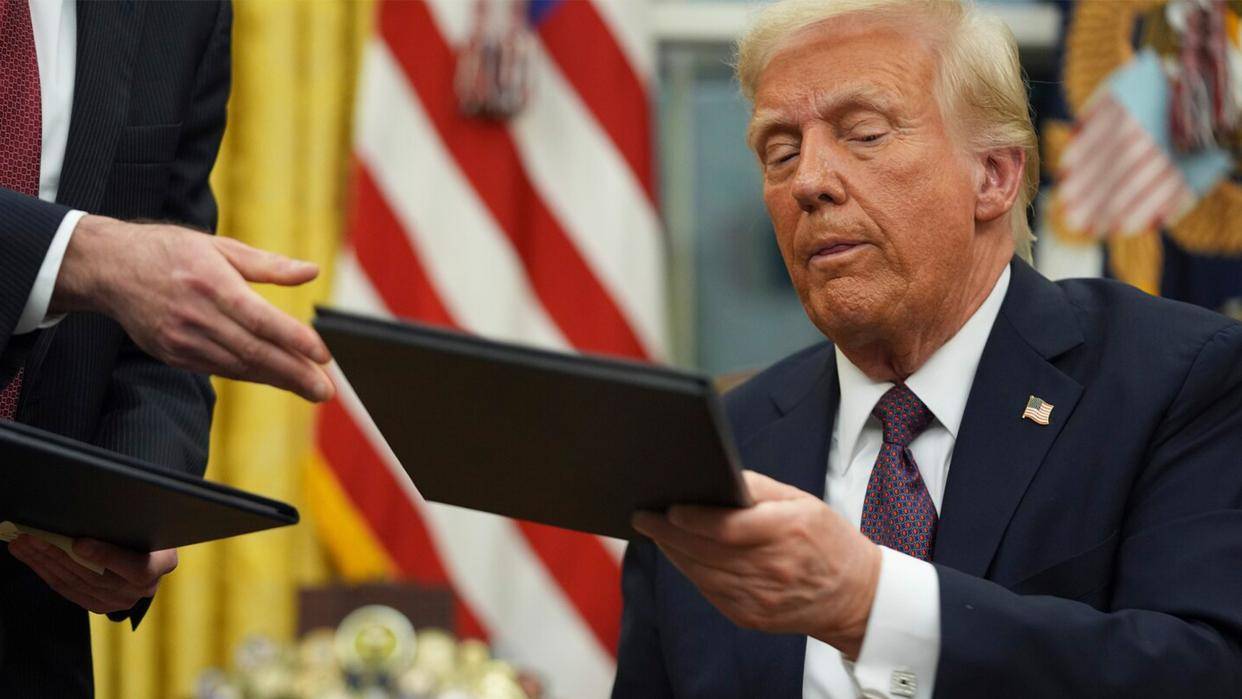
美国封存稀土矿23年,如今90%依赖中国,求取消限制被拒
Sou Hu Cai Jing· 2025-10-21 09:27
Core Viewpoint - The article discusses the escalating trade tensions between the U.S. and China, particularly focusing on the U.S. demand for China to lift restrictions on rare earth exports, highlighting the strategic importance of these resources for national security and technological advancement [1][15][39]. Group 1: U.S. Trade Policy and Strategy - Trump's assertion that "tariffs equal national security" reflects a desperate political maneuver rather than a solid strategy, indicating a loss of confidence in his administration's trade policies [3][5]. - The trade war has not yielded the expected benefits for the U.S., with rising costs for American businesses and dissatisfaction among allies, leading to a decline in Trump's domestic support [6][8]. - The focus on rare earths as a singular demand illustrates a shift from broader trade negotiations to a more desperate, point-specific strategy, revealing the diminishing options available to the U.S. [24][32]. Group 2: Importance of Rare Earths - China controls over 80% of global rare earth production, while the U.S. relies on imports for 90% of its rare earth needs, making this a critical issue for U.S. military and technological sectors [15][21]. - The U.S. has faced significant delays in developing domestic rare earth processing capabilities, with projects pushed back to 2026, underscoring the challenges in establishing alternative supply chains [15][17]. - The competition for rare earths is not merely an economic issue but a matter of national security, as these resources are essential for modern technology and military applications [15][33]. Group 3: China's Position and Strategy - China's restrictions on rare earth exports are part of a broader strategy to manage its resources sustainably and assert its position in global trade, rather than a targeted response to U.S. demands [17][19]. - The Chinese government has maintained a calm and resolute stance in negotiations, indicating a strong position in the face of U.S. pressure [19][39]. - The ongoing struggle over rare earths reflects a larger contest for defining future technological and industrial standards, with China increasingly positioning itself as a rule-maker rather than a rule-taker [35][39].