
越级消费

Search documents
重庆啤酒20260115
2026-01-16 02:53
Summary of Chongqing Beer Conference Call Industry Overview - The overall beer market in 2025 is expected to remain flat, with significant product innovations such as tea-flavored beer and one-liter packaging, and changes in distribution channels, particularly the rise of non-on-premise channels, which are growing rapidly. Online sales account for a low percentage of about 4-5% of total sales [2][6]. Company Performance and Strategy - Uusu beer has seen growth in both domestic and international sales, while Lebao has experienced three consecutive years of growth. However, the Chongqing and Dali brands are facing challenges. International brands like Carlsberg and local brands such as Fenghua Xueyue have achieved double-digit growth [2][4]. - The company plans to launch approximately 300 new products in 2024 to meet diverse consumer demands [2]. - The company emphasizes precise advertising spending and has increased the promotion of one-liter canned products, optimizing brand combinations and improving management efficiency to control costs [3][18]. - The dividend payout ratio is expected to remain around 90%-100% in the coming years, and the company is open to acquisitions that align with its industry chain [3][27]. Sales Channels and Consumer Trends - The beer market is currently in a mature state with no significant demand breakthroughs. The shift from on-premise to off-premise consumption is expected to continue, driven by technological advancements and changes in consumer habits [8][16]. - The company has observed a significant increase in canning rates, from approximately 18% in 2019 to nearly 29% by the third quarter of 2025, reflecting the growing importance of non-on-premise channels [16]. Product Innovation and Future Plans - The company is focused on continuous innovation in flavors, packaging, and sales models, with new products like tea-flavored beer and one-liter cans being introduced [9][10]. - The company has plans to launch non-alcoholic beer products and is exploring high-end products to increase unit prices, such as the one-liter can [10][11]. - Future product launches include Uusu brand's Jin Junmei tea beer and amber lager, as well as various regional products tailored to local market demands [10][11]. Cost Management and Raw Material Procurement - The company has locked in prices for major raw materials and packaging for the upcoming year, expecting cost savings on barley and other materials, with a slight increase in aluminum can prices having a minimal impact [13]. - The overall procurement cost savings are anticipated to positively contribute to gross margins [13]. Market Challenges and Opportunities - The company faces challenges in raising selling prices (SP) due to potential declines in overall demand, which is a significant concern for the industry [14]. - The high-end market is growing, with an increasing share of female consumers, leading to the introduction of products that cater to this demographic [15]. Long-term Strategy and Outlook - The company is focused on implementing the "Sail 27" strategy until 2027, aiming to develop the Chinese market while adjusting to the group's overall direction, including potential expansions into beverage categories following acquisitions [21][22]. - The company is also monitoring the impact of imported beers on the domestic market, although specific data on market share is not available [23]. Conclusion - Chongqing Beer is navigating a challenging market landscape with a focus on innovation, cost management, and strategic growth through new product launches and potential acquisitions, while adapting to changing consumer preferences and market dynamics [2][3][10][14].

凤凰网财经《知行》深度对话宝洁:在进博会,看见消费创新的未来
Feng Huang Wang Cai Jing· 2025-11-19 12:49
Core Viewpoint - Procter & Gamble (P&G) emphasizes innovation as a core driver for its sustained leadership in the Chinese market, focusing on consumer insights and long-term value creation rather than short-term gains [1][17]. Group 1: Innovation Strategy - P&G has participated in the China International Import Expo for the seventh consecutive year, highlighting its commitment to the Chinese market [2]. - The company identifies three key elements of innovation: product innovation for better experiences, AI for efficient and agile innovation, and continuous innovation contributing to sustainable development [3][4]. - P&G's approach to innovation is centered around understanding Chinese consumers, maintaining a "Day 1 mindset" to combat complacency from past successes [4][5]. Group 2: Market Insights - The Chinese cosmetics market is identified as an incremental growth market, with the total transaction value surpassing 1 trillion yuan in 2023, projected to reach 1.0738 trillion yuan in 2024 [6][7]. - P&G believes that industry collaboration is essential for driving growth, moving from "wild growth" to a "high-level competition and cooperation" market [7]. Group 3: Technology Integration - P&G has integrated AI across its entire value chain, aiming to enhance consumer experiences while ensuring that AI serves as a tool for better living rather than an end goal [9][10]. - The company has established a comprehensive data feedback system to gather real-time consumer insights, which has significantly influenced its operational strategy and culture [8]. Group 4: Product Philosophy - P&G's innovation focuses on user experience rather than mere technological showcase, exemplified by products that address specific consumer needs, such as improved absorption in hair care products [10][11]. - The company recognizes the importance of catering to diverse consumer needs, adapting products to regional differences, such as climate variations affecting skincare [11]. Group 5: Sustainability Commitment - P&G aims for net-zero emissions by 2040, viewing green investment as a commitment to the future rather than a cost [13]. - The company has implemented various initiatives to promote sustainability, including a project that has recycled over 30,000 tons of plastic in collaboration with industry partners [13]. Group 6: Globalization and Localization - P&G's "Glocal" strategy focuses on making China an innovation hub, leveraging local consumer insights to drive global product development [14][15]. - The company is helping Chinese supply chain enterprises enter international markets, emphasizing the importance of localizing products to meet specific consumer needs [15]. Group 7: Future Industry Outlook - The future of the Chinese daily chemical industry is expected to shift from zero-sum competition to high-level cooperation, leading to long-term prosperity [16]. - The industry is anticipated to offer higher quality, more segmented, and safer beauty and health products, with an emphasis on collaborative development across various sectors [16].

凤凰网财经《知行》深度对话宝洁:在进博会,看见消费创新的未来
凤凰网财经· 2025-11-19 12:45
Core Viewpoint - Procter & Gamble (P&G) emphasizes continuous innovation and consumer-centric strategies to maintain its leadership in the Chinese market, which is now its second-largest globally, amidst evolving consumer demands and market dynamics [1][17]. Group 1: Innovation as a Core Strategy - P&G's innovation is rooted in three key elements: product innovation for better experiences, AI for efficient and agile innovation, and sustainable practices contributing to green development, all centered around Chinese consumers [3][4]. - The company adopts a "Day 1 mindset" to combat the burden of success, focusing on understanding and meeting the evolving needs of Chinese consumers [4][5]. - P&G's long-term strategy involves planning over 5-10 years, prioritizing brand and category growth rather than short-term sales metrics, and enhancing consumer engagement through increased research and communication [6][7]. Group 2: Market Insights - The Chinese cosmetics market is identified as a growth market, with a total transaction value surpassing 1 trillion yuan in 2023, projected to reach 1.07 trillion yuan in 2024, indicating a broadening consumer base [7][8]. - The industry is transitioning from "wild growth" to "high-level competition," necessitating collective efforts in innovation, regulatory support, and consumer education to drive market expansion [8][9]. Group 3: Technology Empowerment - P&G has integrated AI across its entire value chain, aiming to enhance consumer experiences while ensuring that AI serves as a tool for better living rather than an end in itself [9][10]. - The company has established a robust online presence, leveraging e-commerce as a platform for consumer interaction and feedback, which has significantly influenced its operational strategies [8][9]. Group 4: Product Philosophy - P&G's innovation focuses on user experience rather than mere technological showcase, exemplified by products that address specific consumer needs, such as improved absorption in hair care products [10][11]. - The company recognizes the importance of catering to diverse consumer segments, adapting products to meet regional differences in consumer preferences [11][12]. Group 5: Sustainability Initiatives - P&G is committed to achieving net-zero emissions by 2040, with a focus on climate, water resources, waste, and nature, integrating sustainability into every aspect of its operations [12][13]. - The company has implemented significant recycling initiatives, such as recovering over 30,000 tons of plastic through collaborative efforts within the industry [12][13]. Group 6: Globalization and Localization - P&G's "Glocal" strategy aims to transform China from a market to an innovation hub, emphasizing local consumer needs while leveraging global resources and technology [13][14]. - The company supports Chinese supply chain enterprises in entering international markets, highlighting the importance of localized service to meet specific consumer demands [14][15]. Group 7: Future of the Industry - The future of the Chinese daily chemical industry is expected to shift towards high-quality competition, with an emphasis on collaboration and innovation to meet diverse consumer needs [16][17]. - The industry is anticipated to see increased product quality and safety, driven by regulatory support and a focus on consumer-centric development [16][17].

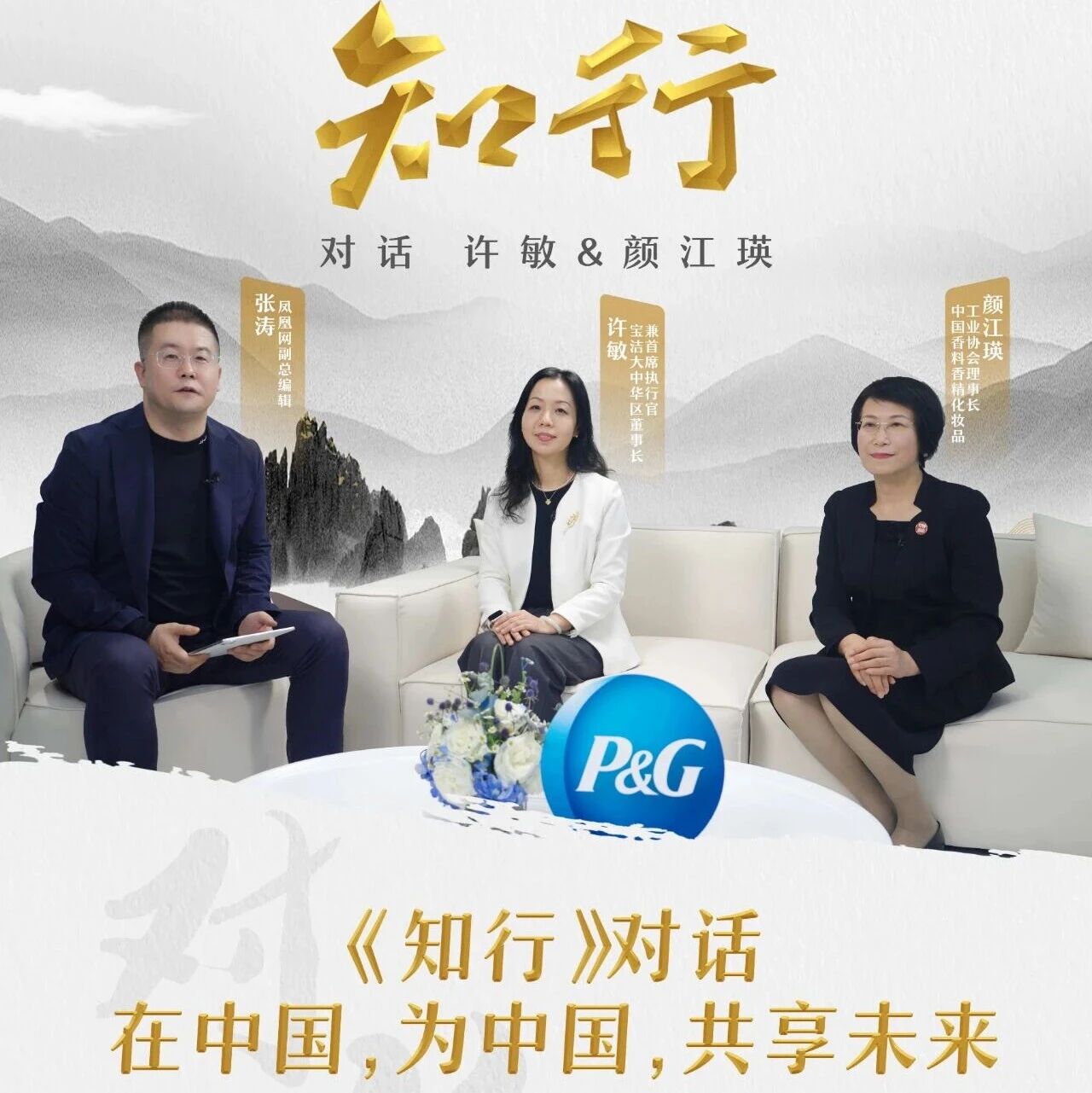
凤凰网财经《知行》深度对话宝洁:创新点亮美好生活,解码全球化新范式
Feng Huang Wang Cai Jing· 2025-11-19 04:14
Core Insights - The core theme of the discussion revolves around Procter & Gamble's (P&G) continuous innovation and adaptation in the Chinese market, emphasizing the importance of consumer-centric strategies and long-term growth over short-term gains [1][17]. Group 1: Innovation Focus - P&G has participated in the China International Import Expo for the seventh consecutive year, highlighting its commitment to innovation as a core aspect of its business DNA [2][3]. - The company emphasizes three key elements of innovation: product innovation for better consumer experiences, the use of AI for efficient and agile innovation, and continuous innovation contributing to sustainable development [3][4]. - P&G's approach to innovation is driven by a "Day 1 mindset," focusing on understanding and meeting the needs of Chinese consumers rather than resting on past successes [4][5]. Group 2: Market Dynamics - The Chinese cosmetics market is identified as a growth market, with the total transaction value surpassing 1 trillion yuan in 2023, projected to reach 1.07 trillion yuan in 2024 [6][7]. - The market is characterized by an expanding consumer base, including the elderly and health-conscious individuals, indicating a shift towards a more inclusive consumer landscape [7]. - P&G's strategy involves not just competing for market share but also collaborating with the industry to expand the overall market size [7][8]. Group 3: Technology Empowerment - P&G has integrated AI across its entire value chain, aiming to enhance consumer experiences and operational efficiency [9][10]. - The company views AI as a tool to improve life quality rather than an end goal, emphasizing the importance of foundational scientific data for effective AI application [9][10]. Group 4: Product Philosophy - P&G's innovation is centered on user experience rather than mere technological showcase, with products designed to address specific consumer needs [10][11]. - The company recognizes the importance of catering to diverse consumer preferences, as evidenced by tailored products for different demographics and regional needs [11]. Group 5: Sustainability Commitment - P&G aims for net-zero emissions by 2040, viewing green investments as a commitment to the future rather than a cost [12][13]. - The company has implemented various initiatives to promote sustainability, including significant plastic recycling efforts and collaboration with industry partners [13]. Group 6: Globalization Strategy - P&G's "Glocal" strategy focuses on leveraging local consumer insights to drive global innovation, positioning China as a key innovation hub [14][15]. - The company aims to balance global and local needs by ensuring high-quality products that meet local consumer standards [15]. Group 7: Industry Future - The future of the Chinese daily chemical industry is expected to shift towards high-quality competition and collaboration, moving away from zero-sum games [16]. - The industry is anticipated to see increased product quality and safety, with a focus on meeting diverse consumer demands [16].