
车家生态

Search documents
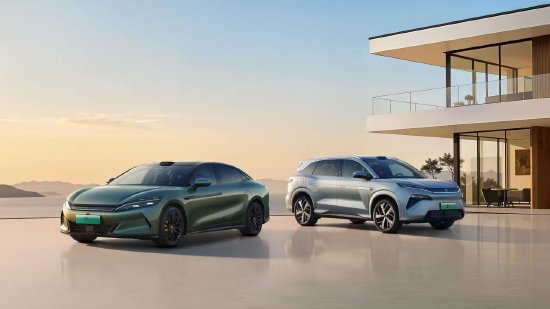
直击车展|比亚迪汉L唐L新车色及OTA发布,补贴后售价19.48万元起
Xin Lang Ke Ji· 2025-11-21 12:51
Core Insights - During the 2025 Guangzhou Auto Show, BYD launched its flagship models Han L and Tang L, featuring new colors and OTA updates [1] - The Han L EV and Tang L EV models are equipped with a high-voltage architecture and fast-charging capabilities, achieving peak charging power of 1000 kW, allowing for a 400 km range in just 5 minutes [1] - The Han L DM and Tang L DM utilize the fifth-generation DM technology, with impressive acceleration and fuel efficiency metrics [1] Pricing and Model Variants - Han L EV has three variants priced between 204,800 to 264,800 yuan after subsidies; Han L DM is priced between 194,800 to 244,800 yuan; Tang L EV ranges from 224,800 to 274,800 yuan; and Tang L DM is priced from 214,800 to 270,800 yuan [1] Performance Specifications - Han L EV and Tang L EV feature a single motor power of 580 kW, with total horsepower reaching 1102 for the all-wheel-drive version, achieving 0-100 km/h in 2.7 seconds and 3.6 seconds respectively [1] - The Han L DM accelerates from 0-100 km/h in 3.9 seconds with a minimum fuel consumption of 3.9 L/100 km, while the Tang L DM achieves 0-100 km/h in 4.3 seconds with a minimum fuel consumption of 4.9 L/100 km [1] Design and Customization - The Han L and Tang L models introduce a new olive green color, with Han L also offering a new West Lake blue color and a black sports package for personalized users [2] - The popular Liuguang silver color from Han L is now available for Tang L users as an optional upgrade [2] Intelligent Features - Both models feature an upgraded intelligent cockpit and driver assistance systems with OTA capabilities, including the DiLink 150 for enhanced visual and interactive experiences [2] - The DiPilot 300 driver assistance system introduces a new "parking to parking" navigation feature [2] Ecosystem Integration - BYD collaborates with Midea to connect vehicles with home smart systems, allowing users to control home appliances via voice commands and automate home settings when approaching [2] - The company has partnered with various brands to offer smart accessories like child safety seats and massage devices that can interact with the vehicle's system [2]


家电企业与车企的合作及相关收购事件动作频频
Shen Zhen Shang Bao· 2025-11-12 01:37
Group 1 - Changan Automobile's Avita Technology and Haier Group's Katai Chi Holdings have formed a partnership to innovate in product customization, home-vehicle integration, and in-car functionality design for a new high-end flagship product [1] - Tengshi New Energy Vehicles has also partnered with Midea Group's high-end appliance brand COLMO, while Sharp announced its first electric vehicle, LDK+, set to launch in 2027 [1] - The trend of collaboration and acquisitions between home appliance companies and automotive firms is increasingly evident, indicating a clear "automotive+" trend in the home appliance industry [1] Group 2 - Haier Group signed a strategic cooperation agreement with Changan Automobile to develop a home-vehicle ecosystem, including interconnected systems and personalized vehicle modifications [2] - Haier's Katai Chi Holdings acquired a 43% stake in Autohome from Ping An's Yunchen Capital for approximately $1.8 billion, becoming the controlling shareholder [2] - Haier aims to leverage platforms like Autohome and Katai Chi to transition from selling products to selling scenarios, focusing on after-market services rather than manufacturing vehicles [3] Group 3 - The home appliance industry's foray into the automotive sector can be categorized into three models: direct vehicle manufacturing, key component supply, and automotive distribution [4] - Companies like Hisense and TCL are transitioning to provide essential components and solutions for electric vehicles, with significant growth in their respective orders and shipments [4] - Gome's automotive market initiative aims to establish a network of smart experience centers across China, enhancing collaboration with manufacturers and dealers [4] Group 4 - The push by home appliance companies into the automotive sector is driven by growth limitations in their own industry and the desire to control both home and mobile entry points for users [5] - The automotive industry presents significant challenges due to its capital intensity, rapid technological changes, and complex supply chains, as evidenced by the struggles of brands like WM Motor and Hozon [6]


豪掷超150亿元!海尔又有大动作
Zhong Guo Jing Ying Bao· 2025-08-11 10:29
Core Viewpoint - The collaboration between Haier Group and Changan Automobile marks a significant shift in the integration of the consumer electronics and automotive industries, focusing on strategic cooperation in areas such as new energy, supply chain, and health [3][5]. Group 1: Strategic Collaboration - Haier and Changan signed a strategic cooperation agreement to leverage their industrial strengths for comprehensive collaboration in multiple cutting-edge fields [3][4]. - The partnership aims to build a "car-home ecosystem," explore digital transformation solutions, share global industrial networks, and co-create new brand marketing models [5][6]. Group 2: Market Context and Drivers - The global home appliance market is nearing saturation, prompting Haier to seek new growth avenues beyond traditional boundaries [6]. - The demand for smart vehicles as "mobile living spaces" that seamlessly connect with home environments is becoming a necessity for consumers [6][7]. Group 3: Technological Integration and Ecosystem Development - Haier is focusing on creating a unified platform for car-home connectivity, which includes developing in-car appliances and establishing a cold chain ecosystem [5][7]. - The company has invested over 15 billion yuan to build its car-home ecosystem, collaborating with leading automotive firms to enhance digital transformation across the industry [7][8]. Group 4: Competitive Advantages - Haier's advantages in building the car-home ecosystem include platform development, global R&D layout, and ecosystem integration capabilities [6][8]. - The company aims to transition from selling products to offering integrated scenarios, enhancing user experience through data-driven interactions [6][9]. Group 5: Future Outlook - The ultimate goal of the car-home ecosystem is to achieve differentiated service offerings based on unified technical standards, avoiding fragmentation in user experience [8][9]. - Haier's strategy positions it as a key player in the car-home integration space, with potential to become a leading global brand in seamless "human-car-home" experiences [9].


豪掷超150亿元 海尔车家生态“阳谋”
Zhong Guo Jing Ying Bao· 2025-08-09 01:24
Core Insights - The collaboration between Haier Group and Changan Automobile marks a significant shift in the integration of the consumer electronics and automotive industries, moving from exploratory attempts to mainstream models [1][2] - Haier's strategic focus on the "car-home ecosystem" aims to expand the boundaries of smart home scenarios while creating new growth opportunities [1][3] Group 1: Strategic Collaboration - Haier and Changan will engage in comprehensive strategic cooperation across multiple fields, including new energy, supply chain, and global branding [1][2] - The partnership will focus on building a connected car-home ecosystem, exploring digital transformation solutions, sharing global industrial networks, and co-creating new brand marketing models [2][5] Group 2: Market Dynamics - The drive for Haier's focus on the "car-home ecosystem" is influenced by the saturation of the global home appliance market and the evolving demand for smart vehicles that seamlessly integrate with home environments [3][6] - Haier aims to transition from selling products to selling scenarios, leveraging user data throughout the lifecycle [3][6] Group 3: Competitive Advantages - Haier's "car-home ecosystem" is supported by three main advantages: platform and technology development, global R&D layout, and ecological collaboration [4][6] - The establishment of the UhomeCar platform aims to enhance data interoperability and create a seamless user experience between home and vehicle [4][6] Group 4: Investment and Growth - Haier has invested over 15 billion yuan to build the car-home ecosystem, focusing on partnerships with leading automotive companies like Changan [5][6] - The acquisition of AutoHome and strategic investments in companies like New Times Data are part of Haier's strategy to enhance its industrial internet capabilities and complete the ecosystem [5][6] Group 5: Future Outlook - The future of the "car-home ecosystem" will depend on unifying technical standards and differentiating service offerings based on user scenarios [6][7] - Haier's approach to innovation balances technological advancement with cost control, aiming to create competitive products and services for a broader user base [7]