创维汽车

Search documents
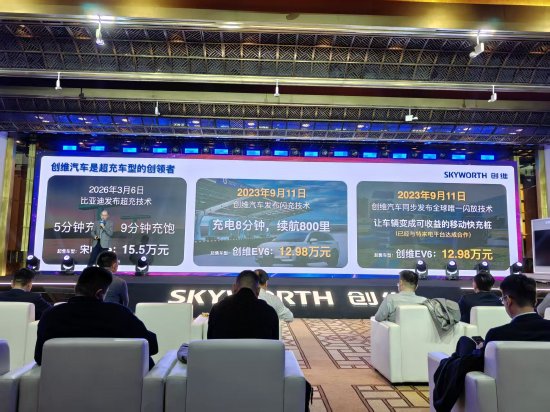
创维汽车陈贵章:创维汽车是超充车型的创领者,比比亚迪超充发布更早
Xin Lang Cai Jing· 2026-03-11 10:01
Core Insights - Skyworth Auto announced its fast charging technology, which was released in September 2023, three years ahead of BYD's recent ultra-fast charging technology [1][3] - The fast charging technology allows vehicles to charge in 8 minutes and achieve a range of 800 kilometers [1][3] - Skyworth Auto is the only global manufacturer to support flash charging technology, enabling vehicles to function as profitable mobile charging stations [1][3] - The starting price for models supporting both fast charging and flash charging technologies is 129,800 yuan, which is more competitive compared to BYD [1][3]


创维集团创始人黄宏生:38年只做“电”这一件事,从造“用电”的机器,到干“发电”的生意|2026商业新愿景
Jing Ji Guan Cha Wang· 2026-02-12 16:09
Core Insights - The global geopolitical and economic shifts have created significant pressure on businesses and households, leading to a more divided world where traditional market expansion strategies face unprecedented challenges [2][3]. Group 1: Challenges and Strategies - Companies must adapt their overseas expansion strategies to focus not only on market share but also on benefiting local economies and building trust with local partners [3][4]. - The traditional aggressive market penetration approach of Chinese companies is encountering resistance, necessitating a shift towards a "mutual benefit" model that emphasizes local workforce development and technology transfer [4][5]. Group 2: Technological Innovation - The company has initiated the "AI Living Room Revolution," leveraging data from 200 million households to enhance user experience through proactive AI applications, moving beyond traditional command-based smart appliances [6][12]. - The lack of integration of smart technology in products has been identified as a critical factor in the decline of major Japanese electronics firms, serving as a warning for Chinese companies to innovate [5][6]. Group 3: Energy Sector Expansion - The company's photovoltaic business now accounts for one-third of its revenue, reflecting a strategic pivot into the energy sector, utilizing existing manufacturing and distribution capabilities [7][9]. - The focus will extend to energy storage solutions in 2026, with an emphasis on optimizing energy usage through AI algorithms that can manage electricity pricing effectively [10][11]. Group 4: Health and Well-being - The company is exploring the automotive sector with a focus on creating vehicles that provide a "mobile rest space," addressing the health concerns of a significant portion of the population [12]. - The overarching goal across all sectors—home appliances, energy, and automotive—is to enhance human health and quality of life [12]. Group 5: Future Outlook - Companies must prioritize technological innovation, remain humble in strategy, and focus on results to navigate uncertainties in 2026, ensuring they are rooted in user needs and global partnerships [13].
创维集团创始人黄宏生:38年只做“电”这一件事,从造“用电”的机器,到干“发电”的生意
Jing Ji Guan Cha Wang· 2026-02-12 16:08
Core Insights - The global geopolitical and economic shifts have created significant pressure on businesses and households, leading to a challenging environment for both industrial and financial sectors [1] - The traditional aggressive market expansion strategies of Chinese companies are facing unprecedented obstacles, necessitating a shift towards a more symbiotic approach that benefits local economies [1][2] - The decline of Japanese electronics giants serves as a warning for Chinese companies to embrace smart technology and software integration to remain competitive [3][4] Group 1: Business Strategy - The company has adopted a "altruistic value symbiosis" approach, focusing on local partnerships and retaining local workforce while establishing R&D centers in foreign markets [1] - The company has acquired factories in South Africa and Indonesia, emphasizing the importance of contributing to local industrial capabilities and technology standards [1] - The company is leveraging its user data from 200 million households to drive its AI initiatives, aiming to create smart appliances that proactively respond to user needs [5] Group 2: Industry Trends - The company's solar energy business now accounts for one-third of its revenue, showcasing a strategic pivot towards renewable energy [6] - The company has built over 800,000 household power stations in five years, targeting markets with high electricity prices and significant unmet energy needs [7] - The company plans to expand into the energy storage sector, utilizing AI algorithms to optimize energy usage and profitability for users [8] Group 3: Future Outlook - The company emphasizes the importance of being rooted in user needs, technological innovation, and global partnerships to navigate uncertainties in the coming years [8] - The company is exploring the automotive sector, focusing on health and wellness features in vehicles to address the needs of a large population facing health challenges [8]
年入650亿,70岁创业大佬的三次跨界奇迹
Xin Lang Cai Jing· 2026-02-09 01:21
Core Insights - Huang Hongsheng, at 70 years old, continues to lead Skyworth through industry cycles, demonstrating resilience and ambition in entrepreneurship [1][5][61] - Skyworth has transformed from a household name in television to a diversified group involved in electric vehicles and solar energy, achieving significant revenue growth [5][36][100] Group 1: Company Background and Achievements - Skyworth was established in Hong Kong in 1988 and quickly became a major player in the Chinese television market, achieving a listing on the Hong Kong Stock Exchange in 2000 [52][78] - The company has expanded its product offerings beyond televisions to include home appliances, electric vehicles, and solar energy solutions, becoming a comprehensive group [100][104] - In 2024, Skyworth's total revenue reached approximately 650.13 billion yuan, with solar energy contributing 203 billion yuan and the automotive sector generating nearly 2 billion yuan in profit [103][104] Group 2: Entrepreneurial Journey of Huang Hongsheng - Huang's entrepreneurial journey began with significant challenges, including three failed ventures in the early 1990s before successfully launching Skyworth [18][76][78] - His decision to enter the electric vehicle market in 2010 was initially met with skepticism, but the company has since achieved profitability, particularly in the Middle East market [56][91] - Huang's strategic pivot to solar energy in 2020 has resulted in rapid growth, with solar revenue increasing from 41.01 billion yuan in 2021 to 203.34 billion yuan in 2024 [39][97] Group 3: Future Outlook and Vision - Huang aims for Skyworth to achieve a revenue target of 100 billion yuan, reflecting his ongoing ambition despite his age [5][59] - The company is positioned to leverage its extensive customer base for solar energy solutions, with expectations that solar revenue will surpass television revenue by 2025 [41][100] - Huang emphasizes the importance of innovation and adaptability in business, continuously seeking new opportunities in emerging markets [25][46][106]

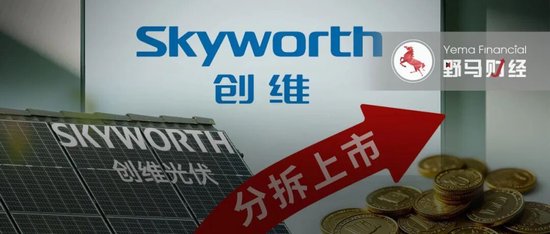
“海南富豪”的千亿棋局:创维大分拆,再造一个“资本帝国”
Xin Lang Cai Jing· 2026-01-23 10:14
Core Viewpoint - The company is undergoing a significant transformation by initiating a share buyback, privatization, and the spin-off of its solar business, Skyworth Solar, for independent listing, aiming to highlight its independent value and attract new energy investments [1][22][23]. Group 1: Company Strategy and Financials - Skyworth Group announced plans for a share buyback and privatization while spinning off its solar business, Skyworth Solar, which is expected to enhance its independent valuation [4][6][27]. - Following the announcement, Skyworth Group's stock price surged over 43%, with a market capitalization exceeding HKD 100 billion [1][23]. - The company will distribute Skyworth Solar shares to shareholders, with an estimated value of approximately HKD 6.13 per share of Skyworth Group [4][27]. - The total value of cash and solar shares per Skyworth Group share is projected to be around HKD 10.16, representing a premium of about 96.15% compared to its last trading price before suspension [6][34]. Group 2: Business Performance and Market Position - Skyworth Solar, established in 2020, has rapidly expanded its market presence, contributing significantly to the group's revenue, with solar business revenue reaching CNY 138.36 billion, accounting for 38.2% of the total revenue [9][11][32]. - The solar business has shown strong growth, with a revenue increase of 53.5% year-on-year, making it a key driver of profit for the group [11][32]. - As of mid-2025, Skyworth Solar has constructed over 800,000 power stations, generating over 410 billion kWh of electricity [9][30]. Group 3: Future Outlook and Expansion Plans - The founder of Skyworth Group, Huang Hongsheng, indicated that the solar business is expected to surpass traditional television revenue for the first time in 2025, with plans to expand into the energy storage sector [14][35]. - The company is focusing on international markets, particularly in regions with high electricity prices and weak infrastructure, such as Europe, the Middle East, and South America [14][35]. - Skyworth Group aims to achieve a revenue target of CNY 100 billion by 2024, with a strong emphasis on global expansion and partnerships with international brands [41][42].
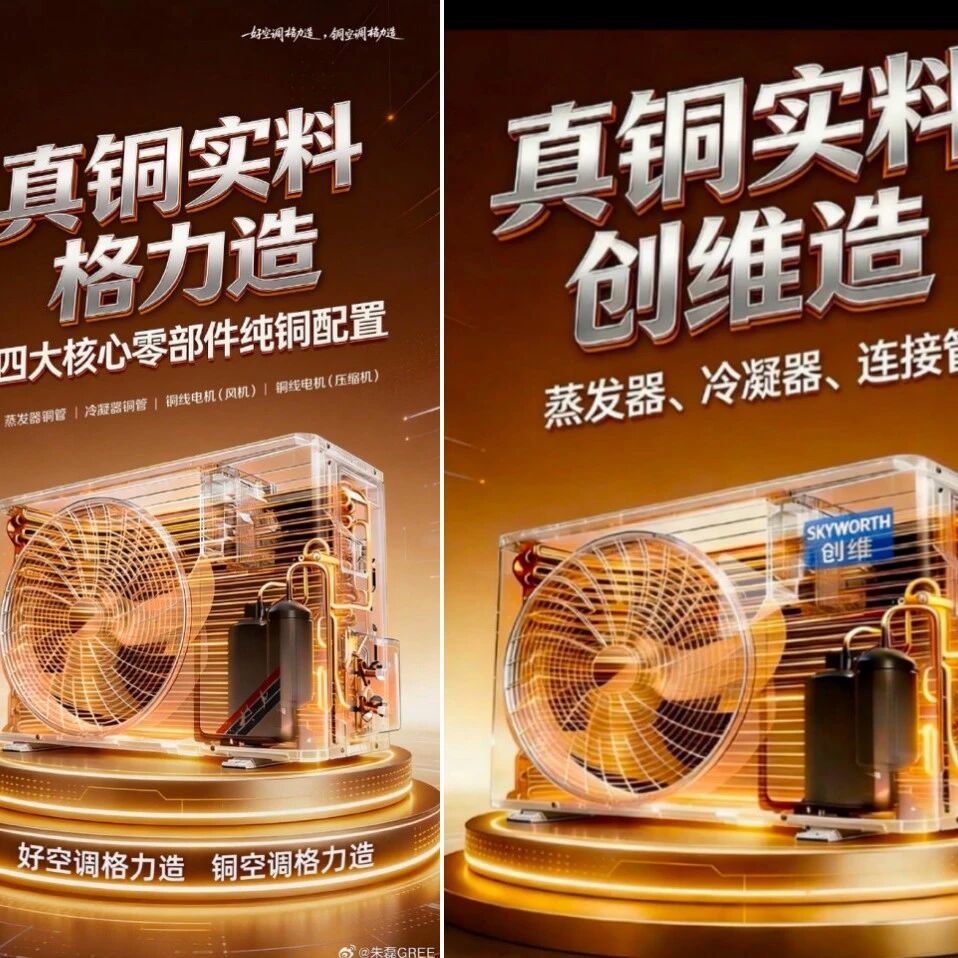
格力高管炮轰创维海报抄袭,“彩电大王”跨界造车难圆千亿梦?
凤凰网财经· 2026-01-07 14:14
Core Viewpoint - Gree Electric Appliances' executive Zhu Lei publicly accused Skyworth of plagiarizing Gree's advertising design style, highlighting a growing tension in the air conditioning market regarding material technology and branding strategies [1][5][6]. Group 1: Market Dynamics and Competition - The air conditioning market remains competitive, with ongoing discussions about the use of aluminum instead of copper in core materials, which has become a focal point for public scrutiny [5]. - Gree has stated it will not increase prices or adopt aluminum technology, while competitors like Haier and Midea are moving forward with such applications [6]. - Gree emphasizes its "true copper" product positioning, asserting that all key components of its air conditioners are made from pure copper, contrasting with Skyworth's ambiguous stance on aluminum technology [9][13]. Group 2: Skyworth's Business Challenges - Skyworth, once a leading television brand, is struggling with a transition from home appliance manufacturing to diversification, including ventures into smart cars and global markets [14][20]. - The company has repeatedly failed to meet its ambitious revenue target of 100 billion yuan, with 2023 revenues at 69.031 billion yuan, a 29.1% increase, but a projected decline in 2024 to 65.013 billion yuan, a 5.8% drop [23]. - Complaints about Skyworth's air conditioning products have surfaced, indicating issues with warranty service and product quality, which could impact brand reputation [15]. Group 3: Automotive Ventures - Skyworth's foray into the automotive sector, initiated in 2010, has faced challenges, particularly in the domestic market, with only about 40,000 units sold in 2024 [24]. - The overseas market has become a crucial support for Skyworth's automotive division, with significant sales in the Middle East, contributing approximately 87.5% of total global sales [24]. - To achieve its revenue goals, Skyworth is considering spinning off its white goods, solar energy, and automotive divisions for additional funding, while also focusing on AI transformation in its operations [25][31].

家电企业与车企的合作及相关收购事件动作频频
Shen Zhen Shang Bao· 2025-11-12 01:37
Group 1 - Changan Automobile's Avita Technology and Haier Group's Katai Chi Holdings have formed a partnership to innovate in product customization, home-vehicle integration, and in-car functionality design for a new high-end flagship product [1] - Tengshi New Energy Vehicles has also partnered with Midea Group's high-end appliance brand COLMO, while Sharp announced its first electric vehicle, LDK+, set to launch in 2027 [1] - The trend of collaboration and acquisitions between home appliance companies and automotive firms is increasingly evident, indicating a clear "automotive+" trend in the home appliance industry [1] Group 2 - Haier Group signed a strategic cooperation agreement with Changan Automobile to develop a home-vehicle ecosystem, including interconnected systems and personalized vehicle modifications [2] - Haier's Katai Chi Holdings acquired a 43% stake in Autohome from Ping An's Yunchen Capital for approximately $1.8 billion, becoming the controlling shareholder [2] - Haier aims to leverage platforms like Autohome and Katai Chi to transition from selling products to selling scenarios, focusing on after-market services rather than manufacturing vehicles [3] Group 3 - The home appliance industry's foray into the automotive sector can be categorized into three models: direct vehicle manufacturing, key component supply, and automotive distribution [4] - Companies like Hisense and TCL are transitioning to provide essential components and solutions for electric vehicles, with significant growth in their respective orders and shipments [4] - Gome's automotive market initiative aims to establish a network of smart experience centers across China, enhancing collaboration with manufacturers and dealers [4] Group 4 - The push by home appliance companies into the automotive sector is driven by growth limitations in their own industry and the desire to control both home and mobile entry points for users [5] - The automotive industry presents significant challenges due to its capital intensity, rapid technological changes, and complex supply chains, as evidenced by the struggles of brands like WM Motor and Hozon [6]


夏普也学小米造车?上一个学雷军造车的家电大佬,月销不到1500辆
Sou Hu Cai Jing· 2025-11-06 05:36
Core Viewpoint - Sharp, traditionally an appliance manufacturer, is venturing into the automotive industry with its LDK+ electric MPV concept car, aiming for a 2027 launch, which raises questions about innovation versus imitation in the market [2][3] Group 1: Sharp's Automotive Venture - Sharp's LDK+ concept car is designed as an extension of the living room, featuring rotating seats, a retractable screen for cinema experiences, and AIoT connectivity with home appliances [2] - The move mirrors the "car-home" ecosystem promoted by domestic companies, suggesting a trend rather than a unique innovation [2] Group 2: Industry Context and Challenges - The automotive market is highly competitive, and Sharp's ability to succeed is uncertain, especially given the struggles of other appliance companies entering the car market [3] - Notable examples include Stone Technology's founder, who faced backlash for selling shares while launching a car brand, and the disappointing sales figures of other appliance companies like Skyworth, which invested heavily in automotive ventures but saw declining sales [4][6][9]
650亿彩电大王杀入新能源,半年狂揽138亿
2 1 Shi Ji Jing Ji Bao Dao· 2025-09-22 06:51
Core Insights - Huang Hongsheng, the founder of Skyworth Group, has transitioned from a lumberjack in Hainan to a prominent figure in the home appliance industry, now venturing into solar energy and electric vehicles at the age of 70 [1][7][16] Group 1: Company Background - Skyworth Group was founded in 1988, initially focusing on remote control manufacturing before expanding into television production [9][10] - The company went public in Hong Kong in 2000, becoming a leading player in the television industry [9] - After facing significant challenges post-2000, including team departures and revenue declines, the company managed to stabilize and rebuild [10][12] Group 2: Industry Evolution - The home appliance industry is recognized as a key driver of industrialization in East Asia, with Skyworth being a significant player in this sector [9] - The company has adapted to market changes, moving from traditional home appliances to renewable energy solutions, particularly in solar power [12][16] Group 3: Recent Developments - In 2024, Skyworth's revenue is projected to exceed 65 billion yuan, with ambitions to reach a target of 100 billion yuan within two years [7] - The solar energy segment has become a major growth area, contributing nearly 40% of the company's total revenue, with a 54% year-on-year increase in 2025 [12][16] - Skyworth is also entering the electric vehicle market, emphasizing health and smart technology in its automotive offerings [13][16]
创维集团创始人黄宏生:光伏突围、千亿目标和造车蓝图
2 1 Shi Ji Jing Ji Bao Dao· 2025-09-01 23:17
Core Insights - The company aims to achieve a revenue target of 100 billion yuan within two years, driven by strong growth in its smart home appliances and renewable energy sectors [1][14] - The renewable energy segment, particularly solar power, has become a significant growth driver, contributing 138.01 billion yuan in revenue in the first half of 2025, a 54% year-on-year increase [1][2] - The company plans to spin off 5 to 8 subsidiaries for public listing within the next five years to enhance operational efficiency and market presence [1][15] Company Strategy - The company has identified solar energy as a key area for growth, leveraging its existing distribution channels and brand recognition to penetrate the market [4][8] - The company has developed an integrated ecosystem for solar energy, including residential solar installations and energy storage solutions, aiming to create a "solar-storage-charging" model [4][6] - The company has launched the Xihuan platform, which consolidates various solar energy products and services, enhancing value through integration and collaboration [4][10] Market Position - The company has positioned itself as a significant player in the solar energy market, achieving the second-largest market share in distributed solar within two years [9][10] - The solar revenue now accounts for nearly 40% of the company's total revenue, indicating its importance in the overall business strategy [2][5] - The company is expanding its international footprint, targeting a 30% contribution from overseas solar business in the next five years [11][13] Industry Challenges - The solar industry faces challenges such as cyclical market dynamics, capital intensity, and increased competition from other home appliance manufacturers [5][10] - Regulatory changes, such as the 136 document on market-oriented pricing for renewable energy, have introduced new cost and revenue pressures for market participants [5][10] - The company acknowledges the competitive landscape and aims to differentiate itself through technological innovation and value creation rather than price competition [10][12]