
轮作模式

Search documents
(乡村行·看振兴)山西忻州:果蔬产业满棚香 “一棚多用”再生金
Zhong Guo Xin Wen Wang· 2026-02-11 08:45
Core Insights - The article highlights the innovative agricultural practices in Shanxi's Xinfu District, focusing on the dual-crop model of strawberry and sweet corn cultivation, which maximizes land use and increases revenue [1][2]. Group 1: Strawberry Cultivation - The ecological park has planted 21 greenhouses of strawberries, with popular varieties including Hongyan, Zhangji, and King Kong, achieving an average yield of approximately 4,000 pounds per acre [1]. - Each greenhouse is equipped with a temperature and humidity control system, ensuring optimal growth conditions for strawberries, while employing green pest control techniques to guarantee product safety and flavor [1]. Group 2: Crop Rotation and Land Utilization - The rotation model of "strawberry + off-season sweet corn" significantly improves land utilization, allowing for two harvests in one year and enhancing soil structure while reducing pesticide use [2]. - This model not only extends the harvest and labor periods but also provides stable employment opportunities for local villagers [2]. Group 3: Vegetable Cultivation - In addition to strawberries, the article discusses the successful cultivation of lettuce and celery in greenhouses, with farmers like Zhang Liping utilizing organic fertilizers and manual weeding to produce high-quality, pesticide-free vegetables [2][3]. - The precise management of temperature, humidity, and light in the greenhouses allows for continuous harvesting and staggered market entry, enriching the local food supply and capturing market opportunities [3]. Group 4: Future Prospects - The district aims to further develop facility agriculture by expanding sales channels and promoting the brand of pollution-free vegetables, encouraging more villagers to participate in facility planting and share in the economic benefits [3].
“翡翠尖儿”的山海之旅
Xin Lang Cai Jing· 2025-12-28 22:35
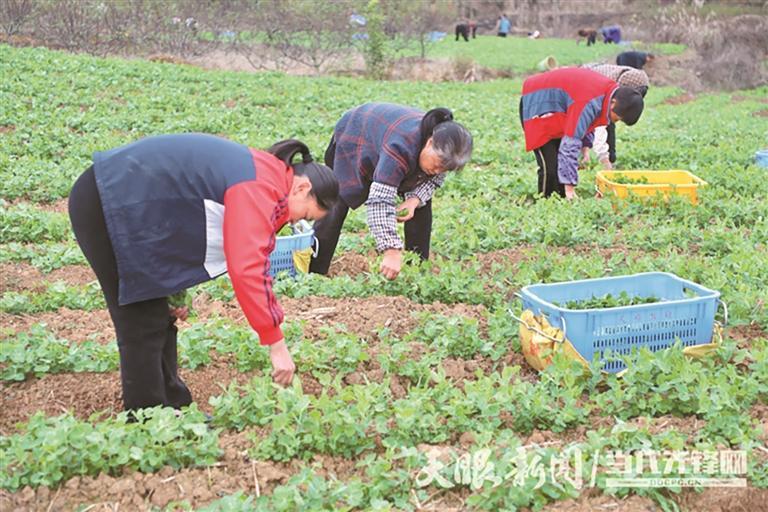
Group 1 - The company, Guizhou Yishao Agricultural Co., Ltd., is engaged in "order agriculture," specifically cultivating pea shoots tailored for the Guangdong-Hong Kong-Macao Greater Bay Area market, with an expected gross income of approximately 6 million yuan from 600,000 jin of pea shoots this year [2] - The cultivation area for pea shoots is 400 mu, and the company has established a supply chain that ensures the produce reaches the market within about 48 hours after harvest [3] - The company is implementing a crop rotation model of "pea shoots + sorghum/rice," which enhances soil fertility and increases overall agricultural productivity, leading to doubled economic benefits [3] Group 2 - The harvesting of pea shoots provides significant income opportunities for local villagers, with individuals earning around 70 to 80 yuan per day during the harvest season [2] - The company has a strategic plan for future crop cycles, indicating a commitment to sustainable agricultural practices and maximizing land use efficiency [3] - The fresh produce is quickly processed and packaged for distribution, highlighting the importance of logistics in the agricultural supply chain [3]

林下种植正当时
Zhong Guo Zi Ran Zi Yuan Bao· 2025-12-26 08:18
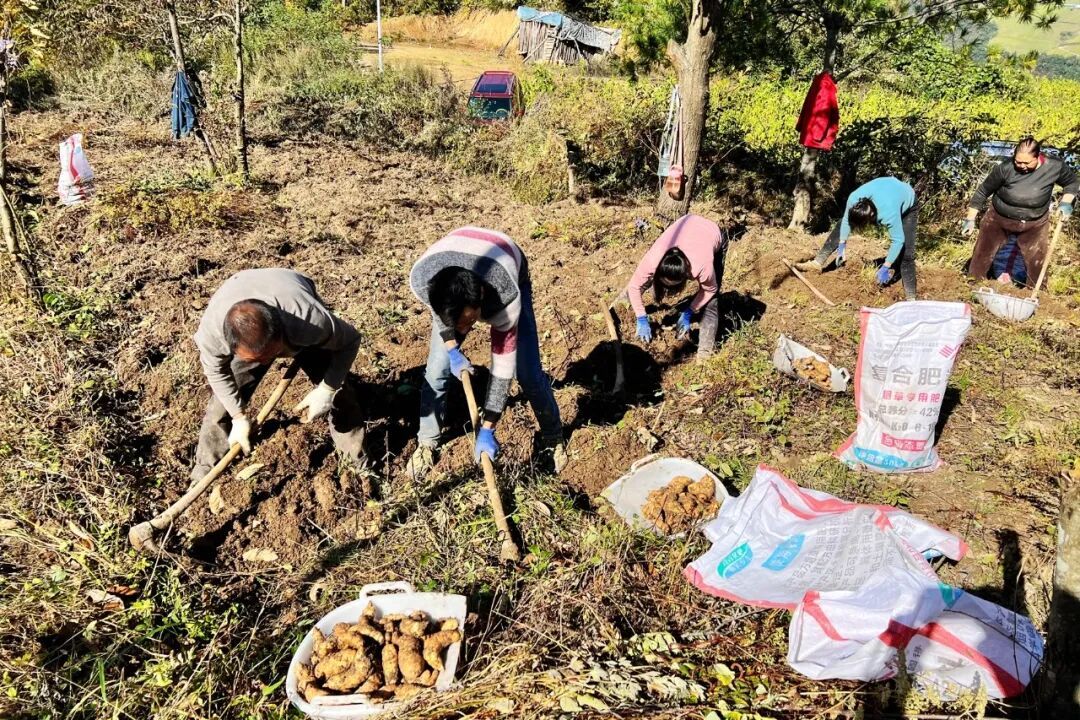
Group 1 - The core viewpoint of the articles highlights the development of the under-forest economy in Hubei Province, particularly in Zhuji County, where local farmers are actively cultivating medicinal herbs such as Tianma and Zhuling, leveraging rich forest resources and government support [2][3][4]. - Zhuji County has over 4.3 million acres of forest, with the under-forest economy covering 950,000 acres and generating a comprehensive forestry output value exceeding 8.3 billion yuan, benefiting 74,000 farming households [2]. - The implementation of a "village collective + cooperative + farmer" model in Xiangba Village has stabilized the purchase price of medicinal herbs, with the first batch of Tianma yielding 60,000 kg and generating nearly 700,000 yuan in revenue [3]. Group 2 - Fengxi Town has developed a multi-faceted agricultural model combining "forest medicine + forest honey + forest fungi + woody + herbaceous" to enhance resource utilization, achieving a total output value of over 600 million yuan from the under-forest economy [4]. - The town has established a "technical service team" to provide on-site guidance to farmers, addressing issues of lack of knowledge and confidence in expanding cultivation [4]. - Zhao Xiaowu, a major Tianma grower, has expanded his cultivation to 800 acres and employs a cooperative model that pays over 400,000 yuan in wages to local villagers, contributing to stable income growth [5][6].
黄河“几字弯”丰收图鉴:从“一季旺”到“四季兴”
Zhong Guo Xin Wen Wang· 2025-10-13 08:57
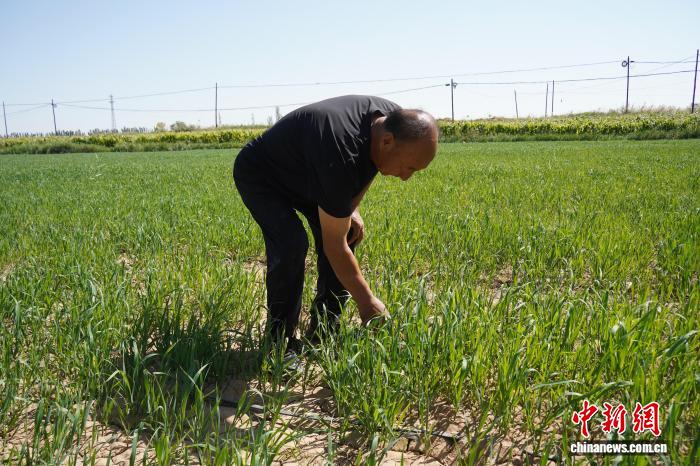
Core Insights - The article highlights the agricultural transformation in the Yellow River "Z" bend area of Inner Mongolia, showcasing a shift from seasonal to year-round harvests through innovative farming practices [1] Group 1: Agricultural Practices - In Urat Rear Banner, farmers are adopting a "wheat + oat grass" rotation model, which allows for continuous land use and increased income. This year, oat grass is expected to yield 300 kg per mu, generating approximately 50,000 yuan in net income from 253 mu [3] - Urat Front Banner has implemented a "melon + vegetable" rotation model since 2018, achieving a land utilization rate of 200%. This has led to the production of various vegetables and fruits, contributing to a year-round harvest [5][6] Group 2: Economic Impact - The average income from facility agriculture in Urat Front Banner is projected to reach around 20,000 yuan per mu this year, up from nearly 17,000 yuan last year, benefiting local residents through job creation and increased earnings [6] - In Hangjin Rear Banner, the chili pepper industry has expanded significantly, with over 11,000 mu planted, expected to yield around 160,000 tons. This growth is attributed to a comprehensive industry chain model that includes research, planting, processing, and logistics [8]
山东鄄城:中药材产业开出增收致富新“药方”
Zhong Guo Jing Ji Wang· 2025-08-06 07:54
Group 1 - The traditional Chinese medicine (TCM) industry is a key and advantageous industry in Juancheng County, Shandong Province, with a focus on the cultivation, processing, and sales of medicinal herbs [3] - The Shunwangcheng TCM professional market is the only national-level TCM market in Shandong Province, facilitating a comprehensive industrial chain that integrates cultivation, production, sales, storage, logistics, and research [3] - In the first half of this year, the transaction volume of the Juancheng TCM market reached 6.05 billion yuan, with an increase of 18,000 mu in TCM planting area and the establishment of five high-standard planting bases [3] Group 2 - Shandong Shun Agricultural Development Co., Ltd. has leased 900 mu of land for TCM cultivation, focusing on varieties like Ophiopogon japonicus and Scutellaria baicalensis, which are well-suited for local soil and have good market prices [2] - The company ensures stable sales channels through long-term partnerships with TCM markets in Hebei and Anhui, resulting in an average annual income increase of over 20,000 yuan for local villagers [2] - The company also processes and exports TCM products to countries like Japan and South Korea, enhancing its market reach [2] Group 3 - Individual farmer Cha Shibang cultivates 43 mu of medicinal herbs, employing crop rotation methods to enhance soil fertility and reduce pest issues, achieving profits of 3,000 to 10,000 yuan per mu [1] - The scientific crop rotation model used by farmers significantly improves land productivity and sustainability [1] - The integration of TCM cultivation with traditional farming practices contributes to the overall economic development of the region [1]