中药材种植与加工

Search documents
【甘快看】新春走基层丨西和:“金豆子”种出幸福年
Xin Lang Cai Jing· 2026-02-08 13:25
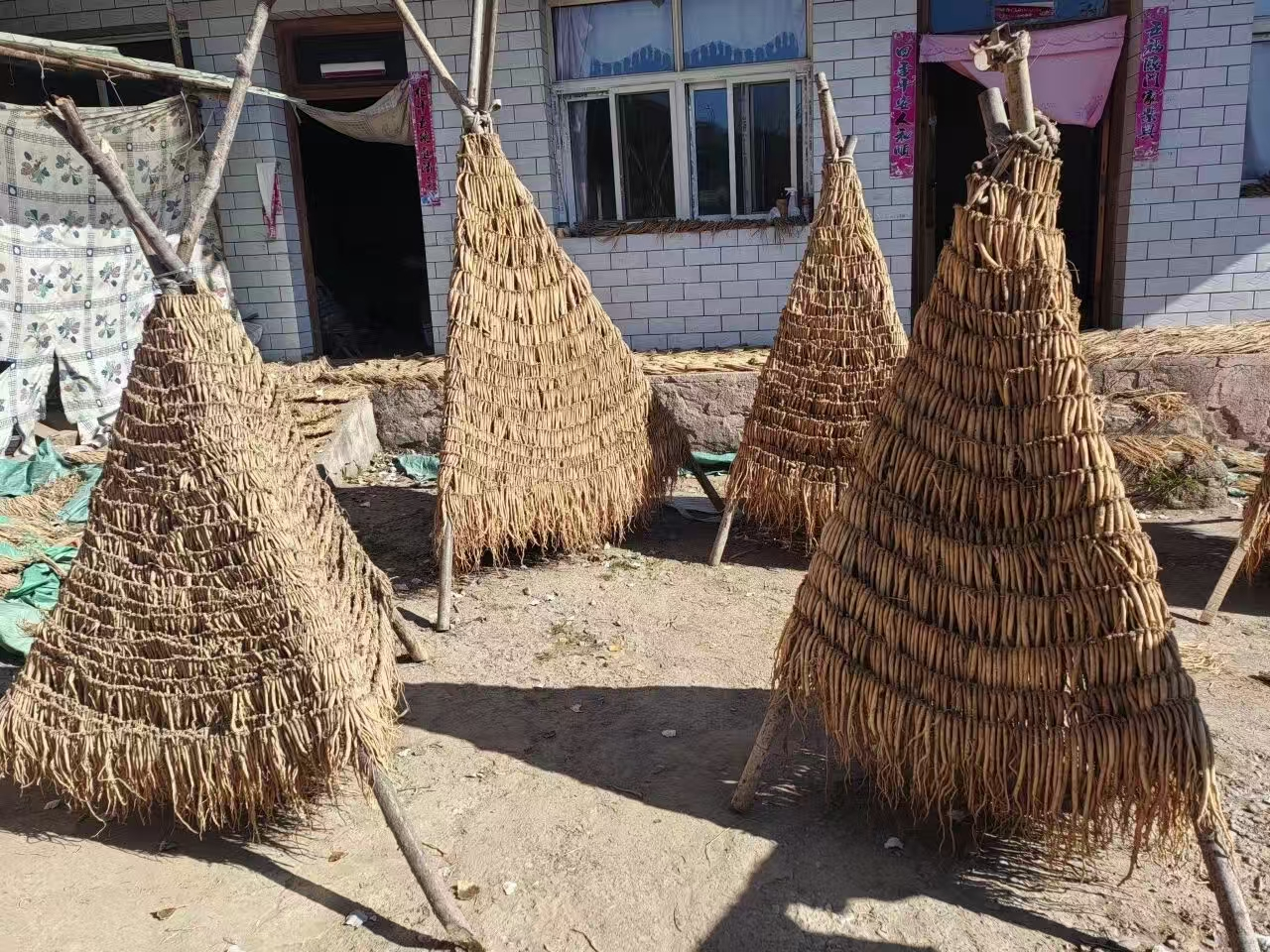
Core Insights - The article highlights the significant economic impact of the Xihe County's half summer (Banxia) industry, which has become a vital source of income for local farmers and contributes to the region's economic development [3][4][5] Group 1: Industry Overview - Xihe County is renowned as "the hometown of Banxia" in China, with its products known for their high quality, including white color, firm texture, and high effective ingredient content [3] - The half summer industry in Xihe County has established a substantial economic scale, with a stable planting area of over 20,000 acres, covering 20 towns and 217 administrative villages [3] - The comprehensive output value of the Xihe half summer industry has exceeded 700 million yuan, making it a key driver of economic growth in the county [3] Group 2: Economic Impact - The half summer industry has transitioned from traditional planting to deep processing, creating a complete industrial chain that includes research and development, production, sales, and services [4] - The local cooperative, Shuangyan Banxia Cooperative, processes approximately 600 tons of half summer annually, generating sales exceeding 40 million yuan [4] - The industry has become a crucial means for income generation, benefiting 96,000 households, with farmers reporting significant earnings from half summer cultivation [4][5] Group 3: Market Reach - Xihe half summer's market influence continues to expand, accounting for over 60% of the national market share and being sold to more than ten provinces and cities in China, as well as to countries like Japan and South Korea [5] - The high-quality half summer is not only a medicinal material but also serves as a "green engine" for economic development in the mountainous areas [5]

英山药材出山记
Ren Min Ri Bao· 2026-02-04 05:16
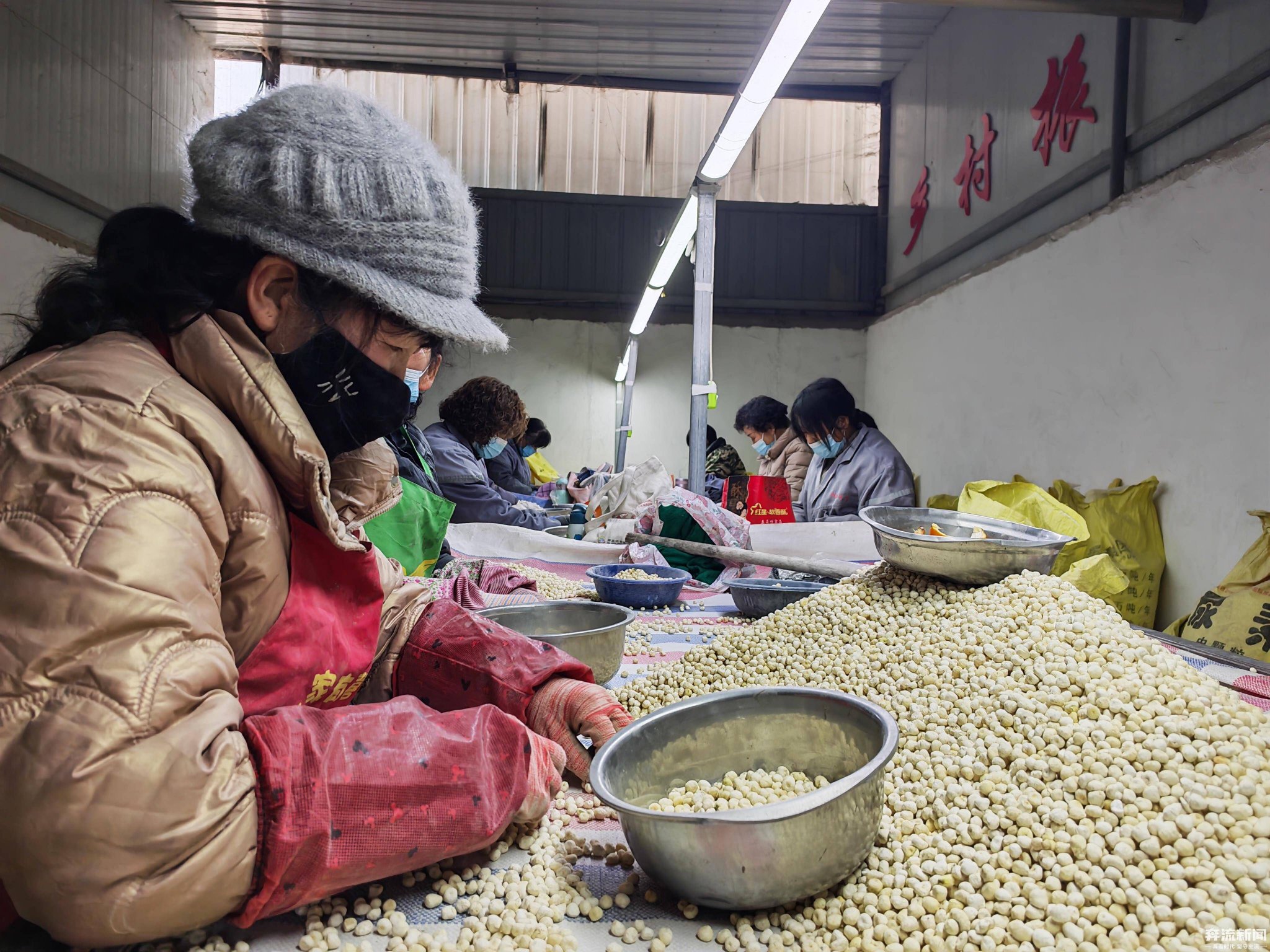
Group 1 - The village of Tiantang in Hubei Province is actively engaged in the cultivation of medicinal materials, particularly Fuling and Tianma, with significant economic benefits reported [1][2] - The cultivation of Fuling requires a growth period of at least 5 months and land must rest for 3 to 5 years, while Tianma takes 2 years to harvest, indicating challenges in increasing production due to land limitations and long growth cycles [3][4] - Innovative methods are being explored to enhance production efficiency, including the use of a mixing machine to produce Fuling mycelium at a rate of over 4,000 bags per hour, with significant sales reported [6][7] Group 2 - The local government emphasizes the importance of increasing the added value of medicinal materials, with a focus on enhancing processing capabilities to move from bulk sales to higher-value products [7] - Companies are developing new products that significantly increase the value of medicinal materials, such as "medicinal food homologous" products and instant drink formulations, which can enhance value by 5 to 10 times [7] - The ecological advantages of the region are highlighted as a key factor in development, with local industries relying on the natural environment to generate economic benefits for the community [7]
英山药材出山记(新春走基层)
Ren Min Ri Bao· 2026-02-03 20:19
Core Viewpoint - The article highlights the innovative methods being adopted in Ying Shan County, Hubei Province, to enhance the cultivation and profitability of traditional Chinese medicinal herbs like Fuling and Tianma, leveraging modern agricultural techniques and ecological advantages [2][11]. Group 1: Traditional Cultivation Challenges - The cultivation of Fuling requires a growth period of at least 5 months, with land needing to rest for 3 to 5 years after harvest, while Tianma takes 2 years to mature, necessitating a similar resting period for the soil [5]. - The limited land availability and long cultivation cycles pose significant challenges for farmers seeking to increase their income from these crops [4][5]. Group 2: Innovative Agricultural Practices - A local company, Hubei Senrong Traditional Chinese Medicine Development Co., is producing Fuling mycelium at a rate of over 4,000 bags per hour, with sales reaching 5 million bags last year [7]. - The use of greenhouses allows for the cultivation of Tianma, reducing the growth cycle from 2 years to just 7 months, enabling farmers to capitalize on market demand more effectively [10]. - The integration of temperature control and modern farming techniques has led to improved yields and profitability for local farmers [10]. Group 3: Economic Impact and Future Prospects - The cultivation of medicinal herbs in Ying Shan generates over 15 million yuan annually, with the potential for further economic growth through value-added processing [11]. - Local initiatives are focused on enhancing the value of medicinal herbs, with companies developing products that significantly increase profit margins, such as instant drink formulations that can sell for 5 to 10 times the original value of raw materials [11]. - The county aims to leverage its ecological advantages to promote sustainable development and high-quality economic growth, aligning with the "Two Mountains" theory of ecological and economic integration [11].
甘肃通渭:金银花“开”出亿元产业
Xin Lang Cai Jing· 2026-01-17 16:39
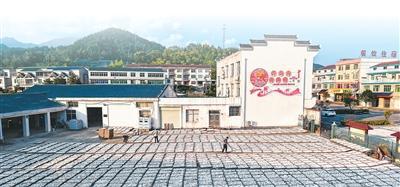
Core Viewpoint - The development of the honeysuckle industry in Tongwei County, Gansu Province, has significantly improved local farmers' incomes and contributed to the county's economic growth through a coordinated development model involving various industry chains [1][2][3]. Group 1: Industry Growth and Economic Impact - The area under honeysuckle cultivation in Tongwei County has expanded from 220 acres to 150,000 acres over the past decade, with a target production of 45,000 tons and a planting value exceeding 900 million yuan by 2025 [1][2]. - The honeysuckle industry has led to income increases for 52,000 households, establishing the largest honeysuckle cultivation cluster in Northwest China [1][2]. Group 2: Innovation and Technology - Tongwei County has implemented an "external introduction and internal cultivation" mechanism, collaborating with Shandong Jiujianpeng Group for technology and funding to develop provincial leading enterprises and modern processing facilities [2]. - The establishment of the Dingxi City Honeysuckle Research Institute and partnerships with various educational institutions have led to the creation of four provincial local standards, enhancing the competitiveness of the industry [2]. Group 3: Branding and Product Development - A 150 million yuan investment has been made to build a honeysuckle health industry park, resulting in the development of 32 product varieties, with plans to add a new production line in 2024 expected to generate annual revenues of 735 million yuan [3]. - The county has actively worked on brand enhancement through promotional events and trademark registrations, significantly increasing the market competitiveness of "Tongwei Honeysuckle" [3]. Group 4: Policy Support and Sustainability - Tongwei County has integrated policy resources to ensure sustainable development, including the establishment of a risk prevention network through agricultural insurance for honeysuckle [3]. - The county has introduced various policy documents aimed at improving the quality and efficiency of the honeysuckle industry, with a budget of 8.5 million yuan allocated for 2025 [3].
大方优质天麻远销海外
Xin Lang Cai Jing· 2026-01-12 22:06
Group 1 - The Dafa County's Tianma industry has transformed into a comprehensive industry cluster with a total output value exceeding 2.1 billion yuan, driven by the implementation of the East-West cooperation strategy [1] - The Guizhou Jiulong Tianma Company has increased its daily production of Tianma liquor by 30% due to funding support, and its products are now exported to countries like Russia and Kazakhstan [1] - The company has developed new varieties of Tianma, such as "Gui Tianma Jiulong No. 2," which has a 30% higher content of Tianma active ingredients compared to ordinary varieties, promoting nearly 10,000 acres of cultivation in the county [1] Group 2 - The establishment of the "China·Guizhou Tianma Trading Center" in Dafa, with an investment of 27 million yuan from Guangzhou, integrates sales, research, and storage, facilitating the entry of Biji Tianma into high-end consumer markets [2] - The transformation of Dafa Tianma from a local specialty to an international commodity exemplifies the East-West cooperation strategy, creating a path for wealth generation in the Wumeng mountainous area [2]
山东文登:西洋参“链”动乡村振兴
Xin Hua Wang· 2026-01-10 03:00
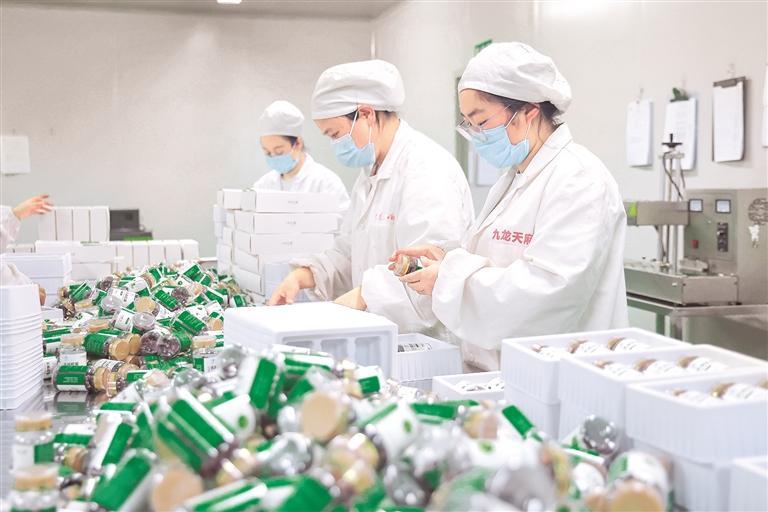
Core Insights - The demand for deep-processed products of American ginseng has been continuously growing since it was officially included in the food and drug homologous directory [1][2] - The local government in Wengden District aims to promote rural revitalization through the development of characteristic industries, with the American ginseng industry serving as a successful model [1] Industry Development - Wengden District has established standardized planting bases and promoted ecological planting techniques, resulting in an expansion of American ginseng planting area to 55,000 acres, with an annual production of 7,500 tons of fresh ginseng [1] - A variety of processing enterprises have emerged, producing different categories of products such as ginseng slices, tablets, and meal replacement powders, creating a product matrix that meets diverse market demands [1] Sales and Marketing - The sales strategy employs a dual-channel approach, utilizing both online and offline methods to enhance brand visibility and market reach [2] - The local power supply company has optimized the distribution network to support the American ginseng industry, ensuring reliable electricity supply for agricultural production and processing [2] Economic Impact - The growth of the American ginseng industry has stimulated the development of related sectors such as rural tourism and logistics, creating numerous job opportunities and increasing local income [2]
厚植高原沃土 激活产业动能——云南推进高原特色农业强省新篇
Zhong Guo Zheng Quan Bao· 2025-12-29 22:08
Core Viewpoint - Yunnan's unique highland geography, diverse climate, and rich biodiversity have fostered a distinctive agricultural industry, focusing on high-quality development through technological innovation and financial support, aiming for a transformation from scale expansion to quality and efficiency in key agricultural sectors like flowers, medicinal herbs, and coffee [1][2][6]. Agricultural Industry Development - Yunnan's agricultural strategy emphasizes the development of 14 key highland specialty agricultural industries, with a projected total output value exceeding 2.7 trillion yuan in 2024 [1]. - The province is a leading producer of fresh-cut flowers, tea, and rubber, with significant contributions to the economy and rural income [1][2]. Technological Innovation - Technological innovation is identified as the core engine driving the high-quality development of highland specialty agriculture, with a focus on seed innovation and the integration of research and industry [7][8]. - Yunnan has made significant advancements in breeding new varieties, particularly in flowers and medicinal herbs, with over 1,280 new flower varieties applied for and 800 authorized [7]. Financial Support and Investment - Yunnan has established a diversified financial service system to support agricultural development, with a total of 4.398 trillion yuan allocated to agricultural and rural development over five years [11]. - The province has set aside 135.172 billion yuan for highland specialty agriculture, with significant investments in key projects and financial support for farmers and enterprises [11][12]. Industry Structure and Collaboration - The agricultural sector in Yunnan comprises 173,000 agricultural enterprises and 69,800 farmer cooperatives, creating a development pattern led by large enterprises and supported by cooperatives [13]. - Collaborative platforms between enterprises, research institutions, and farmers have been established to ensure seamless integration of research outcomes into market demands [8][9]. Future Goals - Yunnan aims to strengthen its position as a highland specialty agricultural powerhouse by enhancing resource advantages, promoting technological innovation, and improving financial services [14].
厚植高原沃土 激活产业动能
Zhong Guo Zheng Quan Bao· 2025-12-29 21:13
Core Viewpoint - Yunnan is leveraging its unique geographical and climatic advantages to develop highland特色 agriculture, focusing on quality and efficiency, with an aim to transform its agricultural sector into a significant economic pillar by 2024, targeting a total output value of over 2.7 trillion yuan across 14 key agricultural industries [1][2]. Industry Development - Yunnan's agricultural strategy emphasizes "specialization" and "precision," with a focus on innovative mechanisms to enhance agricultural productivity, particularly in flower, medicinal herbs, and coffee sectors [2][3]. - The province has established 39 GAP bases for medicinal herbs, aiming for a planting area of over 10 million mu and an annual output of 150,000 tons by 2027, with a projected industry value of over 200 billion yuan [3]. - The flower industry is a key highlight, with Yunnan becoming a major flower production area, achieving a planting area of 1.95 million mu and an industry value exceeding 140 billion yuan in 2024 [2]. Technological Innovation - Technological innovation is central to the high-quality development of Yunnan's特色 agriculture, with a focus on breeding innovation and the integration of research and industry [4][6]. - The province has seen significant advancements in coffee processing, with an 80% deep processing rate and a projected industry value of over 80 billion yuan by 2024 [4]. - Yunnan's agricultural research institutions are actively involved in breeding new varieties, with over 1,280 new flower varieties applied for and 800 authorized, leading the nation in this area [6]. Financial Support - Yunnan has established a diversified financial service system to support agricultural development, with a total of 439.89 billion yuan allocated for agricultural and rural development over five years [9][10]. - The province has set up a unified credit service platform to facilitate financing for agricultural enterprises, enhancing efficiency in loan applications [10]. - A 30 billion yuan equity investment fund has been established to support key agricultural industries, attracting external capital and expertise to strengthen the agricultural value chain [11]. Market Expansion - Yunnan's agricultural enterprises have reached 173,000, with a focus on brand development to enhance market presence both domestically and internationally [12]. - Companies like Betaini are expanding into Southeast Asian markets, leveraging Yunnan's resource advantages to create competitive economic benefits [12].

江山古法九制黄精热销市场
Xin Lang Cai Jing· 2025-12-29 17:12
Core Viewpoint - The article highlights the success of the Zhanfei Family Farm in the production and sale of Huangjing, a traditional Chinese medicinal herb, emphasizing its innovative cultivation and processing methods that have led to significant market demand and recognition [1][2][3]. Group 1: Production and Processing - The Zhanfei Family Farm utilizes the ancient "nine steaming and nine drying" technique to produce Huangjing, which has won multiple awards, including gold at the 24th China Changchun International Agricultural and Food Expo [1][2]. - The farm's processing facility is located at an altitude of 650 meters, where the traditional methods are maintained to preserve the herb's quality, despite the higher costs and lower efficiency compared to machine processing [2][3]. - The farm has achieved a stable average yield of over 2,500 kilograms per acre for Huangjing, with a 98% seedling emergence rate due to innovative planting techniques and organic farming practices [3]. Group 2: Market Demand and Sales - The farm's Huangjing products have seen a significant increase in sales, with over 5,000 kilograms of finished products expected to sell out this year, driven by customer demand rather than advertising [2][4]. - The main products include Huangjing liquor priced at 75 yuan per kilogram and the nine-processed Huangjing starting at 100 yuan per kilogram, contributing to a diversified product matrix [4]. - The farm generates over 5 million yuan annually from its 300 acres of Huangjing cultivation, indicating a robust financial performance and potential for future growth [5]. Group 3: Future Development - The farm aims to continue expanding its operations by enhancing technological research and developing new products, focusing on the potential of the forest economy [5].
【甘快看】甘肃漳县:中药材铺就乡村振兴“致富路”
Xin Lang Cai Jing· 2025-12-27 11:30
Core Viewpoint - The winter season in Gansu Zhang County has not hindered the development of the traditional Chinese medicine (TCM) industry, which is thriving due to busy activities in drying, managing, and selling medicinal herbs, leading to increased income for local farmers [1]. Group 1: Agricultural Practices - Farmers are utilizing sunny winter days to dry medicinal herbs like Codonopsis pilosula and Astragalus membranaceus, with optimal drying conditions requiring about four hours of sunlight daily [3]. - The introduction of centralized drying facilities and drying equipment has mitigated concerns about winter moisture and mold, allowing farmers to achieve higher quality herbs and increased sales [3]. - The price of dried herbs during winter is approximately 10% higher compared to other seasons due to better preservation of active ingredients [3]. Group 2: Processing and Sales - Gansu Hongjin Yuan Health Technology Co., Ltd. is processing over 6 tons of medicinal herbs daily during the winter season, with a 40% increase in added value from the products [4]. - The company anticipates an annual output of over 5,000 boxes of herbal products, generating more than 20 million yuan in revenue [4]. - The local medicinal herb trading market is bustling, with merchants purchasing over 100 tons of high-quality herbs for processing and sale before the Spring Festival [4]. Group 3: Policy Support - The local government has established over 20 standardized winter drying facilities, providing free drying space and equipment to farmers [5]. - Technical service teams are offering guidance on frost protection and scientific drying techniques, benefiting over 20,000 farming households [5]. - Financial incentives include a subsidy of 300 yuan per mu for standardized planting, along with the provision of agricultural materials, encouraging the growth of the TCM industry [5]. Group 4: Industry Growth - The total area for TCM cultivation in Zhang County has reached 250,000 mu, with an overall industry output value of 6.8 billion yuan, benefiting 86,300 farmers [5]. - The county aims to enhance the standardization, scale, and branding of the TCM industry, focusing on building a comprehensive platform for production, processing, and sales [5].