轻IP模式

Search documents
从财商教育到潮玩帝国:奇梦岛多次“换脸”转型,只为追风口?
Guan Cha Zhe Wang· 2025-12-10 03:03
Core Viewpoint - The company Quantum Song has transformed into Qimengdao, focusing on the trendy toy market after divesting its education assets and restructuring its business model, aiming to become a leading player in the sector [1][11]. Financial Performance - For the first quarter of fiscal year 2026, Qimengdao reported total revenue from trendy toys of 127.1 million yuan, a significant increase of 93.3% quarter-over-quarter, exceeding performance guidance [1]. - Revenue breakdown includes WAKUKU at 89.73 million yuan, ZIYULI at 20.76 million yuan, and SIINONO at 12.89 million yuan [1]. Business Strategy - The company has adopted a dual-channel strategy, utilizing both online and offline sales to drive growth. Online platforms like Douyin and Xiaohongshu have generated significant engagement, while offline distribution through over 10,000 retail outlets has expanded market reach [7][9]. - Qimengdao's marketing strategy heavily relies on celebrity endorsements, similar to the successful model of Bubble Mart, with notable figures from Lehua Entertainment promoting its flagship IPs [6][14]. Market Positioning - The trendy toy market in China is experiencing a "golden period" of demand upgrade and ecosystem expansion, presenting opportunities for new entrants like Qimengdao [9]. - The company aims to achieve revenue targets of 750 million to 800 million yuan for fiscal year 2026, positioning itself to enter the second tier of the market, although it will face intense competition [16]. Product Development - Qimengdao's flagship IPs, including WAKUKU, ZIYULI, and SIINONO, are designed with consumer memory ease in mind, utilizing a naming structure that enhances brand recall [4]. - The company has rapidly scaled its production capabilities, with plush blind box output increasing over 20 times since the beginning of the year [6]. Competitive Landscape - The trendy toy industry is characterized by a clear tiered structure, with Bubble Mart leading the market. Qimengdao's pricing strategy for its blind boxes offers a competitive edge, appealing to price-sensitive consumers [16]. - However, the company's reliance on a single IP, WAKUKU, which accounts for 70% of total revenue, raises concerns about its risk exposure [14].


中国潮玩“跑赢”迪士尼|经济观察
Chang Sha Wan Bao· 2025-10-15 23:43
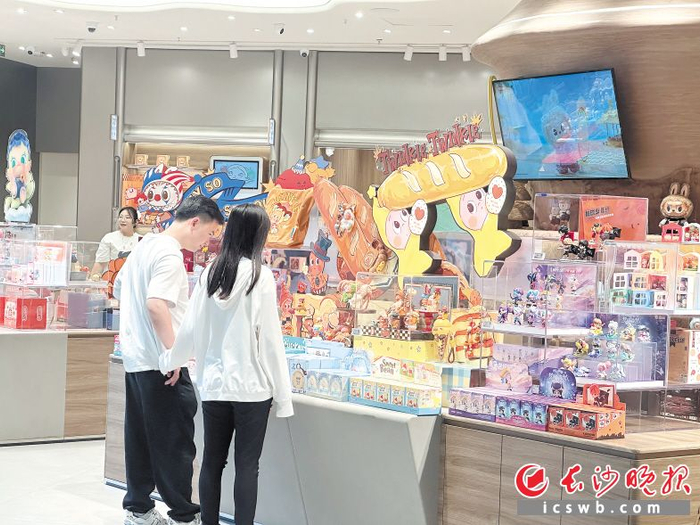
Core Insights - In the first half of 2025, Pop Mart achieved revenue of 13.876 billion RMB, surpassing Disney's toy business to become the second-largest player in the global toy industry, only behind Lego [1] - Pop Mart's success is attributed to its unique business model that relies on popular IPs and a strong social media presence, rather than traditional storytelling and content-driven strategies [7][8] Revenue and Market Position - Pop Mart's revenue of 13.876 billion RMB in the first half of 2025 marks a significant milestone, allowing it to overtake Disney in the toy sector [1] - The company's stock price has increased by over 165% in the past year, driven by the popularity of its IP "Labubu" [7] Product Demand and Market Dynamics - New product launches often sell out quickly, with significant price increases in the secondary market; for example, a blind box originally priced at 1,272 RMB is reselling for 1,900 RMB, reflecting a 49% increase [3] - The offline stores are experiencing similar demand, with many products out of stock and no immediate restock plans [4][5] Innovation and Business Strategy - Pop Mart has shifted from a content-driven IP development model to a data-driven approach, focusing on user engagement and real-time market feedback to optimize product design [8] - The company has successfully created emotional connections with consumers through its IPs, allowing them to express their identities and emotions through the products [9]